Fraction simplification Adding up to 100 Without Regrouping Worksheets for Ages 5-7
9 filtered results
-
From - To
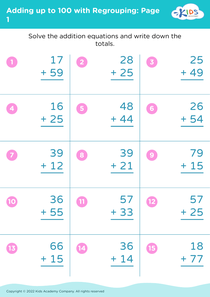
Discover engaging and educational "Fraction Simplification Addition Up to 100 Without Regrouping Worksheets" designed for children ages 5-7. These interactive worksheets help young learners grasp essential math concepts, focusing on fraction simplification while adding two numbers to reach a sum of 100 without regrouping. Fun and colorful visuals captivate students’ attention, enhancing their math skills and boosting confidence. Each worksheet provides a variety of exercises that reinforce problem-solving and critical thinking. Perfect for both classroom and at-home practice, our resources foster a love for learning in a supportive environment. Start your child's math journey today with our engaging worksheets!
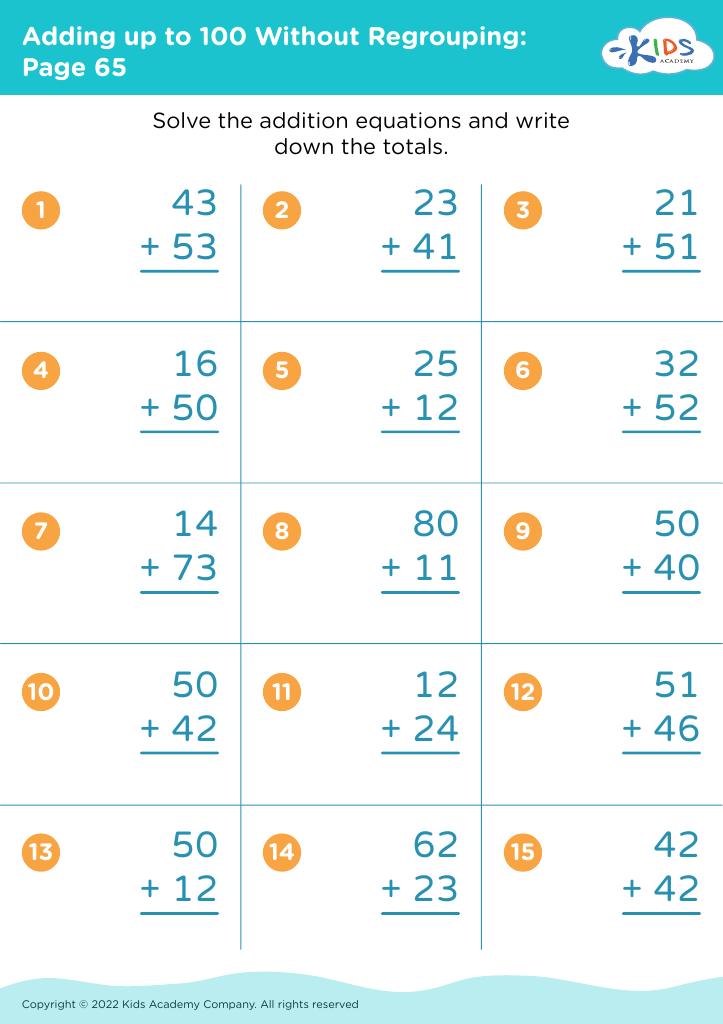
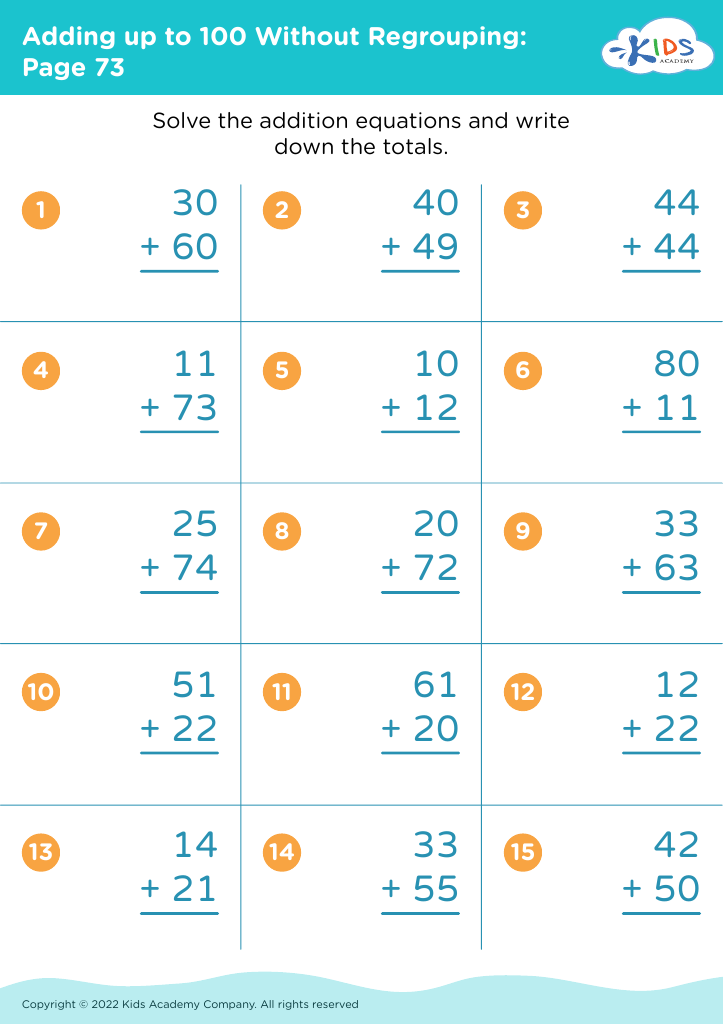
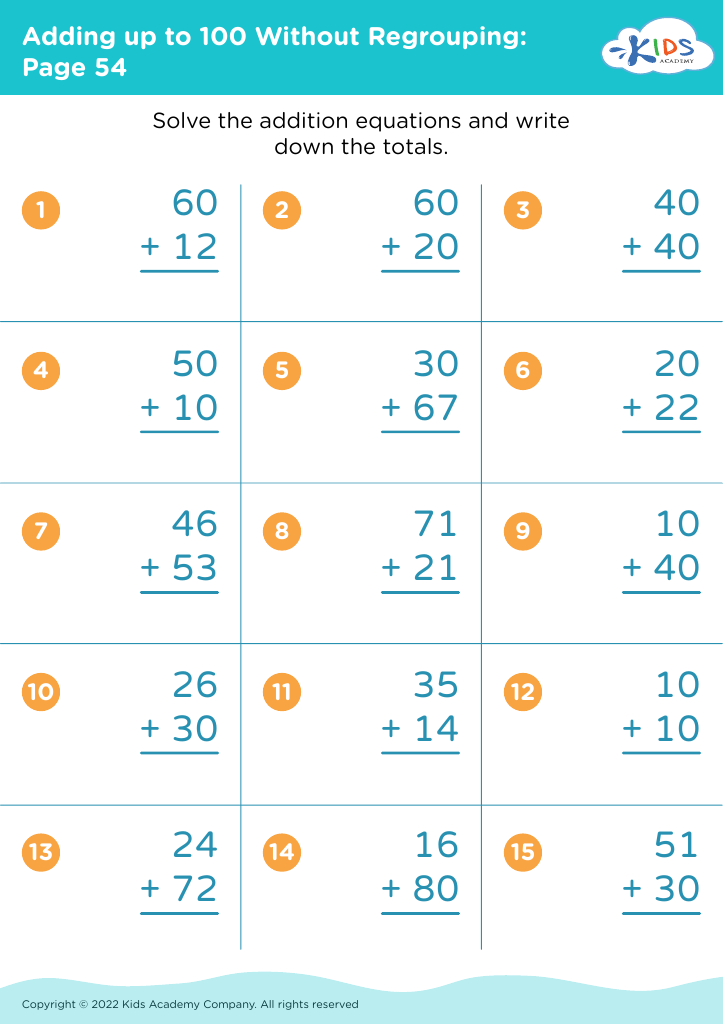
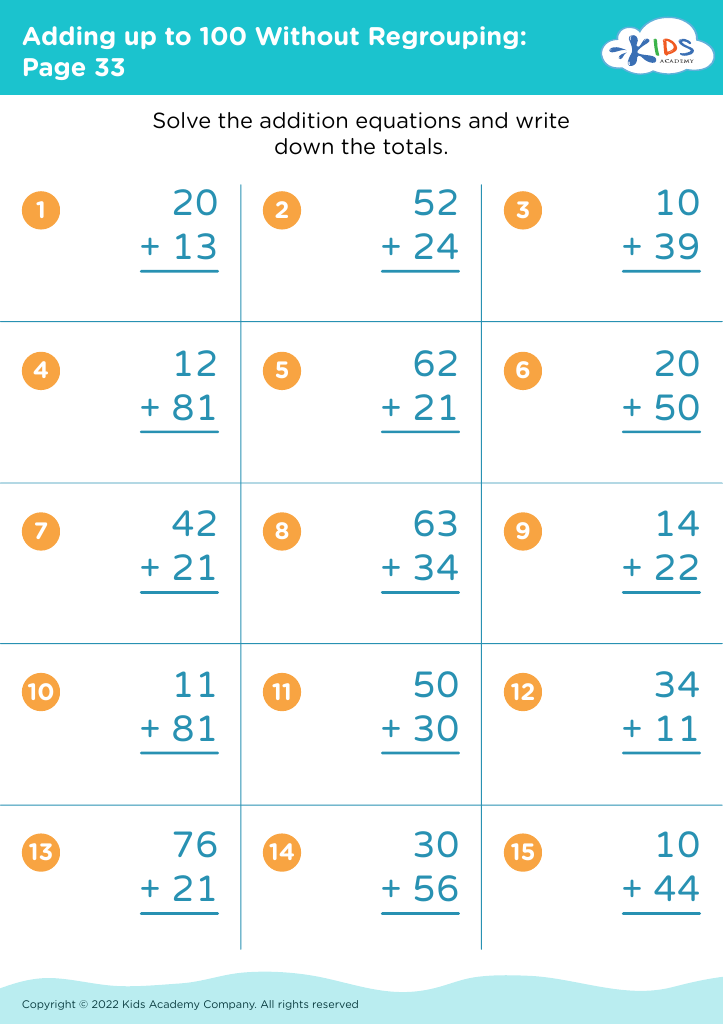
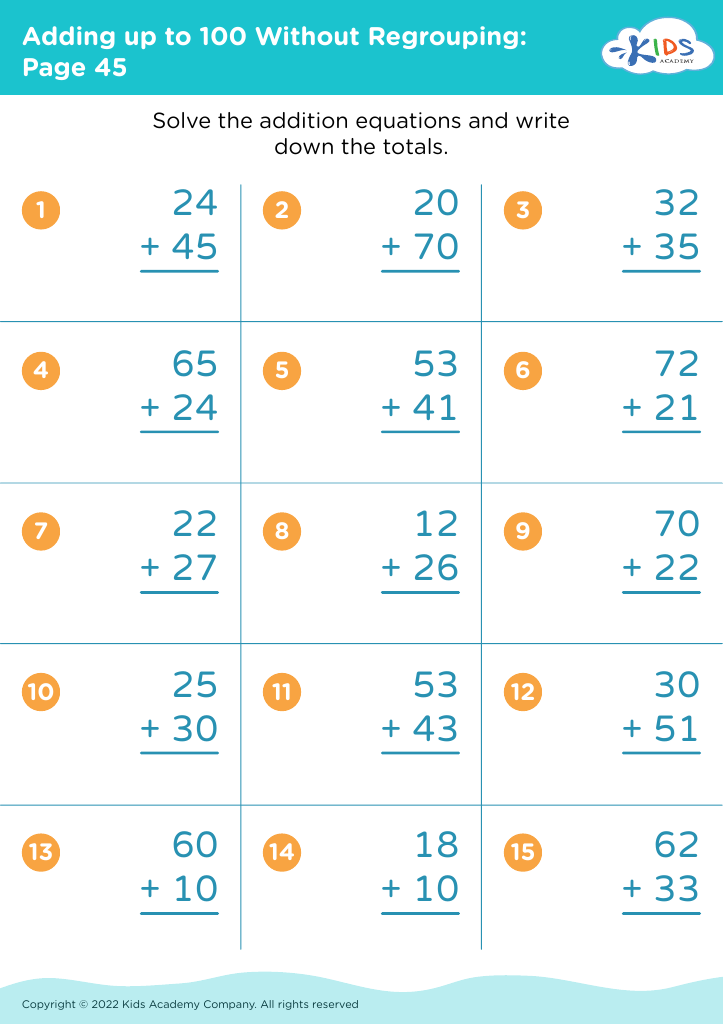
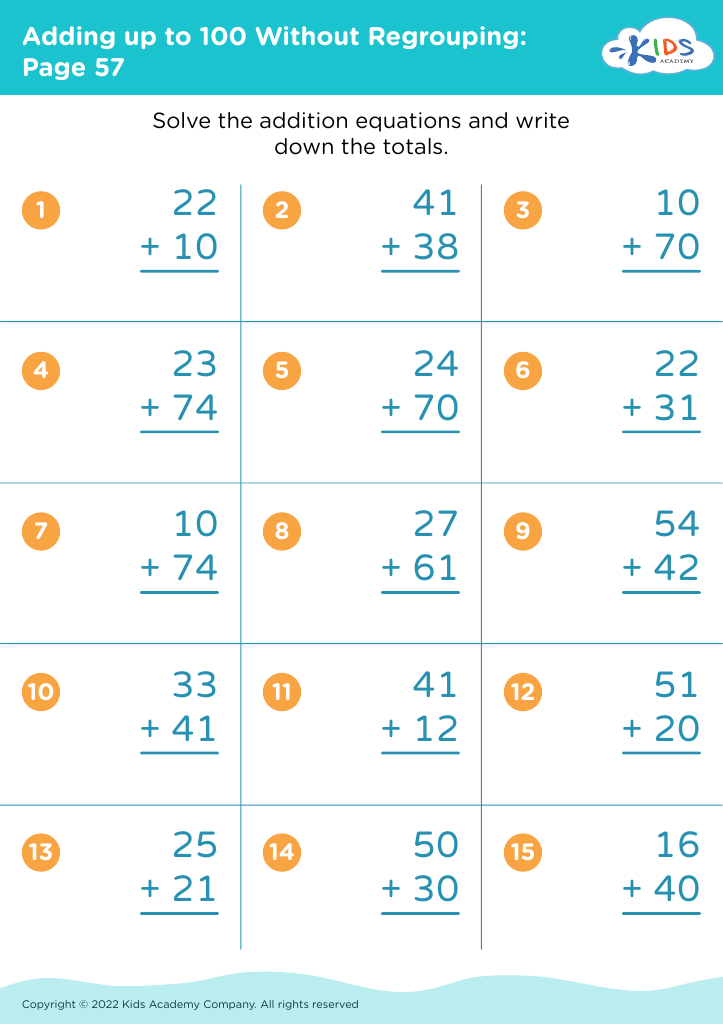
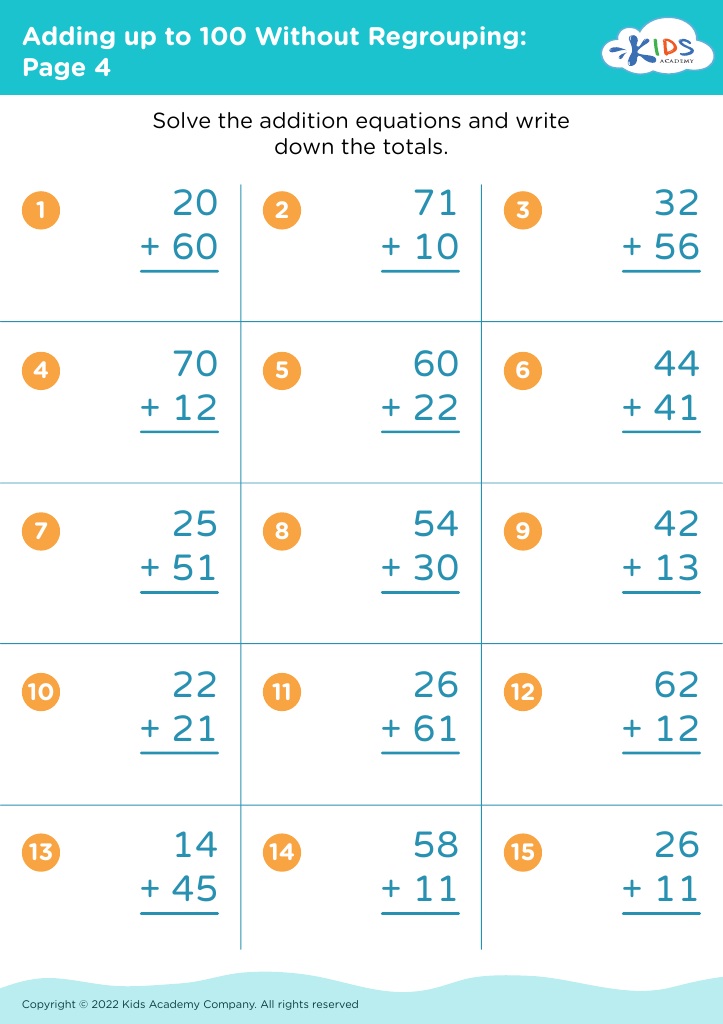
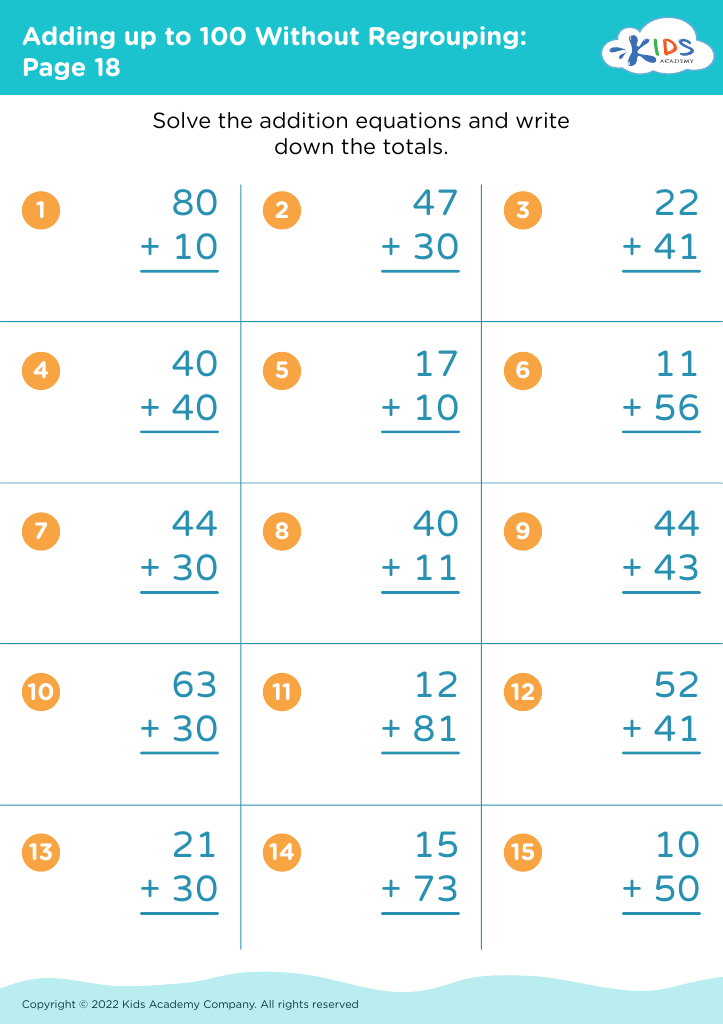
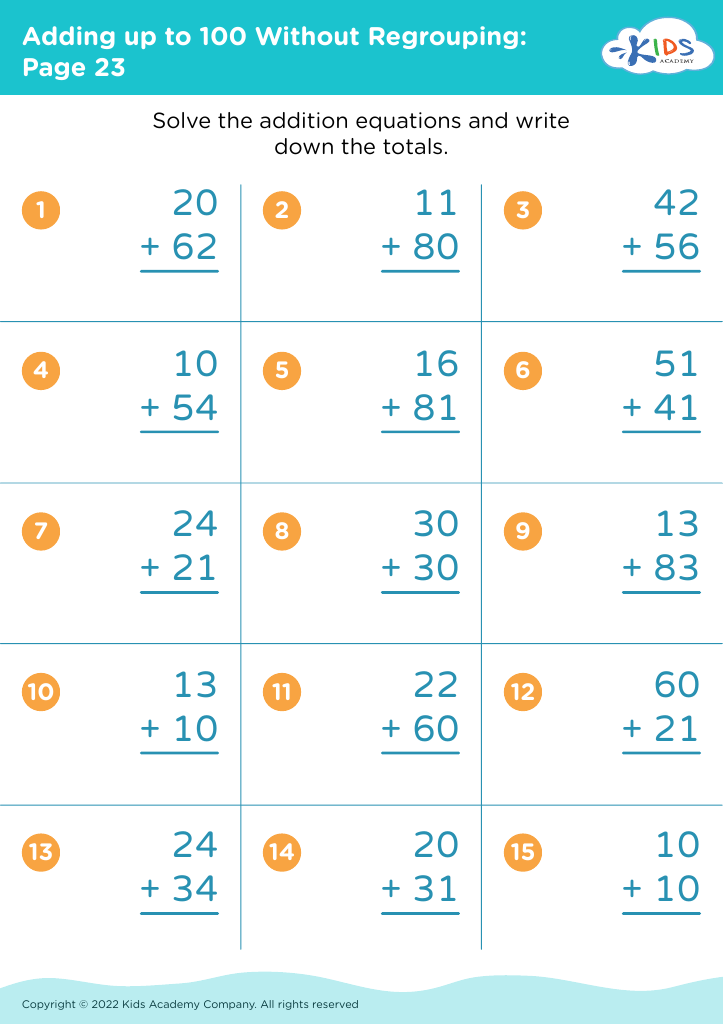




Understanding fraction simplification and addition without regrouping is essential for young learners, especially those aged 5-7. These foundational skills pave the way for a child’s mathematical development and cognitive growth. Simplifying fractions helps children grasp the concept of whole numbers and proportions, fostering their ability to recognize relationships between quantities. At this age, they are forming foundational math identity, and proficiency in these basics builds their confidence and willingness to tackle more complex problems later on.
Furthermore, exercises involving adding up to 100 without regrouping enhance their computational fluency and number sense. Activities can be structured through games and practical examples, making learning both enjoyable and meaningful. This age group thrives on hands-on engagement, so using visual aids and interactive tasks will strengthen their understanding.
When parents and teachers emphasize these skills, they not only support academic achievement but also equip children with critical problem-solving abilities. The ability to simplify fractions and perform addition without regrouping is not just about math; it fosters analytical thinking and resilience. These foundational skills aligned with encouragement can advance students’ learning trajectories and ignite a passion for mathematics. Thus, prioritizing these essential concepts is a vital investment into our children's future learning.