Identifying shapes Adding up to 100 Without Regrouping Worksheets for Ages 5-7
4 filtered results
-
From - To
Discover our engaging "Identifying Shapes Adding Up to 100 Without Regrouping Worksheets," designed specifically for children aged 5-7. These worksheets merge foundational math skills with fun shape identification activities, helping young learners build confidence in addition without the need for regrouping. Through colorful illustrations and interactive exercises, children will practice their addition skills while also recognizing various geometric shapes. Ideal for home or classroom use, these worksheets provide an effective way to reinforce key concepts in a playful manner. Help your child develop crucial math skills while exploring the world of shapes today!
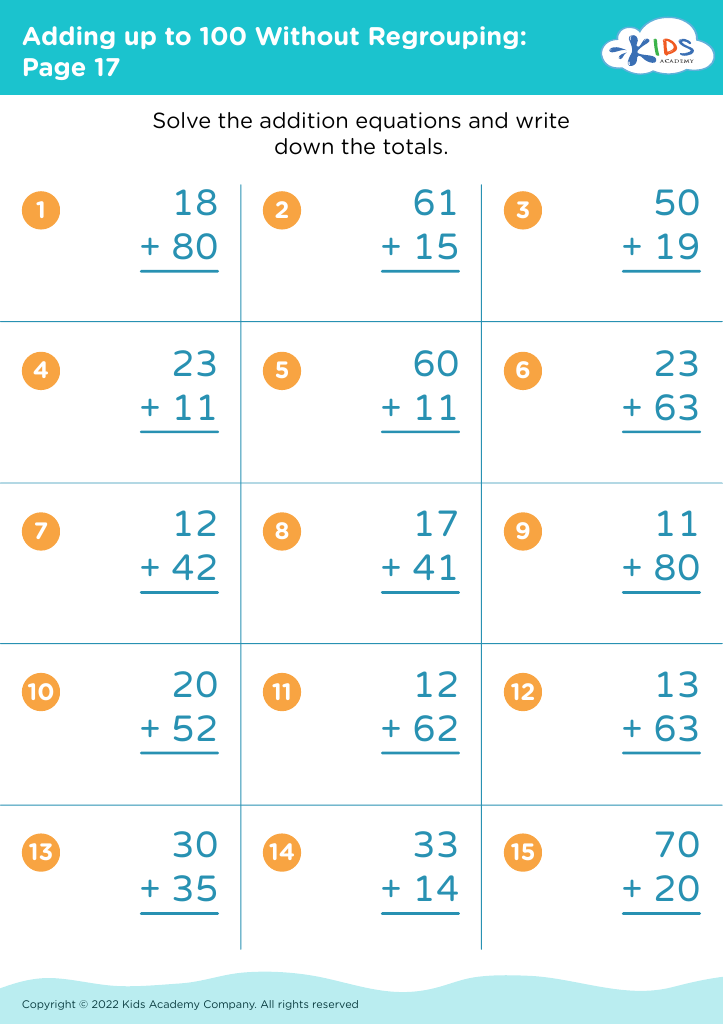
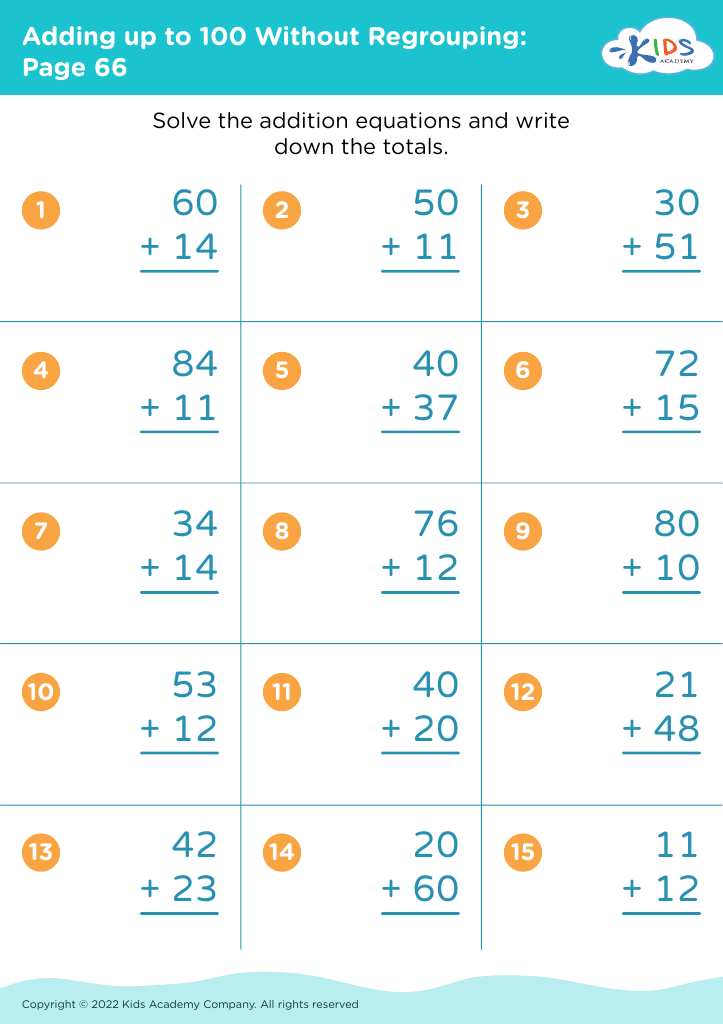
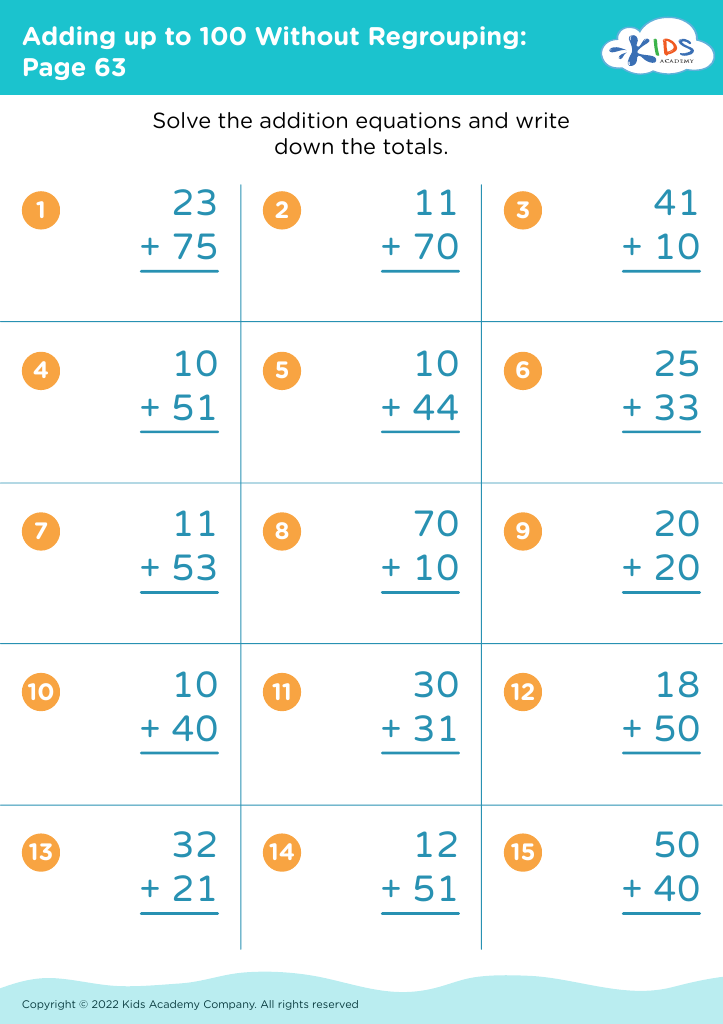
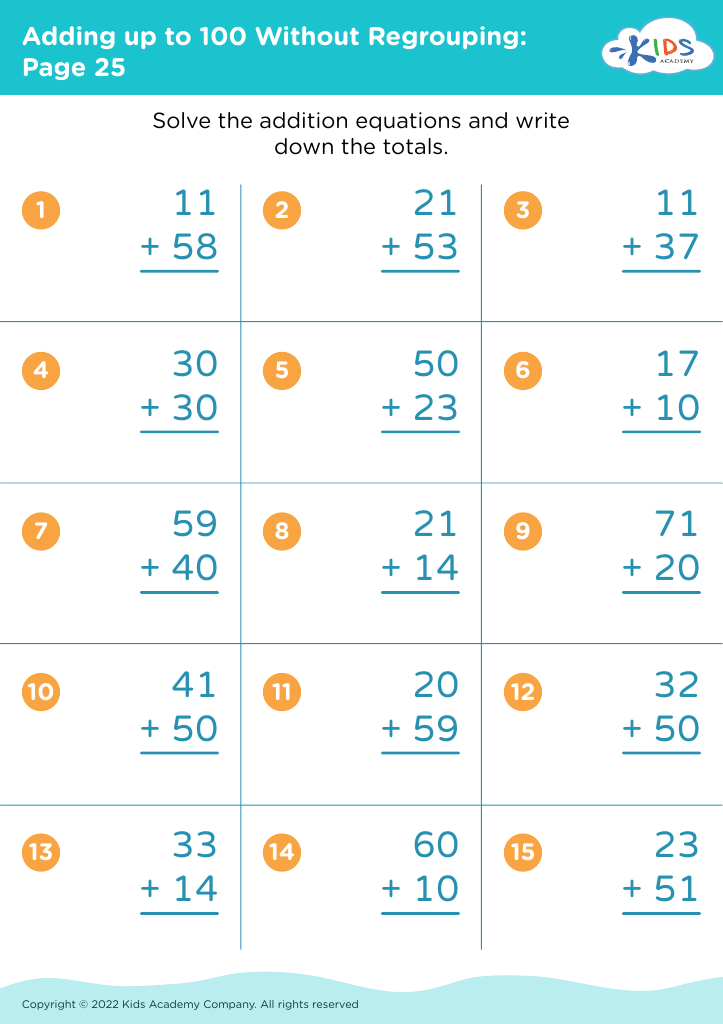




Identifying shapes and mastering addition without regrouping are foundational skills crucial for young learners aged 5-7. Both of these skills play a significant role in cognitive development and are essential in early mathematics education, forming the basis for more complex mathematical concepts later on.
Firstly, understanding shapes helps children recognize geometry in their everyday lives, fostering spatial awareness and critical thinking. This knowledge aids in problem-solving as they learn to classify, compare, and manipulate objects around them. Shapes also play a vital role in art and creative expression, allowing children to visualize and construct their ideas.
On the other hand, adding numbers up to 100 without regrouping nurtures basic arithmetic skills, encouraging them to grasp number sense and develop confidence in math. It helps cultivate an understanding of quantity and fosters mental math techniques that are beneficial for more complex operations in future grades. Without regrouping allows children to practice calculation accuracy, reinforcing their problem-solving skills.
For parents and teachers, emphasizing these concepts is essential, as they not only assist in academic success but also equip children with critical thinking and reasoning abilities vital for lifelong learning. Cultivating these skills at an early age encourages curiosity and a positive attitude toward mathematics.