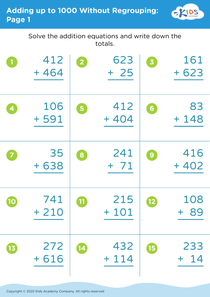
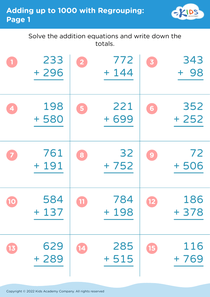
Fraction comparison Adding up to 1000 Misc Worksheets for Ages 5-7
6 filtered results
-
From - To
Explore our "Fraction Comparison Adding Up to 1000 Misc Worksheets" designed specifically for children aged 5-7. These engaging worksheets help young learners grasp the concept of fractions, enabling them to compare and understand how different fractions relate to each other. With fun activities that promote critical thinking and problem-solving skills, students will enjoy practicing their math skills in an interactive way. Our resources support early math education by making learning fractions exciting and educational. Perfect for classroom use or at-home practice, these worksheets ensure children build a strong foundation in math while enhancing their understanding of fractions. Visit us now for free resources!
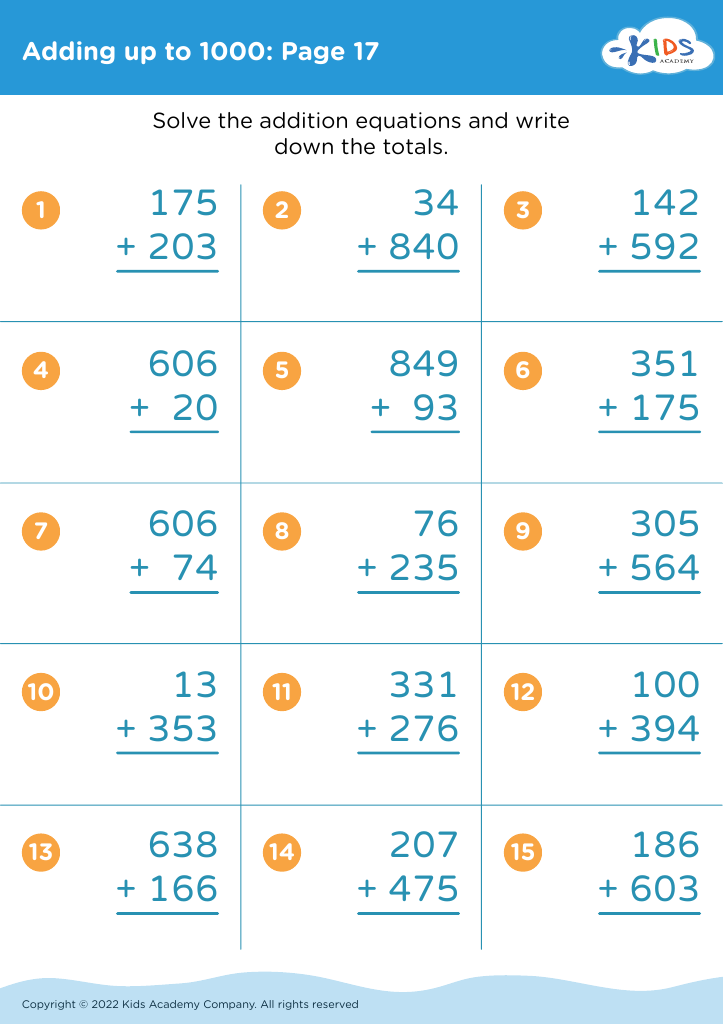
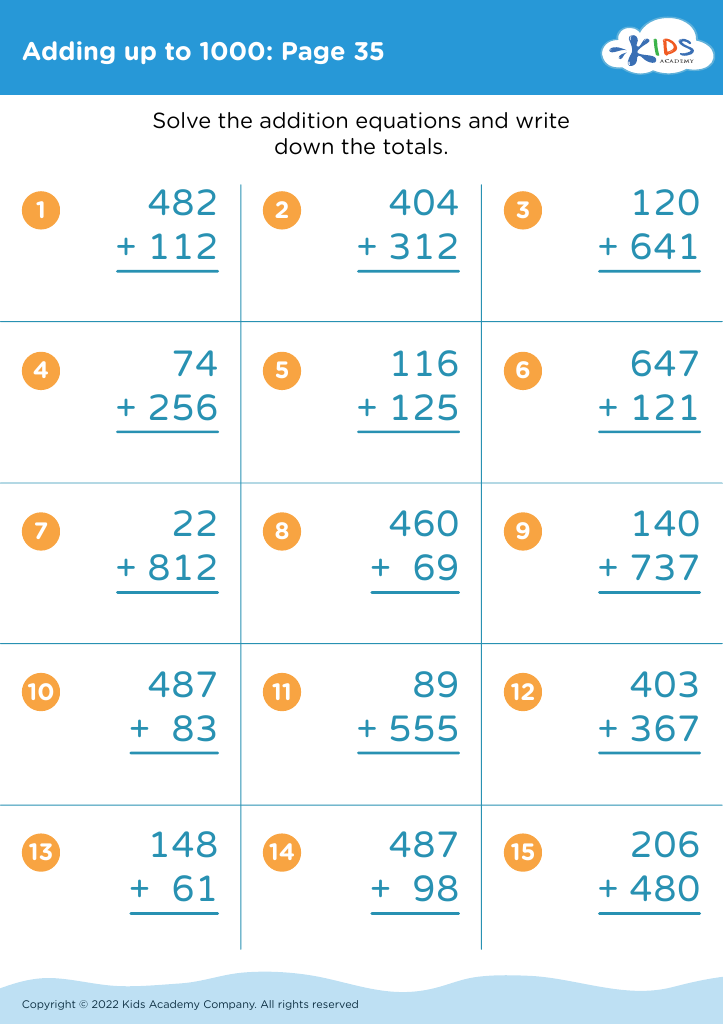
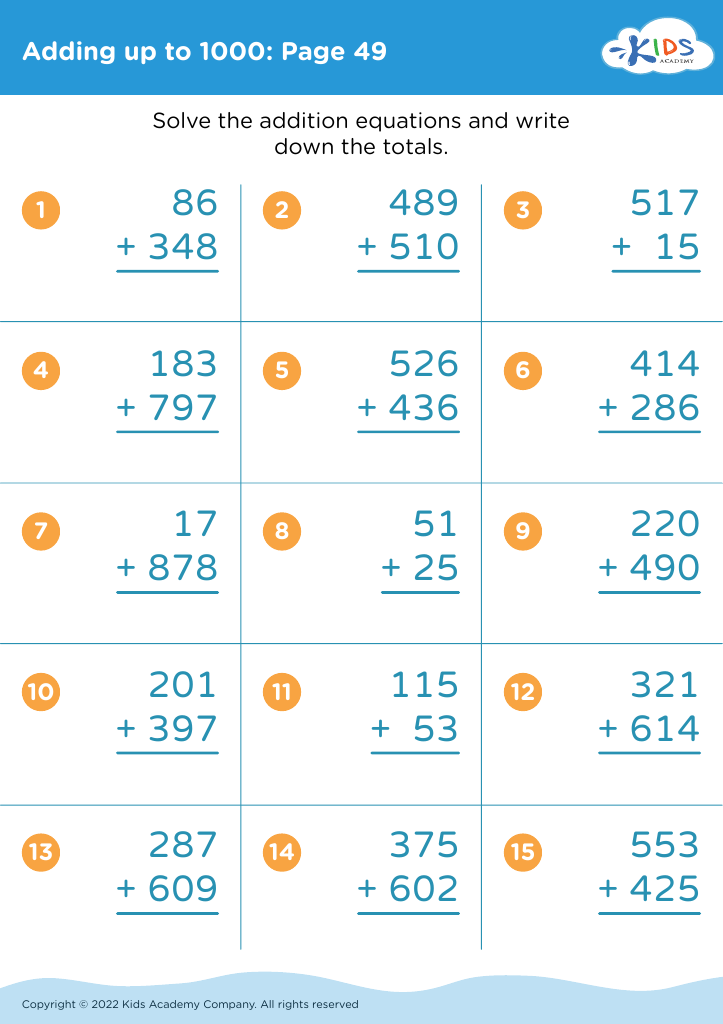
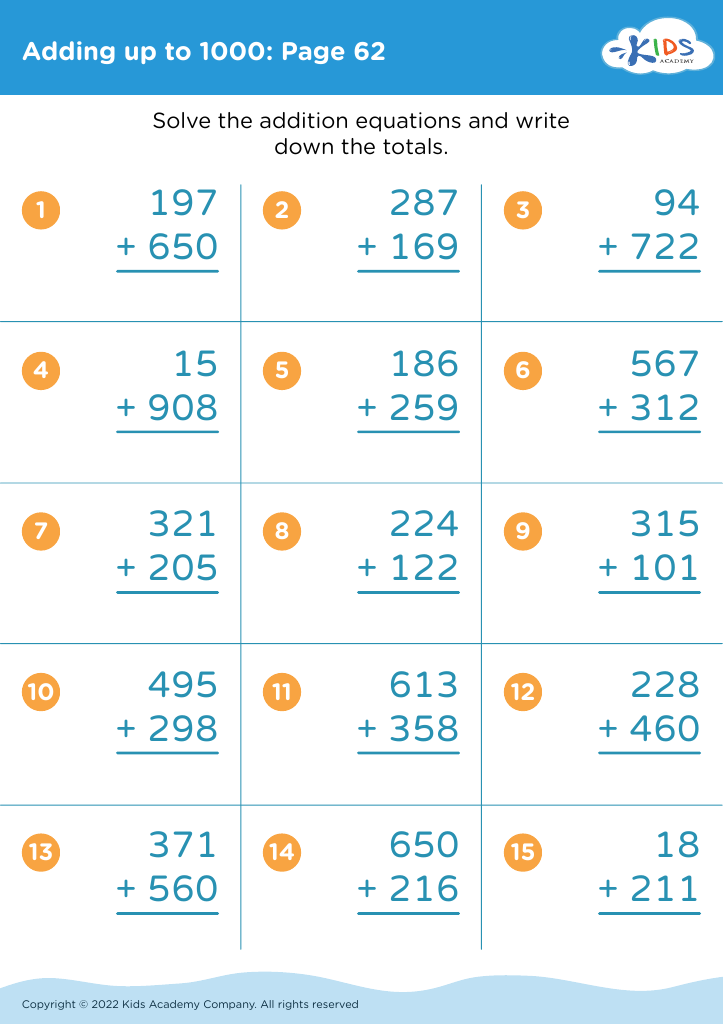
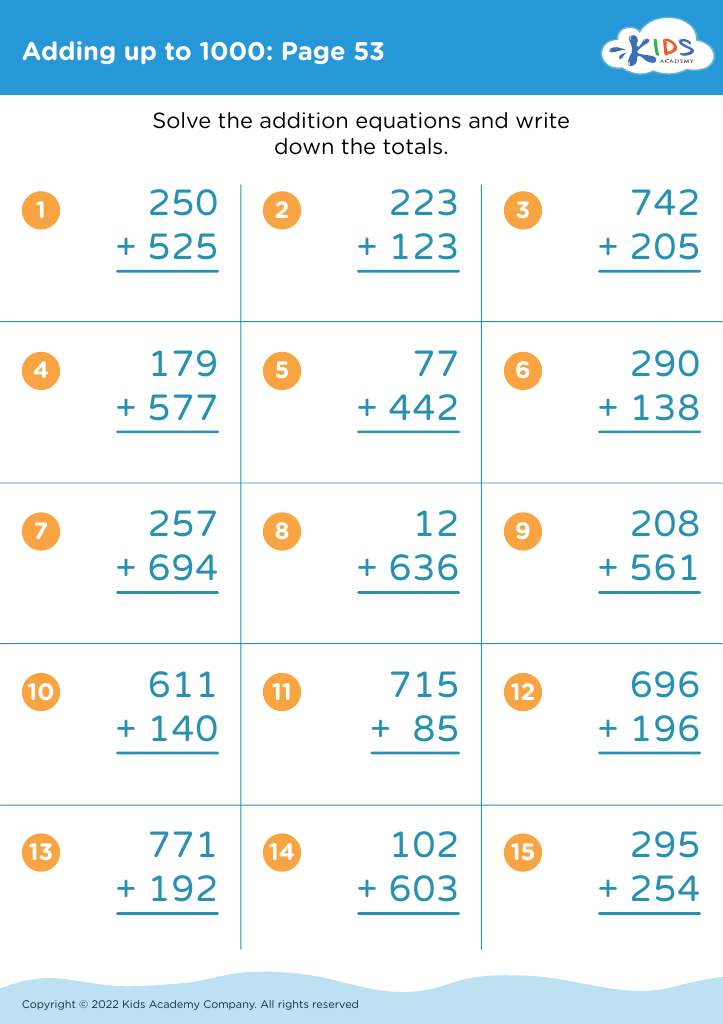
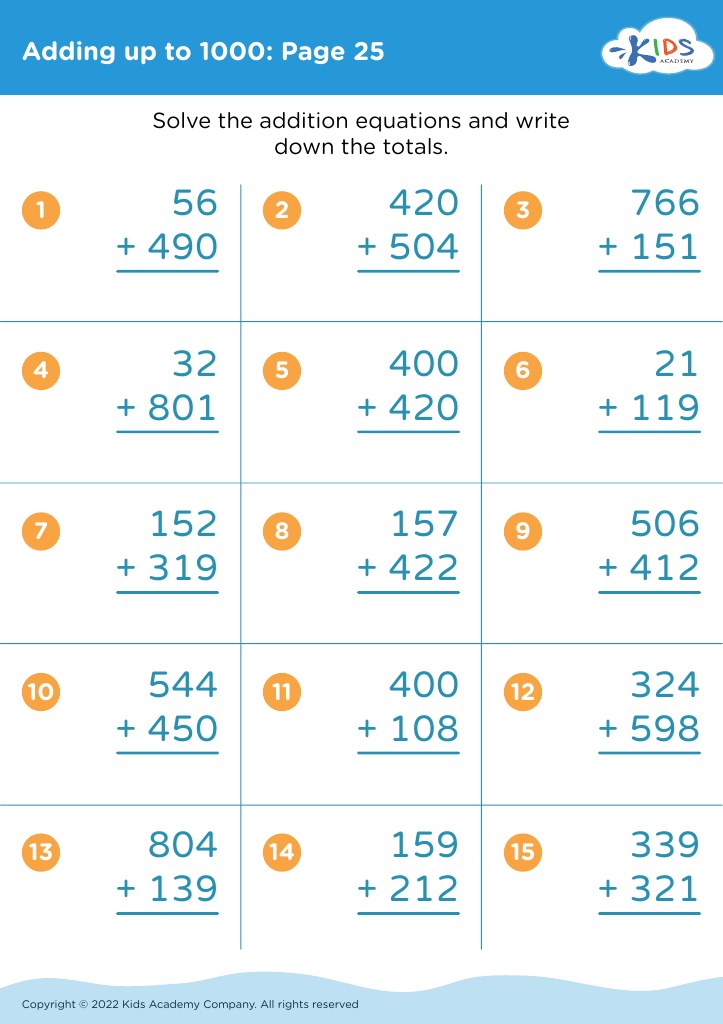


Understanding fraction comparison is vital for young learners, as it lays a foundation for mathematical reasoning and problem-solving skills. For children ages 5-7, engaging with concepts such as fraction comparison can foster critical thinking and promote an understanding of parts and wholes. This developmental stage is crucial, as students are beginning to grasp mathematical concepts that will support them in more complex arithmetic as they progress in school.
Parents and teachers should care about fraction comparison within a broader context, such as "Adding up to 1000," because it promotes comprehension not just in fractions but also in the relationship between different numbers. By introducing children to fractions early, they become more comfortable with comparing sizes, recognizing equivalencies, and grasping the concept of numerators and denominators. These skills reinforce number sense and can help alleviate future anxiety related to math.
Additionally, learning about fractions through activities aimed at adding up to 1000 makes the process engaging and fun. When children learn in a stimulating environment, they are more likely to retain information and develop a positive attitude towards mathematics. This foundation can support lifelong learning and appreciation for mathematical concepts. Overall, fostering an understanding of fractions prepares young learners for success in subsequent school years and everyday life.