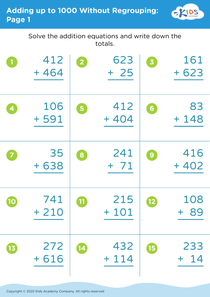
Understand fractions Adding up to 1000 Misc Worksheets for Ages 5-7
3 filtered results
-
From - To
Welcome to our "Understand Fractions: Adding Up to 1000 Misc Worksheets" page, tailored for young learners aged 5-7. These engaging worksheets are designed to introduce fractions in a fun and interactive manner, helping children develop a solid grasp of this essential math concept. With a variety of activities, students will practice recognizing, comparing, and adding fractions, all while building confidence in their mathematical skills. Each worksheet caters to different learning styles, ensuring a comprehensive understanding of fractions as they relate to the larger concept of numbers up to 1000. Pave the way for your child’s successful math journey today!
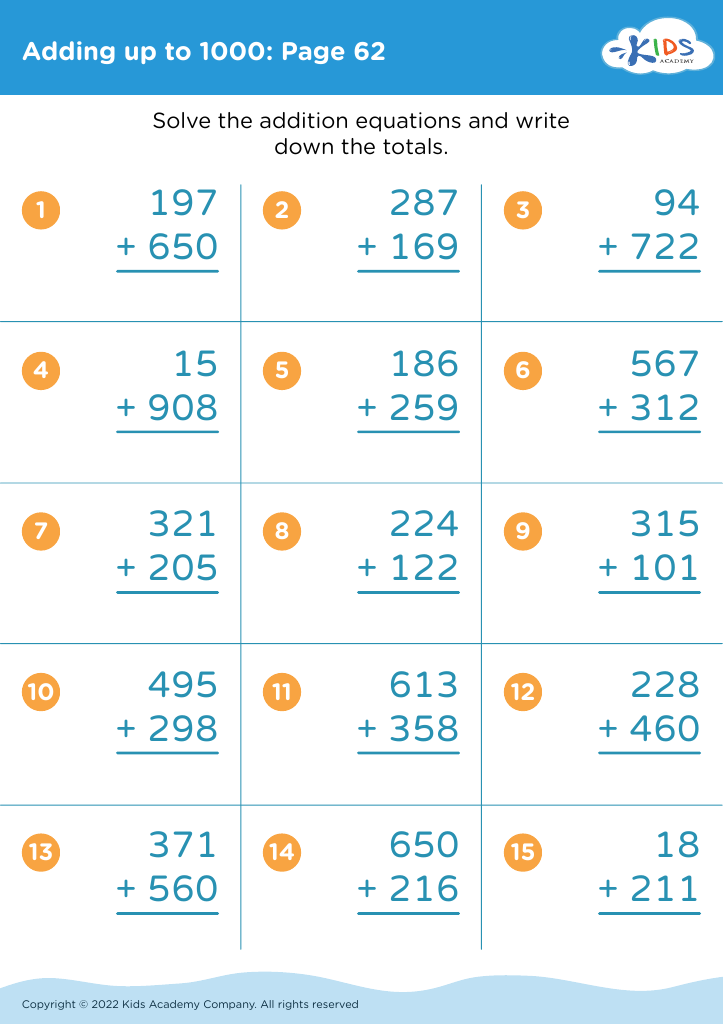
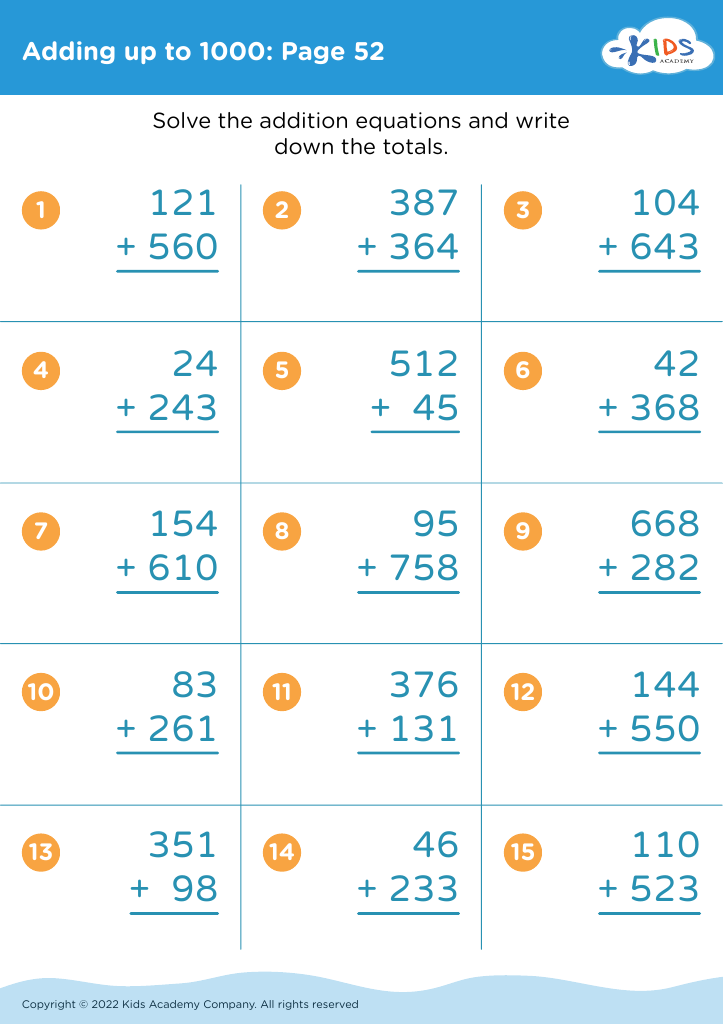
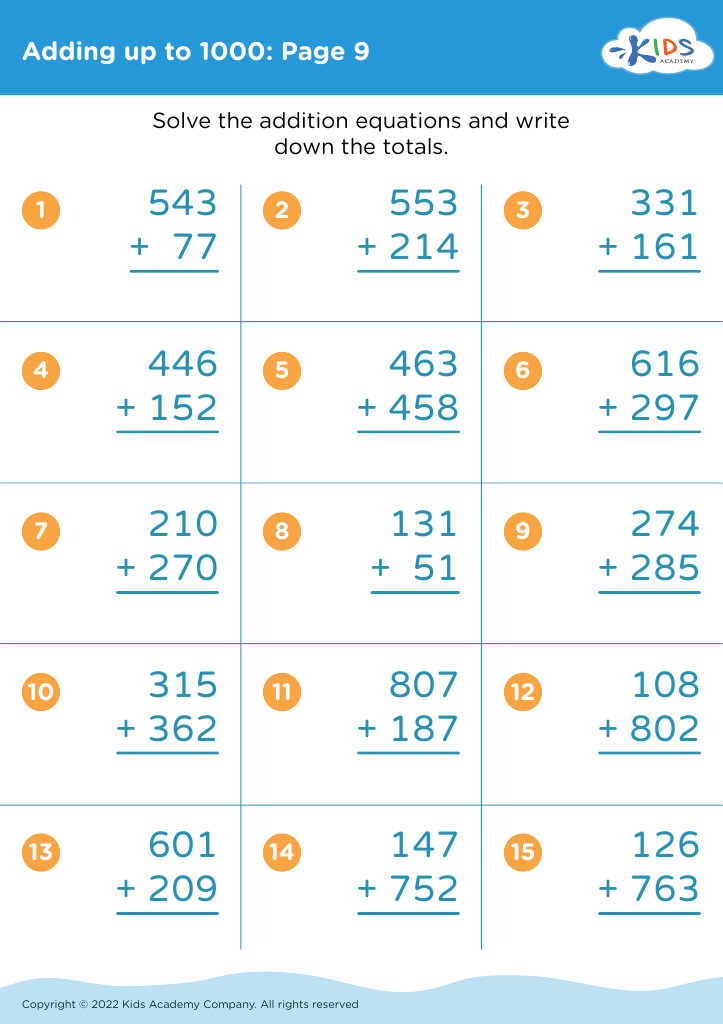


Understanding fractions is a crucial foundation for young learners, particularly those aged 5-7. At this stage, children develop essential mathematical skills that pave the way for more advanced concepts. Fractions help them comprehend parts of a whole, enhancing their problem-solving abilities and critical thinking. Recognizing that fractions can represent smaller or larger parts fosters an understanding of quantity and helps children grasp real-world applications, such as cooking and sharing.
Adding up to 1000 provides context for these fractions, allowing children to understand numerical relationships and the significance of place value. This foundational knowledge is vital when progressing to more complicated math, ensuring they aren’t left behind in future learning.
Moreover, an early grasp of these concepts builds confidence. Children learn that math is accessible and relevant, boosting their engagement and enthusiasm. When parents and teachers emphasize the importance of understanding fractions and basic addition, they support not only academic success but also everyday skills that children will rely on throughout their lives. Encouraging a strong mathematical foundation fosters a positive attitude toward learning and equips young learners with tools they need for future academic achievements.