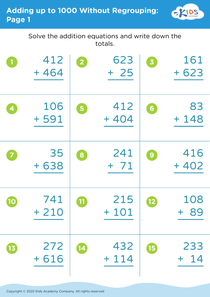
Improve reading skills Adding up to 1000 with Regrouping Worksheets for Ages 5-7
4 filtered results
-
From - To
Boost your child's reading and math abilities with our comprehensive "Improve Reading Skills and Adding Up to 1000 with Regrouping Worksheets" tailored for ages 5-7. These engaging worksheets integrate reading comprehension with mathematical exercises to enhance critical thinking and problem-solving skills. Children will enjoy a variety of tasks that promote number sense, place value understanding, and the fundamentals of addition with regrouping. Building proficiency in reading and arithmetic, these activities are designed to be both educational and fun, fostering a love for learning. Ideal for early grade students, parents, and educators looking to enrich foundational skills.
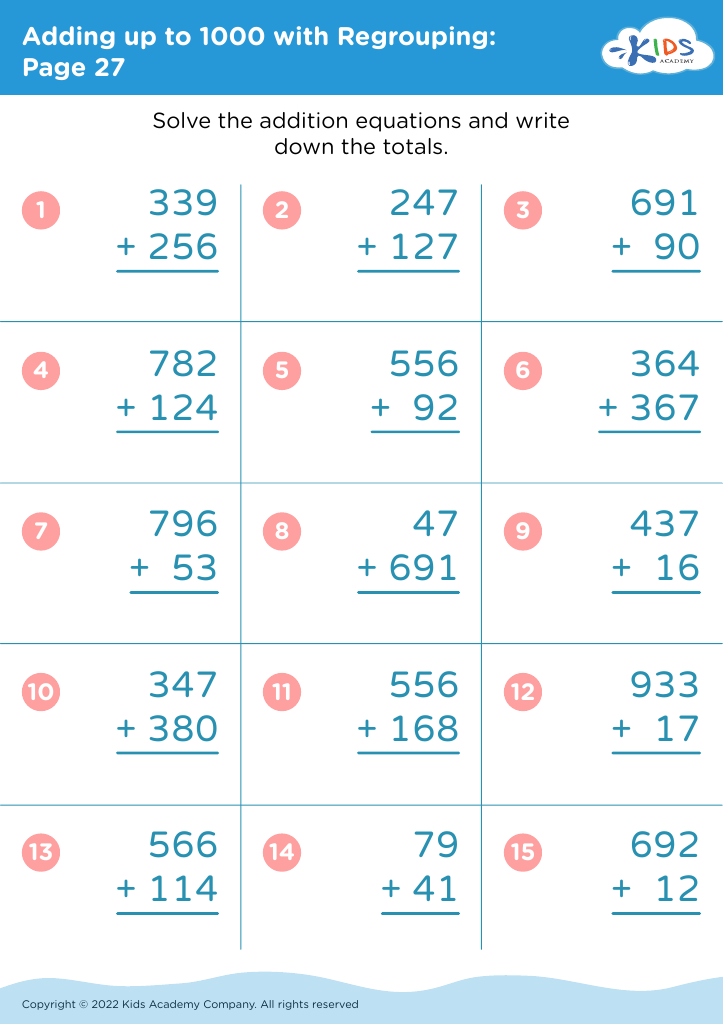
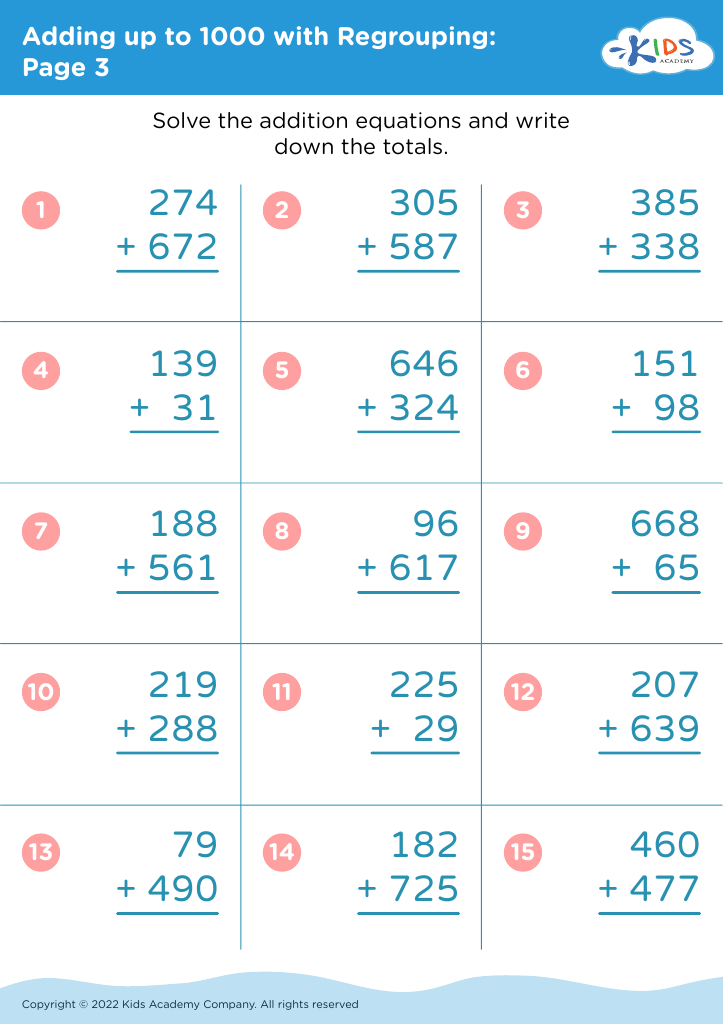
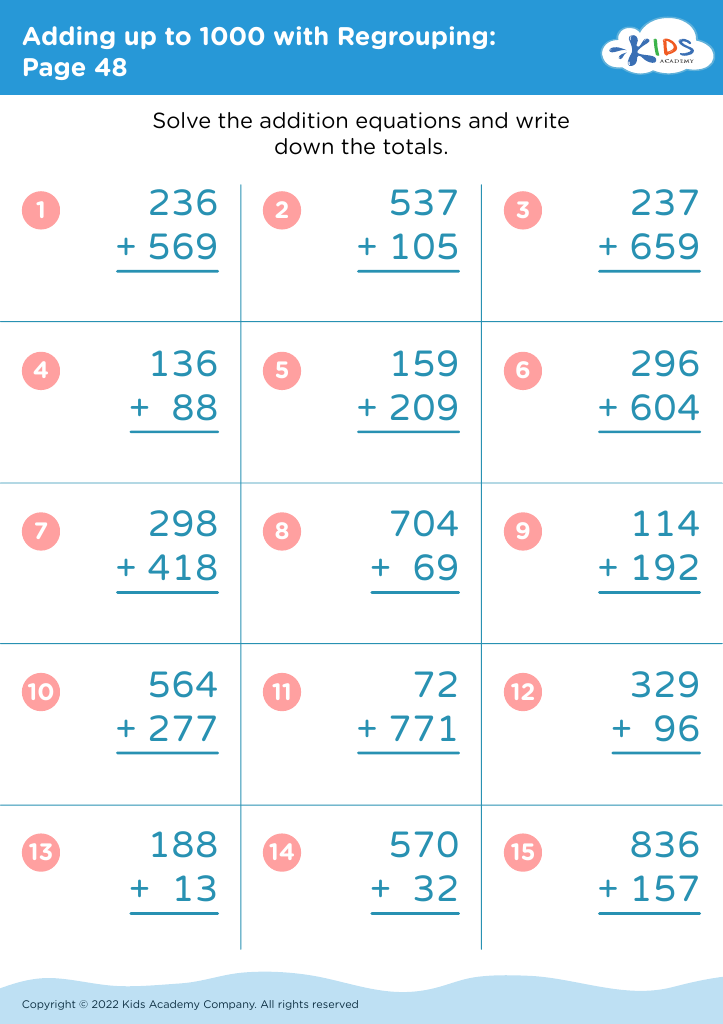
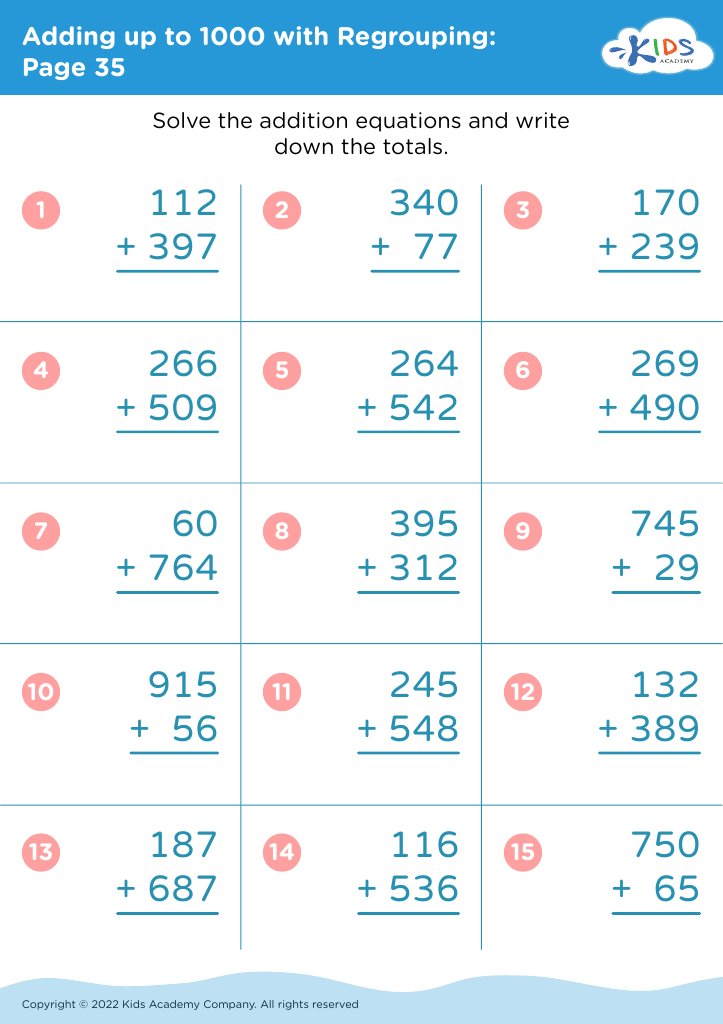


Improving reading skills and mastering addition up to 1000 with regrouping at an early age (ages 5-7) are fundamental for a child's academic growth and overall cognitive development. Strong reading skills enable children to understand and process written information, which is essential across all subjects. Reading expands vocabulary, enhances comprehension, and fosters a love for learning. It also strengthens critical thinking and communication skills, setting the groundwork for future academic success.
Similarly, developing arithmetic skills—specifically adding up to 1000 with regrouping (carrying over)—is crucial in early childhood. This mathematical proficiency aids in problem-solving and logical thinking, which are vital for higher-level math and daily life activities. Mastery of these concepts at a young age builds confidence and a positive attitude towards math.
Teachers and parents should prioritize these skills because they form the building blocks for more complex concepts. Early intervention and consistent practice in reading and arithmetic ensure that children do not fall behind, promoting a balanced intellectual development. Consequently, fostering these skills supports the child's ability to understand the world better, participate fully in classroom activities, and achieve long-term educational successes.