Recognizing Patterns Adding up to 1000 with Regrouping Worksheets for Ages 5-7
4 filtered results
-
From - To
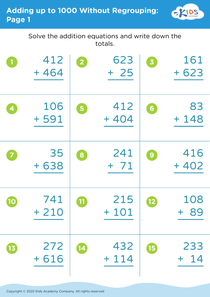
Discover our engaging "Recognizing Patterns Adding up to 1000 with Regrouping Worksheets" designed specifically for children aged 5-7. These thoughtfully crafted worksheets help young learners identify numerical patterns essential for mastering addition, especially when dealing with regrouping. By exploring sequences and interactions between numbers, kids enhance their mathematical thinking while building confidence in their addition skills. With vibrant visuals and age-appropriate challenges, our resources make learning fun and interactive. Perfect for classroom activities or home practice, these worksheets contribute significantly to your child's mathematical development. Explore the world of patterns and let your young mathematicians thrive!
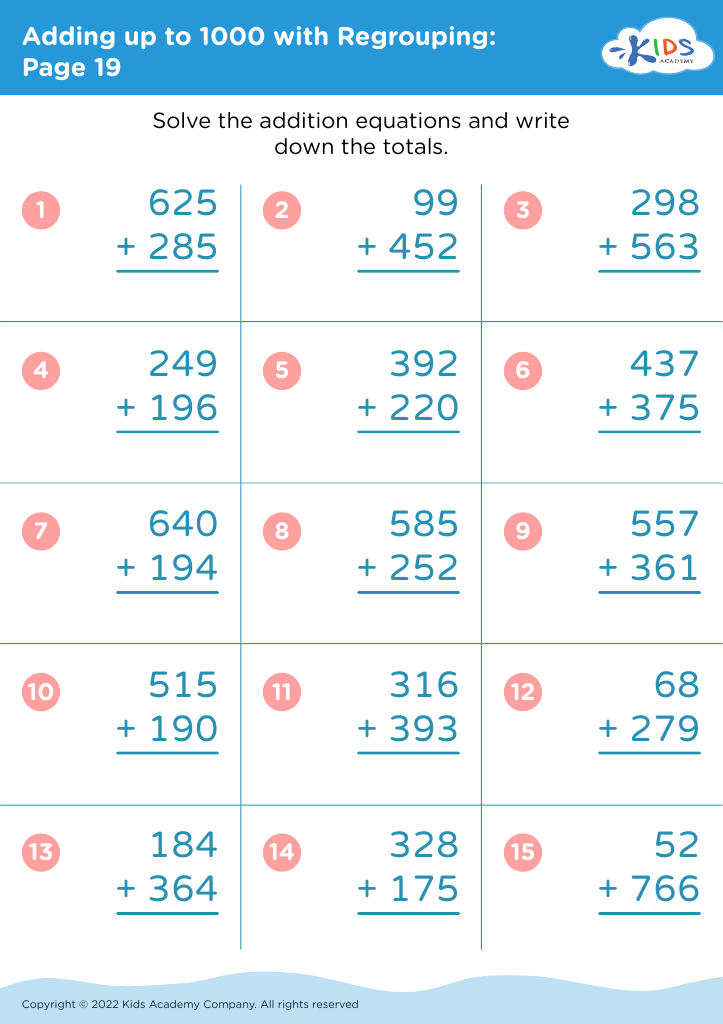
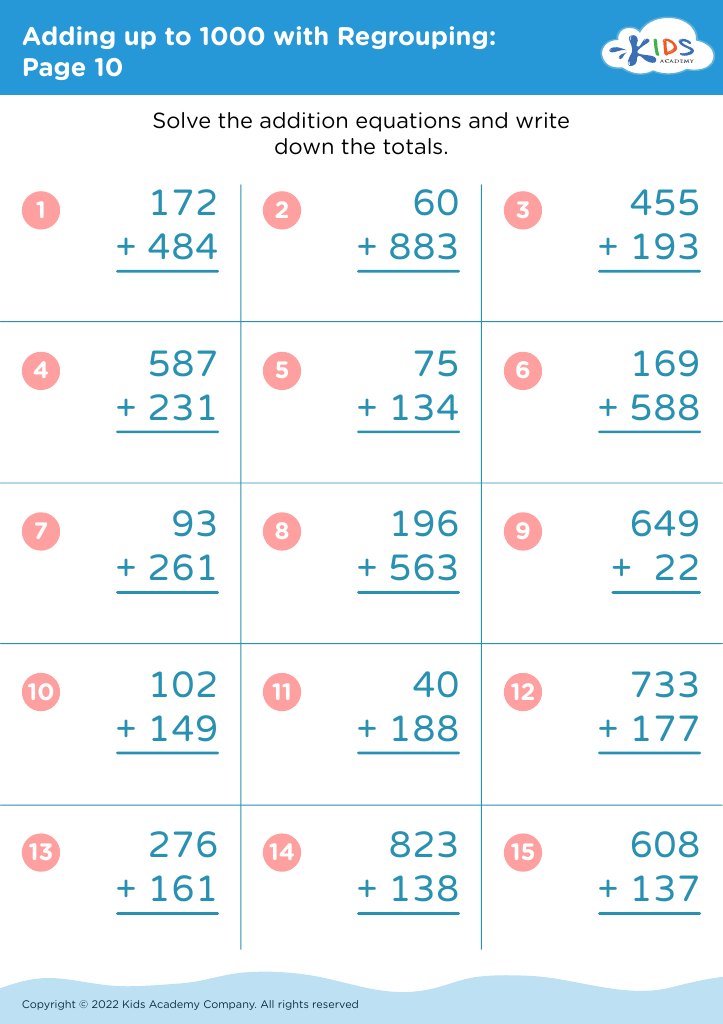
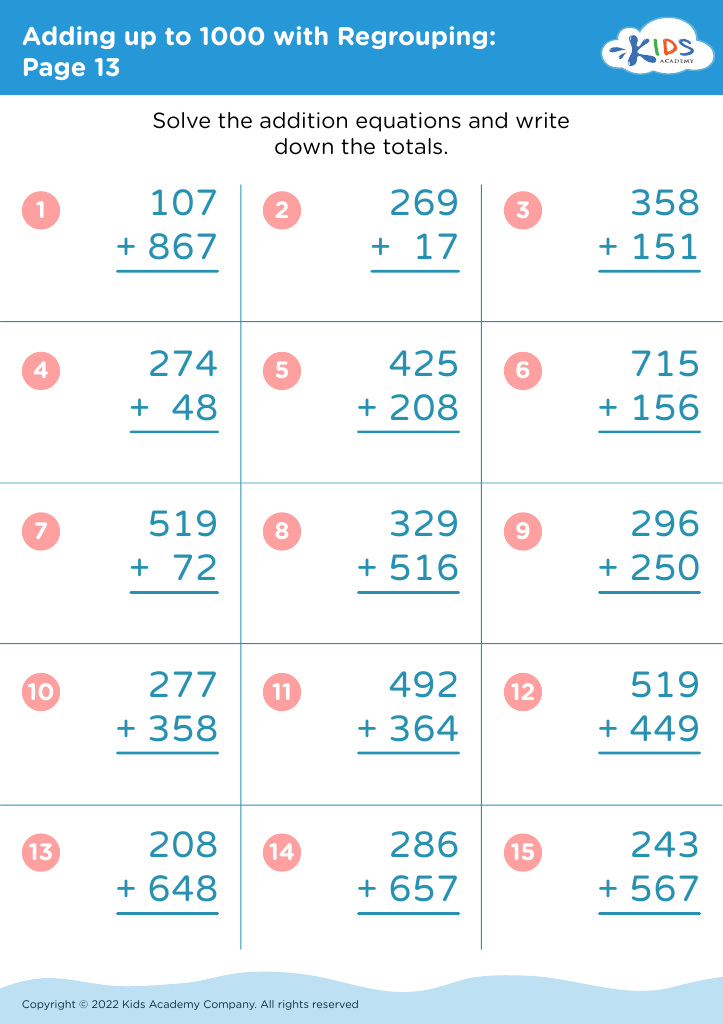
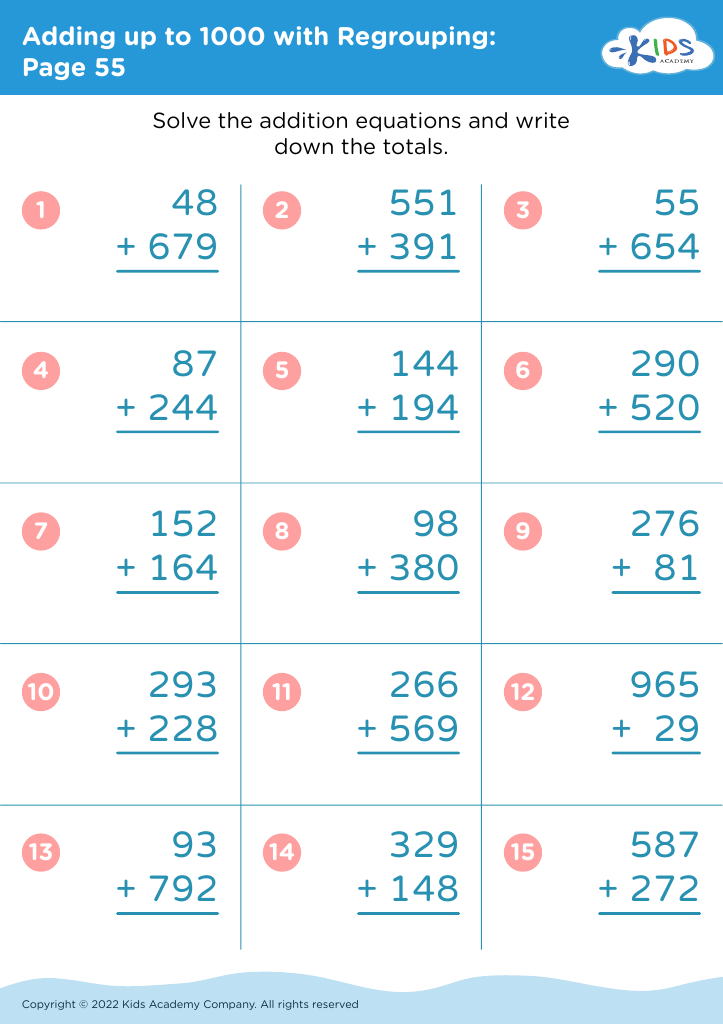


Recognizing patterns, particularly in the context of adding up to 1000 with regrouping, is vital for children aged 5-7 as it lays the foundational skills for their future mathematical understanding. At this developmental stage, children are naturally curious and eager to explore numbers and relationships. Pattern recognition helps develop their problem-solving skills and analytical thinking, enhancing cognitive development.
Understanding how numbers fit together, especially in regrouping, teaches children the concept of place value and the importance of organizing numbers accurately. This skill not only aids in achieving basic arithmetic proficiency but also prepares them for more complex operations as they advance in their education. Furthermore, it fosters logical thinking by helping children to predict results and identify relationships between numbers.
Parents and teachers should care about this concept because it encourages collaboration—when children discuss their thinking, they learn from each other and develop social skills alongside mathematical intuition. By engaging children in activities centered on recognizing patterns while solving problems, adults provide a rich learning environment that nurtures confidence and a positive attitude towards mathematics, vital components for lifelong learning. In essence, recognizing patterns and regrouping empowers young learners to tackle mathematical challenges successfully.