Improve counting skills Adding up to 1000 Without Regrouping Worksheets for Ages 5-7
4 filtered results
-
From - To
Boost your child's counting skills with our engaging "Adding Up to 1000 Without Regrouping Worksheets" designed specifically for ages 5-7. These printable worksheets provide a fun and interactive way for young learners to practice addition without regrouping. By focusing on numbers up to 1000, children will gain confidence in their math abilities while enhancing their understanding of place value and number relationships. Ideal for both classroom and home learning, these worksheets help reinforce essential arithmetic skills, setting a strong foundation for future math success. Let your child explore the world of numbers and enjoy the journey of mastering addition today!
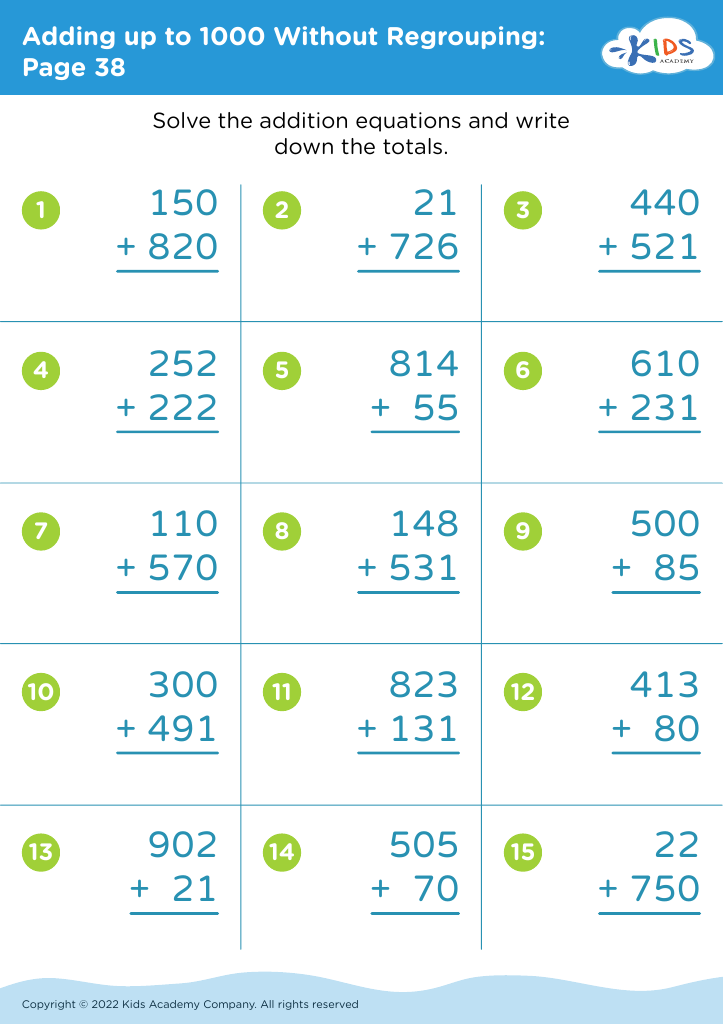
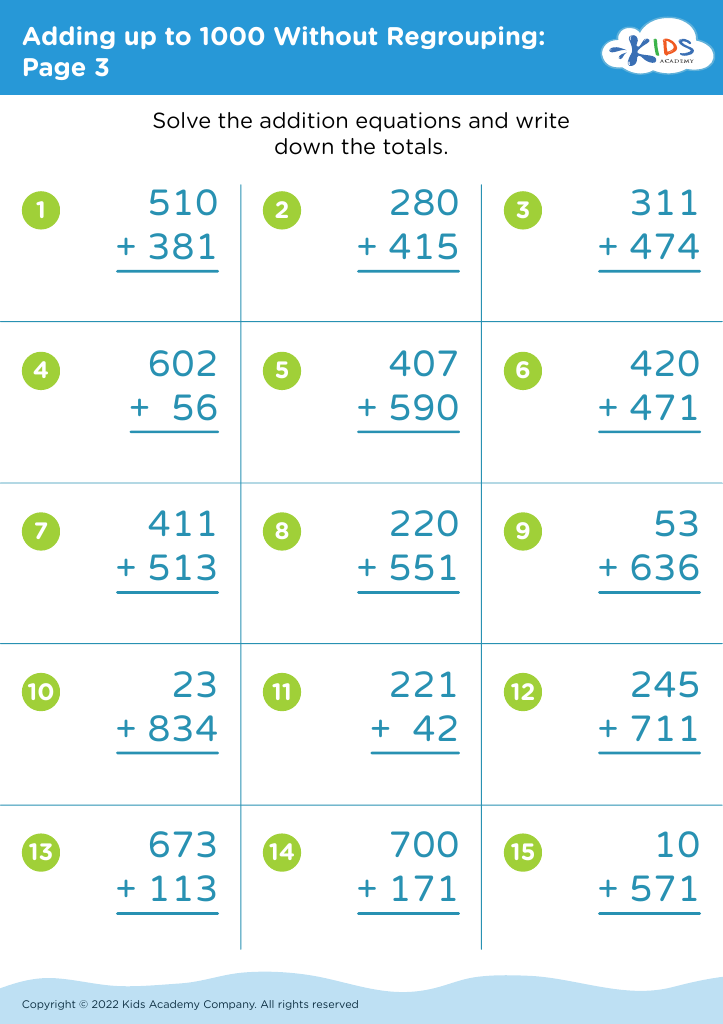
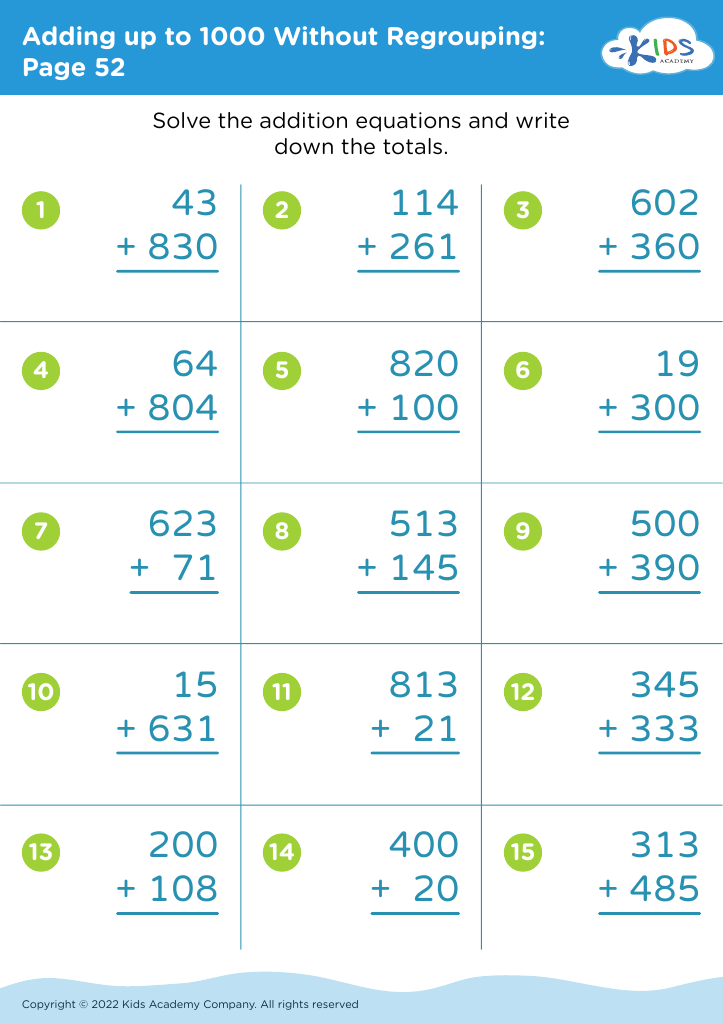
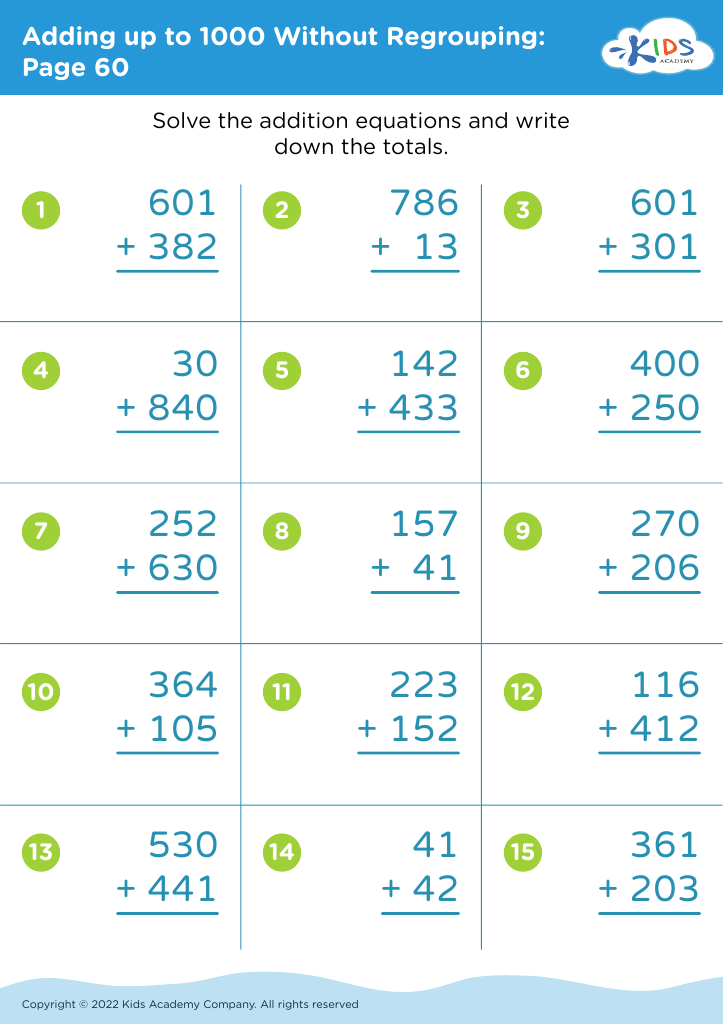


Counting skills are fundamental to a child’s early math development, and fostering this ability within the age range of 5-7 can shape their future learning. Teaching children to add numbers up to 1000 without regrouping builds a strong numeric foundation. It helps them understand place value, number relationships, and arithmetic operations before progressing to more complex concepts.
For teachers and parents, focusing on these skills can lead to increased confidence and competence in math. Children learn to visualize numbers and develop mental math strategies that promote critical thinking. The ability to add without regrouping makes calculations simpler and less daunting, encouraging participation in math-related activities and reducing math anxiety.
Furthermore, strong counting skills are essential not just for academic success, but also for real-life situations, such as budgeting, measuring, and problem-solving. As children become comfortable with these basic operations, they will be better equipped to tackle higher-level math concepts in the future.
Overall, improving counting skills at this crucial developmental stage sets the groundwork for lifelong math proficiency, empowering children to approach math creatively and confidently throughout their education. Engaging parents and teachers in this initiative can lead to significant positive impacts on children's learning journeys.