Understanding fractions Adding up to 1000 Without Regrouping Worksheets for Ages 5-7

Filters

13 filtered results

Clear all filters
Favorites
With answer key
Interactive

13 filtered results

Difficulty Level

Grade


Discover our engaging "Understanding Fractions: Adding Up to 1000 Without Regrouping Worksheets" designed for kids aged 5-7. These interactive resources help young learners grasp the concept of fractions through fun, hands-on activities while mastering addition skills. Each worksheet encourages kids to break numbers into manageable parts, reinforcing their understanding of fractions and whole numbers without the complexity of regrouping. Ideal for classroom or at-home learning, these worksheets promote critical thinking and problem-solving skills in a playful context. Watch your child's confidence grow as they explore fractions and practice addition in an exciting and supportive environment. Perfect for early math education!
Check out this FREE Trial Lesson on Adding up to 1000 Without Regrouping for age 5-7!

Sorting Objects into 3 Categories

Favorites
With answer key
Interactive
  • 5-7
  • Understanding fractions
  • Adding up to 1000 Without Regrouping
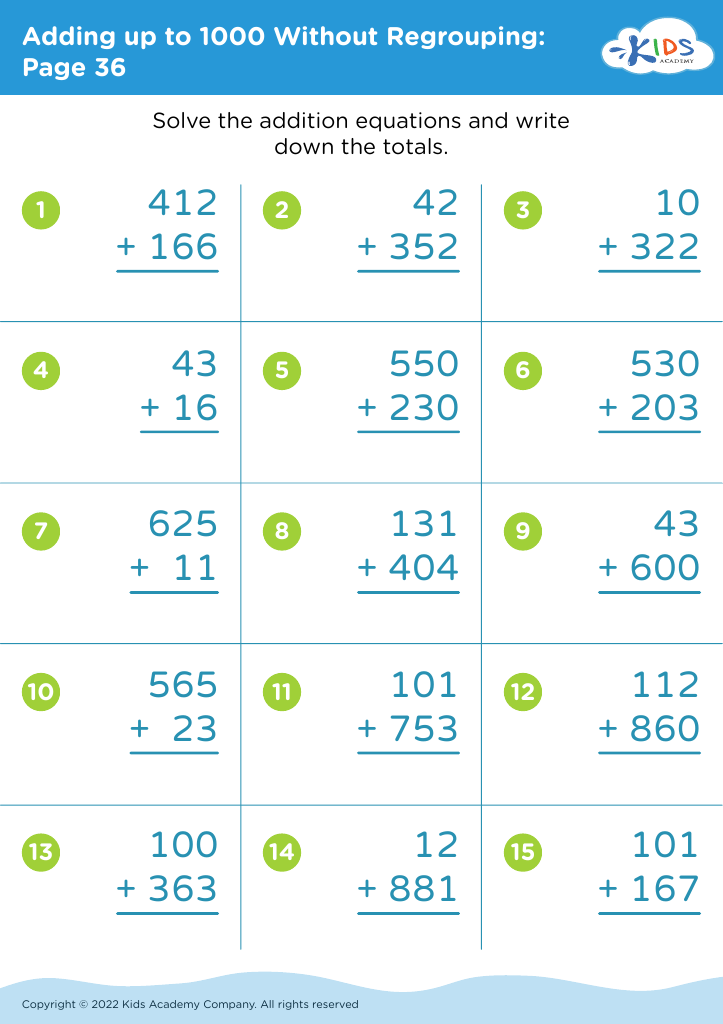
Adding up to 1000 Without Regrouping: Page 36
Worksheet
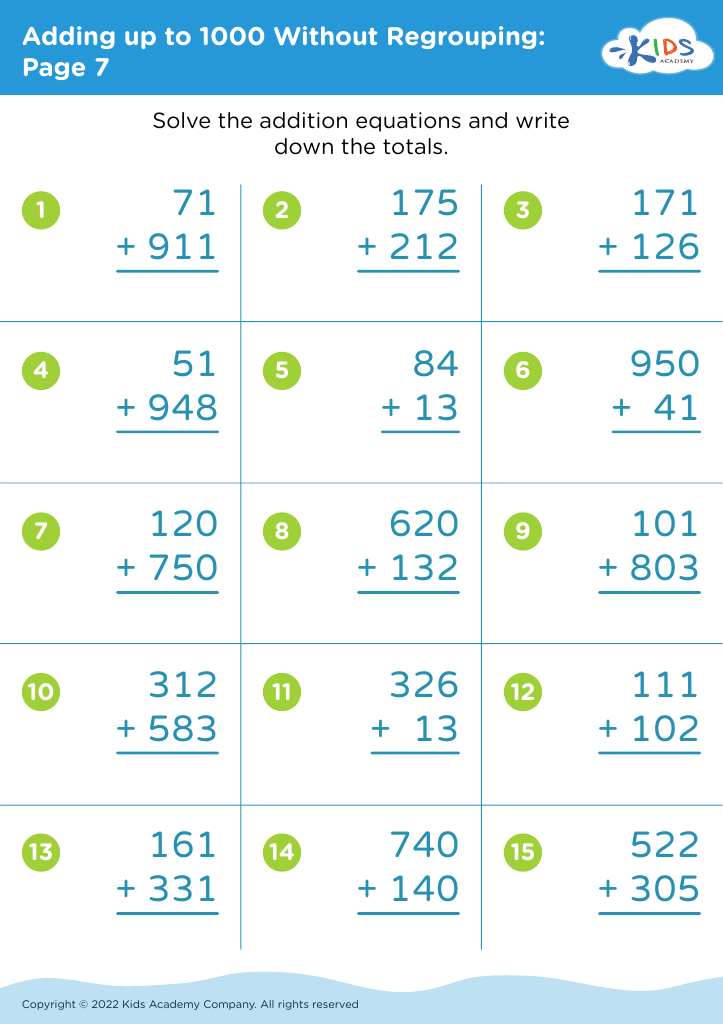
Adding up to 1000 Without Regrouping: Page 7
Worksheet
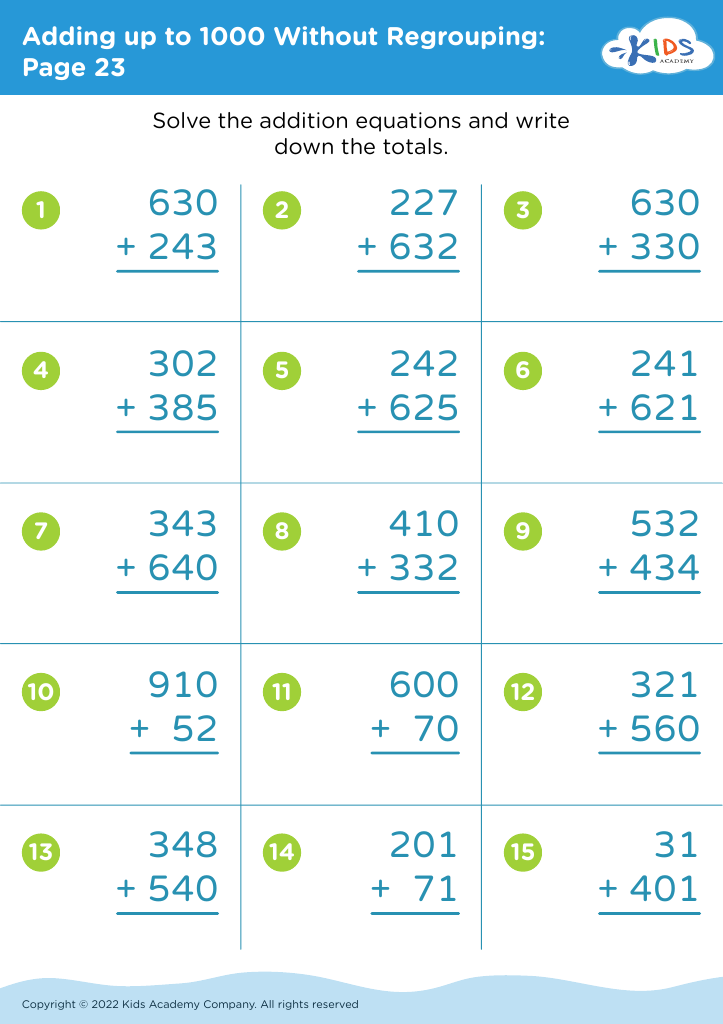
Adding up to 1000 Without Regrouping: Page 23
Worksheet
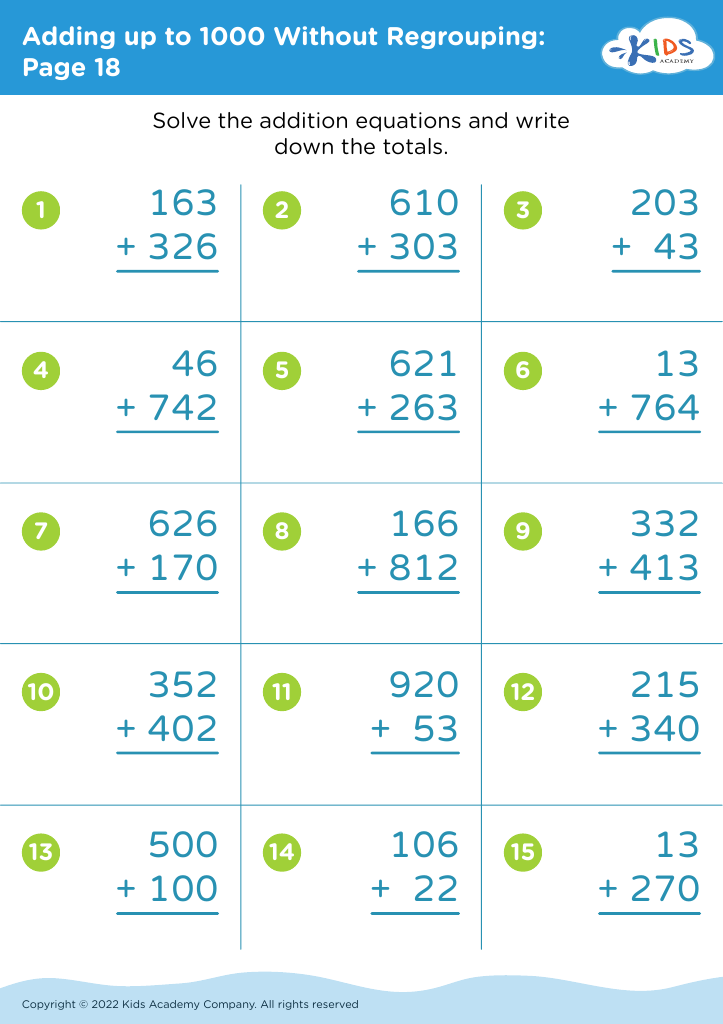
Adding up to 1000 Without Regrouping: Page 18
Worksheet
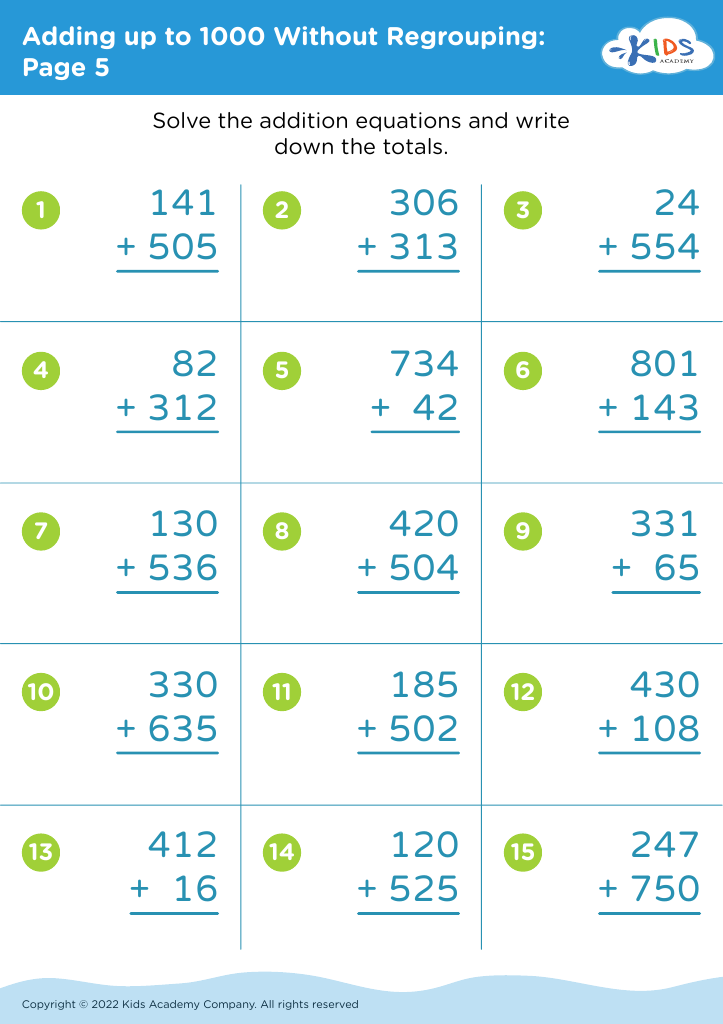
Adding up to 1000 Without Regrouping: Page 5
Worksheet
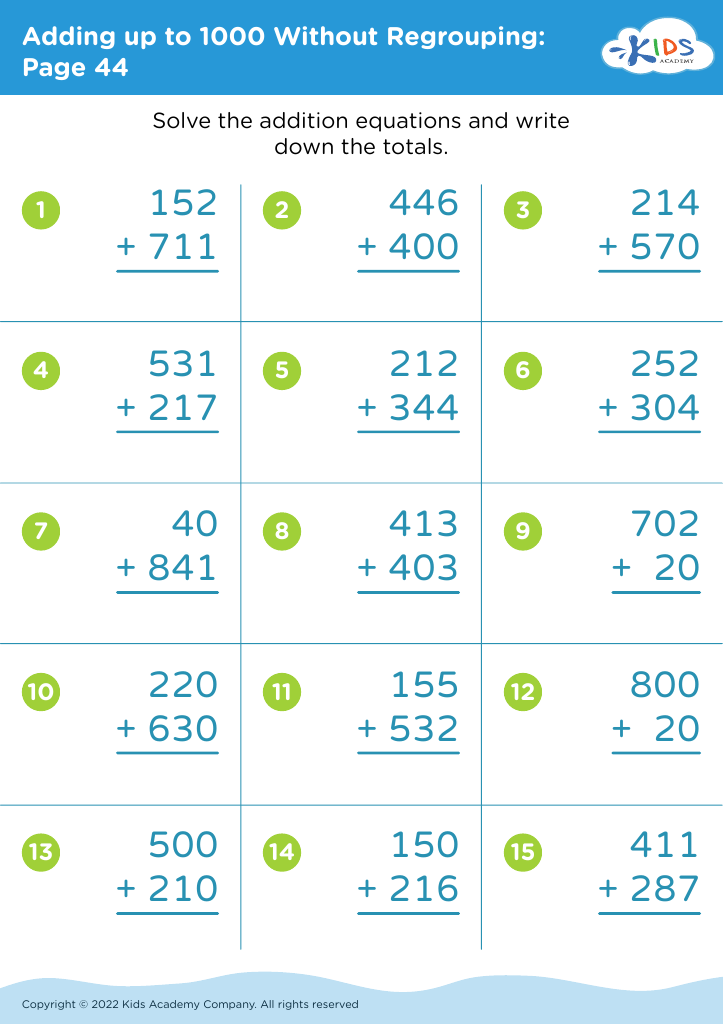
Adding up to 1000 Without Regrouping: Page 44
Worksheet
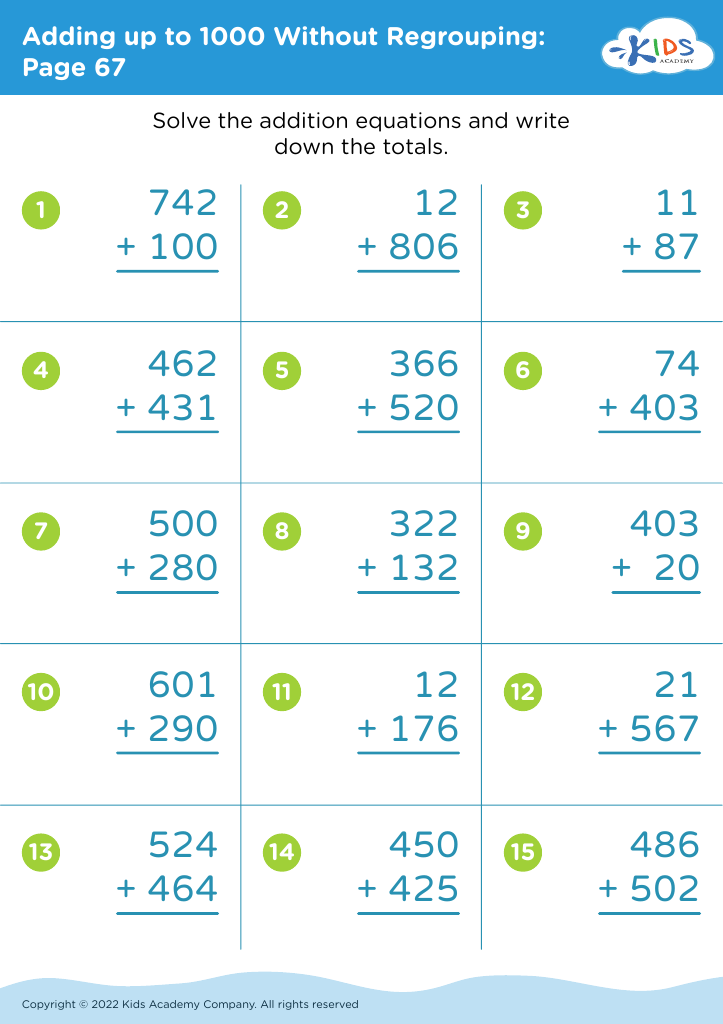
Adding up to 1000 Without Regrouping: Page 67
Worksheet
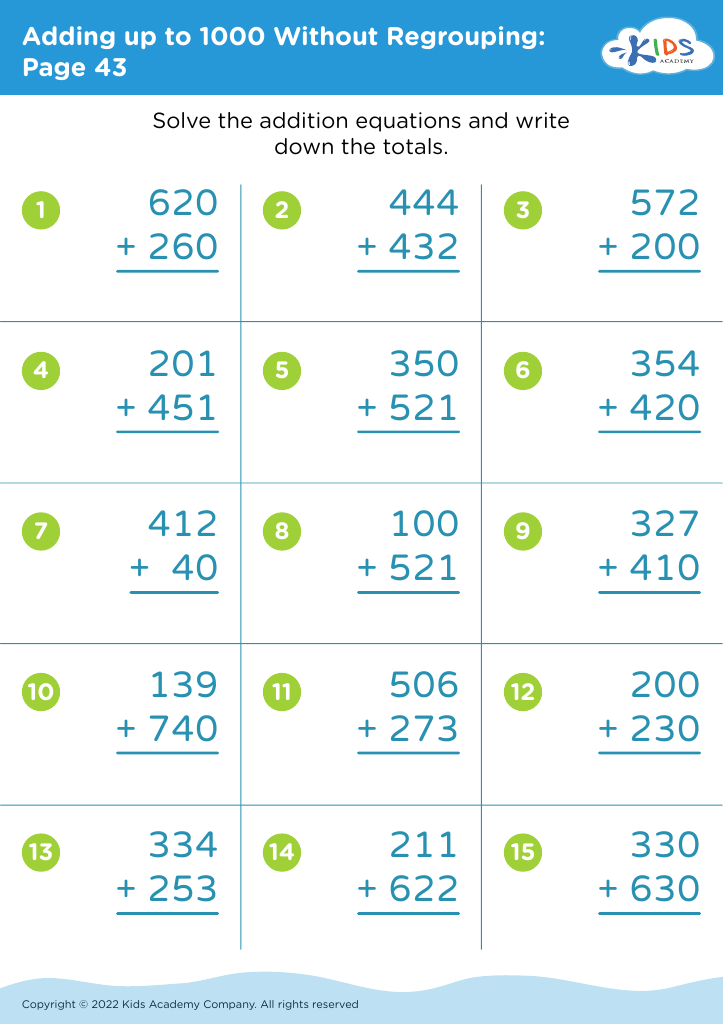
Adding up to 1000 Without Regrouping: Page 43
Worksheet
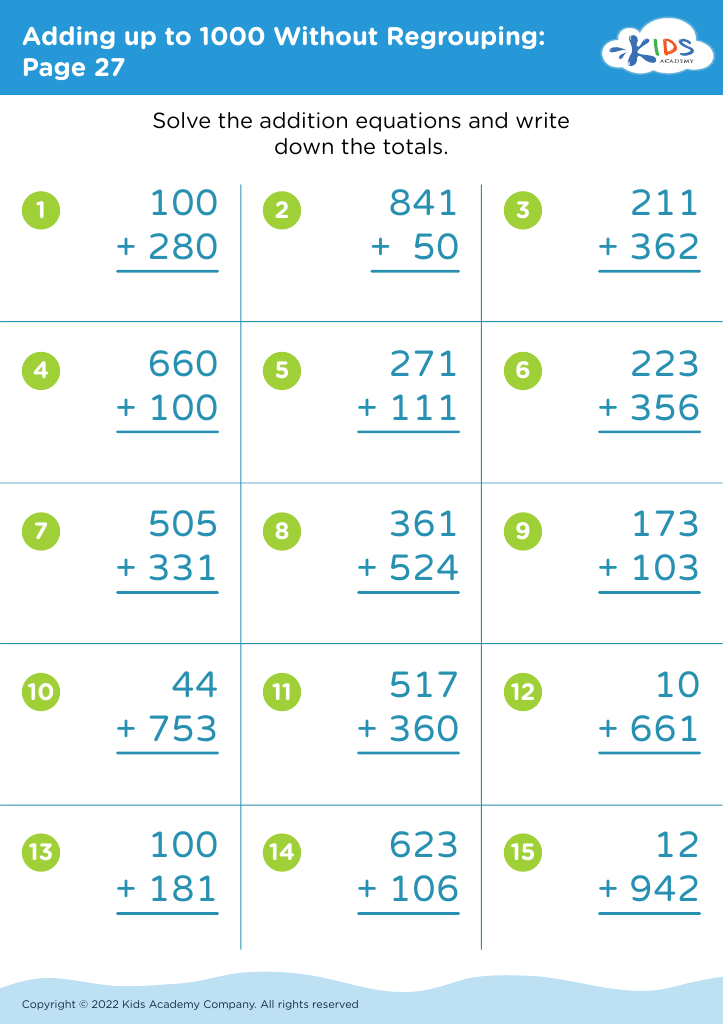
Adding up to 1000 Without Regrouping: Page 27
Worksheet
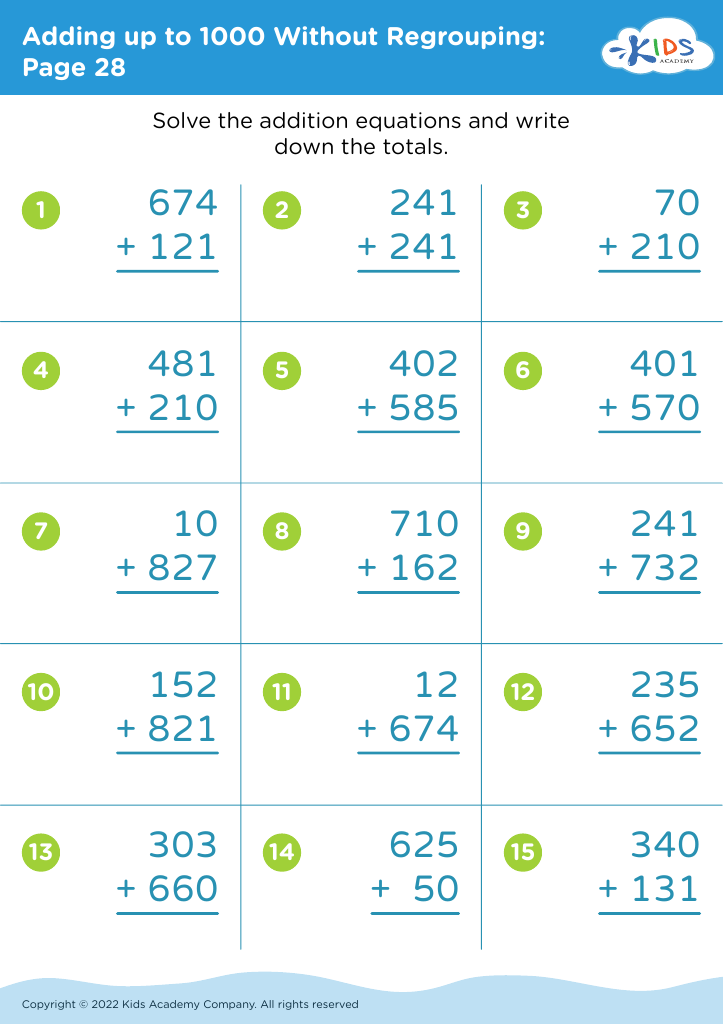
Adding up to 1000 Without Regrouping: Page 28
Worksheet
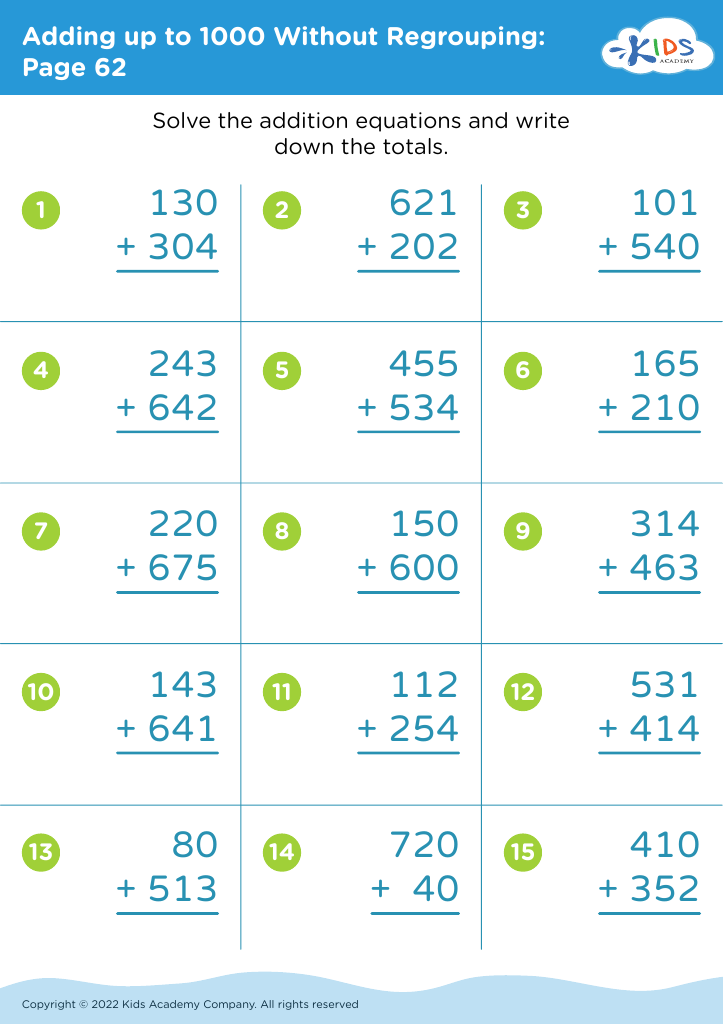
Adding up to 1000 Without Regrouping: Page 62
Worksheet
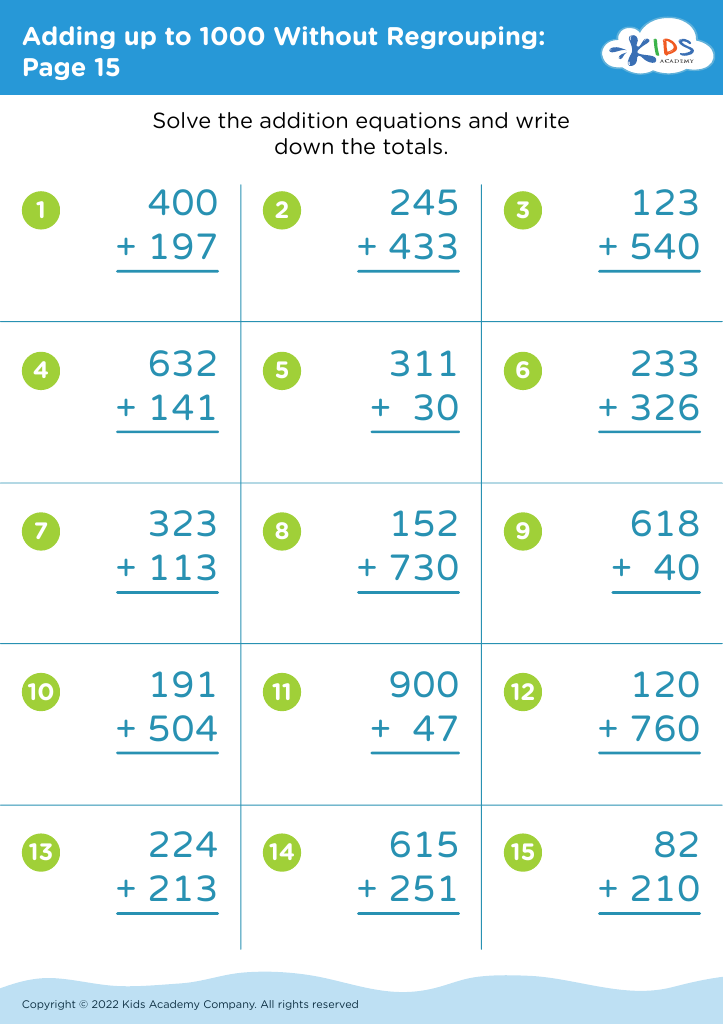
Adding up to 1000 Without Regrouping: Page 15
Worksheet
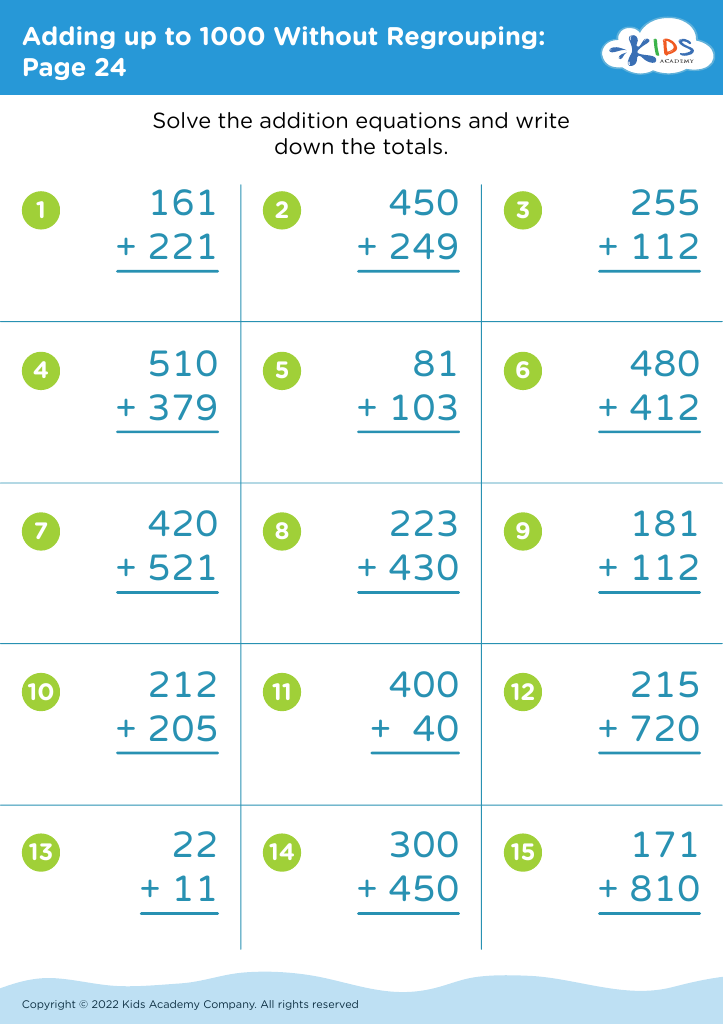
Adding up to 1000 Without Regrouping: Page 24
Worksheet


Understanding fractions and adding numbers up to 1000 without regrouping is crucial for children aged 5-7 because it lays the foundation for essential math skills and promotes early numeracy. At this developmental stage, children are naturally curious and can grasp these concepts more easily.

First, fractions help students understand parts of a whole, an important concept in daily life and in advanced math. For example, sharing food or dividing objects introduces the practical application of fractions.

Second, adding numbers up to 1000 without regrouping reinforces basic addition skills, which are vital for future mathematical success. Mastering this skill helps children feel more confident while building their problem-solving abilities, improving their ability to work with larger numbers later on.

Third, learning these concepts fosters critical thinking and promotes cognitive development. It encourages students to see patterns, make connections, and develop a deeper understanding of numbers.

When parents and teachers prioritize these skills, they provide children the tools they need for academic success, fostering a love for math that can last throughout their education. Strong foundational skills not only support math fluency but also encourage aGrowth mindset toward learning.