Basic Addition Adding up to 1000 Worksheets for Ages 5-7
6 filtered results
-
From - To
Introducing our Basic Addition Adding Up to 1000 Worksheets, designed specifically for ages 5-7. These engaging worksheets provide young mathematicians with the essential skills for mastering addition. Through fun, interactive exercises, your child will practice adding numbers up to 1000, enhancing their arithmetic skills and building a solid math foundation. Developed by educators, these worksheets foster confidence and curiosity in learners. Ideal for classroom use or at-home practice, our high-quality, printable worksheets ensure that learning remains enjoyable and effective. Boost your child’s addition abilities and watch them thrive with our expertly crafted resources!
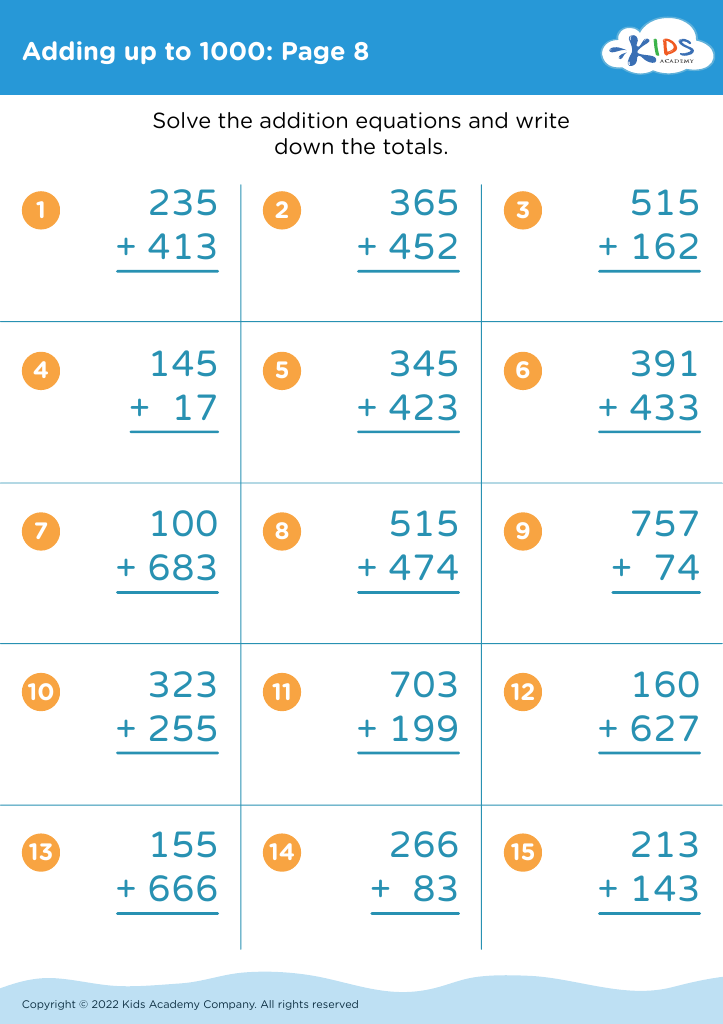
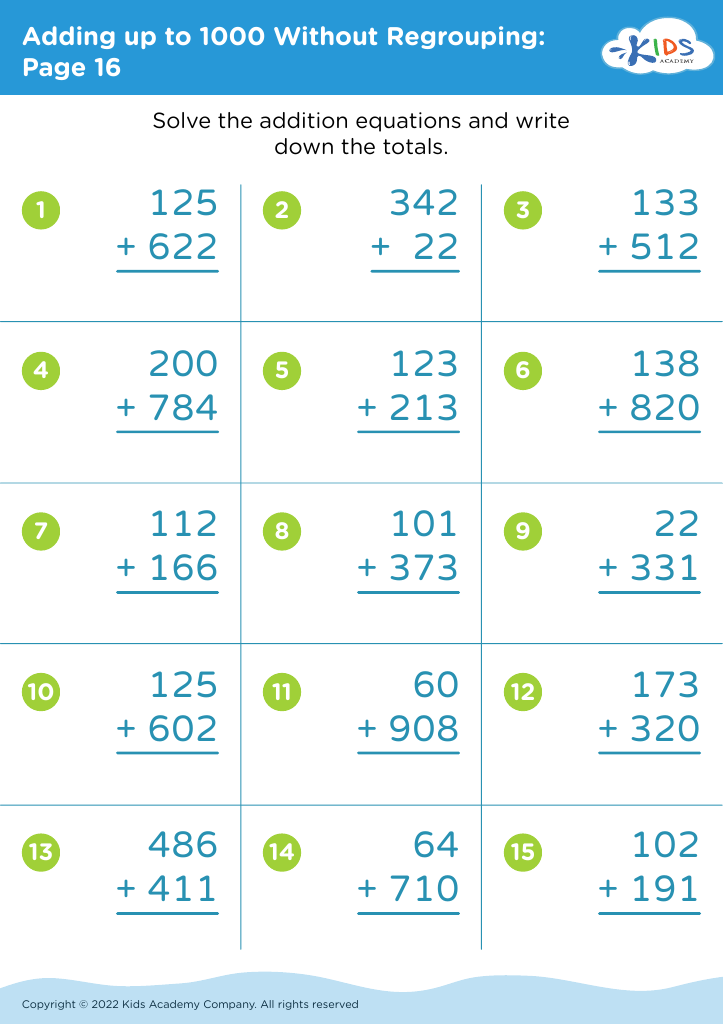
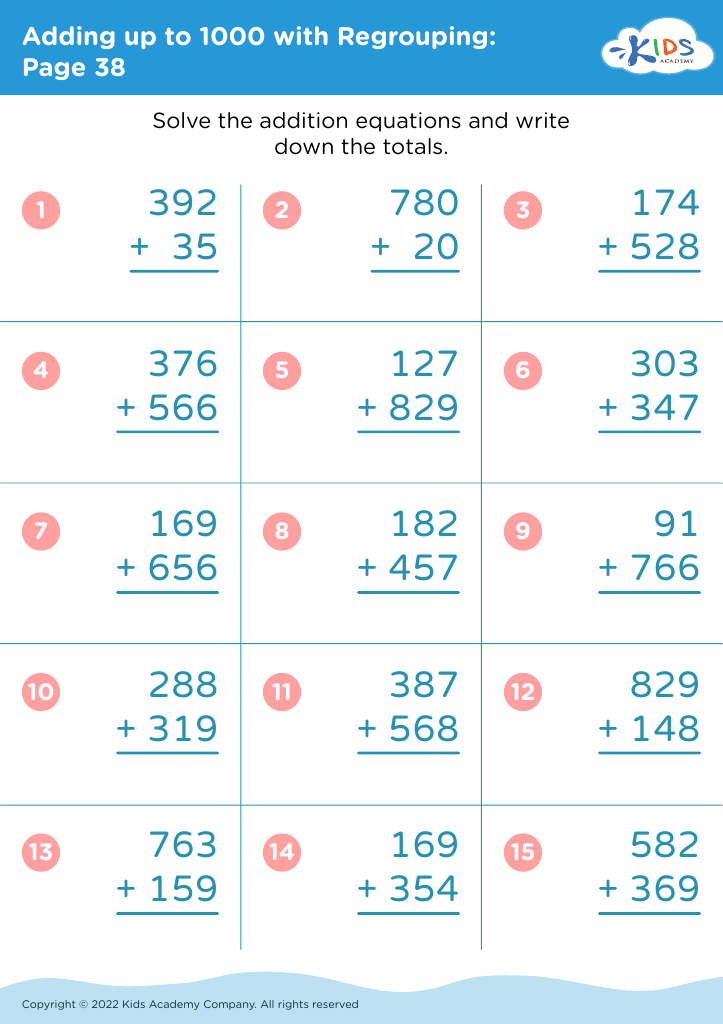
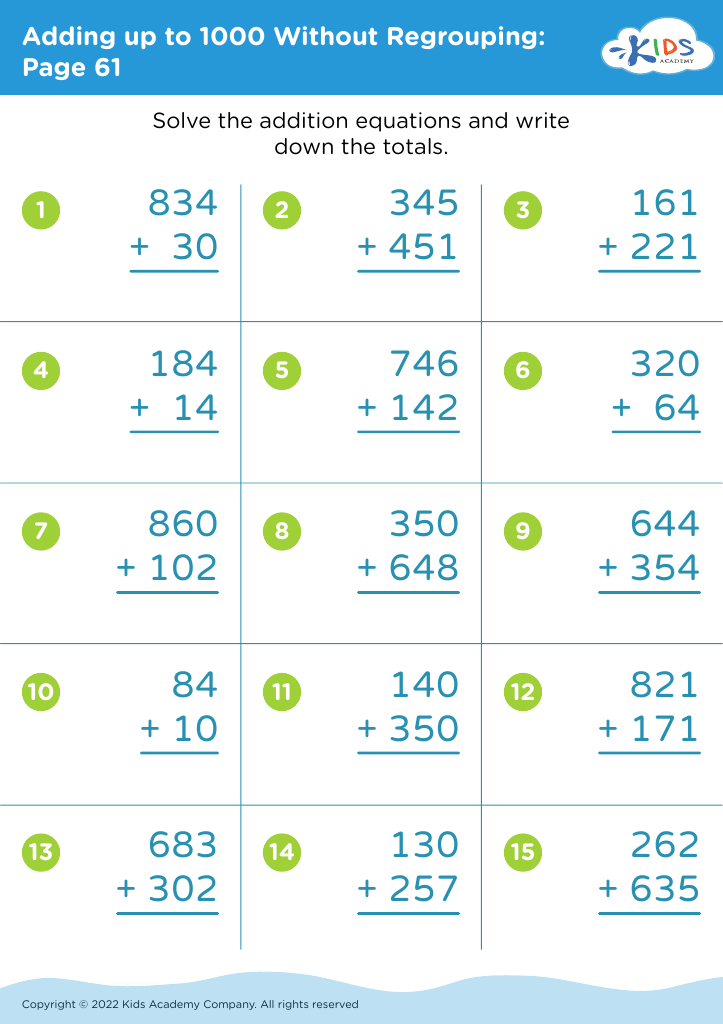
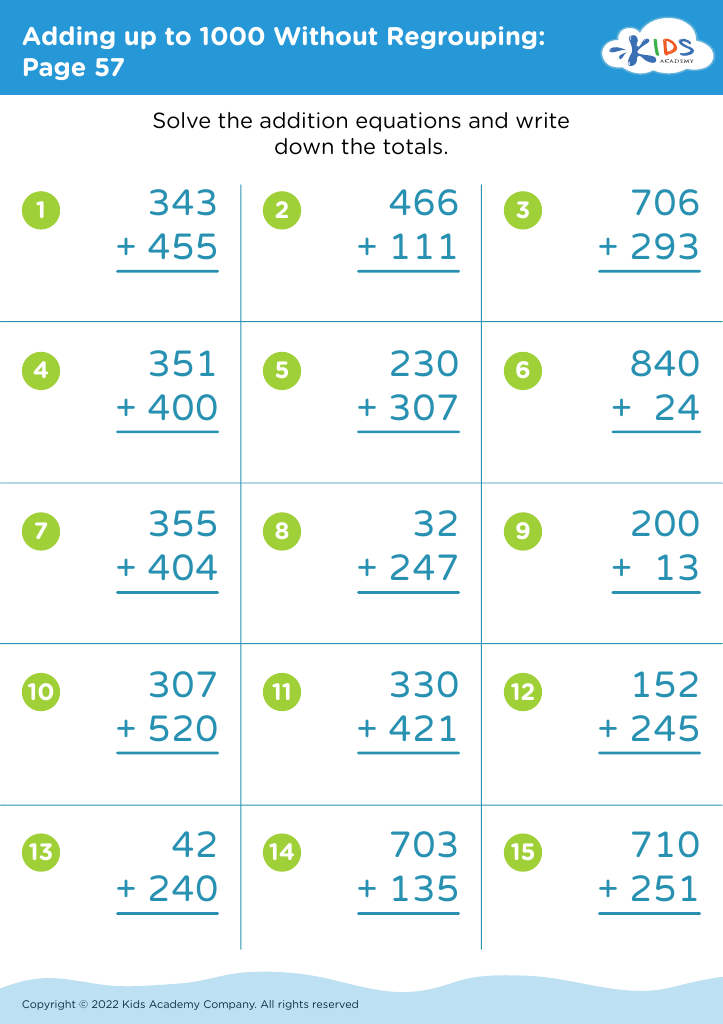
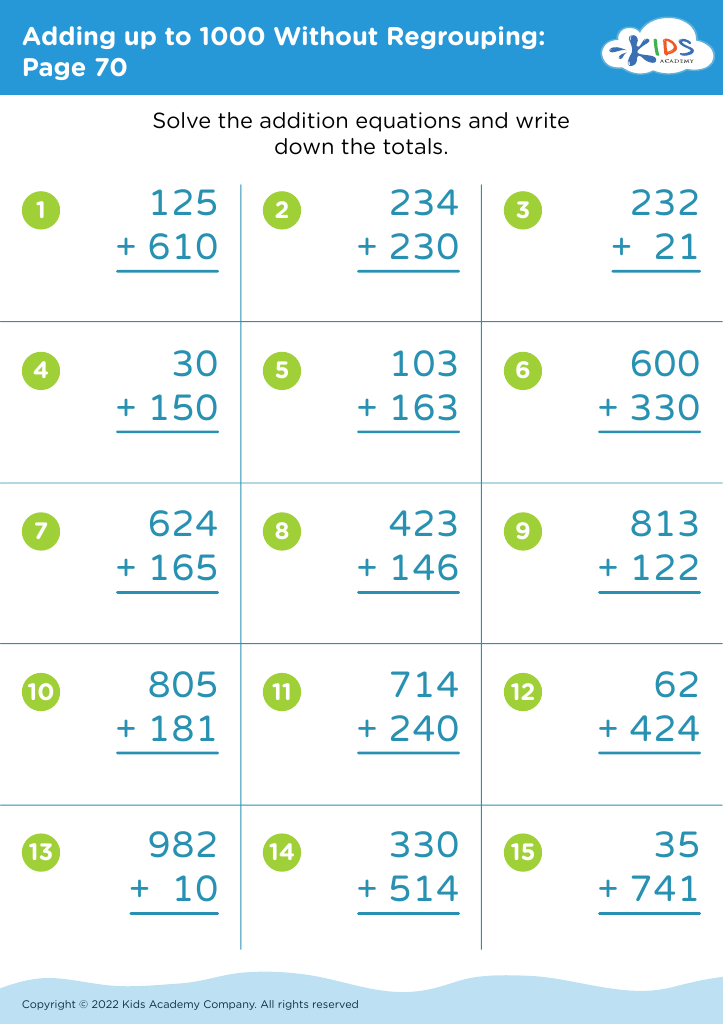



Parents and teachers should prioritize teaching basic addition up to 1000 to ages 5-7 as a cornerstone of early math development. Establishing a solid foundation in addition not only supports arithmetic understanding but also boosts overall cognitive skills, such as problem-solving, logical thinking, and memory. This age group is crucial for building these foundational skills because young minds are remarkably receptive to new concepts, making it an ideal period for math instruction.
Proficiency in basic addition underpins future mathematical learning and everyday applications— from counting money and telling time to measuring ingredients in a recipe. Early difficulties in mastering addition can create gaps that hinder progress in more advanced topics like multiplication, algebra, and geometry.
Furthermore, success in math encourages self-confidence and curiosity in young learners, influencing their attitudes toward education as a whole. Positive early experiences with mathematics can ignite a lifelong passion for learning, reduce math anxiety, and foster a growth mindset wherein children view challenges as opportunities to improve.
As advocates of children’s educational and personal growth, parents and teachers must ensure learners gain a strong competency in basic addition up to 1000. This effort will enable children to thrive academically and develop the essential life skills that contribute to their future success and confidence.








