Fraction comparison Adding up to 1000 Worksheets for Ages 5-7
13 filtered results
-
From - To
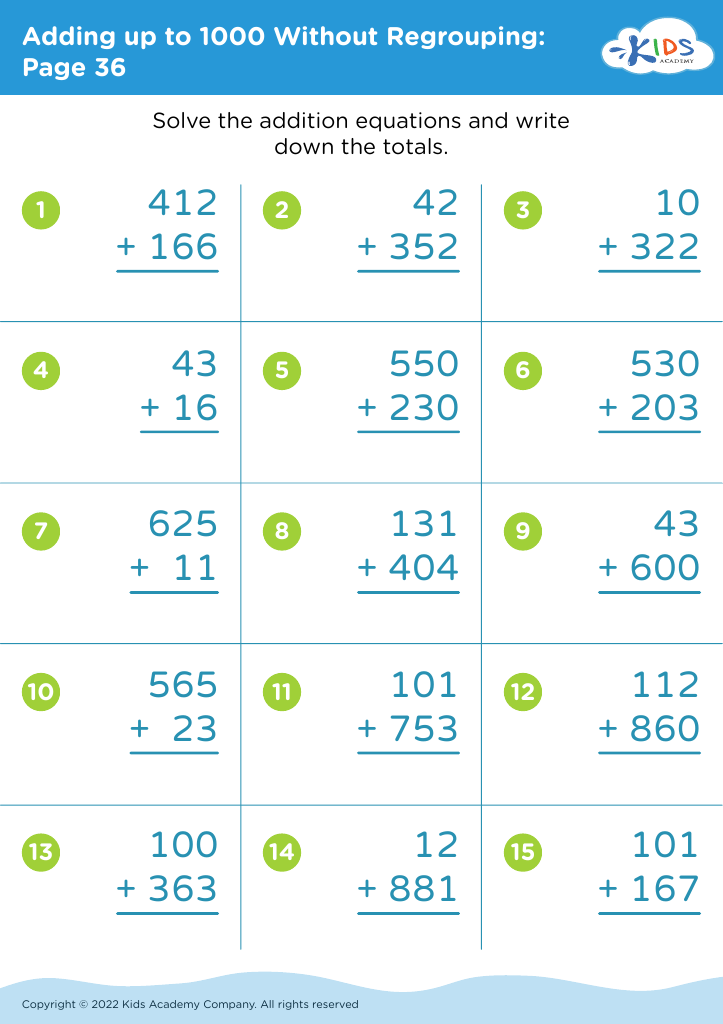
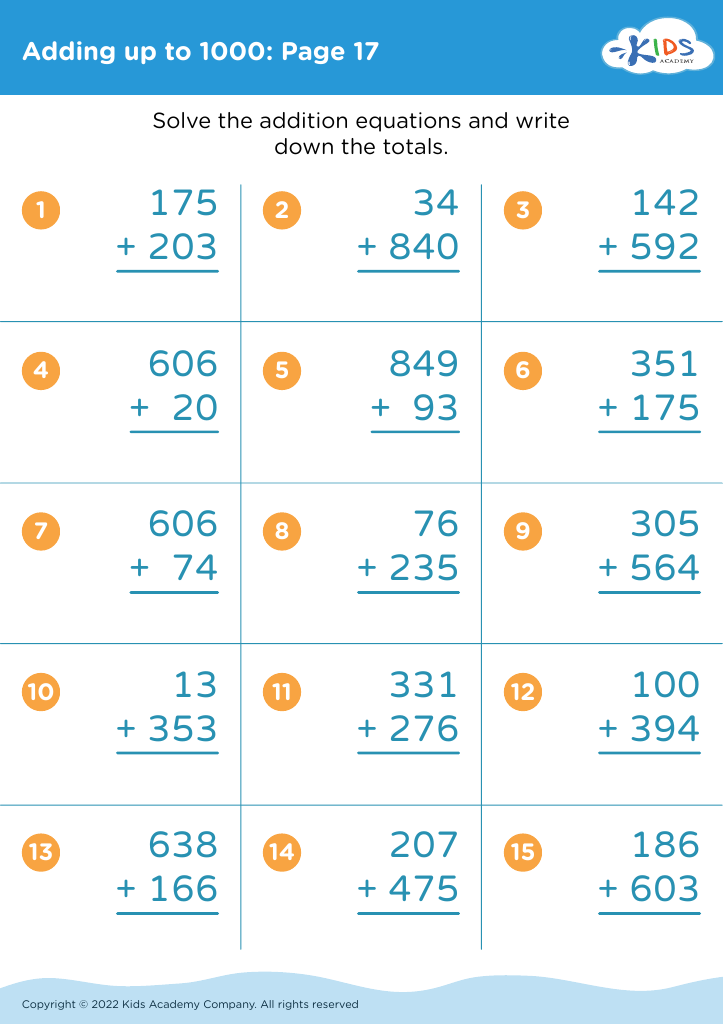
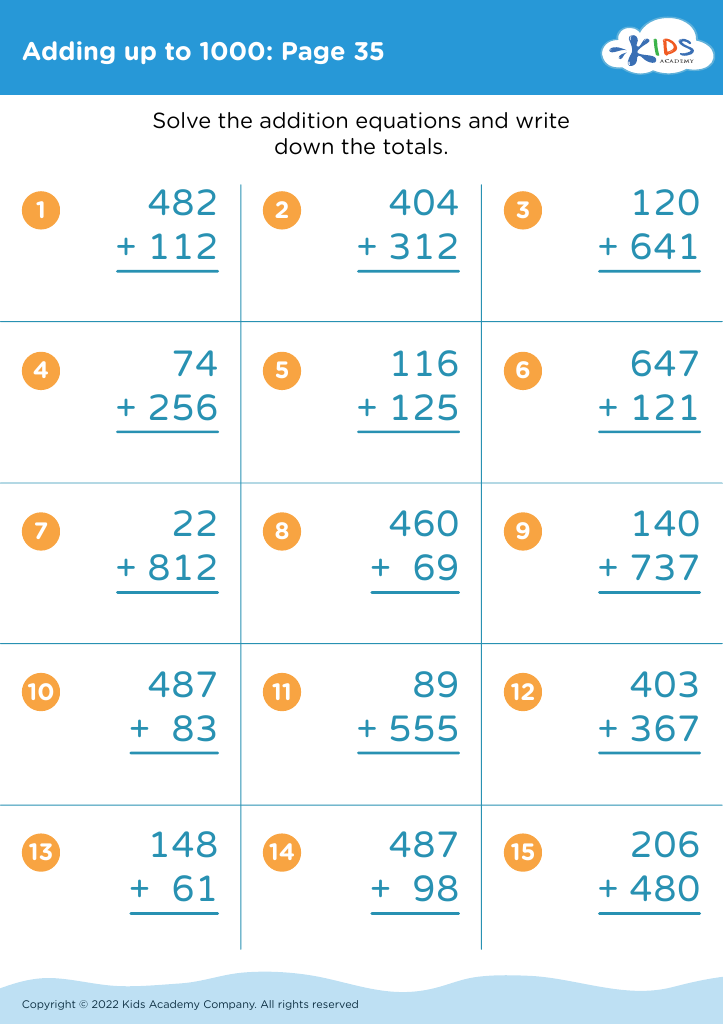
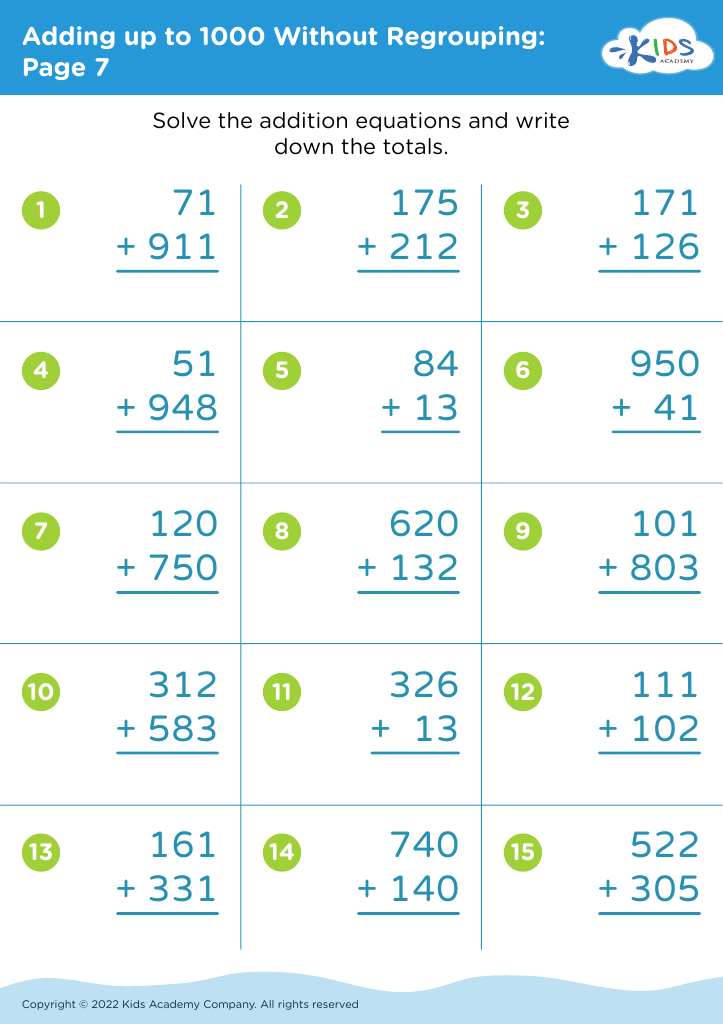
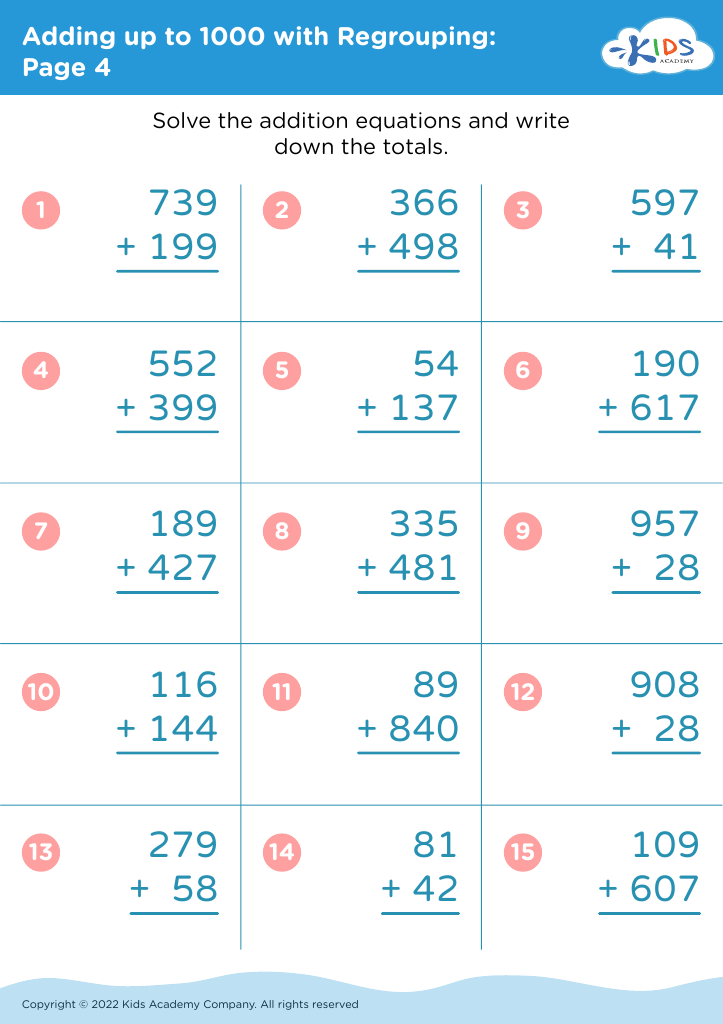
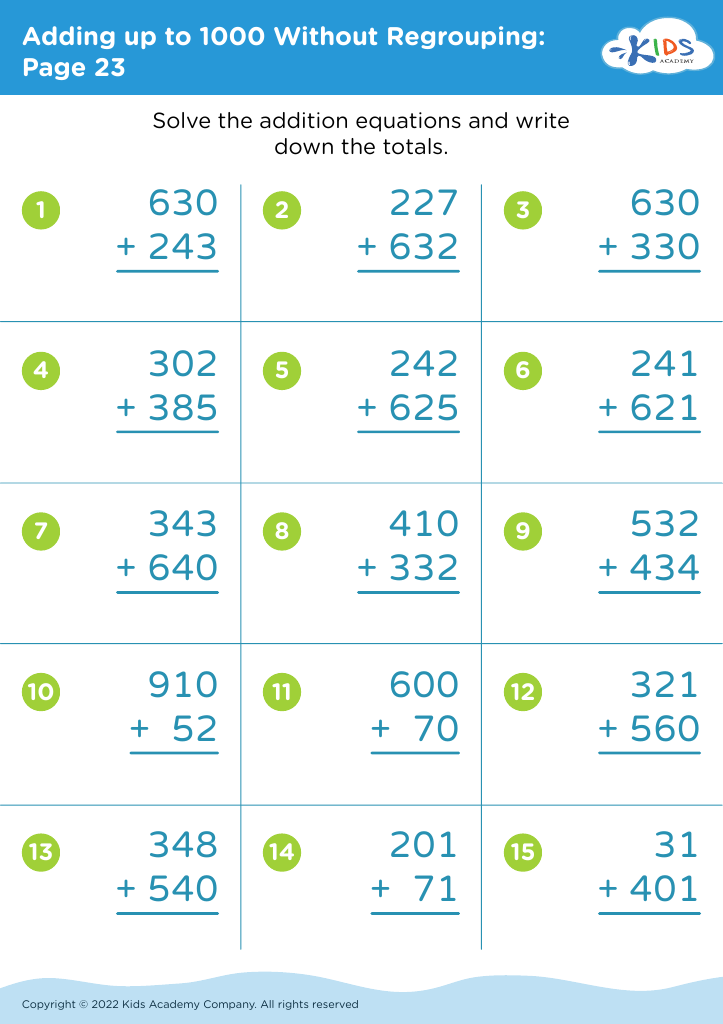
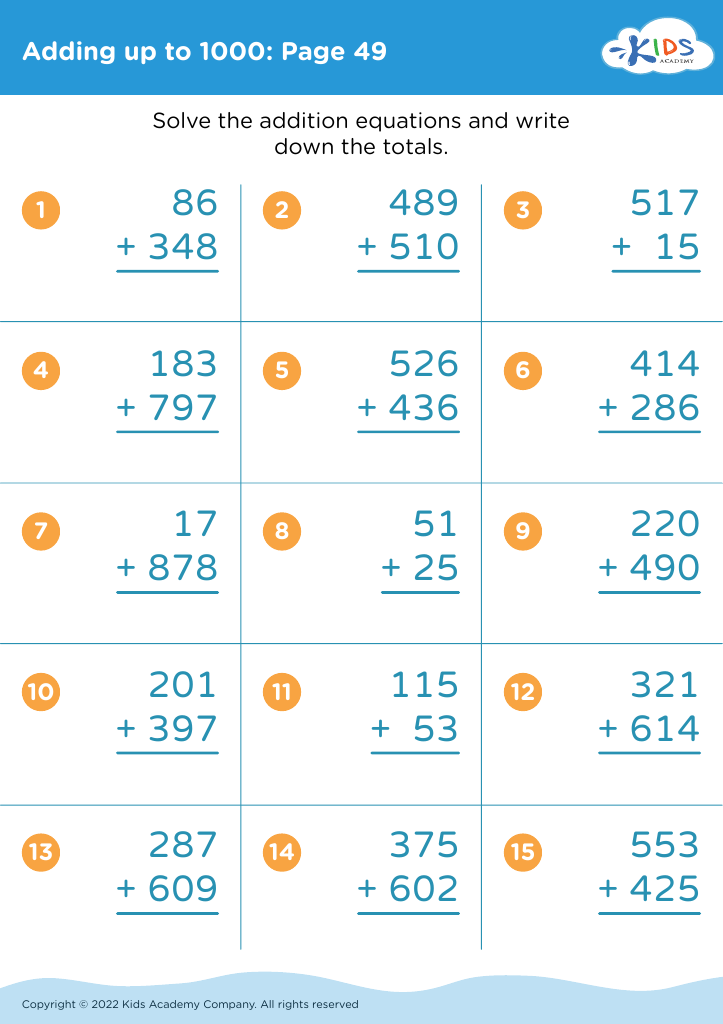
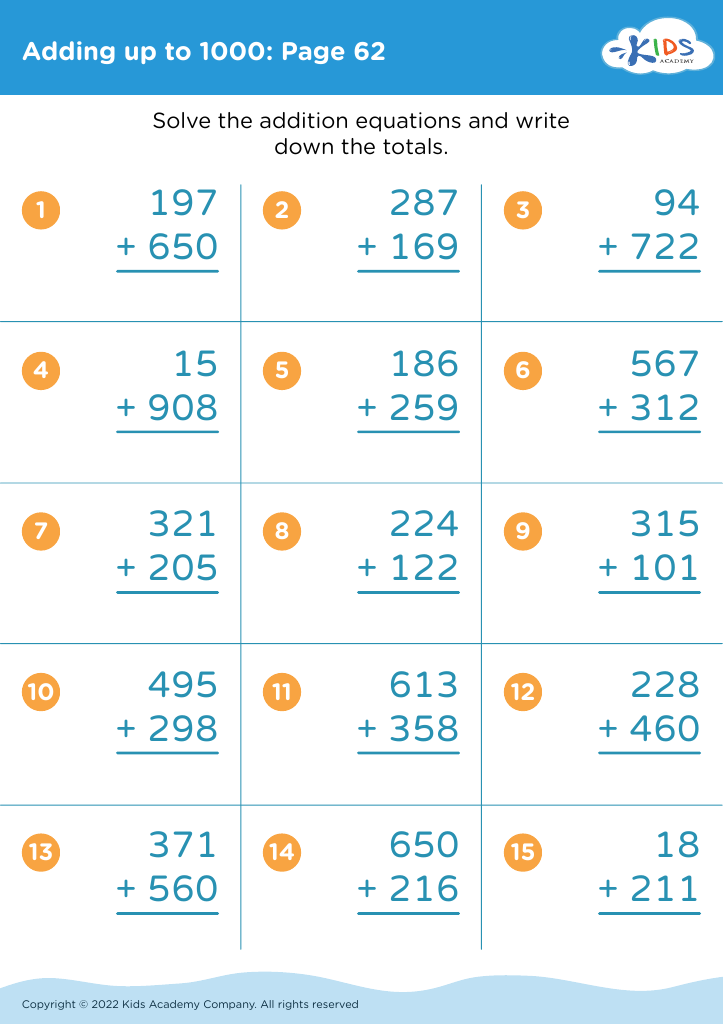
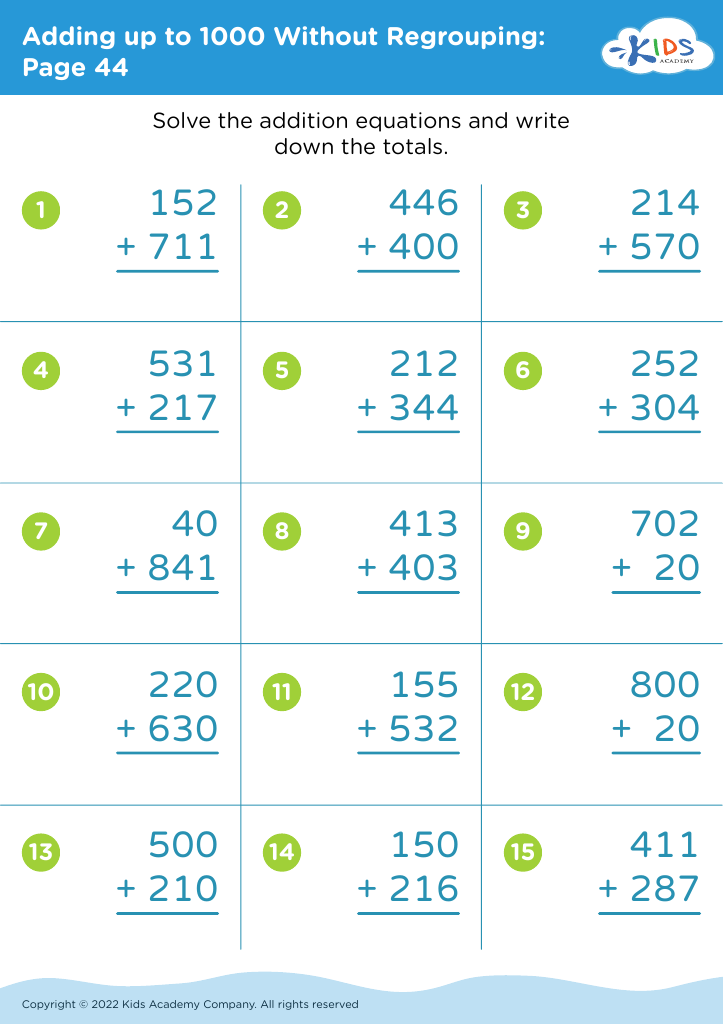
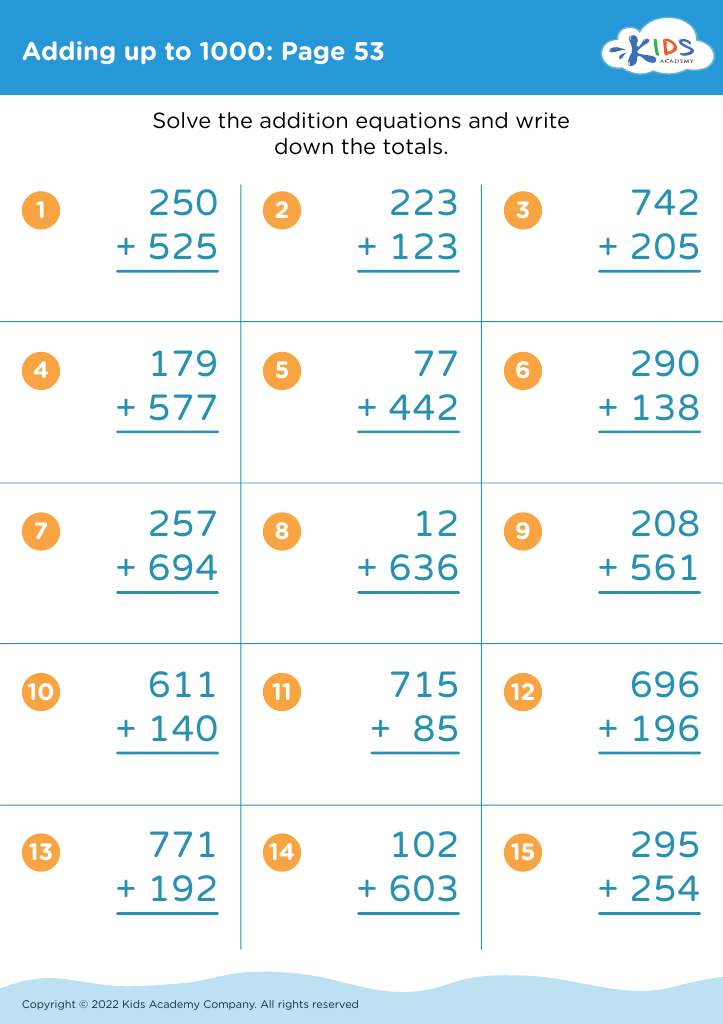
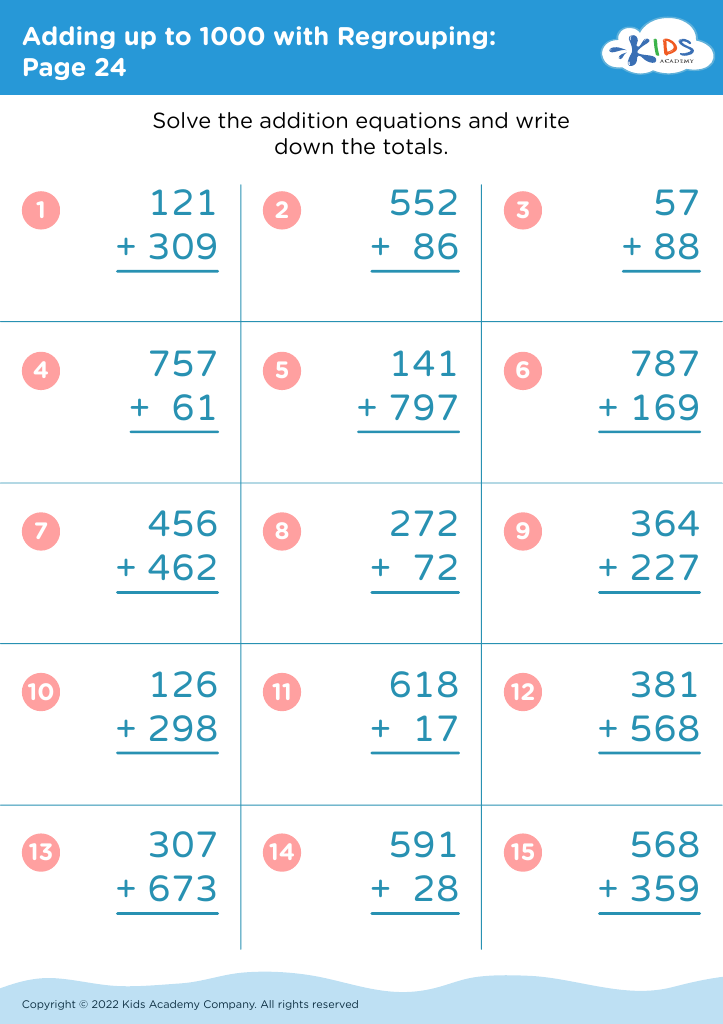
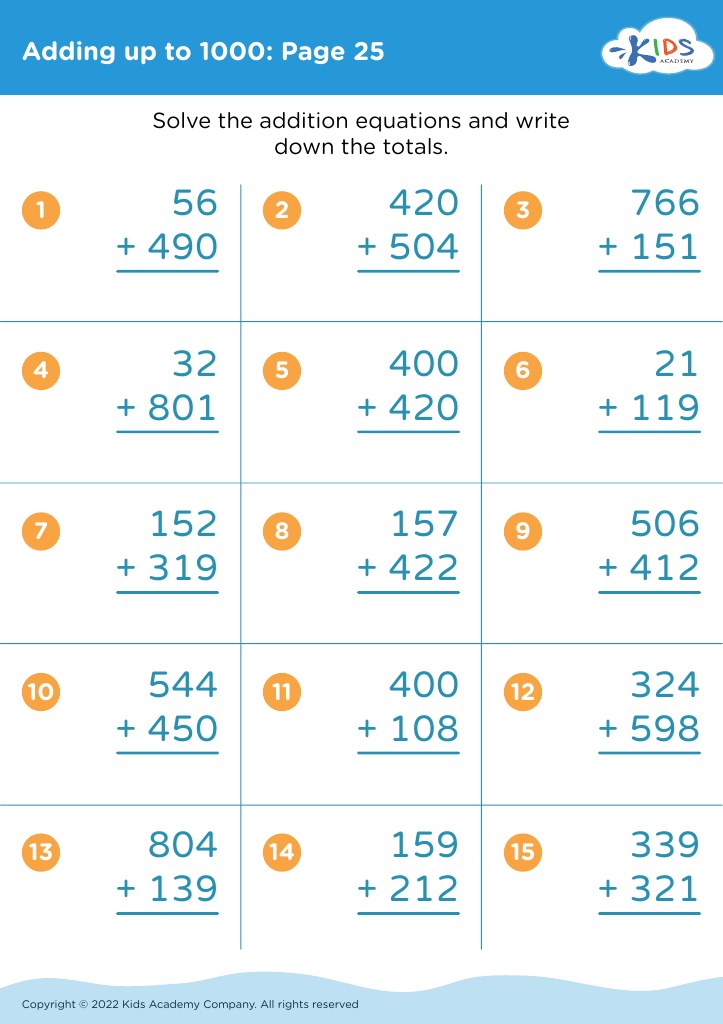
Unlock your child's math potential with our engaging "Fraction Comparison Adding Up to 1000 Worksheets" designed specifically for ages 5-7. These worksheets provide a fun and interactive way for young learners to grasp essential fraction concepts, honing their skills in comparison while enhancing their understanding of numbers. Each activity focuses on comparing fractions, helping kids develop critical thinking and problem-solving abilities. Alongside these fundamental skills, children will practice adding numbers up to 1000, combining foundational math concepts seamlessly. With colorful designs and straightforward instructions, these worksheets make learning fractions enjoyable and effective, ensuring your child builds confidence in their math skills. Start their math journey today!
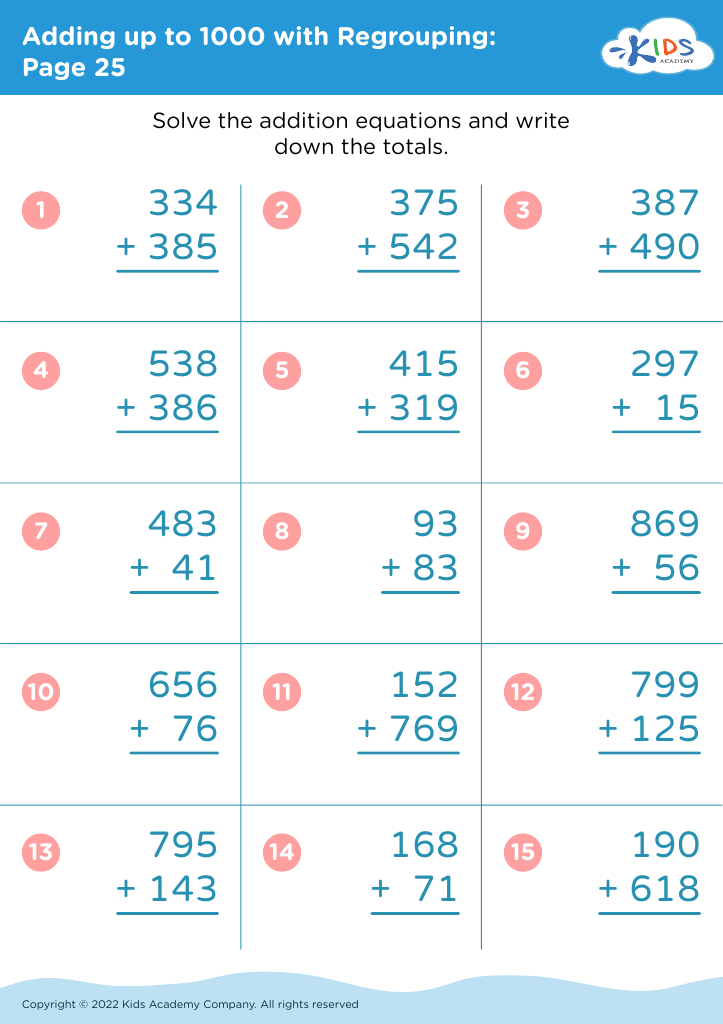



Parents and teachers should care about fraction comparison for young children, particularly those aged 5-7, because it lays the foundation for essential math skills and critical thinking. Understanding fractions is pivotal in developing number sense, a core component of early mathematics education. Comparing fractions allows children to grasp concepts of part-to-whole relationships and appreciate how quantities relate to each other.
Introducing fractions at an early age fosters curiosity and exploration, helping children make connections between their everyday experiences (such as sharing pizza or comparing sizes) and mathematical concepts. By learning to compare fractions, children develop problem-solving skills and the ability to make reasoned judgments about quantities.
As children progress through school, competencies in fraction comparison will prepare them for more advanced mathematical topics, such as addition and subtraction of fractions, which are often introduced in later grades. Moreover, mastering these skills enhances their confidence in math, contributing to a positive attitude toward learning.
By nurturing children's understanding of fractions, parents and teachers create a strong mathematical foundation that will benefit students throughout their academic journey, equipping them with vital skills they will encounter in real-world situations. Supporting children in these early stages ultimately promotes perseverance and a love for learning.








