
Learn new vocabulary Adding up to 1000 Worksheets for Ages 5-7
3 filtered results
Difficulty Level
Grade
Age
-
From - To
Subject
Activity
Standards
Unlock your child's language potential with our "Learn New Vocabulary" worksheets, designed specifically for ages 5-7. This engaging resource is part of our comprehensive collection of worksheets on adding up to 1000, aimed at enhancing vocabulary while developing essential math skills. Each worksheet combines fun activities and colorful visuals, allowing young learners to explore and comprehend new words in an interactive way. By integrating vocabulary building with math concepts, children will not only become confident in their calculations but also improve their language expression. Dive into our 1000+ worksheets, and watch your child's vocabulary flourish alongside their math proficiency!
Favorites
With answer key
Interactive
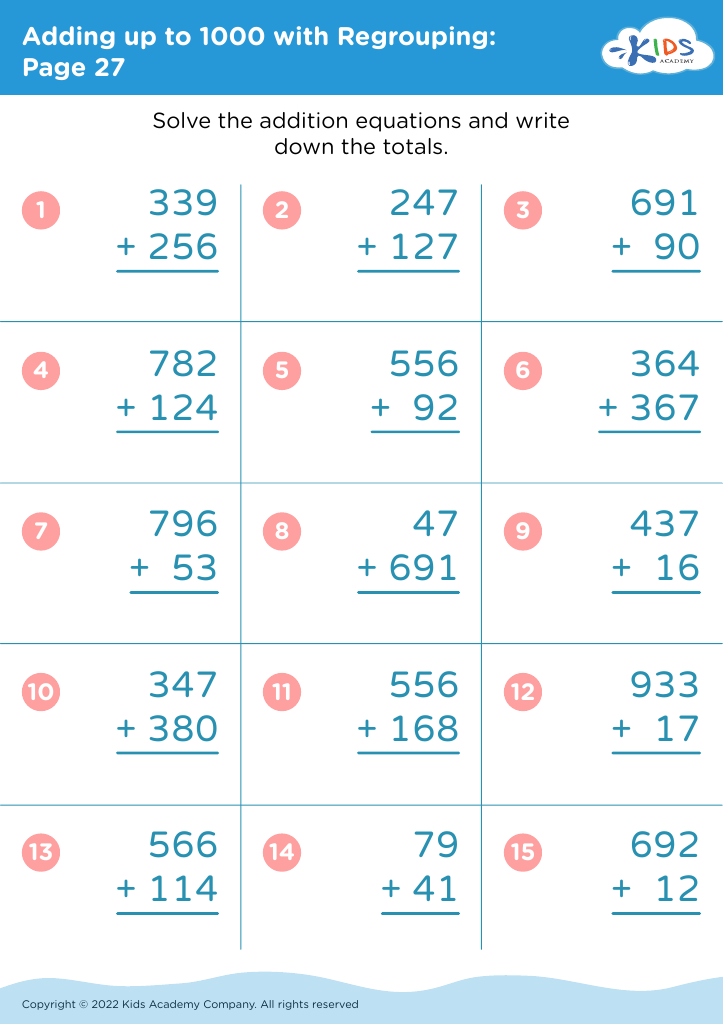
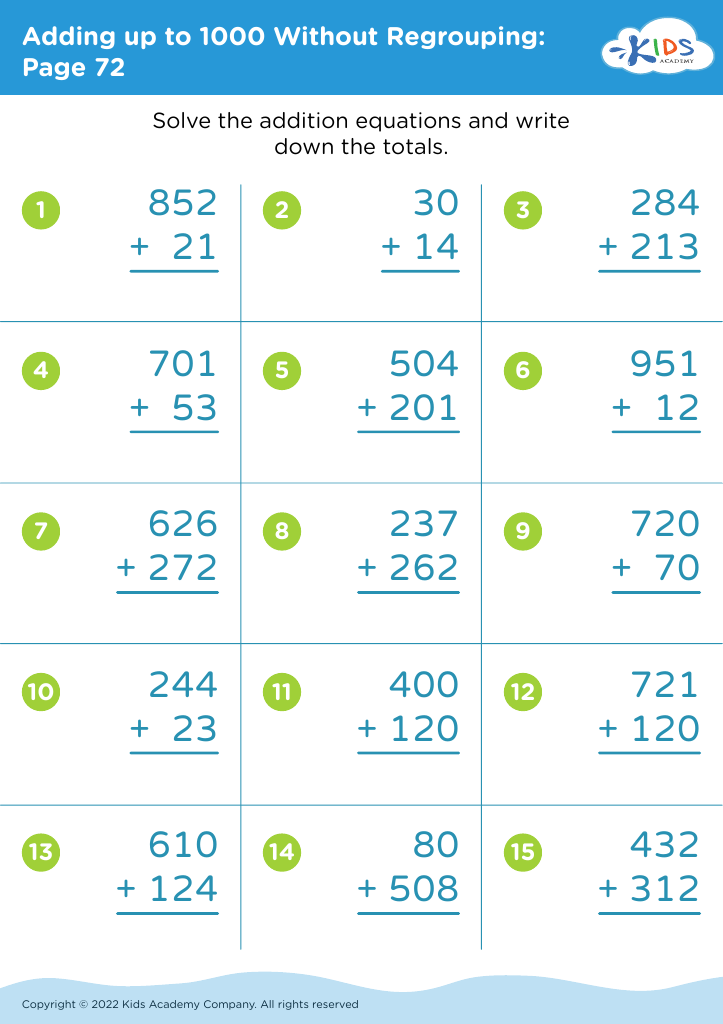
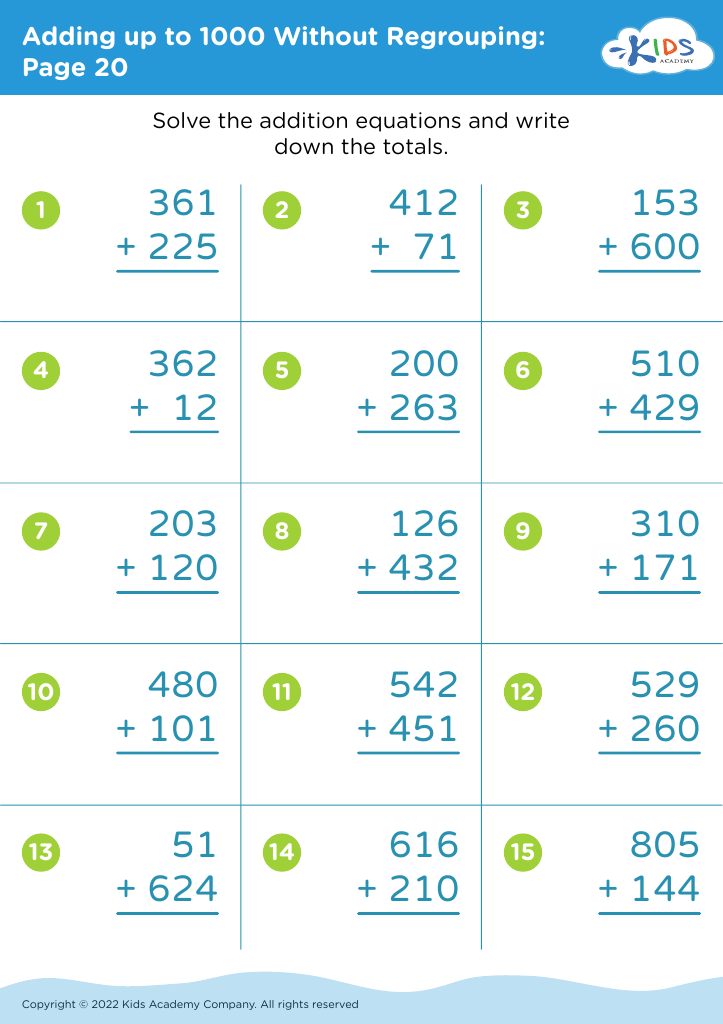
Join Kids Academy for Free
Who is primarily going to use this learning content?



Learning new vocabulary is crucial for children aged 5-7, as it lays the foundation for effective communication and comprehension skills. This development stage is vital for cognitive growth, and expanding vocabulary enhances literacy, critical thinking, and social interactions. When children learn new words, they enhance their ability to express emotions, ideas, and experiences, leading to self-confidence in their communication.
For parents and teachers, fostering vocabulary growth is instrumental in promoting overall academic success. A robust vocabulary aids in reading comprehension, enabling children to grasp stories and concepts effectively. Engaging them in discussions about words, meanings, and contexts can create stimulating learning environments, regardless of setting. Moreover, building vocabulary at this young age often translates into improved writing skills, helping them articulate thoughts clearly as they progress in their education.
Encouraging curiosity about language through games, storytelling, and interactive activities can create a love for learning. It also opens doors to discussions about diverse subjects, enriching their understanding of the world. By emphasizing vocabulary development, parents and teachers equip children with essential tools to navigate both their educational journeys and social interactions, thereby setting them on a path to lifelong learning.








