Number Recognition Adding up to 1000 Worksheets for Ages 5-7 - Page 2
31 filtered results
-
From - To
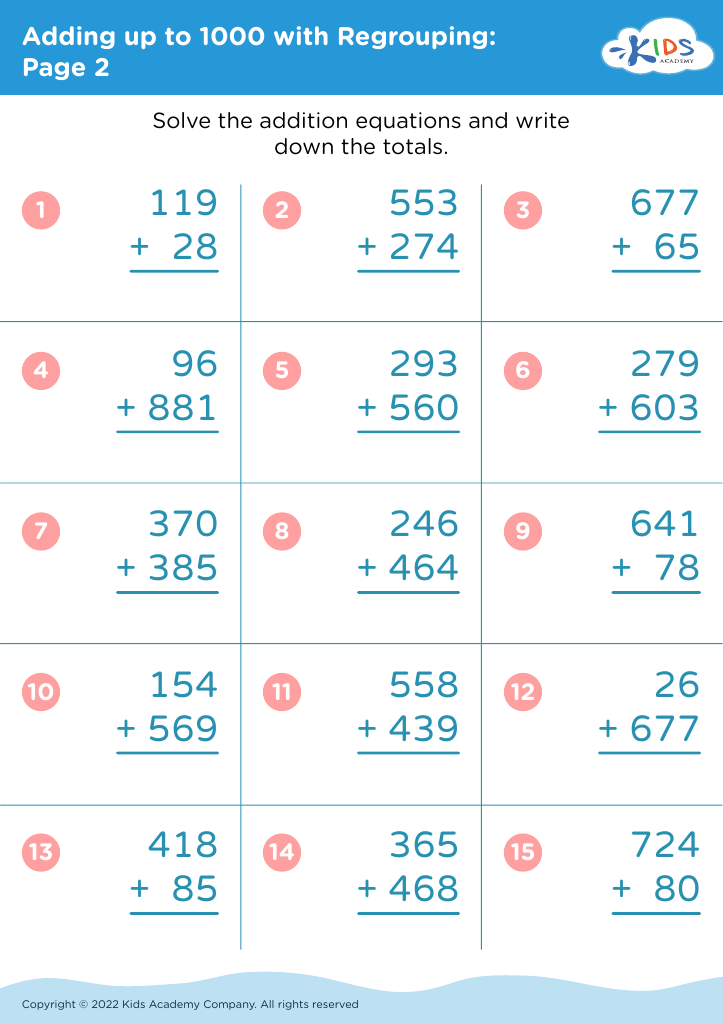
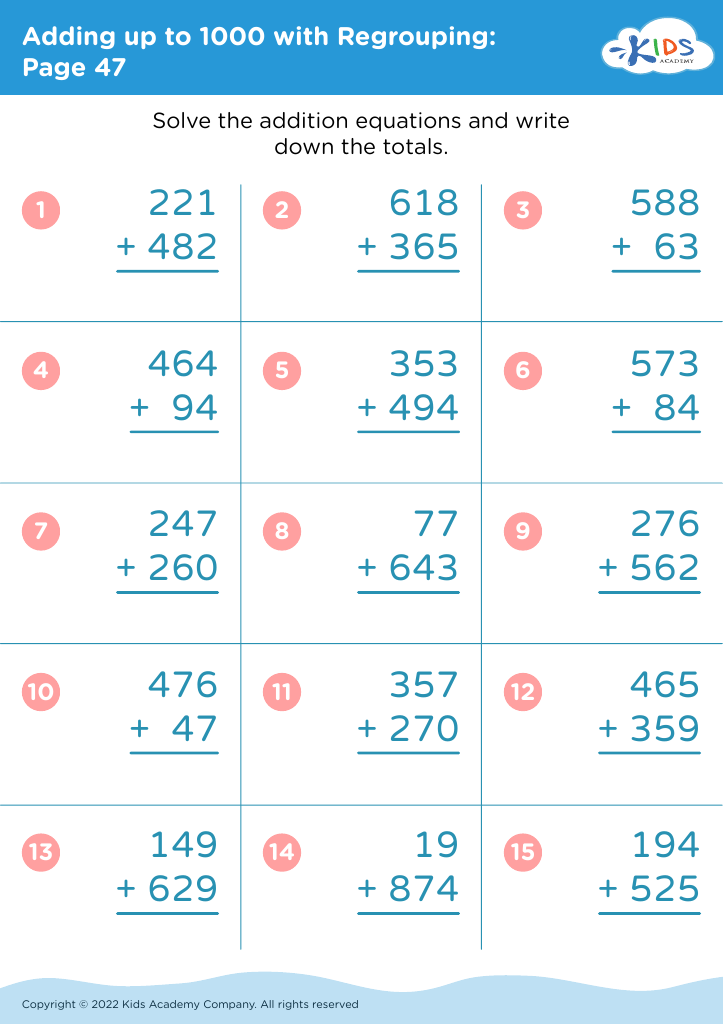
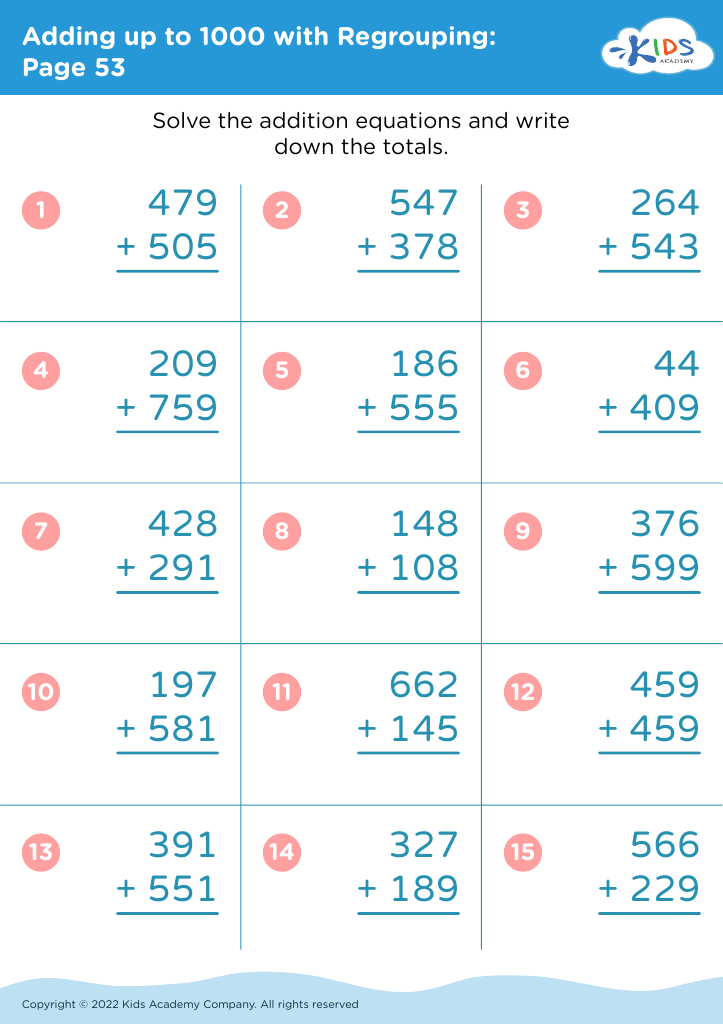
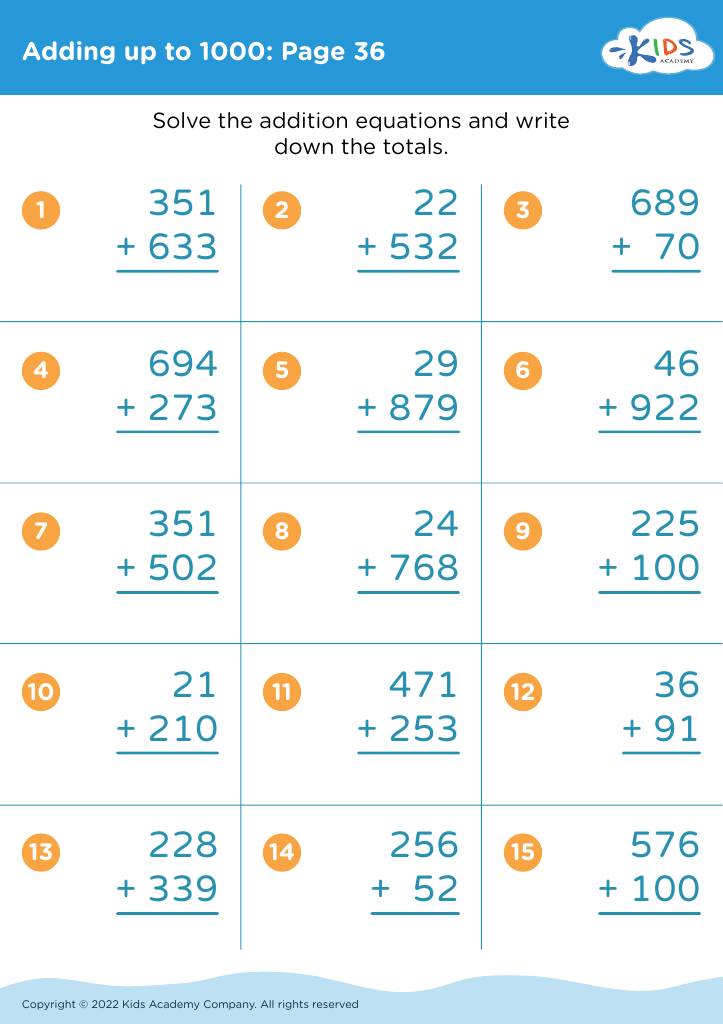
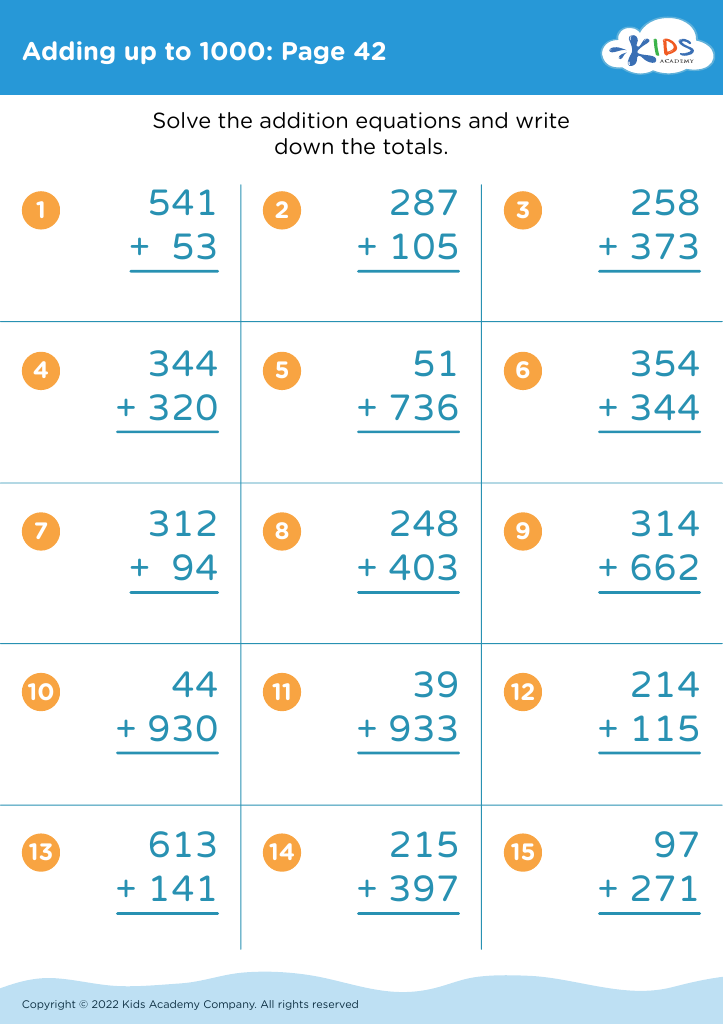
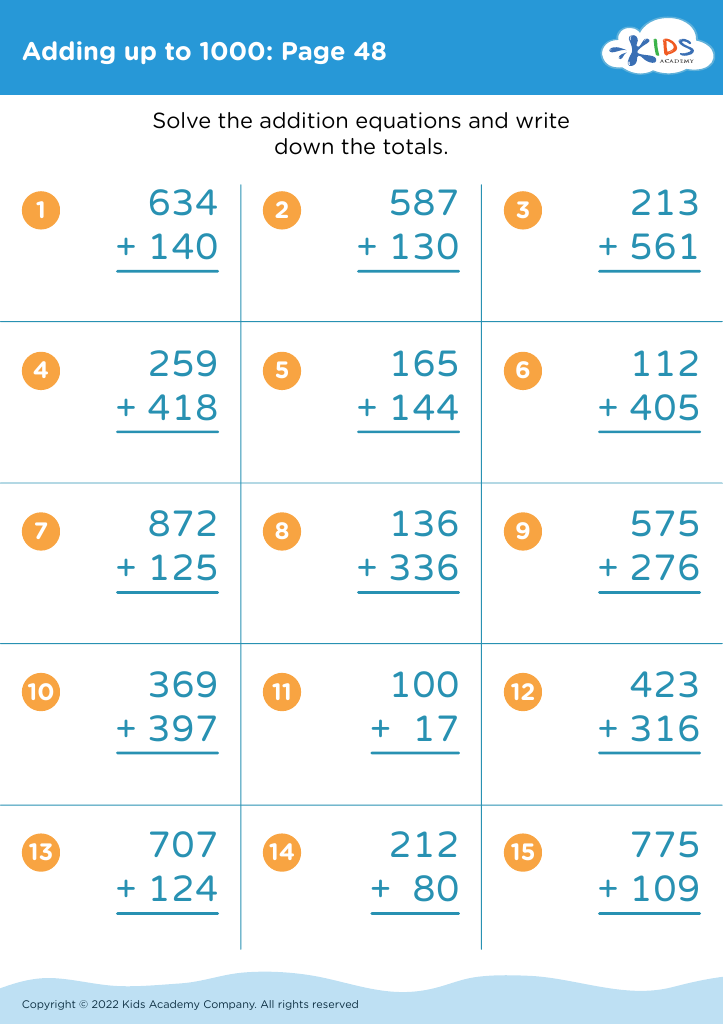
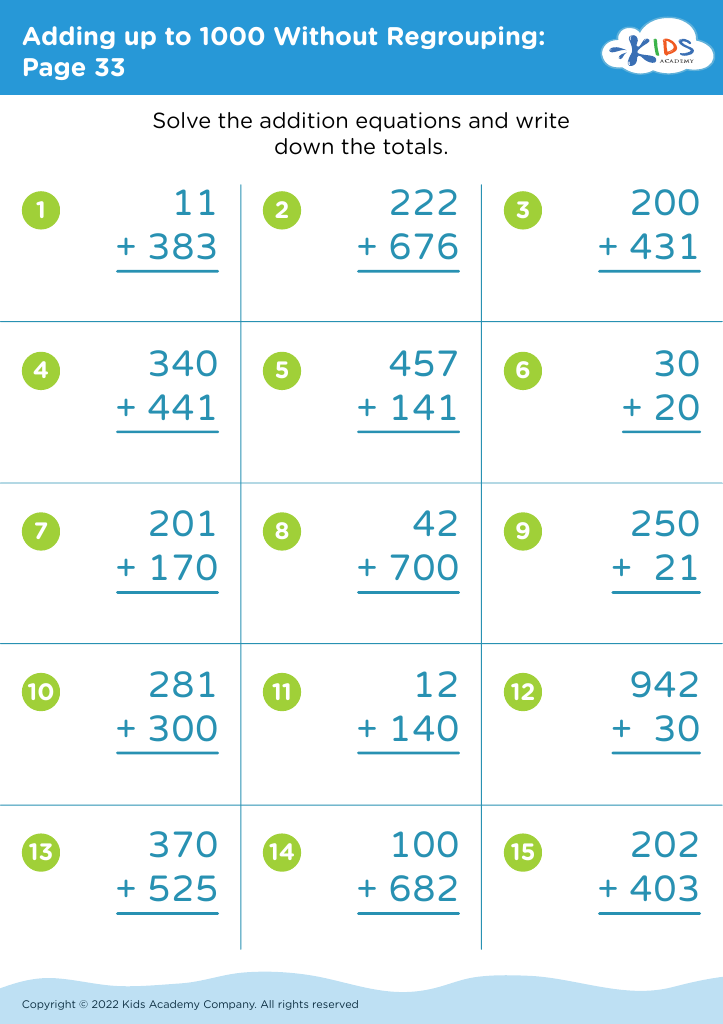




Number recognition and basic arithmetic skills are foundational elements of a child's mathematical development, particularly for ages 5-7. At this stage, children are rapidly developing cognitive abilities, and integrating number recognition up to 1,000 can significantly enhance their numeracy skills.
Firstly, understanding larger numbers deepens their comprehension of our number system. It reinforces the concept of place value, creating a stronger base for future math topics like multiplication and division. Children who can recognize and add these numbers tend to have better problem-solving skills because they understand how numbers interact in a range of contexts.
Moreover, fostering these skills at an early age builds confidence. When children see their ability to solve seemingly larger problems, they feel competent and more interested in math, minimizing math anxiety later in life.
From a practical perspective, number recognition and addition up to 1,000 translate to everyday life skills. Children start to grasp the basics of budgeting, telling time, and measuring, which are essential for day-to-day activities.
Lastly, it supports academic progress. These fundamental skills are often linked to better academic performance not only in mathematics but also in science and technology subjects.
In essence, prioritizing number recognition and addition up to 1,000 for young children equips them with critical thinking skills, boosts confidence, encourages practical life skills, and lays a solid academic foundation.








