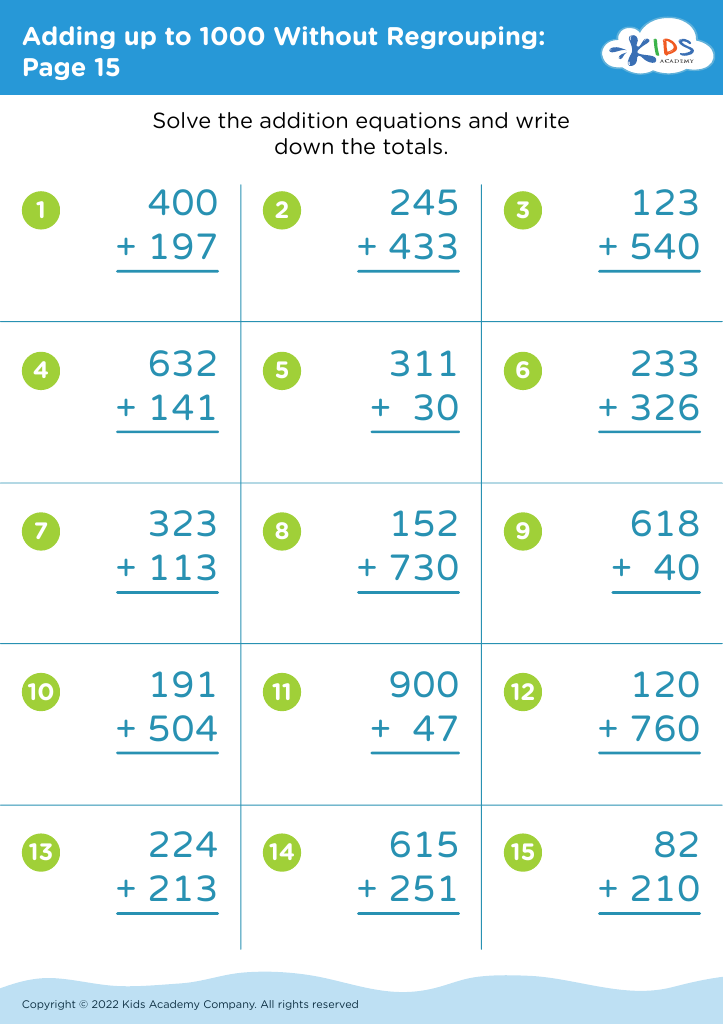




Developing problem-solving skills in children aged 5-7 is crucial for their cognitive and emotional growth. At this age, children are naturally curious and eager to explore the world around them. By engaging them in problem-solving activities, such as basic math challenges that involve adding up to 1000, we help them build foundational skills needed for later academic success.
Problem-solving enhances critical thinking and fosters creativity, enabling children to approach issues with a flexible mindset. It encourages them to ask questions, analyze situations, and consider multiple solutions, developing their confidence in tackling obstacles. Moreover, mastering basic math through such engaging activities makes learning fun and enjoyable, which is vital to keeping young learners motivated.
Teachers and parents play a key role in cultivating these skills, as involved caregivers can provide guidance and tailored activities to support individual learning needs. By emphasizing problem-solving, they also teach resilience; children learn that failure can be a step toward success. In a world that increasingly values analytical thinking and adaptability, promoting problem-solving skills in early childhood lays a strong foundation for future personal and academic achievements. Therefore, nurturing these abilities is essential for holistic child development.








