Understanding fractions Adding up to 1000 Worksheets for Ages 5-7 - Page 2
44 filtered results
-
From - To
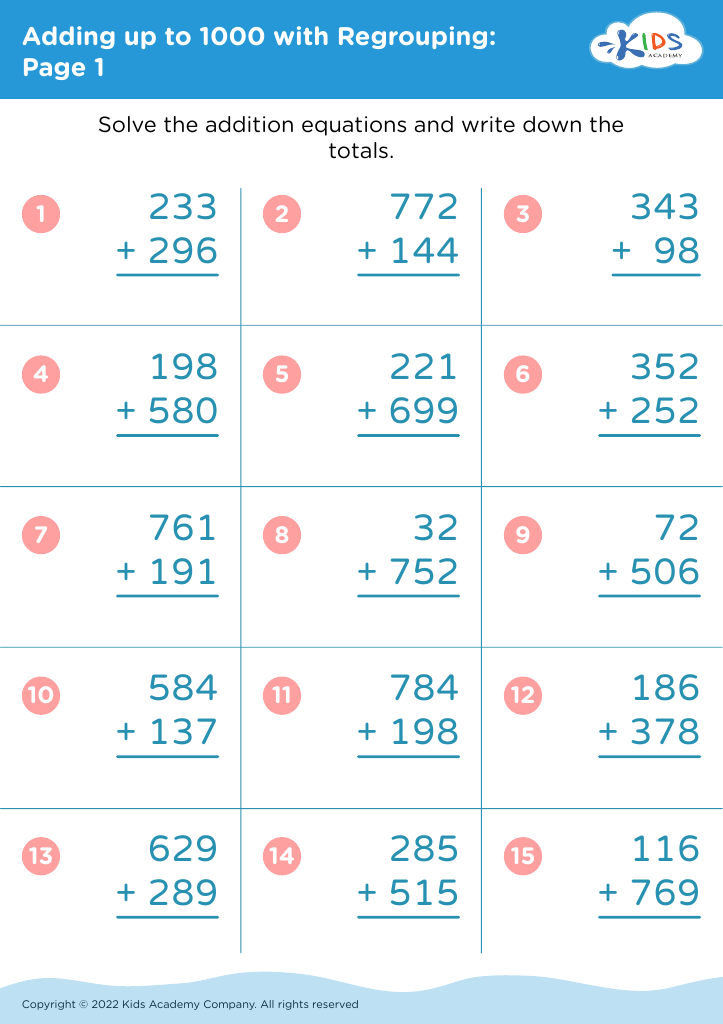
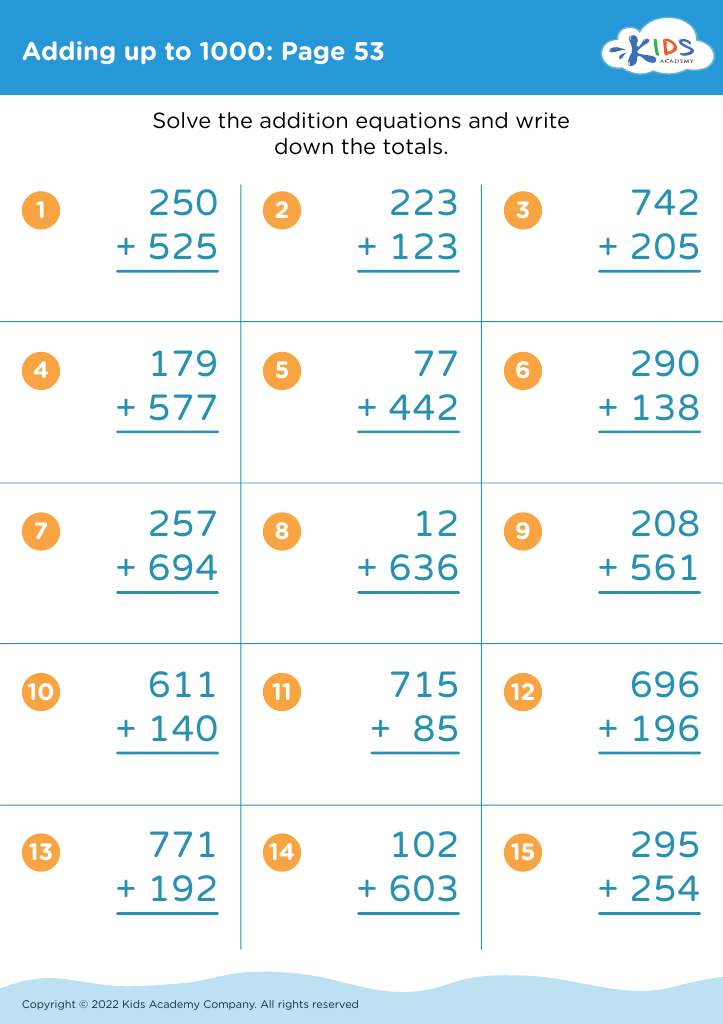
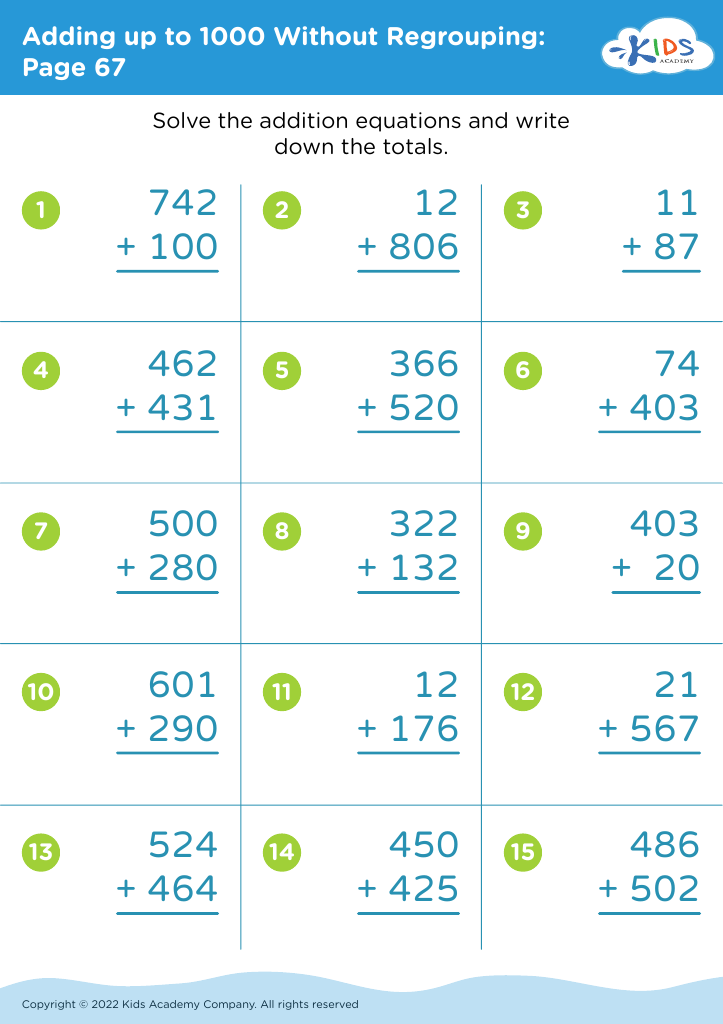
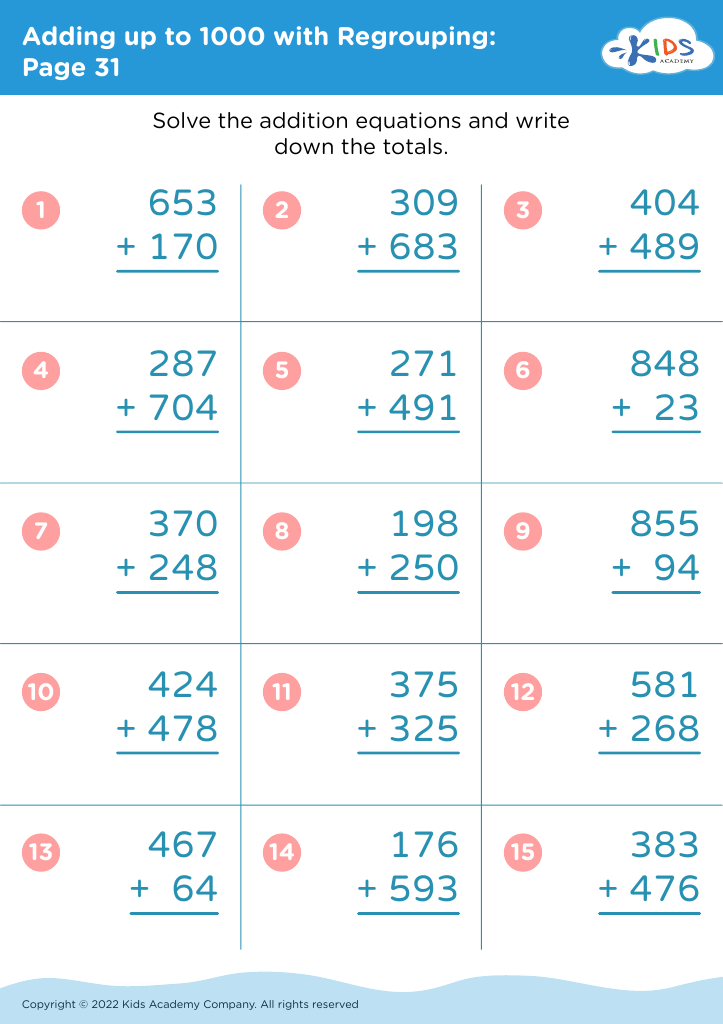
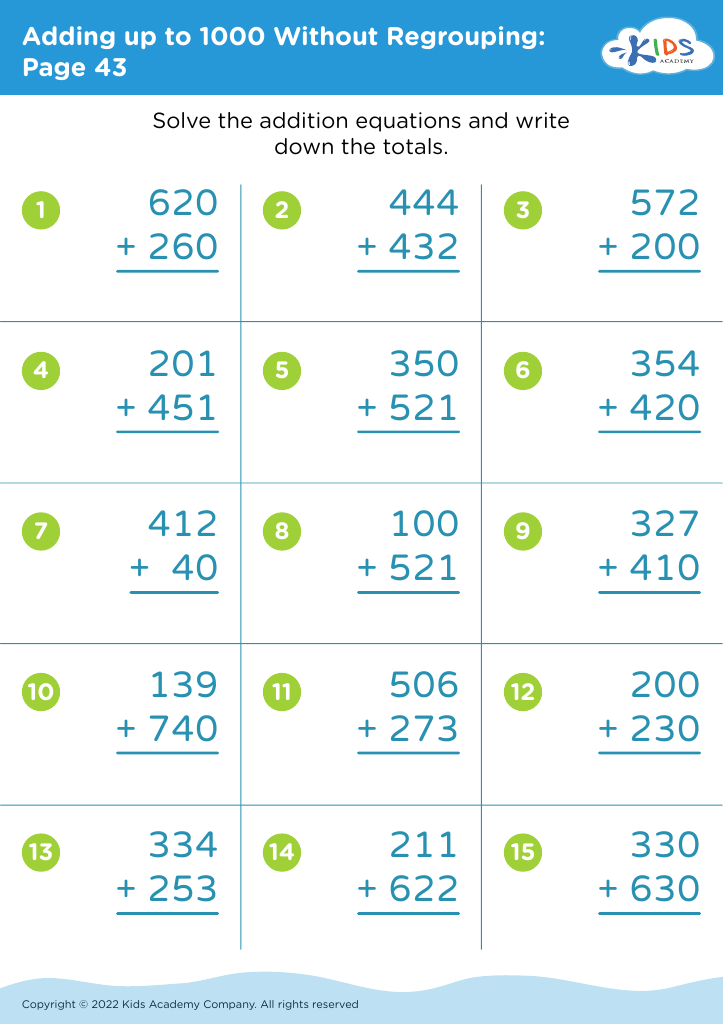
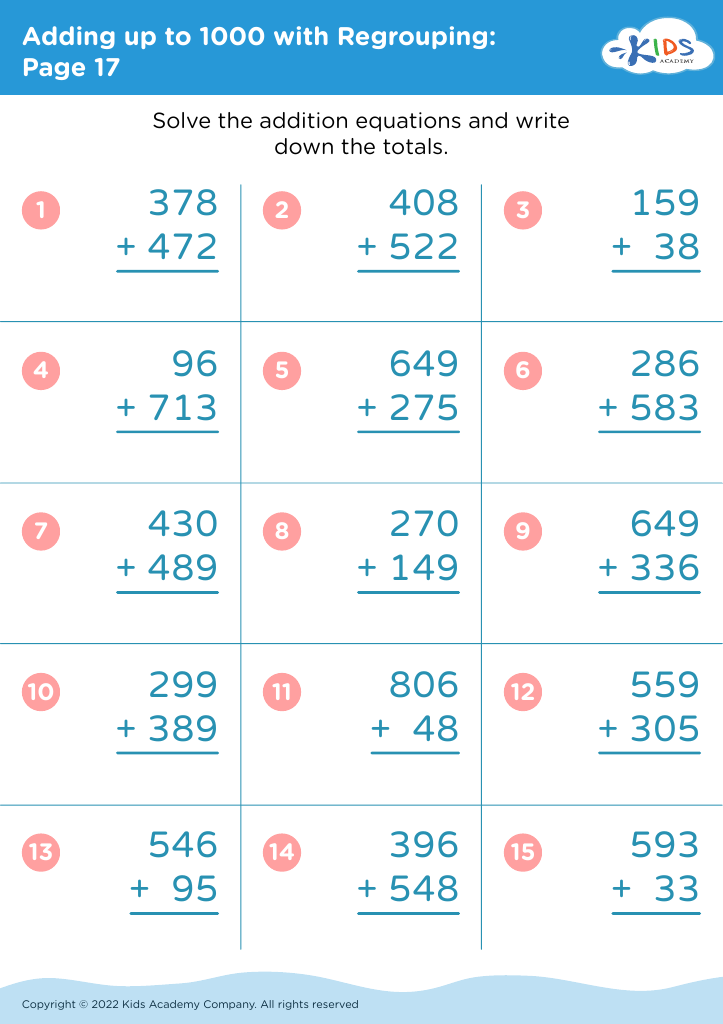
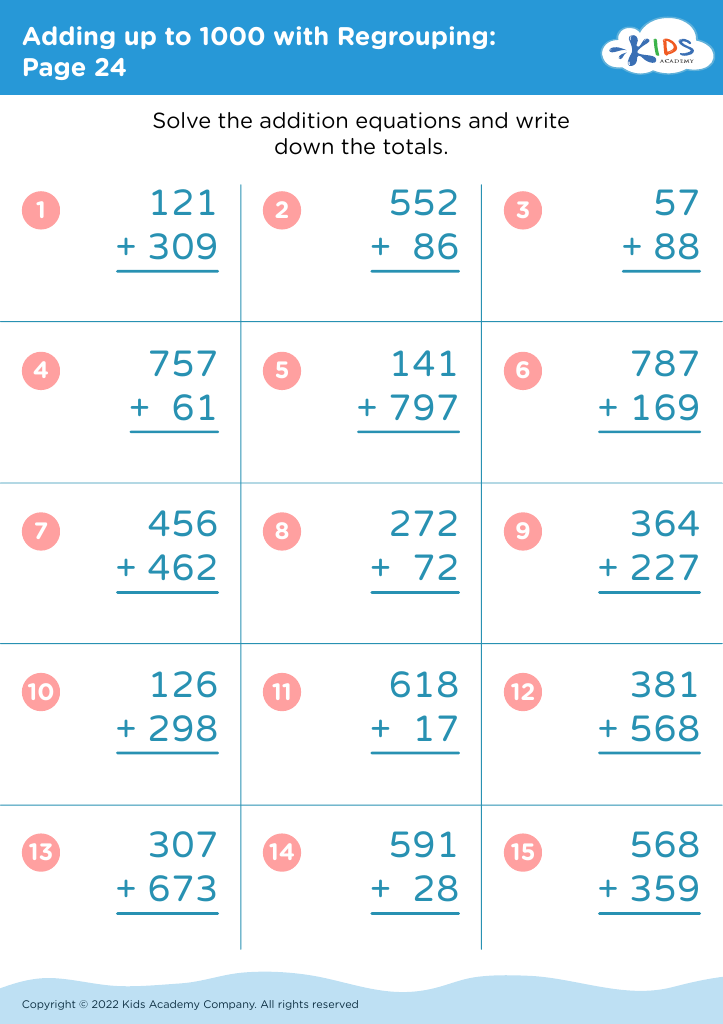
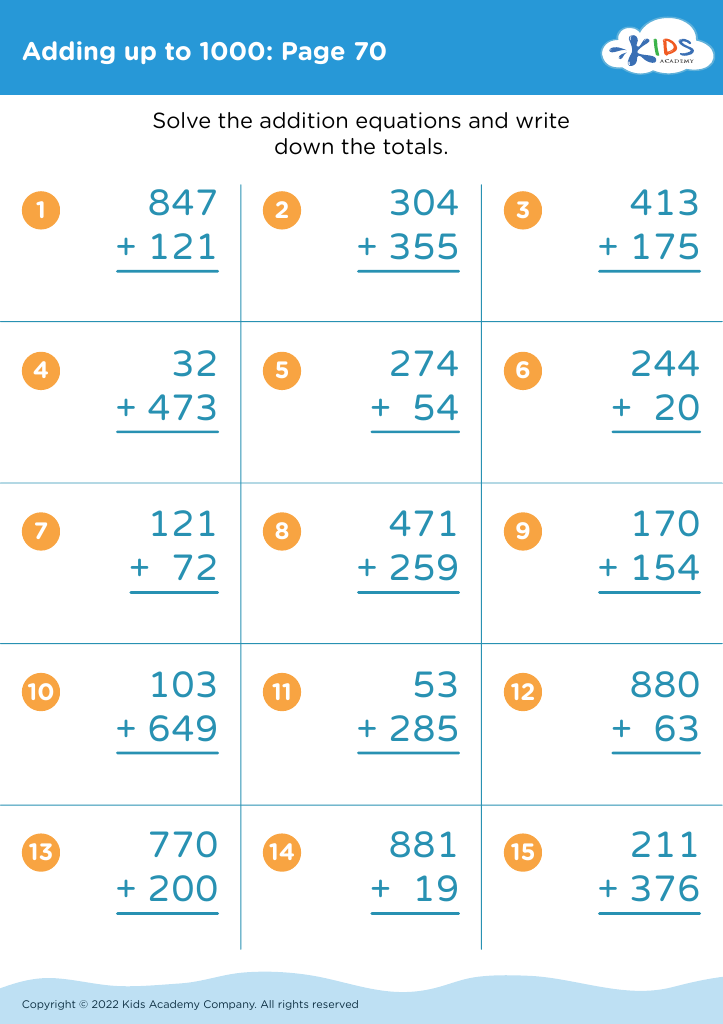




Understanding fractions is a foundational skill that significantly benefits children’s mathematical development, particularly for ages 5-7. At this age, children begin to grasp the concept of parts of a whole, which lays the groundwork for more complex mathematical operations. Introducing fractions in a relatable context, such as dividing objects into equal parts or sharing food, makes learning enjoyable and applicable to real life.
When parents or teachers emphasize adding fractions that sum up to 1 (or 1000 in practical applications), they foster critical thinking skills and help students develop a solid numeracy understanding. This foundational knowledge helps children not only perform calculations but also visualize and understand relationships between numbers. Moreover, with an increasingly challenging curriculum, early proficiency in fractions can boost students' confidence as they progress in mathematics.
Additionally, as students learn to add fractions, they enhance their problem-solving abilities and learn to approach challenges with a growth mindset. This skill is vital in everyday life, from cooking to budgeting. Ultimately, fostering an early comprehension of fractions can spark a lifelong interest in mathematics, leading to higher academic achievement as students move up the educational ladder. Engaging with fractions cultivates both mathematical and cognitive growth essential for children's overall development.








