Animal recognition Adding Up to 5 Worksheets for Ages 5-7 - Page 3
90 filtered results
-
From - To





.jpg)
%20(1).jpg)

Animal recognition, combined with basic math concepts like addition, is vital for young learners aged 5-7. Understanding animals not only sparks curiosity but promotes engagement in learning. When children can identify different animals, they are more likely to participate in discussions and activities, which bolsters their social skills and confidence.
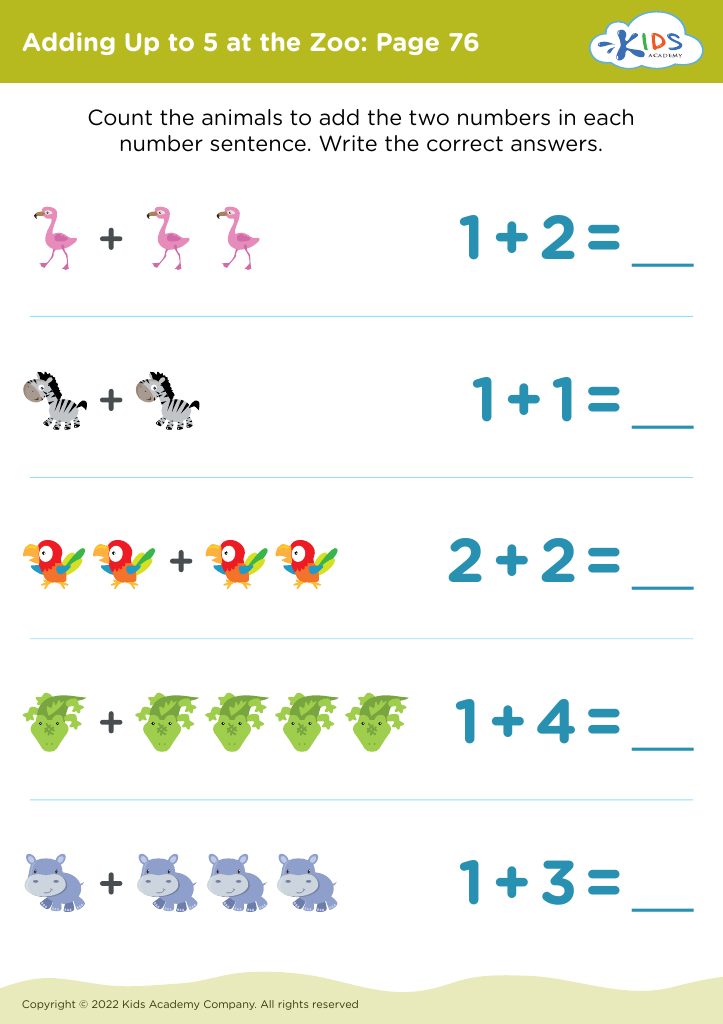
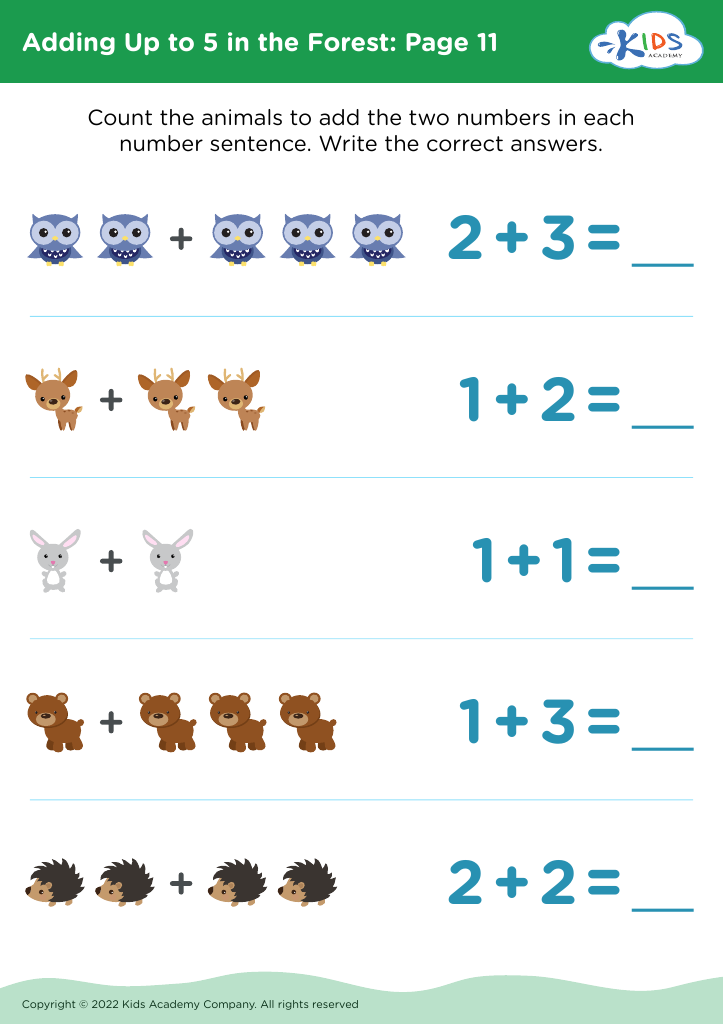
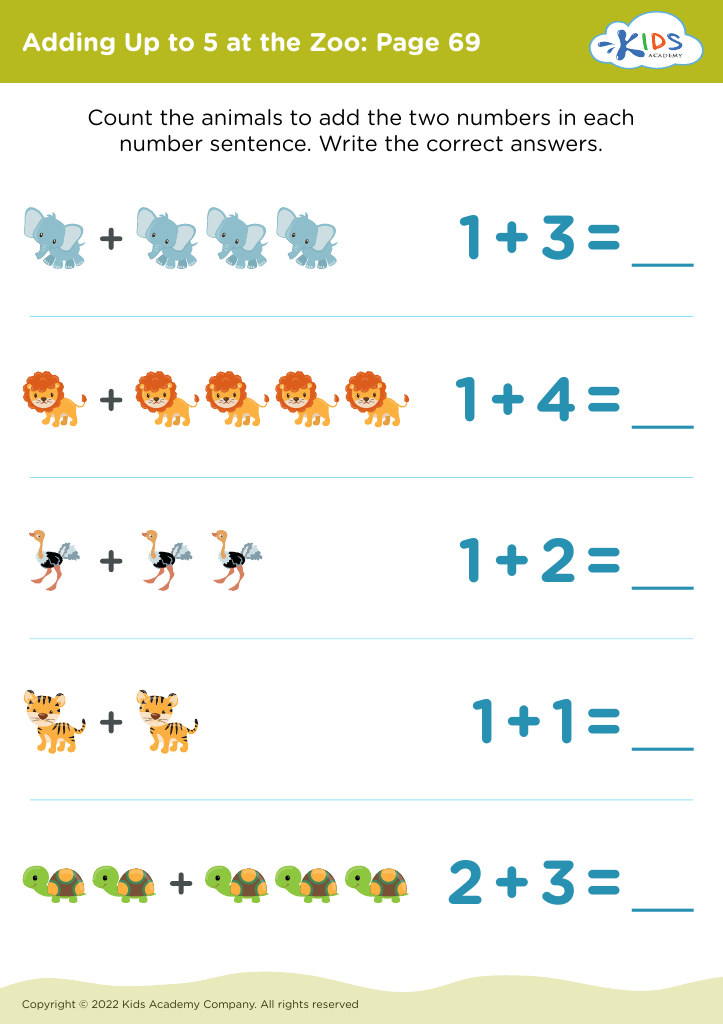
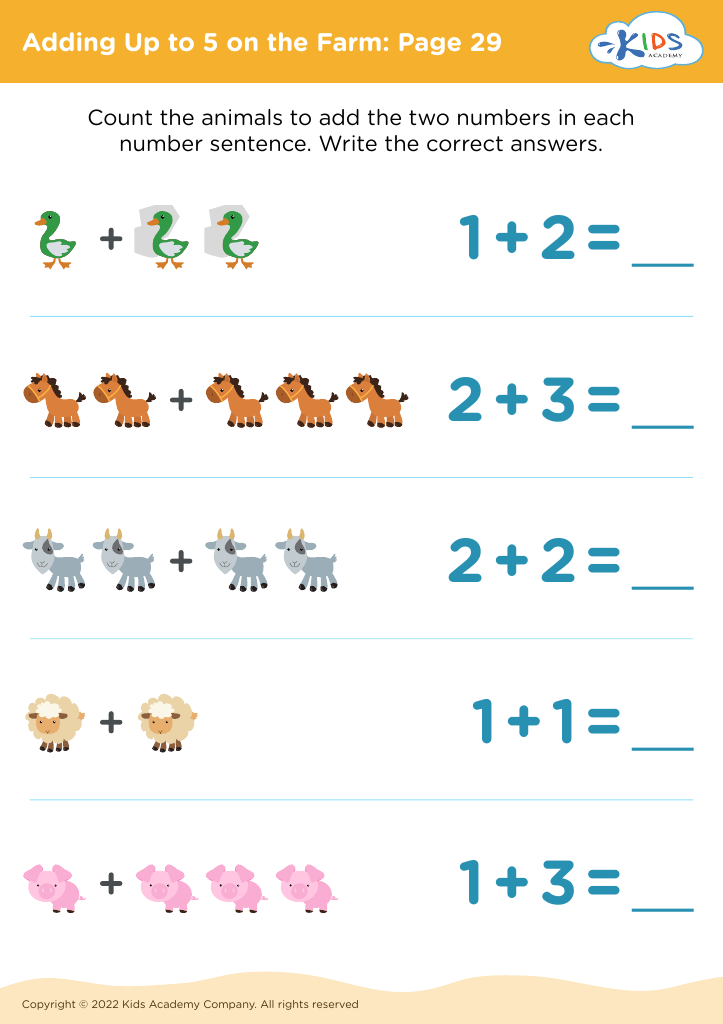
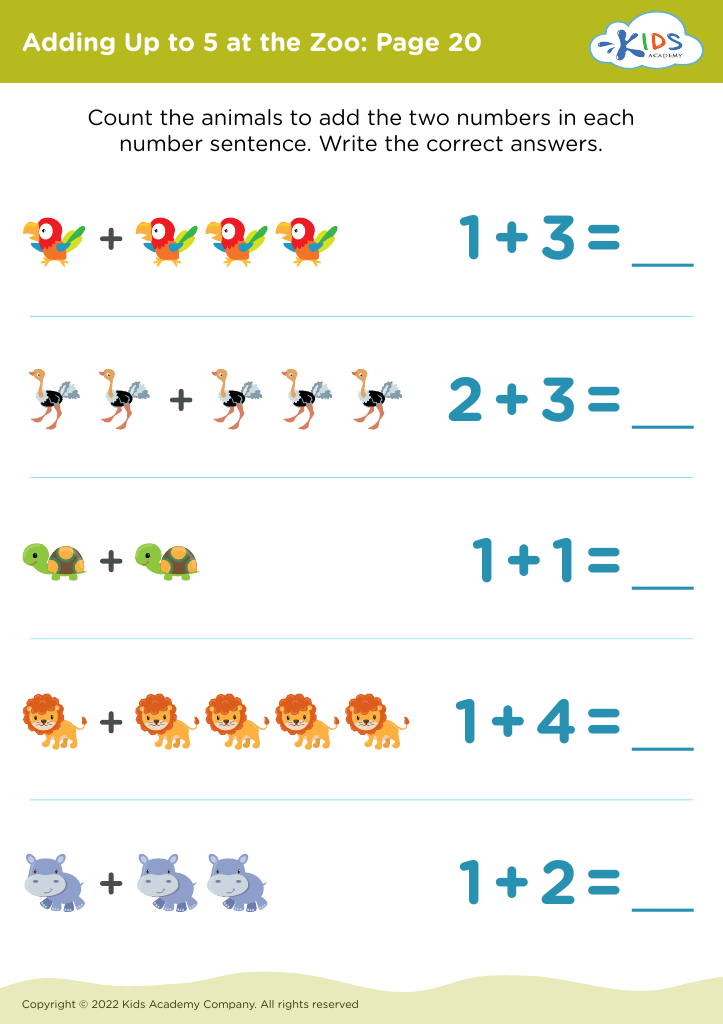
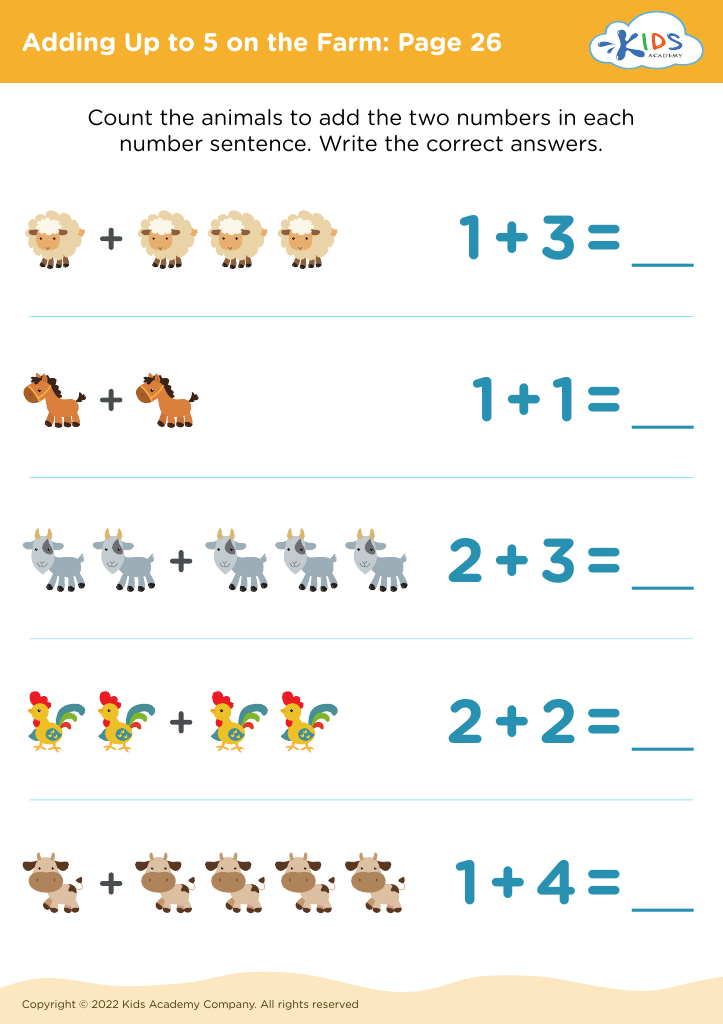
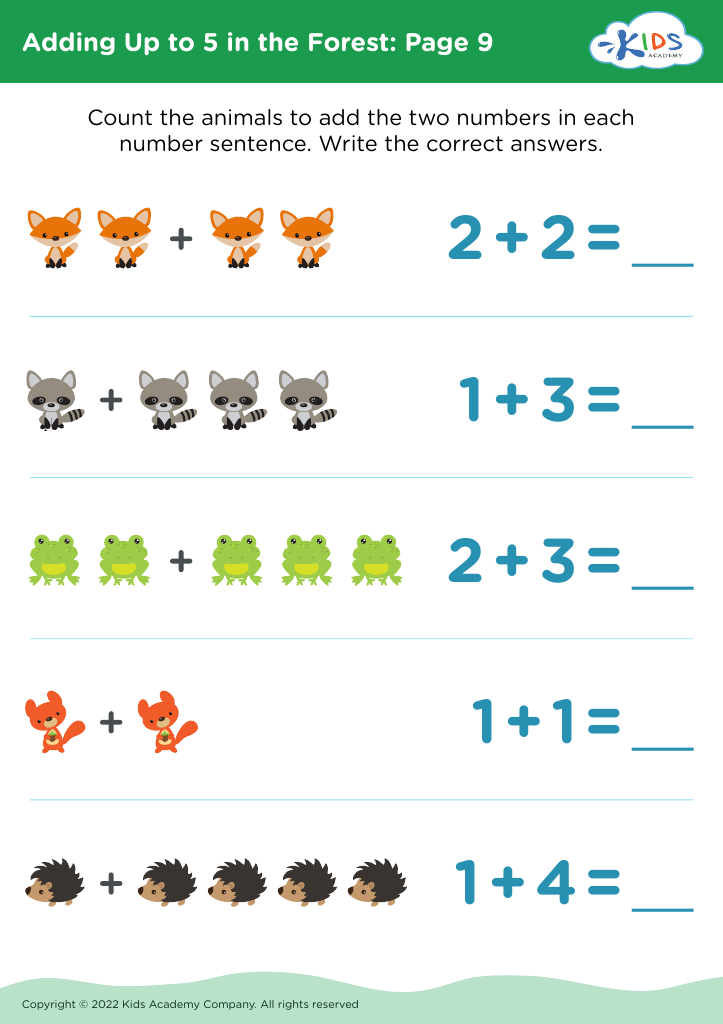
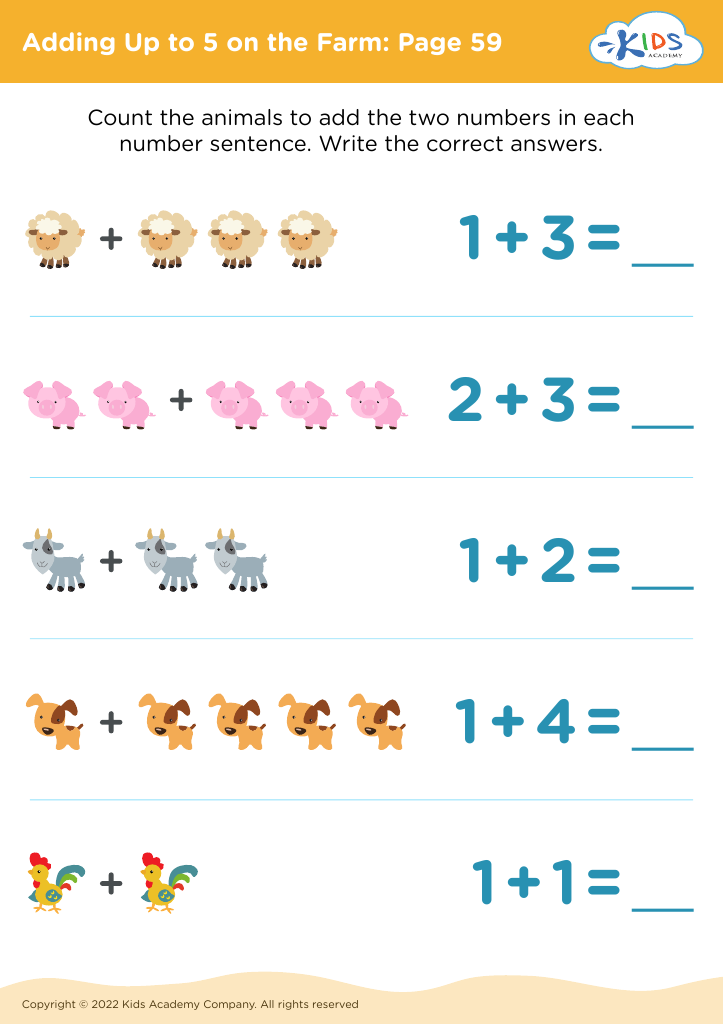
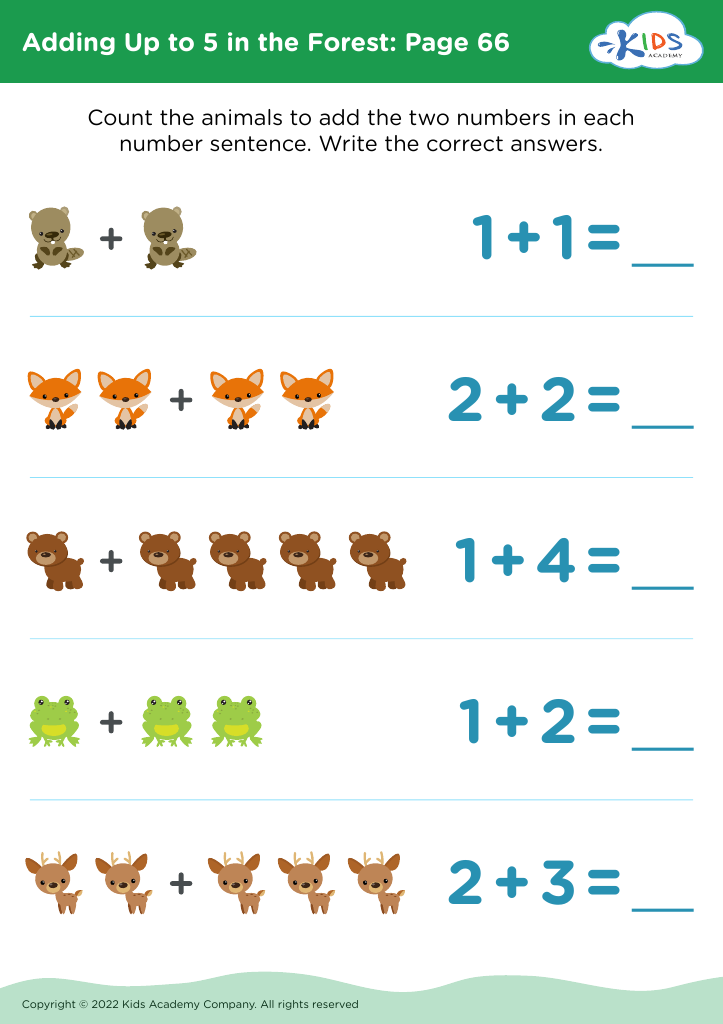
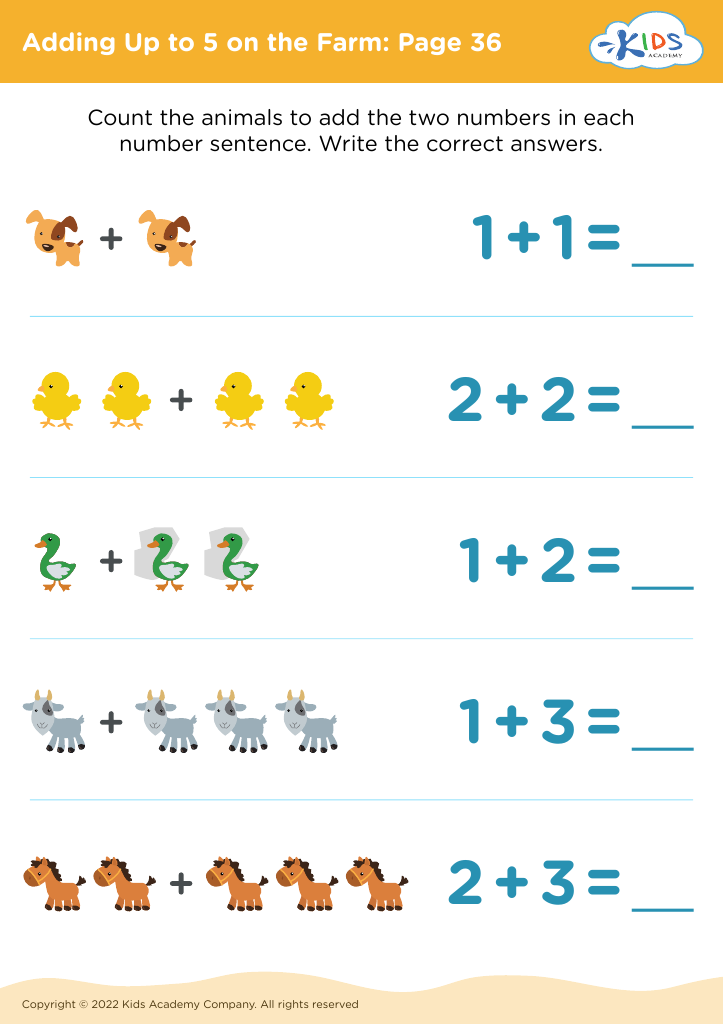
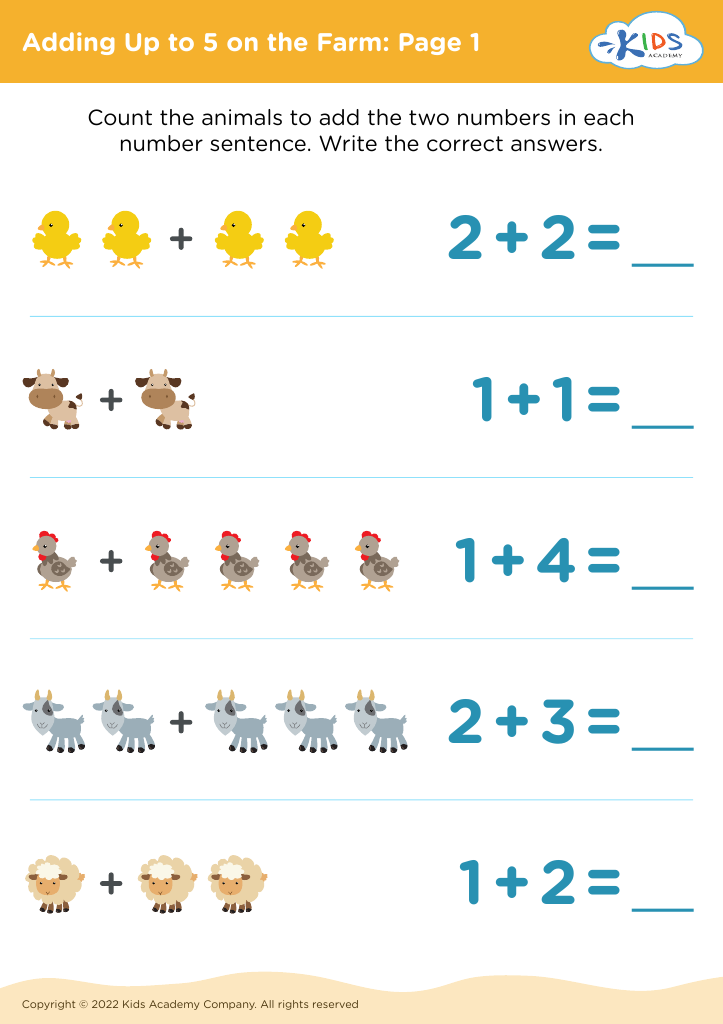
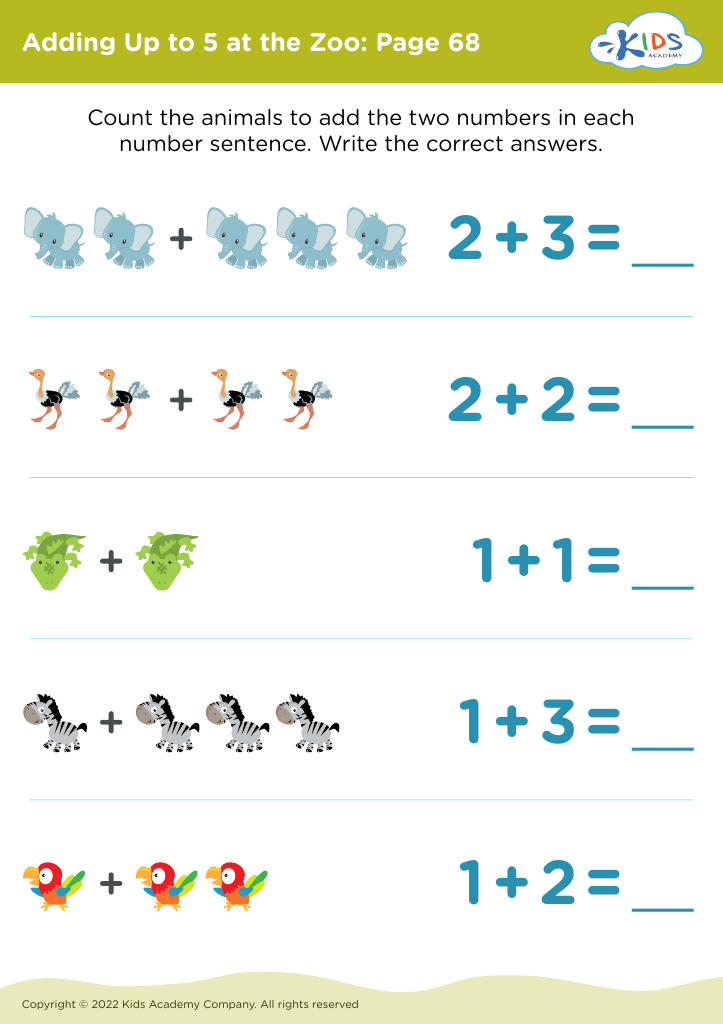
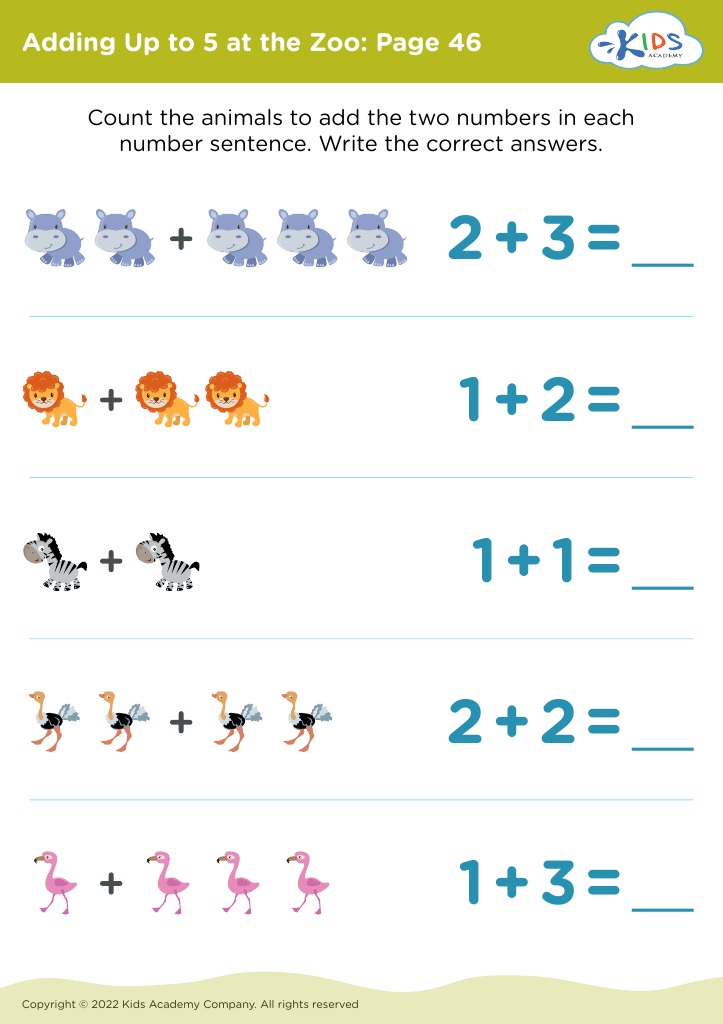
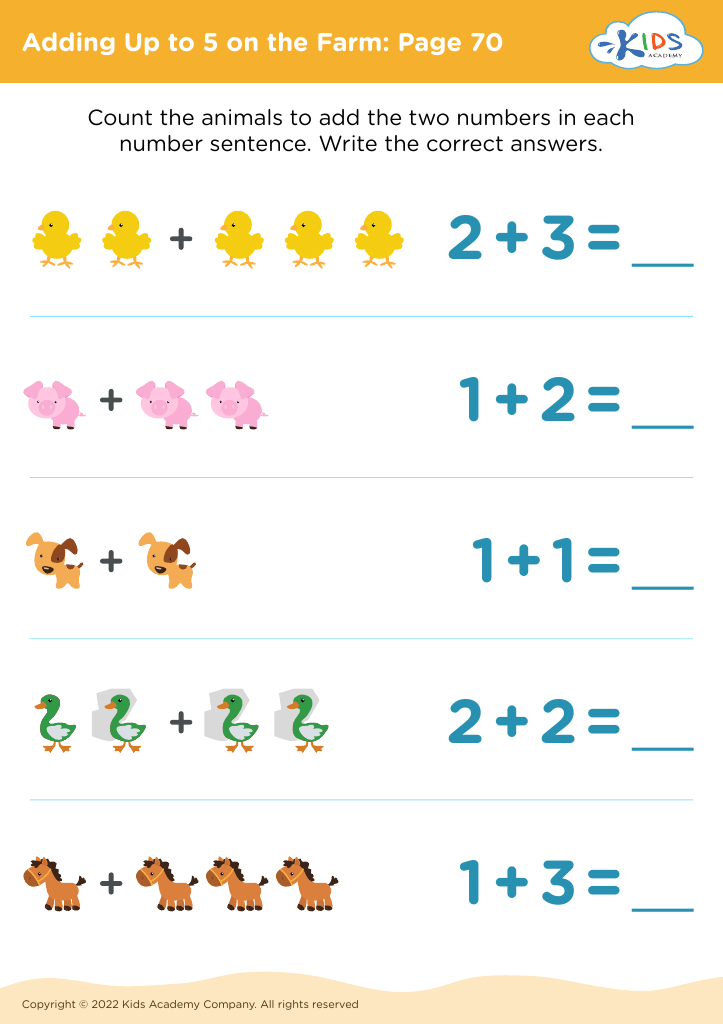
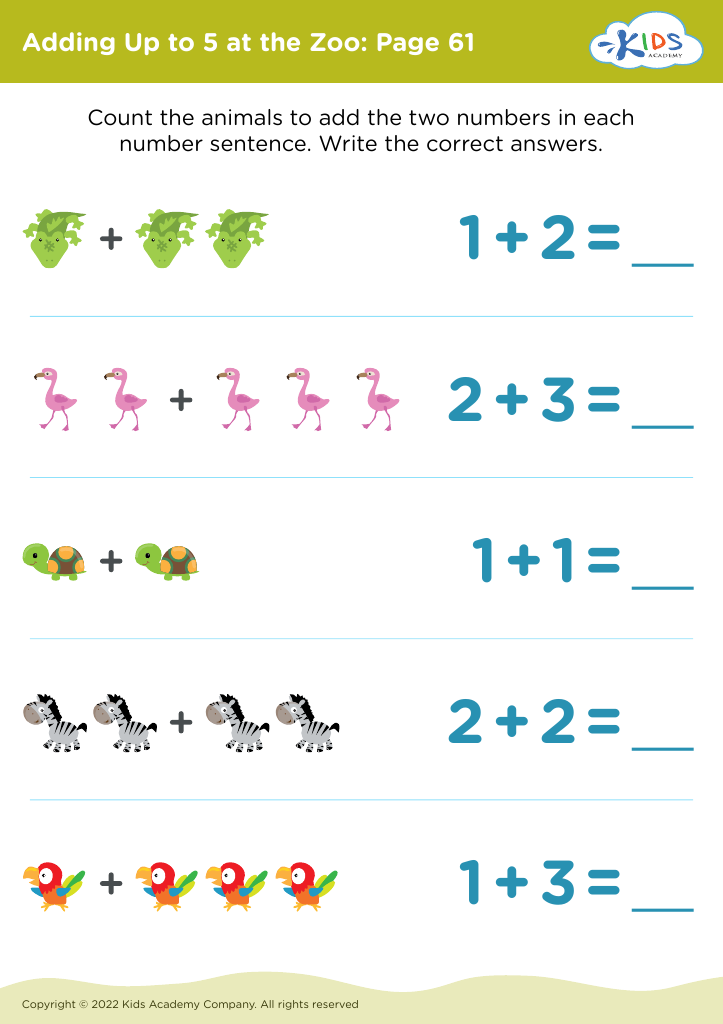
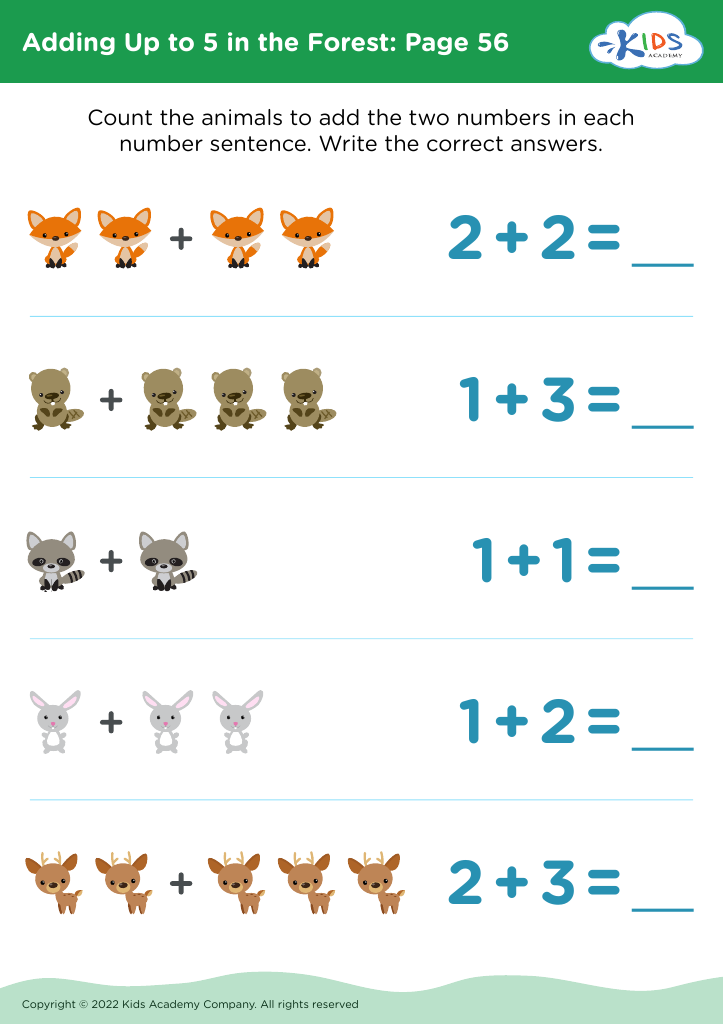
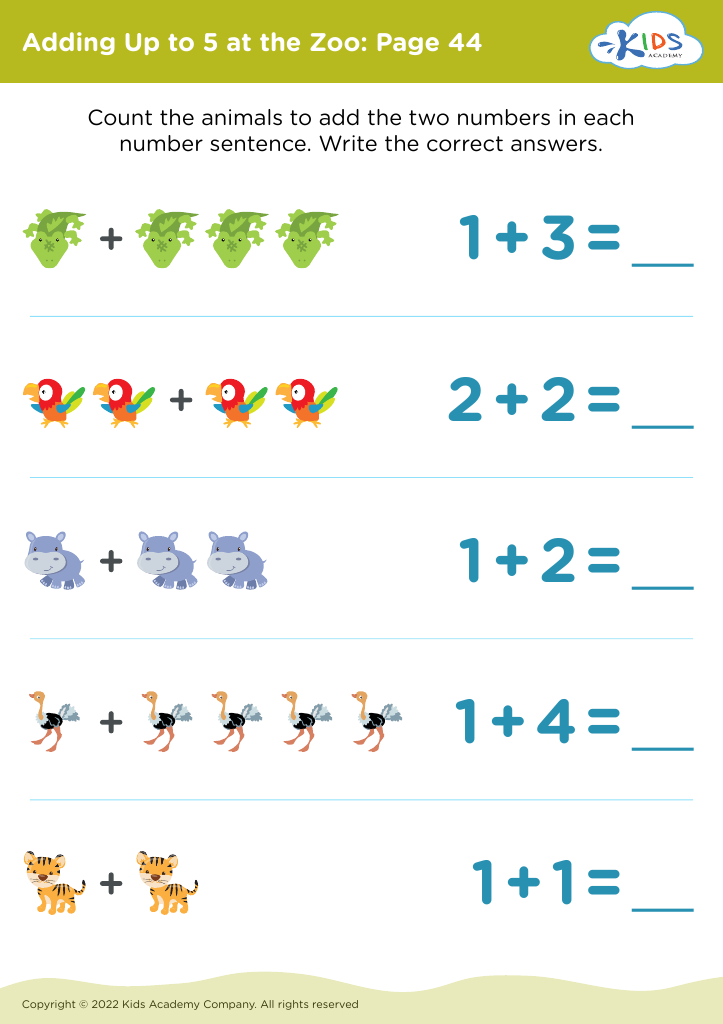
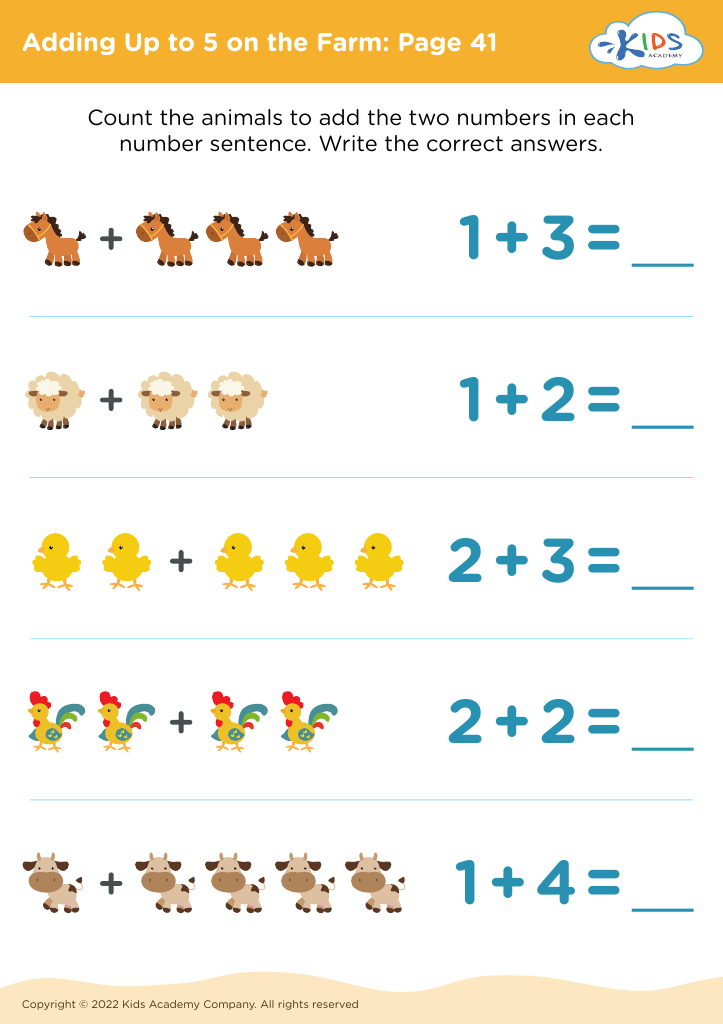
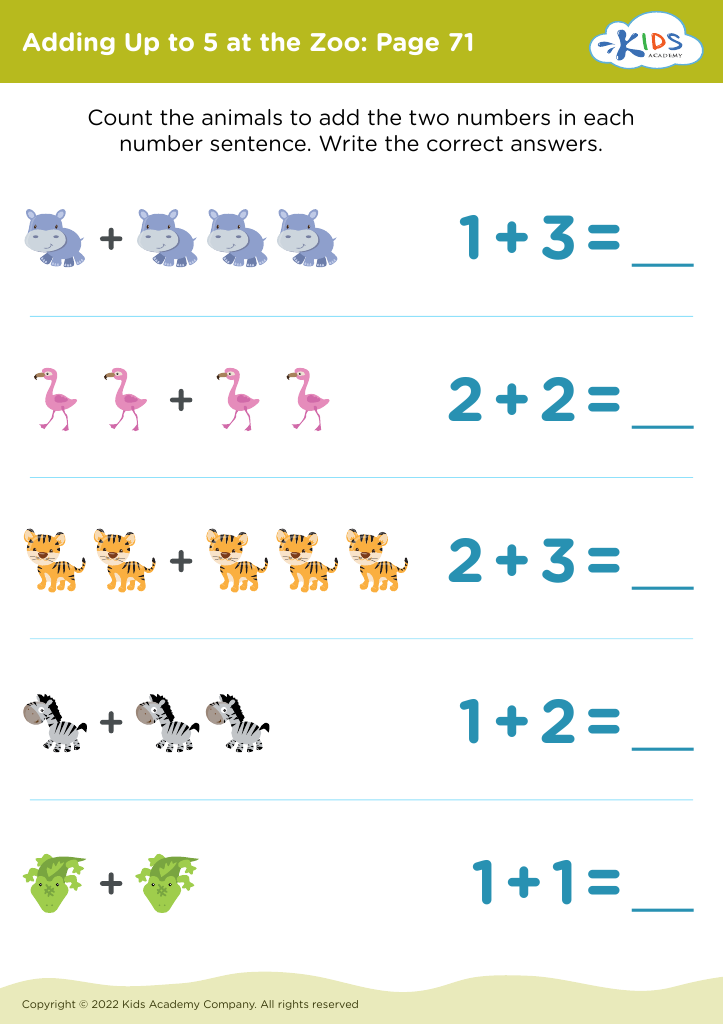
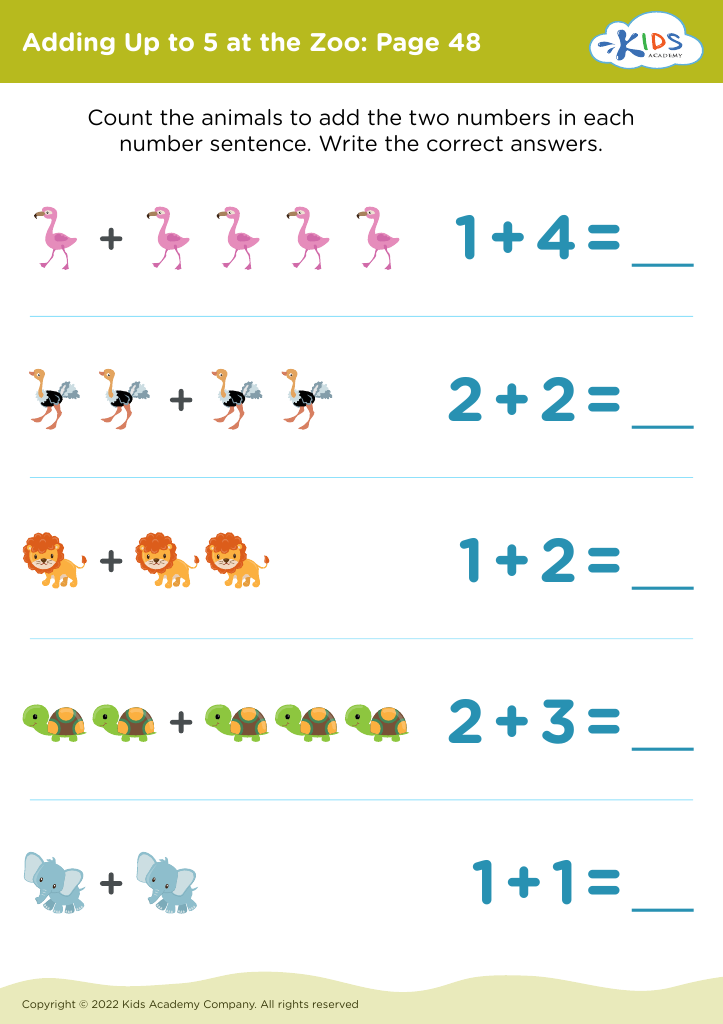
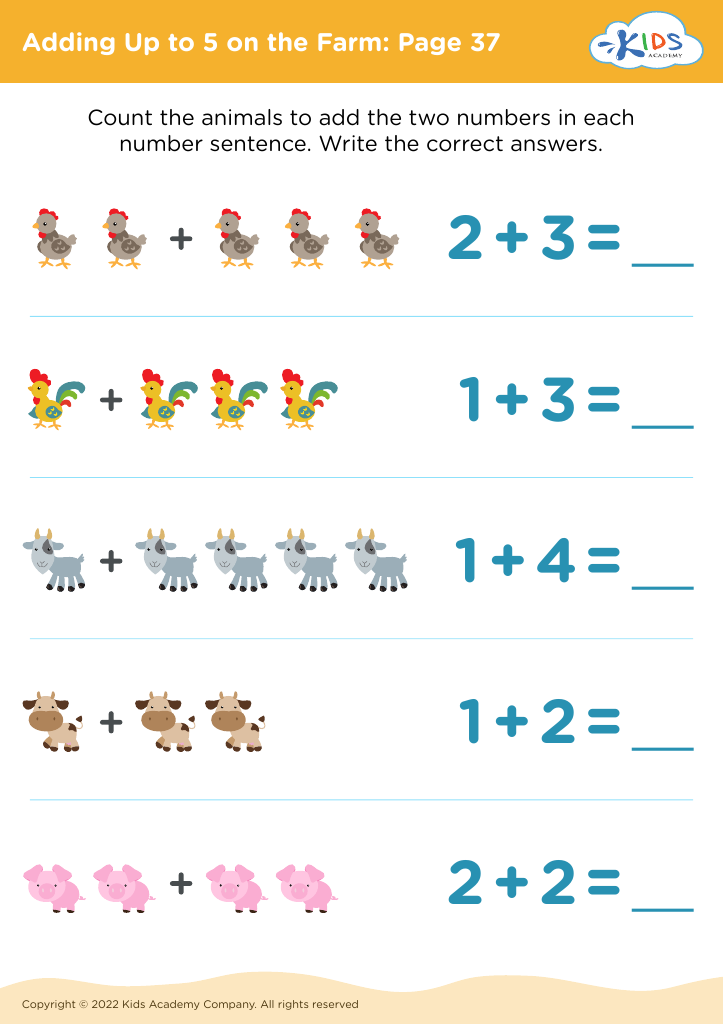
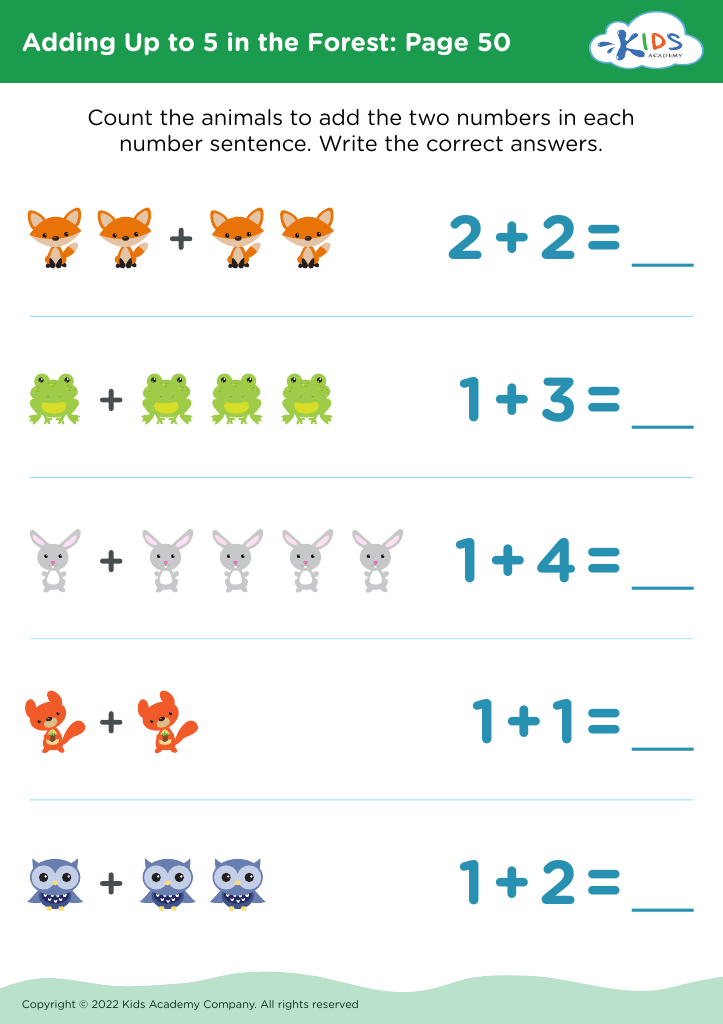
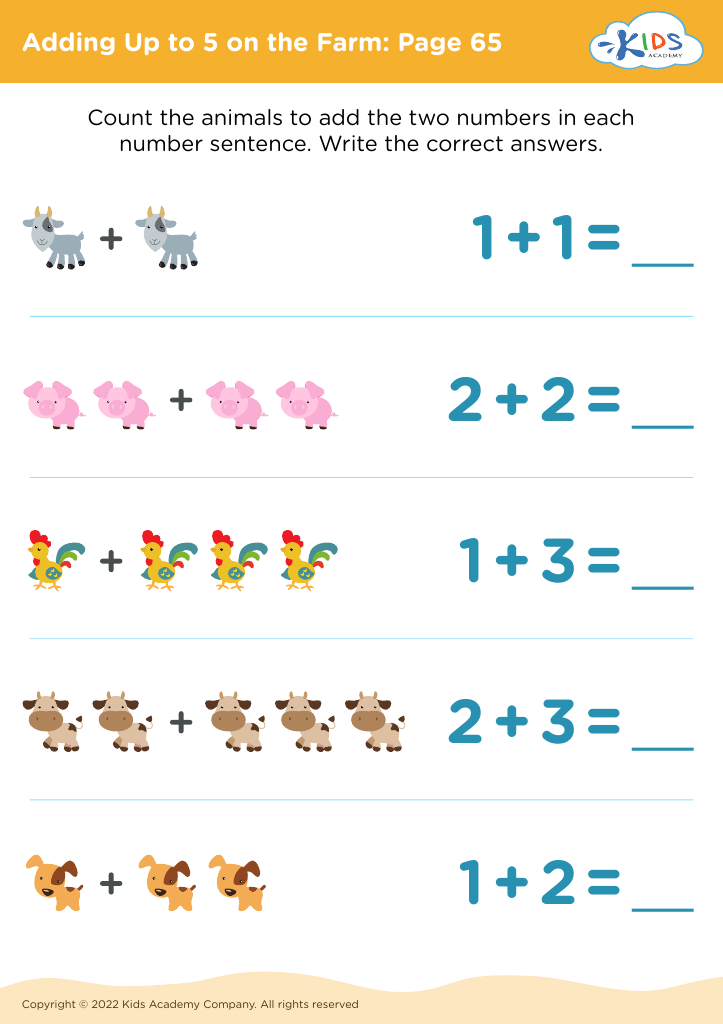
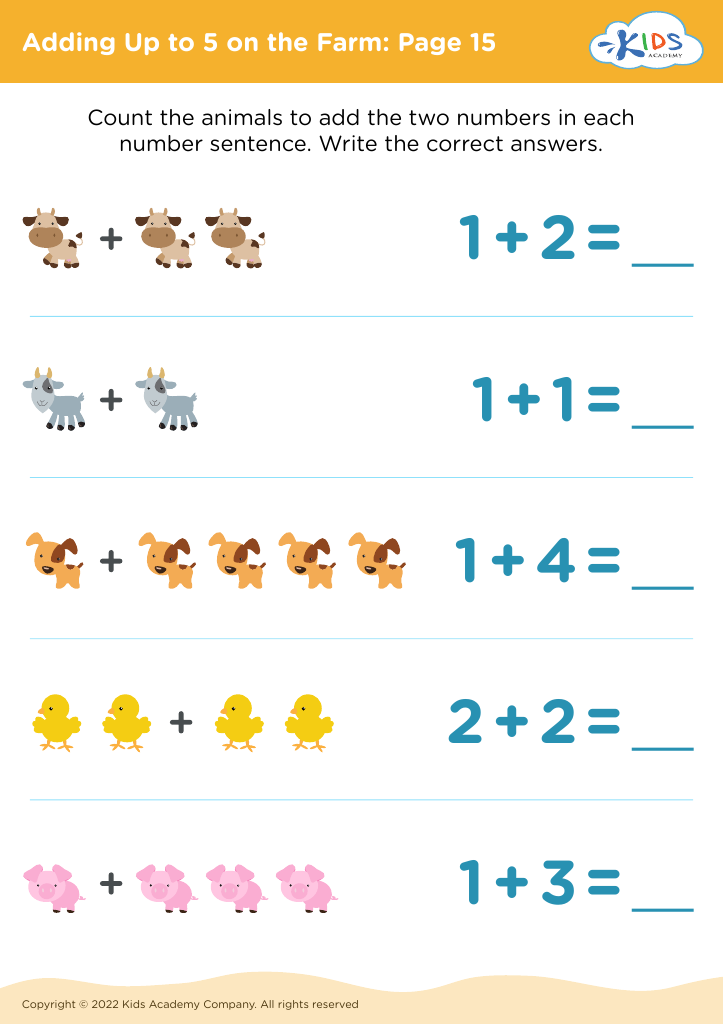
Moreover, incorporating animals into learning activities makes math more relatable and fun. For example, when students count and add animals in various scenarios—such as "If we have 2 cats and 3 dogs, how many animals do we have in total?"—they can visualize the problem, making abstract concepts more concrete. This method enhances their cognitive development, supports their ability to solve problems, and lays the foundation for more complex mathematics in the future.
Parents and teachers play a crucial role in fostering this learning. By integrating animal themes into lessons or casual conversations, they can encourage children to explore both the natural world and mathematical concepts simultaneously. This holistic approach not only enhances academic skills but also nurtures a sense of wonder and connection to the environment, potentially leading to lifelong learners who are both numerate and ecologically aware.








