Visual learning enhancement Adding Up to 5 Worksheets for Ages 5-7
4 filtered results
-
From - To
Discover our "Visual Learning Enhancement: Adding Up to 5 Worksheets" designed specifically for children ages 5-7. These engaging worksheets integrate vibrant visuals with fun activities to support early math skills. Your child will improve their understanding of addition through colorful illustrations and interactive exercises that make learning enjoyable. Each worksheet encourages visual recognition, making it easier for young learners to grasp foundational concepts. Perfect for at-home practice or classroom use, these resources are tailored to enhance cognitive development in little ones. Foster your child’s confidence in math while they explore the world of numbers through our captivating, visual learning approach.
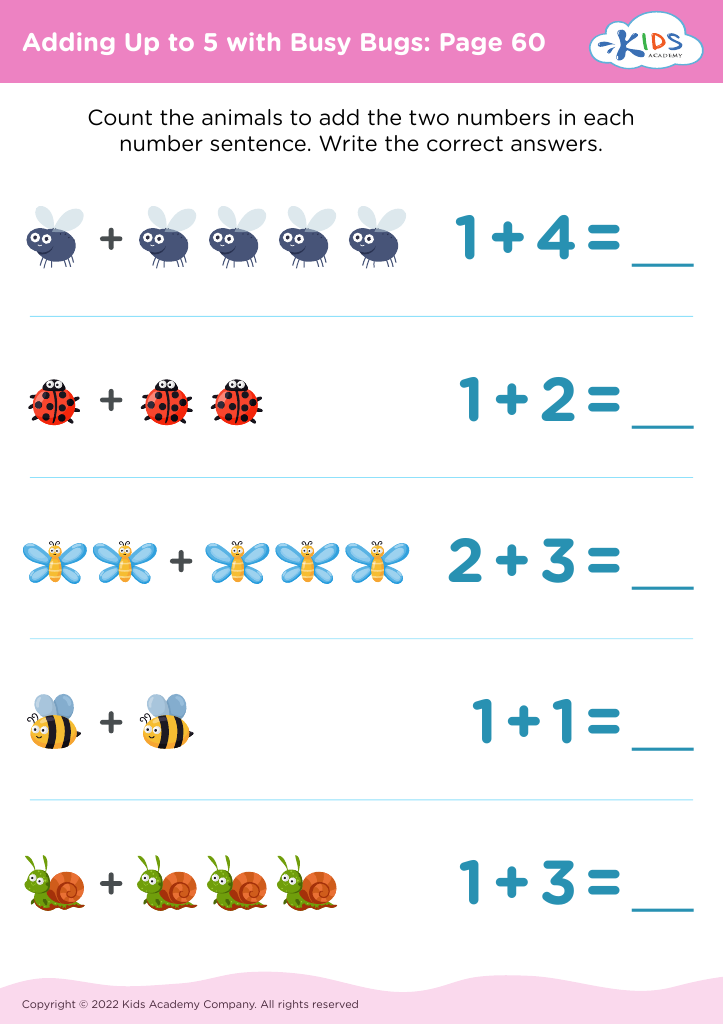
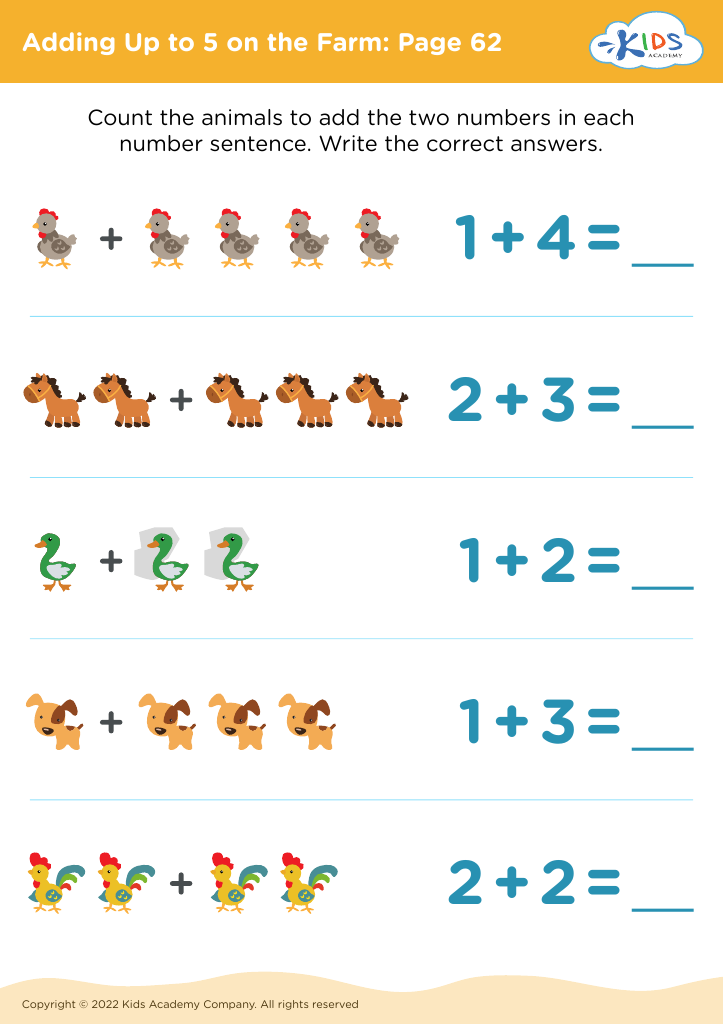
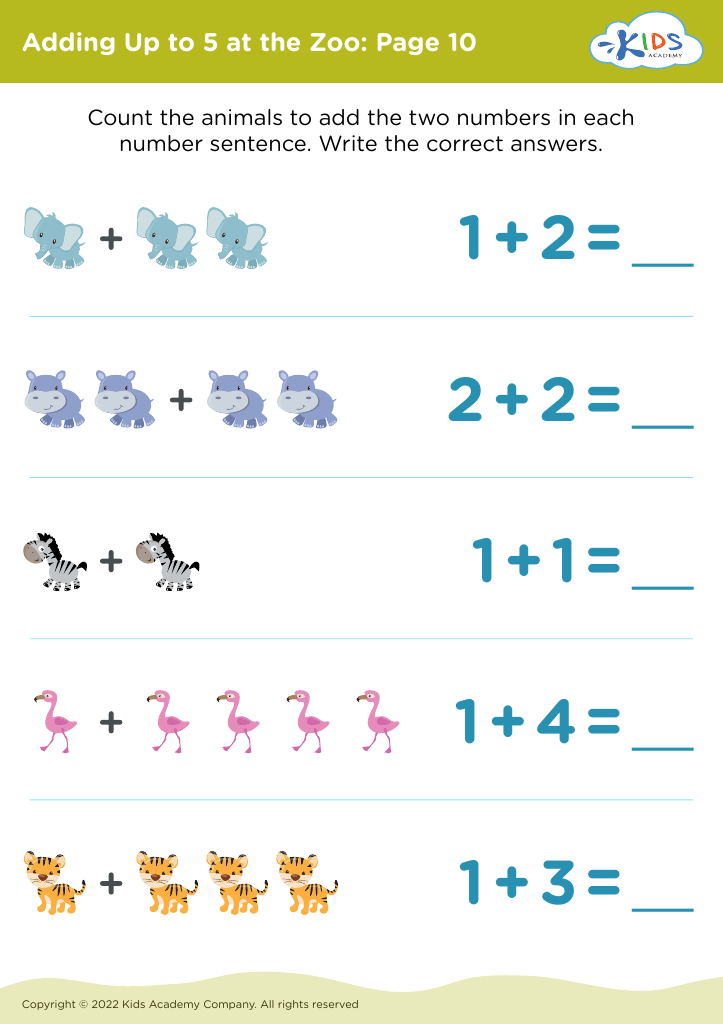
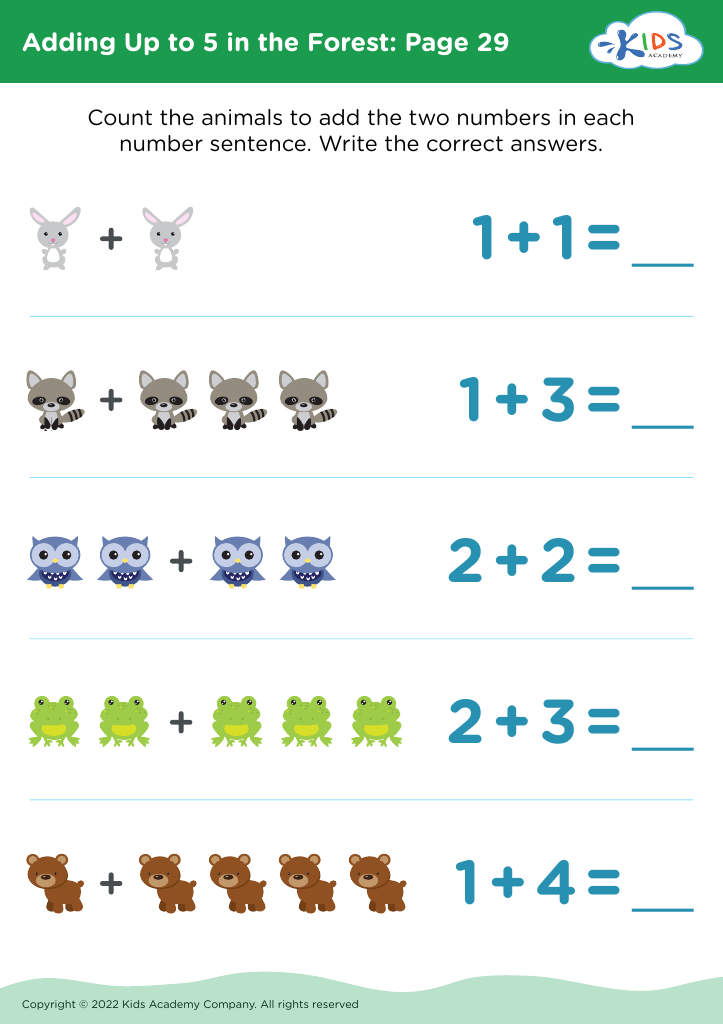








Visual learning enhancement plays a crucial role in teaching mathematical concepts like "Adding Up to 5" for young learners aged 5-7. This form of learning leverages imagery and visual aids, making abstract concepts tangible for children who are naturally drawn to visuals.
When parents and teachers incorporate visual methods, such as counters, number lines, and colorful charts, they provide children with diverse ways to understand and retain mathematical principles. Visual aids can streamline complex ideas, allowing children to grasp the concept of addition without overwhelming them. For example, using pictures of apples for each number helps children visualize the sum and make connections between numbers and their meanings.
Furthermore, visual learning enhances engagement and motivation. Young learners often benefit from playful, child-centered approaches, and visuals can transform learning into an enjoyable experience. It encourages exploration and experimentation, aligning with their natural curiosity.
By fostering visual learning in early education, parents and teachers can help build a strong mathematical foundation, encouraging critical thinking and problem-solving skills. This approach ultimately promotes confidence in children's mathematical abilities, preparing them for future academic success and lifelong learning. Engaging with visual aids not only nurtures a love for learning but also equips children with essential skills for their educational journey.








