Visual-motor skills Adding Up to 5 Worksheets for Ages 5-7
3 filtered results
-
From - To
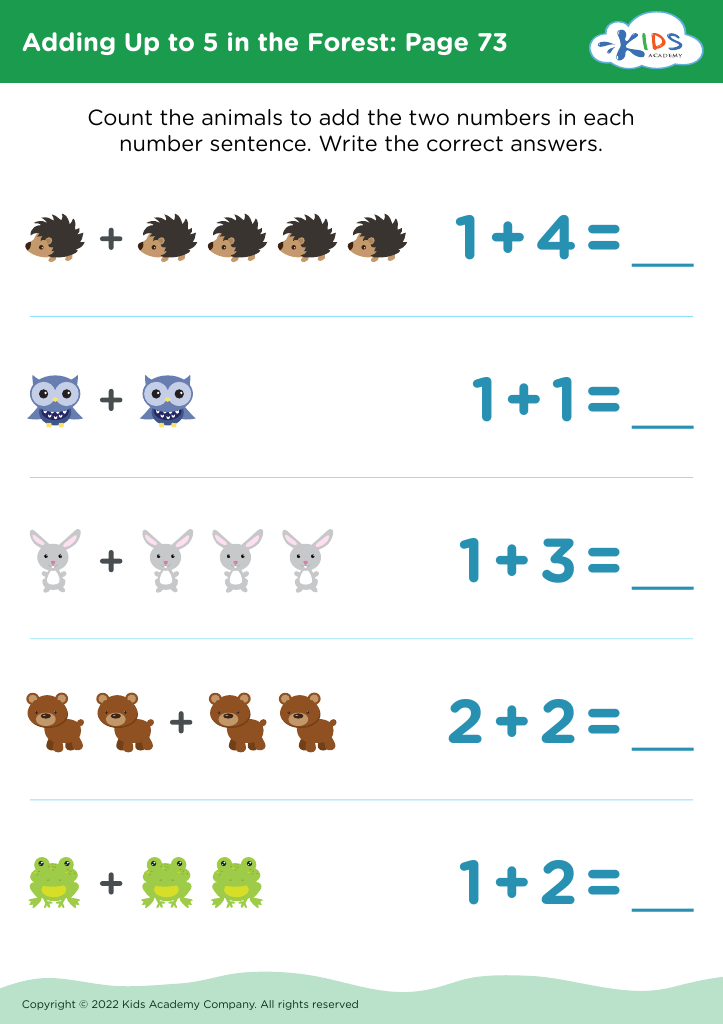
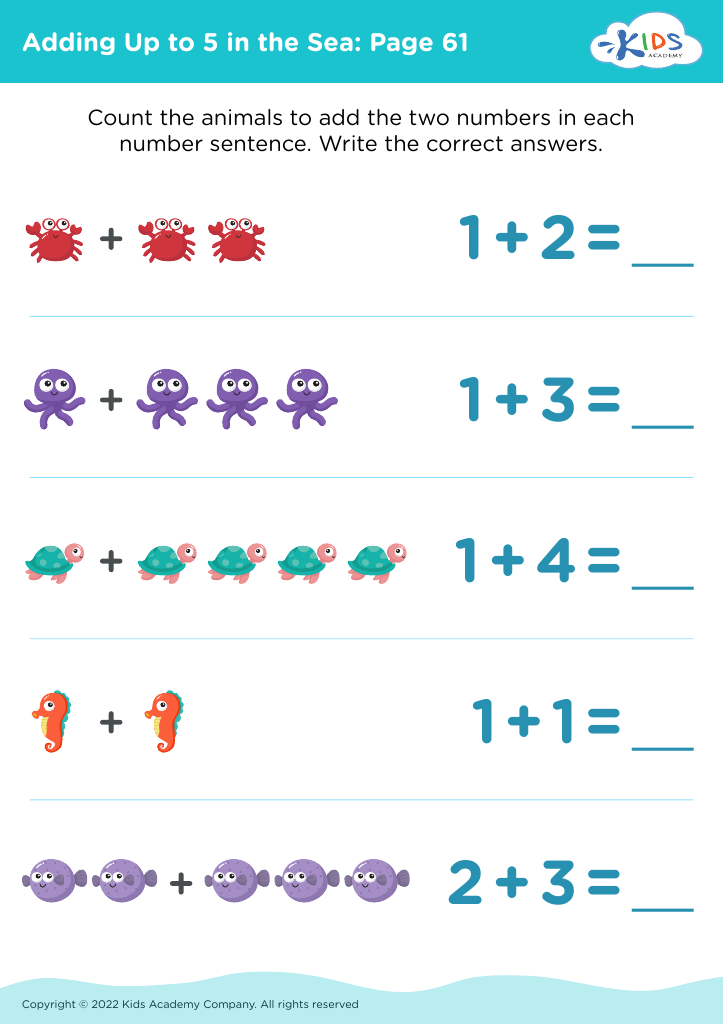
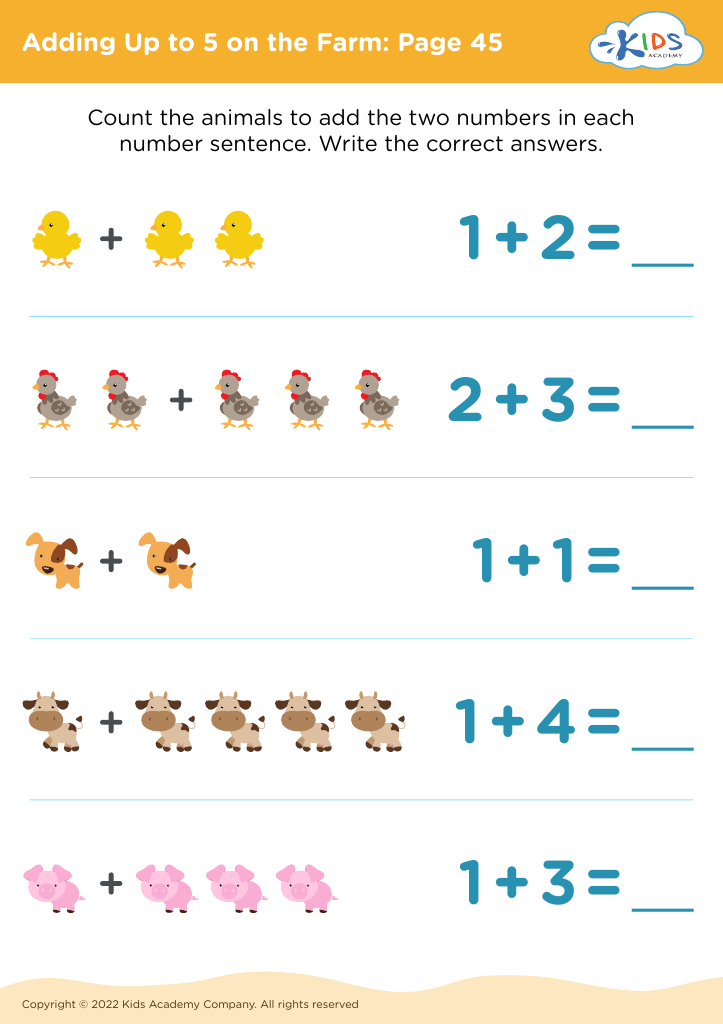
Boost your child's learning journey with our "Visual-Motor Skills Adding Up to 5 Worksheets" designed specifically for ages 5-7. These engaging worksheets blend fundamental math concepts with essential visual-motor skills, essential for early development. Each activity encourages students to explore adding numbers up to 5 while enhancing hand-eye coordination and spatial awareness. Perfect for creating a solid foundation in mathematics, our resources provide children with fun-filled challenges that make learning enjoyable. Download and print the worksheets to enrich your child's math skills while fostering important developmental aspects. Start their educational adventure today!



%20(1).jpg)




Visual-motor skills are crucial for young children aged 5-7 as they lay the foundation for academic success and daily functioning. These skills involve the ability to coordinate visual information with motor actions, enabling kids to perform tasks like writing, drawing, and completing puzzles. Specifically, adding up to 5 demands precision and accuracy in number recognition and manipulation, which are elemental in understanding basic math concepts.
Support in developing these skills helps children gain confidence in their abilities, enhancing their willingness to engage in instructional activities. When students grasp how to combine numbers visually and physically, they prepare themselves for more complex mathematical concepts. Moreover, strong visual-motor skills are correlated with fine motor skills, crucial for tasks like using scissors, buttoning clothing, or eating with utensils.
For parents and teachers, fostering these skills means facilitating a child's overall cognitive, social, and emotional development. Early interventions can address any challenges, ensuring that children build a solid foundation to succeed in later educational stages. Consequently, nurtured visual-motor skills not only promote academic achievement but also contribute positively to a child’s self-esteem and independence, creating a more holistic, well-rounded individual.








