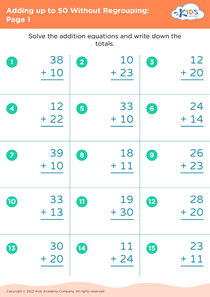
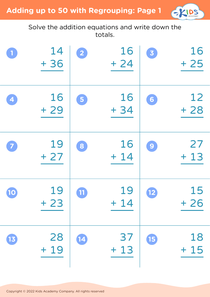
Counting practice Adding up to 50 Misc Worksheets for Ages 5-7
5 filtered results
-
From - To
Help your child master addition with our "Counting Practice Adding up to 50" worksheets, meticulously designed for ages 5-7. These fun, engaging activities offer a variety of exercises to build a solid foundation in math. Students will develop their counting and addition skills while staying engaged and entertained. Tailored to young learners, these worksheets feature colorful visuals and interactive problems that make learning enjoyable. Perfect for classroom use or at-home practice, our worksheets give children the tools they need to succeed in math. Explore our collection and watch your child's confidence grow as they unlock the secrets of addition up to 50!
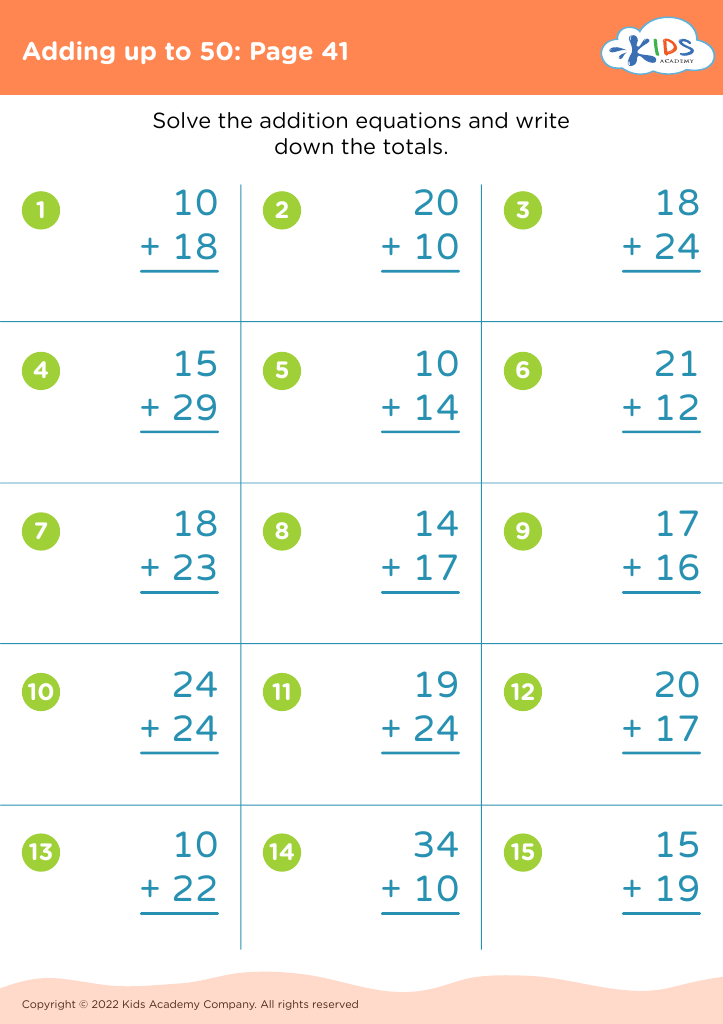
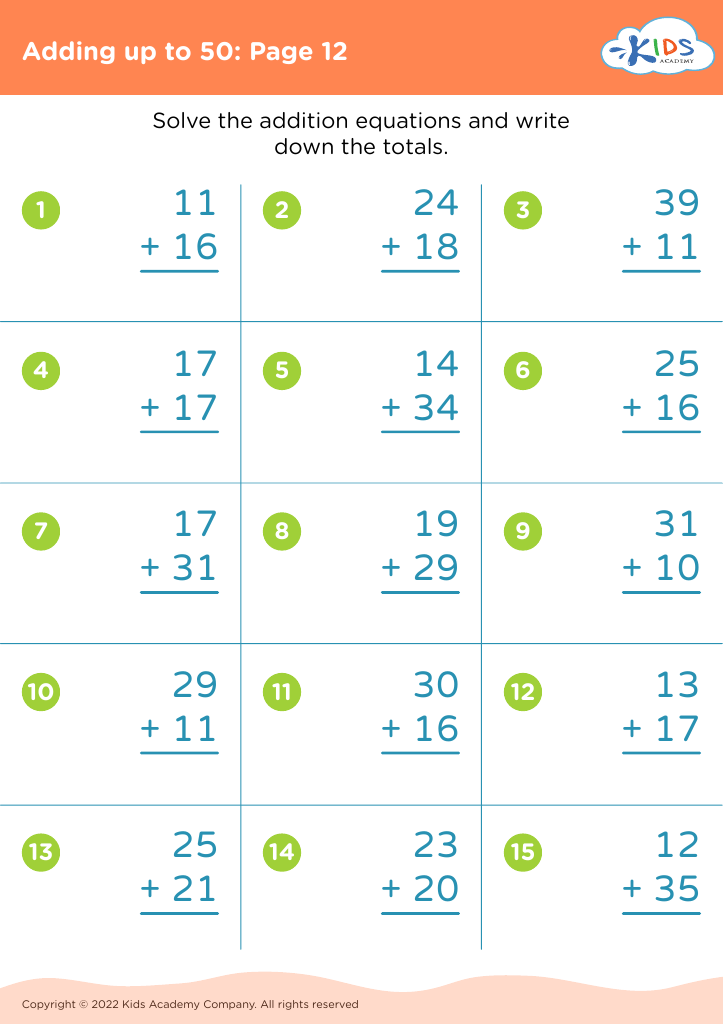
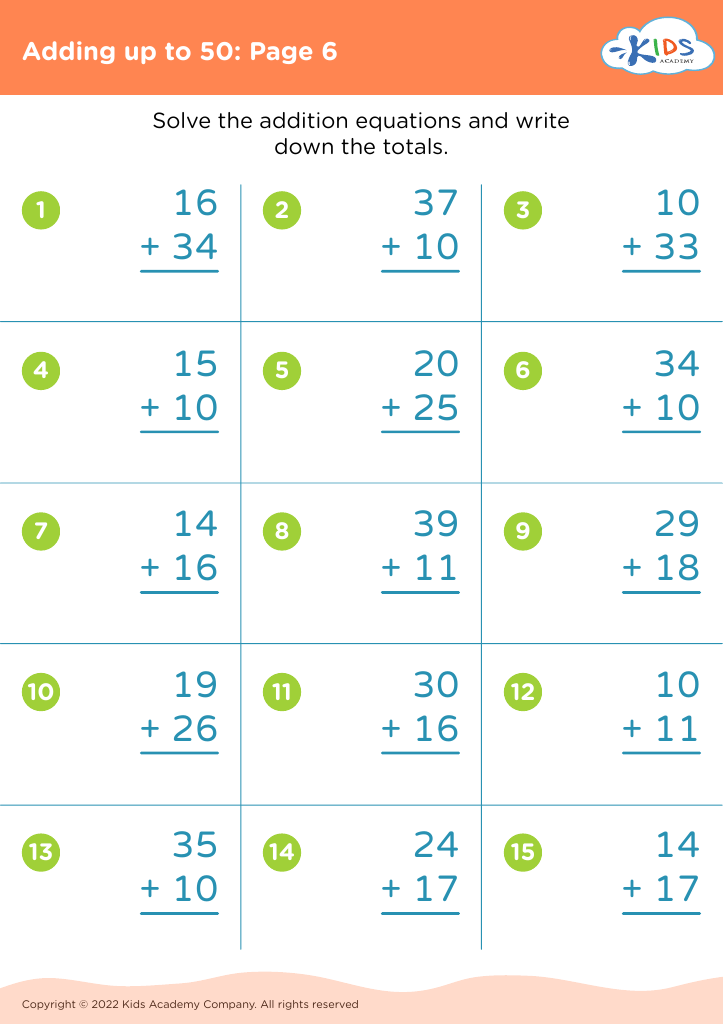
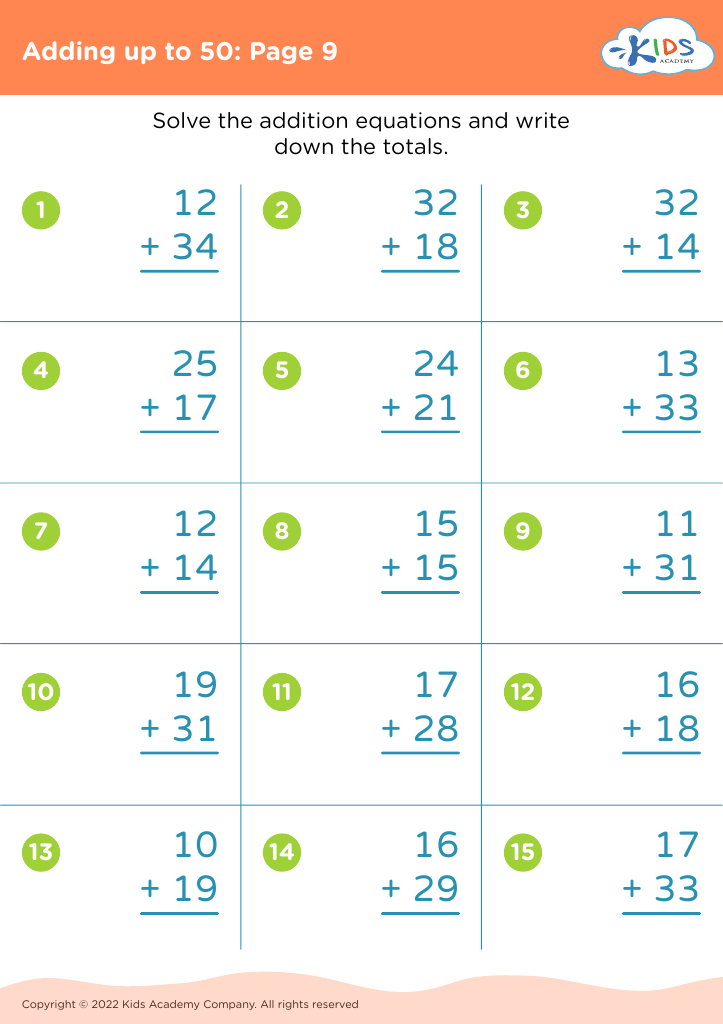
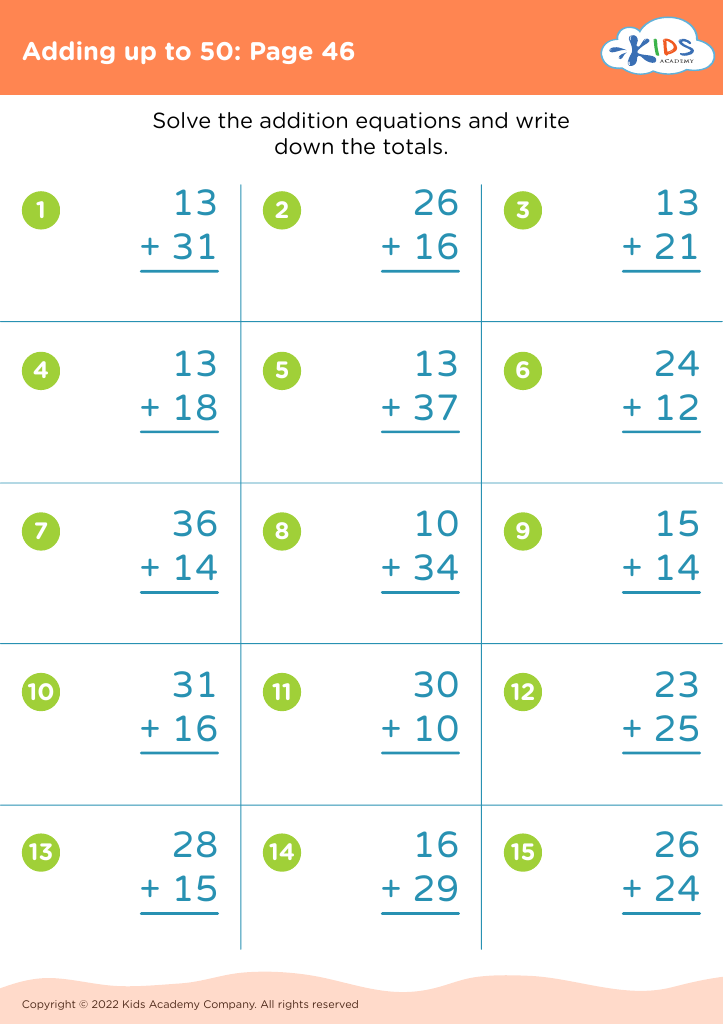


Counting practice and mastering addition up to 50 are essential foundational skills for children ages 5-7 for several key reasons. At this developmental stage, young learners are cultivating their number sense, which is the ability to understand, relate, and connect numbers. Engaging in consistent counting practice helps solidify this number sense, providing a strong base for more complex mathematical concepts.
First, fluency in counting and addition allows children to build confidence in their math abilities, fostering a positive attitude towards the subject. This self-assurance often leads to increased engagement and enjoyment, essential for continued educational success.
Second, early proficiency in basic math supports cognitive development. Children enhance their problem-solving skills, logical thinking, and the ability to follow a sequence. These skills are not just vital for math, but for everyday tasks and academic learning across other subjects.
Moreover, counting and simple addition are practical life skills. They enable children to manage everyday tasks such as handling money, telling time, and measuring objects — activities they encounter in daily life.
In summary, focusing on counting and addition up to 50 during early childhood primes students for academic success, nurtures a love for math, and prepares them for real-world activities. Parents and teachers who encourage this practice provide a critical stepping stone for future learning achievements.