Improve reading skills Adding up to 50 Misc Worksheets for Ages 5-7
3 filtered results
-
From - To
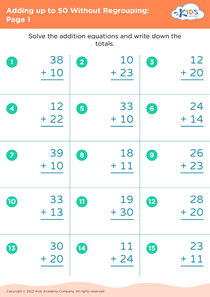
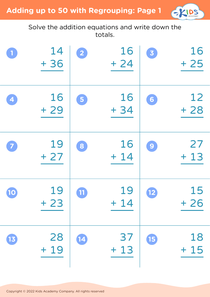
Looking to strengthen your child's academic foundation? Check out "Improve Reading Skills Adding up to 50 Misc Worksheets for Ages 5-7!" These expertly crafted worksheets blend math and reading, focusing on enhancing both calculation abilities and literacy. Each activity is designed to make learning engaging and enjoyable, ensuring children develop crucial numeracy and reading comprehension skills simultaneously. Ideal for young learners, these worksheets offer a fun way to practice adding numbers up to 50, encouraging a love for learning at an early age. Visit Kids Academy to download these invaluable resources and give your child a head start in their education journey.
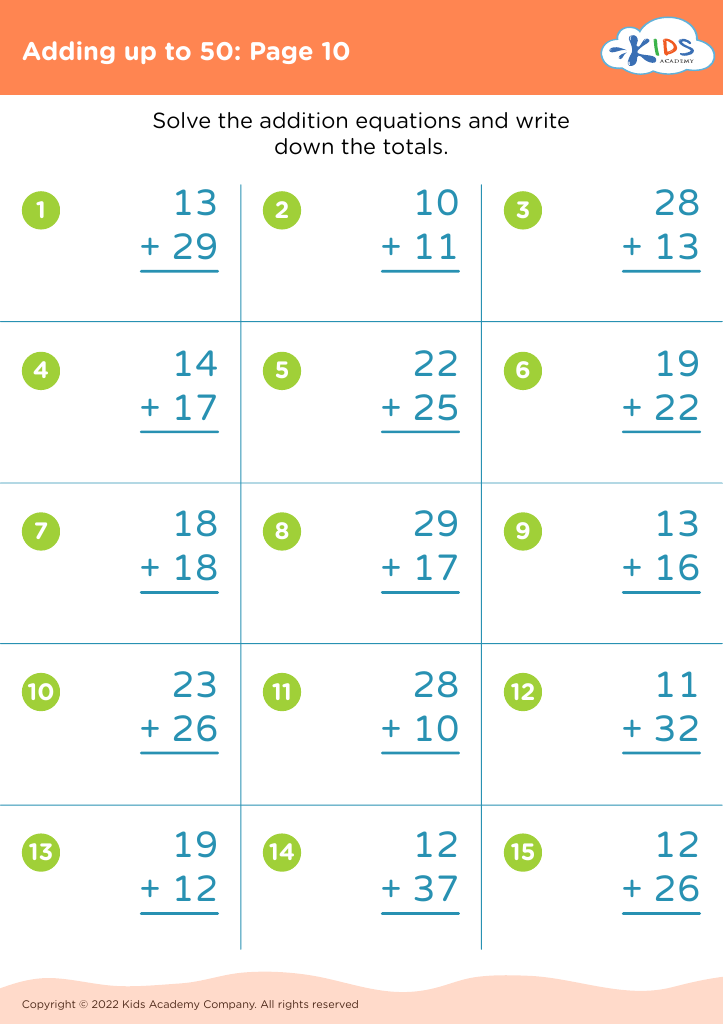


Improving reading skills and foundational math abilities in children ages 5-7 is essential for several reasons. Firstly, early reading proficiency is a strong predictor of future academic success. When children learn to read effectively, they develop critical thinking, vocabulary, and comprehension skills that are fundamental for learning across all subjects. Proficiency in reading sets the stage for better performance in later grades, reducing the risk of academic struggles and increasing confidence and engagement in learning.
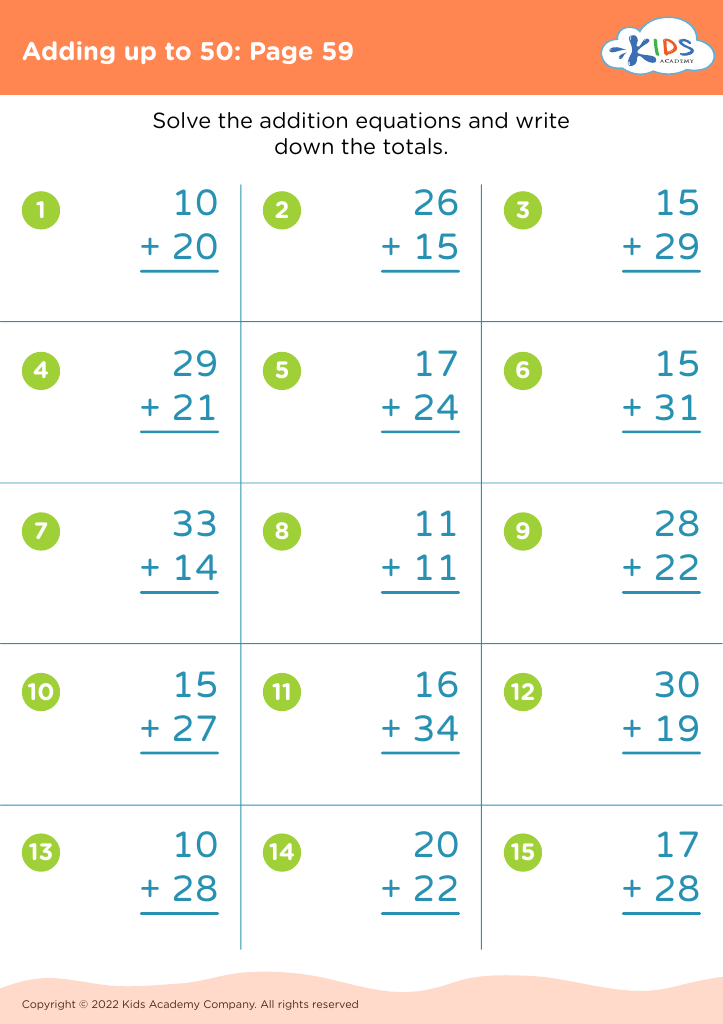
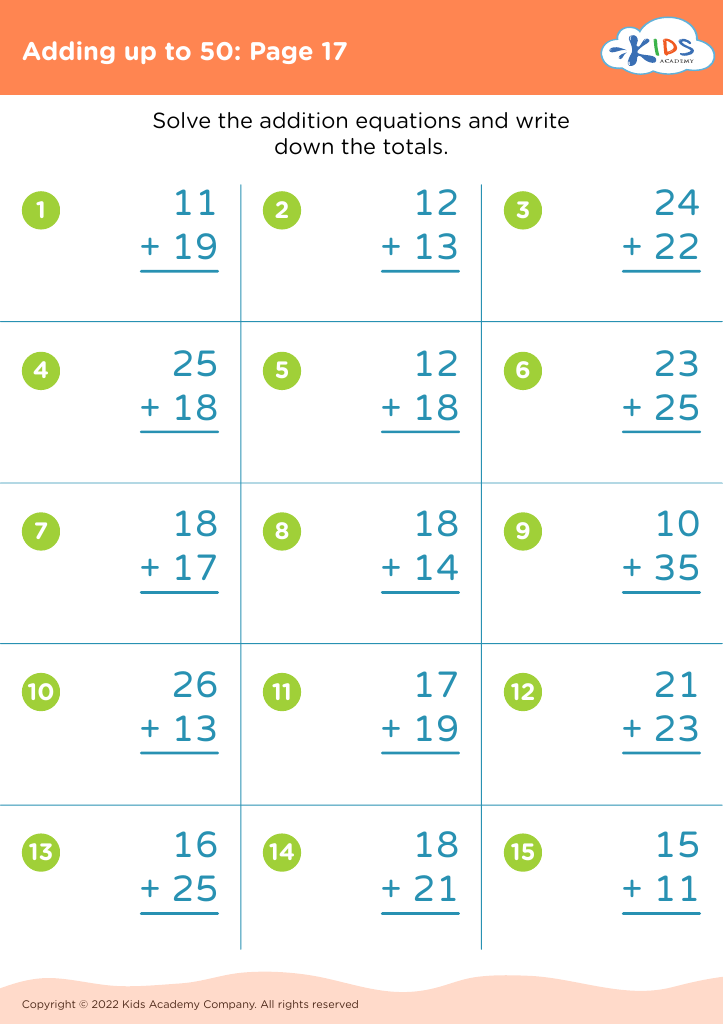
Adding up to 50 introduces basic arithmetic and helps solidify numerical sense, crucial for more advanced math concepts. Children learn problem-solving and logical reasoning abilities that can be applied in and out of the classroom. Early exposure to math develops a solid foundation, making it easier for children to tackle more complex mathematical challenges in the future.
Parents and teachers play a pivotal role in nurturing these skills. Encouraging reading and math at a young age can transform challenges into strengths. A balanced approach to literacy and numeracy, through games, activities, and consistent practice, supports cognitive development, ignites curiosity, and fosters a love for learning. By prioritizing these skills, adults help ensure that children build a strong academic foundation, capable of withstanding future educational demands, thereby helping them achieve their full potential academically and beyond.