Reading comprehension Adding up to 50 Misc Worksheets for Ages 5-7
4 filtered results
-
From - To
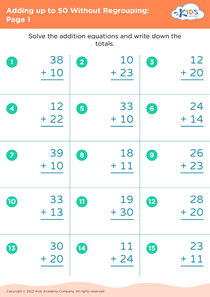
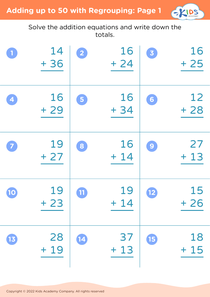
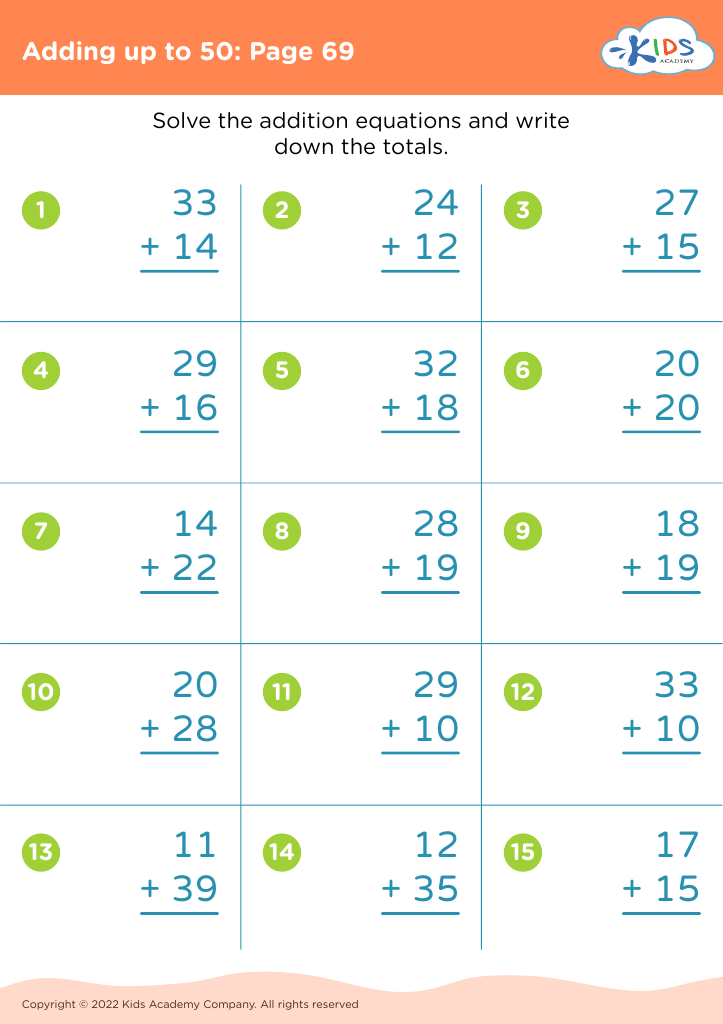
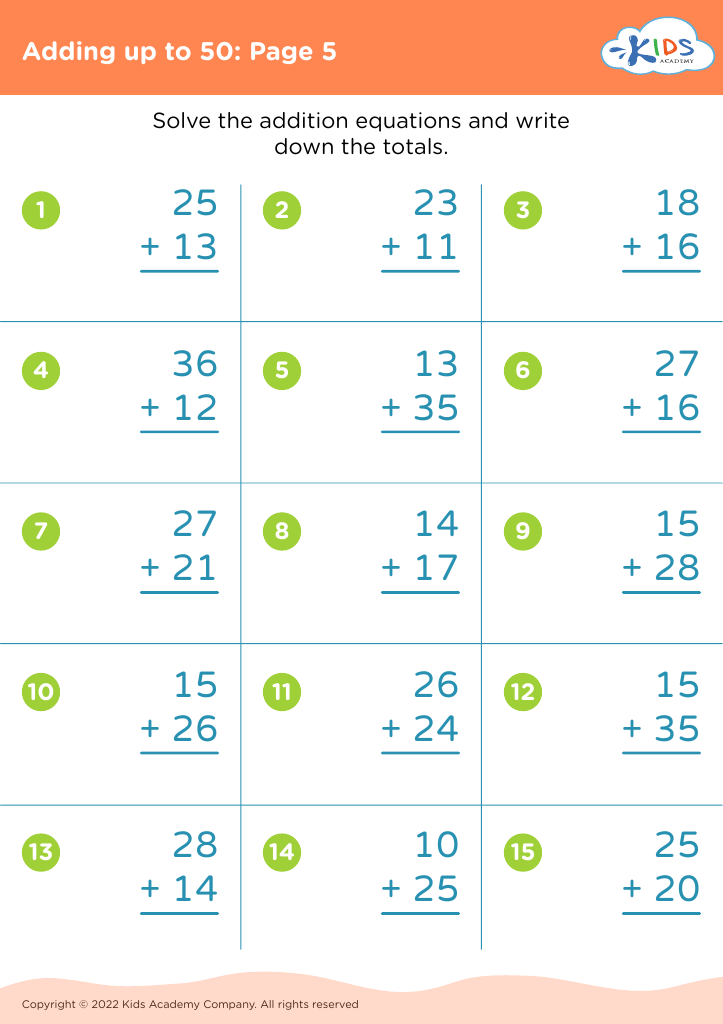
Enhance your child's reading and math skills with our Reading Comprehension Adding up to 50 Misc Worksheets for ages 5-7. Designed by education experts, these worksheets blend engaging narratives with math problems to boost both literacy and numeracy. Each story-driven exercise helps young learners grasp addition concepts up to 50, while reinforcing reading comprehension abilities. Ideal for classroom use or at-home practice, these worksheets are a fun and effective way to support your child’s educational journey. Discover a variety of interactive worksheets tailored to inspire confidence and success in both reading and math. Download now for free!
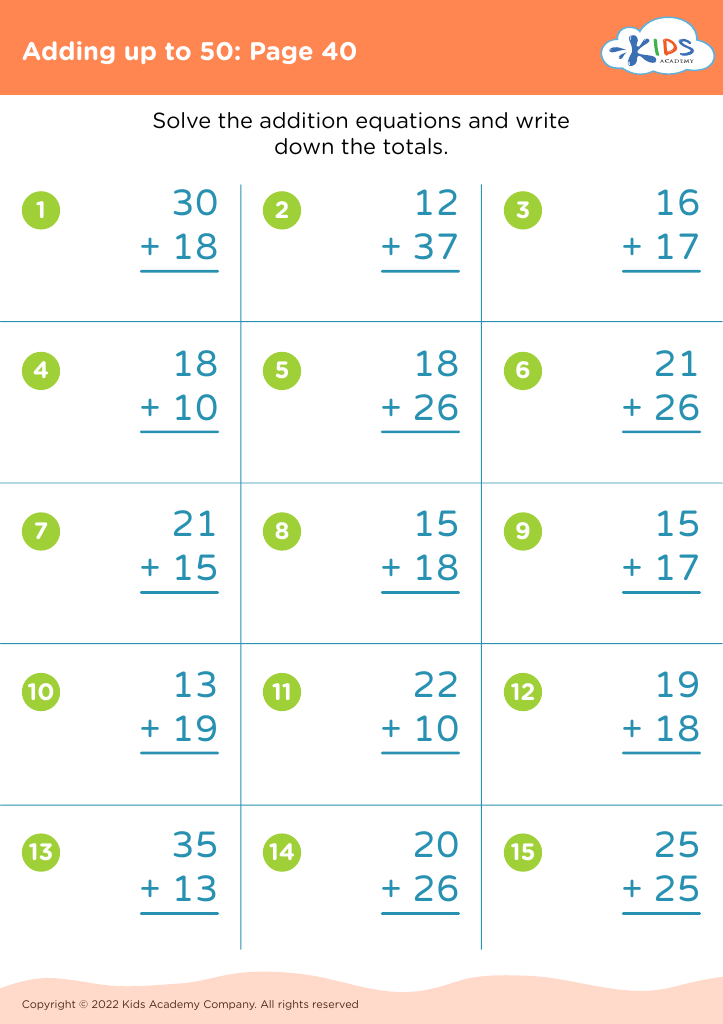
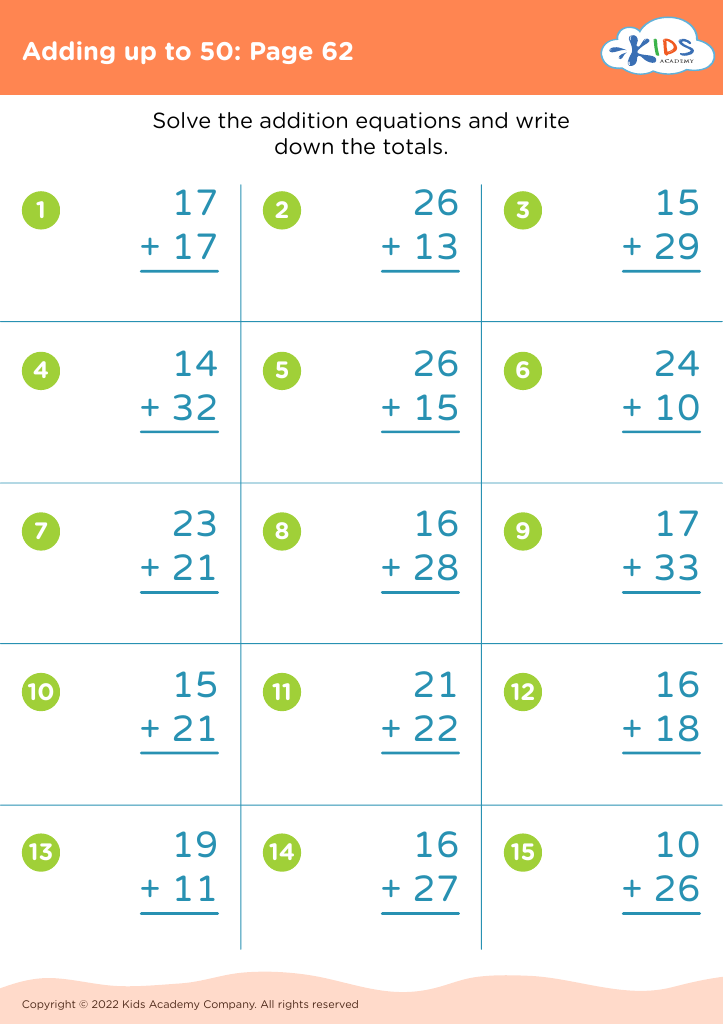


Reading comprehension and basic math skills, such as Adding up to 50, are fundamental components of early childhood education, vital to both intellectual and emotional growth. For children ages 5-7, these skills form the cornerstone of academic success and personal development. Here’s why parents and teachers should prioritize them:
Building Blocks for Learning
Reading comprehension is critical for understanding and processing written information, making it essential across all subjects. It allows children to follow instructions, grasp stories, and engage with complex texts as they progress in education. Early math skills, including addition up to 50, are equally important. They prepare children for more advanced mathematical concepts and problem-solving skills.
Enhancing Cognitive Skills
Both reading and math activities sharpen cognitive abilities such as critical thinking, pattern recognition, and memory. Comprehending a story, for instance, involves recalling details, sequencing events, and making inferences, while solving addition problems fosters logical thinking.
Boosting Confidence and Independence
Success in reading and math builds children's confidence. Mastering these foundational skills helps them tackle more challenging tasks independently, fostering a sense of achievement.
Laying the Foundation for Future Learning
Strong early literacy and numeracy skills predict better academic performance in later years. They create a solid base for future learning, ensuring children are well-prepared for more complex subjects and reducing the risk of academic struggles.
Investing time and resources in reading comprehension and basic math fluency at this crucial age sets the stage for lifelong learning and success.