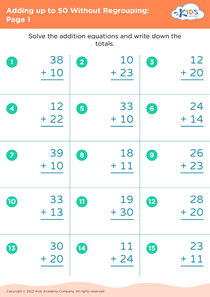
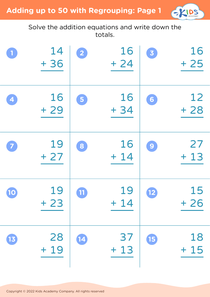
Understanding multiplication Adding up to 50 Misc Worksheets for Ages 5-7
3 filtered results
-
From - To
Welcome to our "Understanding Multiplication: Adding Up to 50 Misc Worksheets” page, specially designed for ages 5 to 7! These engaging worksheets introduce young learners to multiplication concepts by reinforcing their understanding of addition. With fun and colorful exercises, children will practice multiplication using numbers up to 50, enhancing their mathematical skills while building confidence. Our resources include vibrant visuals, interactive problems, and step-by-step guides to make learning enjoyable and effective. Whether at school or home, these worksheets are perfect for cultivating a strong foundational understanding of multiplication. Start your child's math journey with us today!
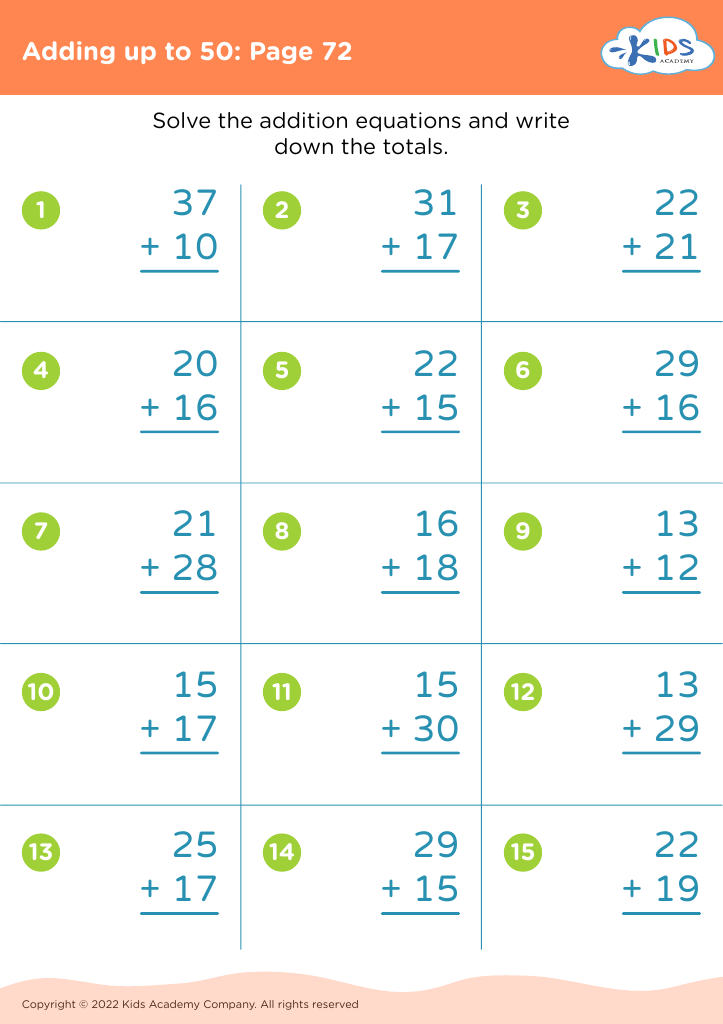
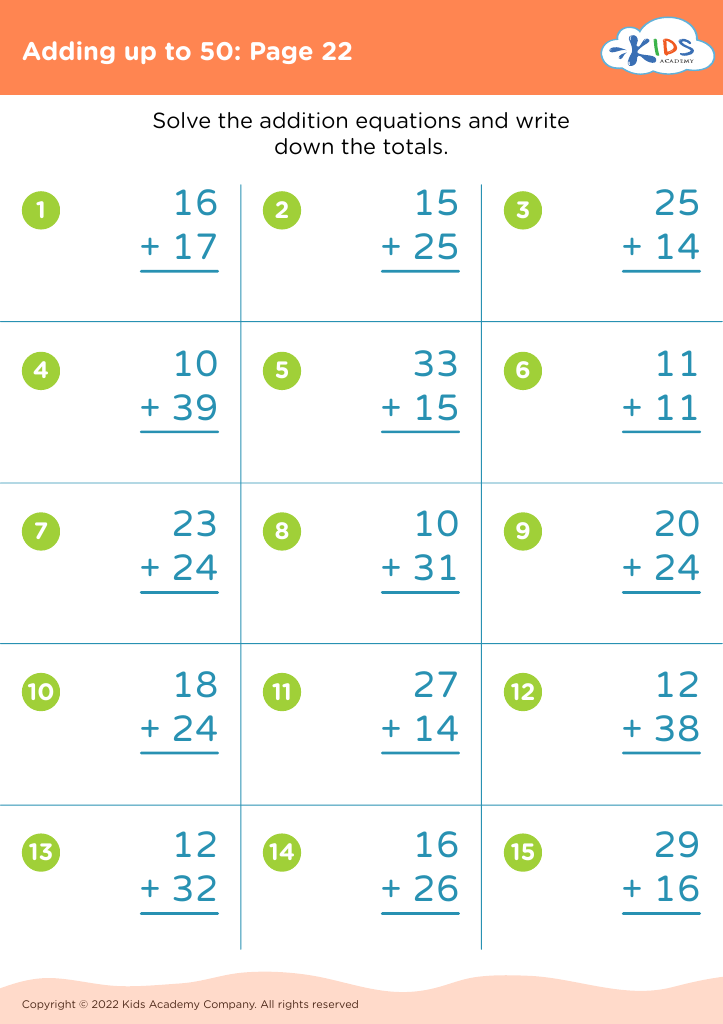
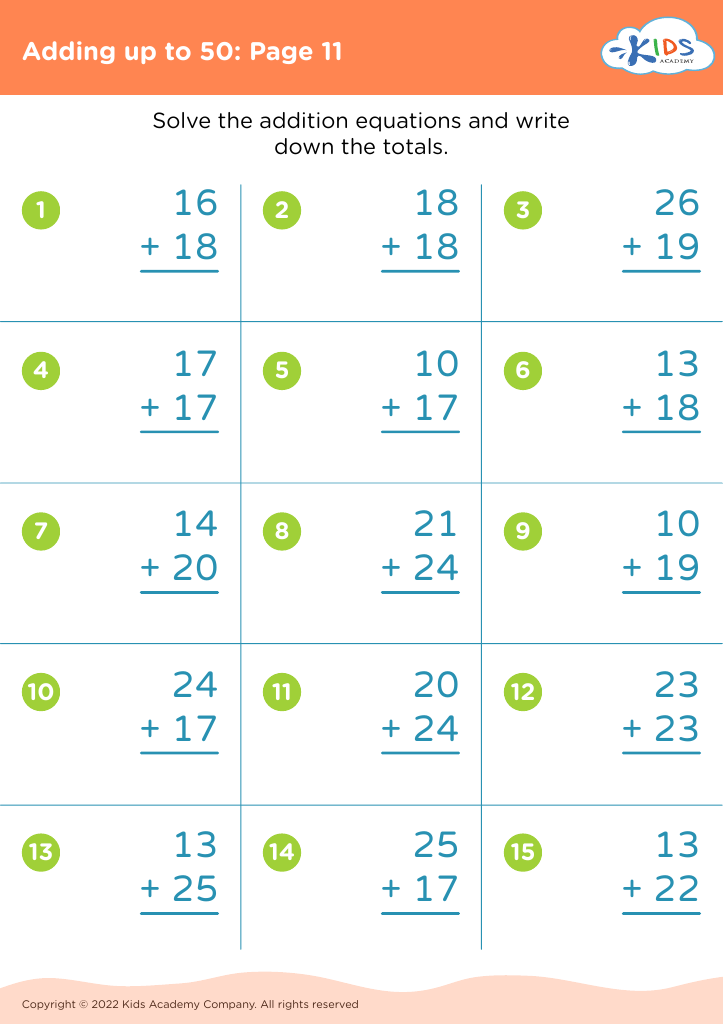


Understanding multiplication and addition for children aged 5-7 is vital as it lays the foundation for mathematical skills necessary in everyday life and future academic success. At this age, kids are curious and eager to learn, and grasping these concepts early can boost their confidence and enjoyment in math.
Understanding multiplication, particularly within the context of adding up to 50, helps children recognize patterns, develop critical reasoning, and enhance their ability to solve problems. It encourages mental arithmetic, enabling them to perform calculations faster and with greater accuracy.
Moreover, mastery of these topics promotes number sense, fostering a deeper comprehension of how numbers relate to one another. This foundational understanding is crucial as it transitions into more complex mathematical concepts in later grades.
Both parents and teachers play an essential role in facilitating this learning process. Engaging children with fun, interactive activities that blend multiplication and addition can harness their natural curiosity. By making math enjoyable, they can cultivate a lifelong positive attitude towards learning. Thus, investing time in understanding addition and multiplication equips children not only with skills necessary for academic success but also with tools they’ll use throughout their lives.