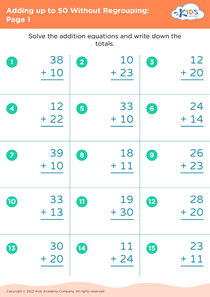
Addition Practice Adding up to 50 with Regrouping Worksheets for Ages 5-7
5 filtered results
-
From - To
Enhance your child’s mathematical skills with our “Addition Practice Adding up to 50 with Regrouping” worksheets designed for ages 5-7. These printable sheets offer fun and engaging activities that help young learners grasp the concept of addition and regrouping. Perfect for children in early grades, these exercises are crafted to build a strong foundation in math by practicing sums up to 50. Teachers and parents can use these resources to make learning exciting and effective, ensuring a smooth transition to more advanced mathematical concepts. Download today and watch your child's confidence soar!
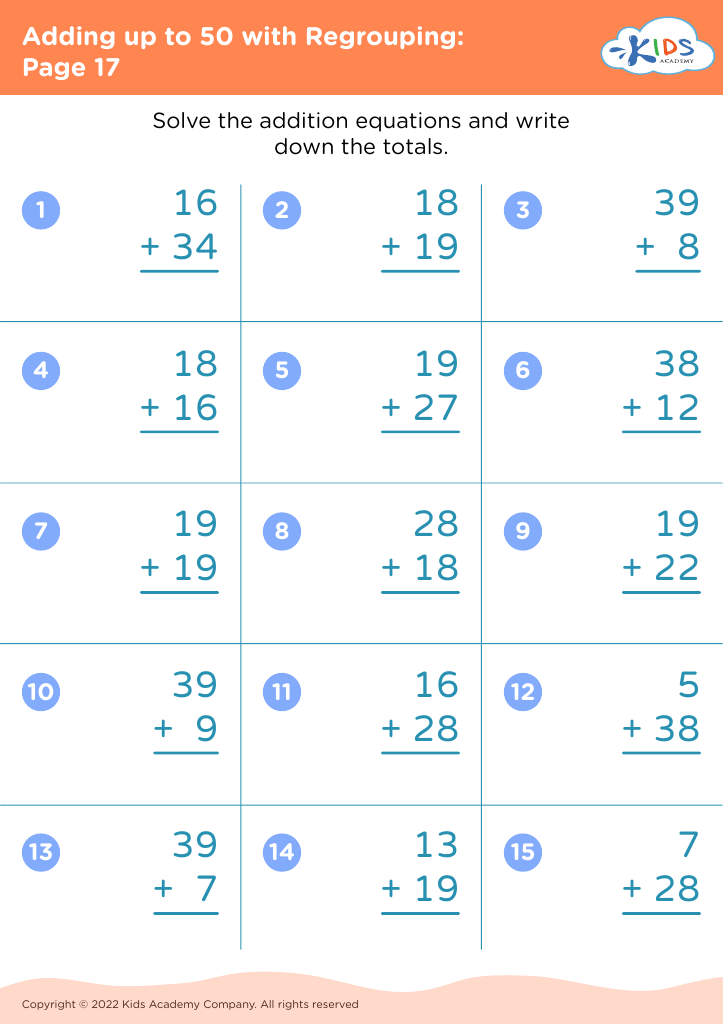
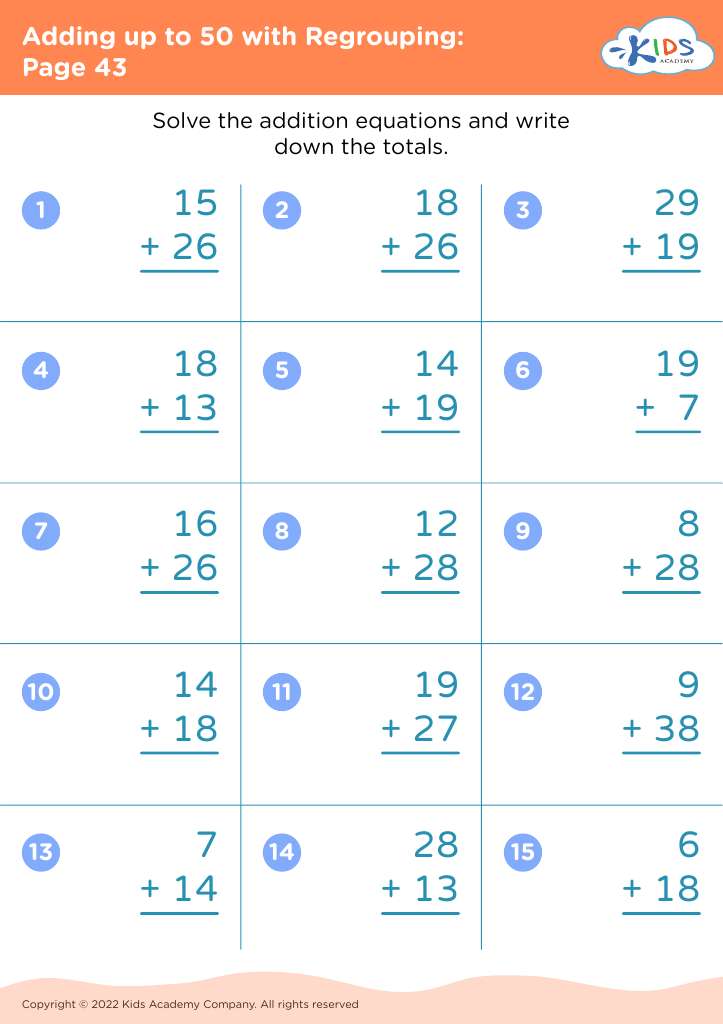
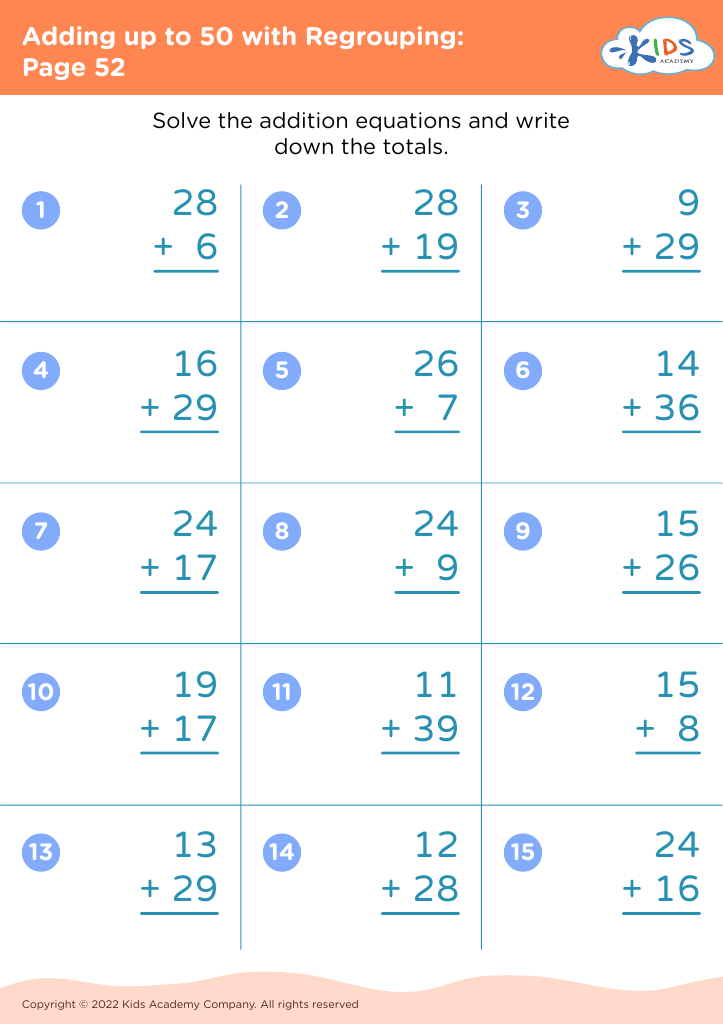
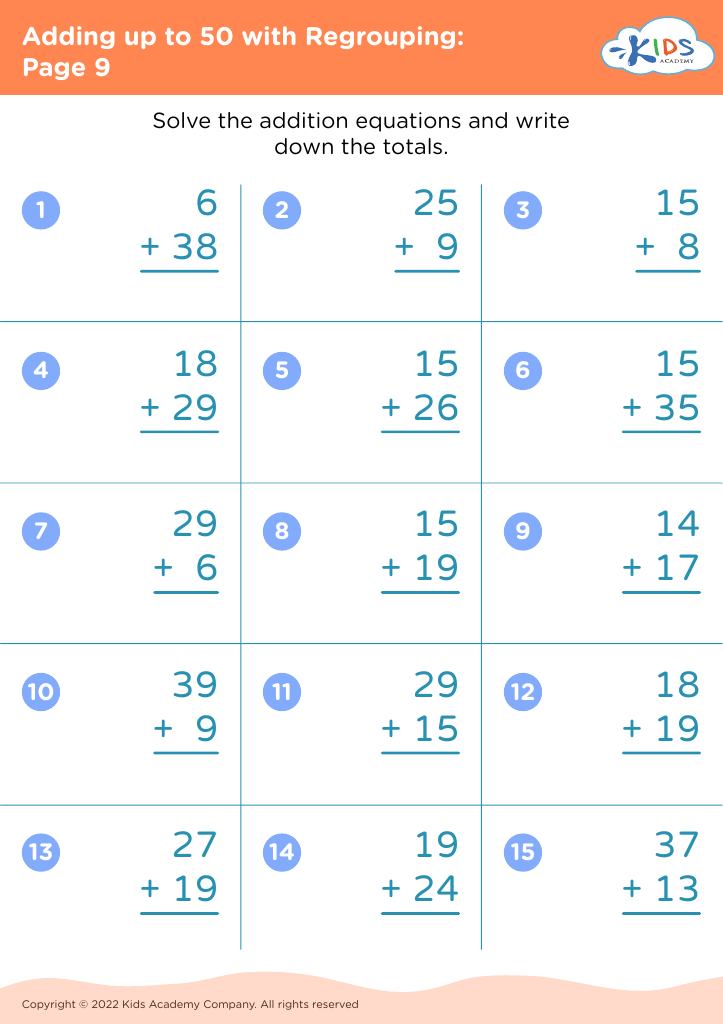
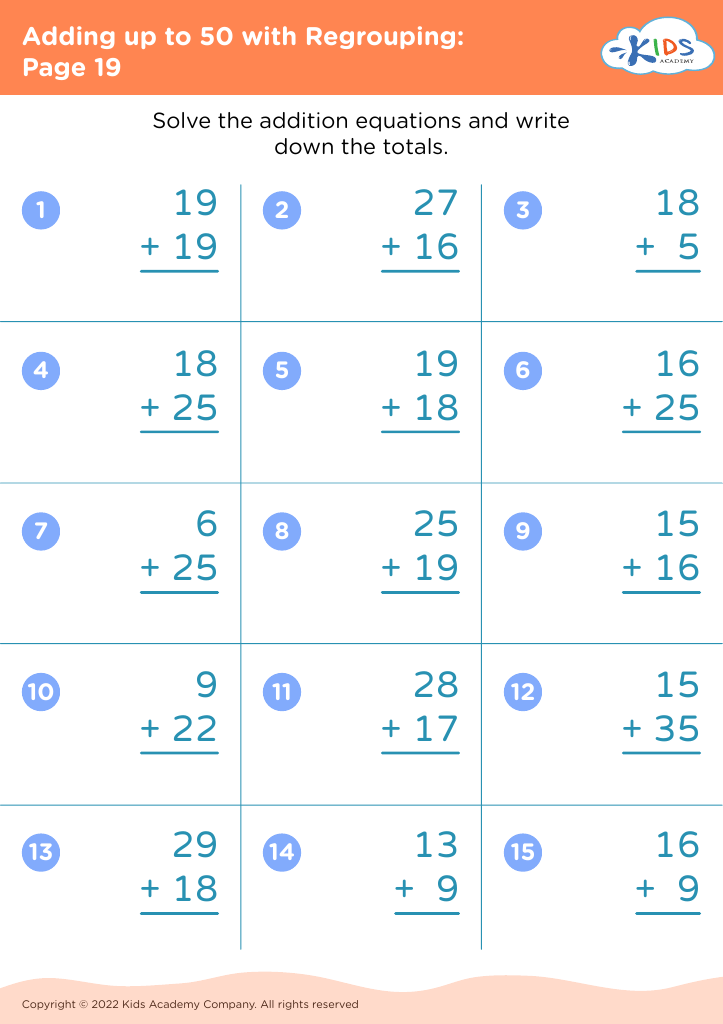


Parents and teachers should recognize the importance of addition practice adding up to 50 with regrouping for children aged 5-7 because it lays a foundational stone for their future mathematical journey. At this critical age, young students are developing their mathematical reasoning and problem-solving abilities. Mastering addition with regrouping not only enhances their arithmetic skills but also improves their understanding of the place value system, which is fundamental for more complex math concepts.
Furthermore, engaging in addition practice improves fluency and automaticity in simple computations, reducing the cognitive load for students when they encounter multi-step problems later on. This practice also encourages children to develop perseverance and analytical thinking as they learn to break down numbers and carry over values systematically.
Moreover, successful practice of these addition problems boosts children's confidence. Positive early experiences in math can lessen the anxiety often associated with the subject and cultivate a positive attitude toward ongoing learning. Teachers and parents can provide a supportive and engaging environment through activities, worksheets, and educational games, ensuring the practice is neither tedious nor overwhelming. Ultimately, this foundational skill helps prepare children not just for mathematics but for real-world applications and logical thinking required in everyday life.