Filters

17 filtered results

Clear all filters
Favorites
With answer key
Interactive

17 filtered results

Difficulty Level

Grade


Welcome to our "Understanding Fractions: Adding up to 50 with Regrouping Worksheets" designed for young learners aged 5-7! This engaging resource helps children develop a strong foundational knowledge of fractions through interactive and fun activities. Our worksheets focus on understanding fractions while mastering addition with regrouping, ensuring kids grasp key mathematical concepts effortlessly. Featuring colorful illustrations and age-appropriate exercises, this collection promotes clear comprehension and builds confidence in young mathematicians. Whether in the classroom or at home, these worksheets are perfect for enhancing critical thinking and problem-solving skills, setting the stage for future math success. Let's make learning fractions enjoyable!
Check out this FREE Trial Lesson on Adding up to 50 with Regrouping for age 5-7!

T

Favorites
With answer key
Interactive
  • 5-7
  • Understanding fractions
  • Adding up to 50 with Regrouping
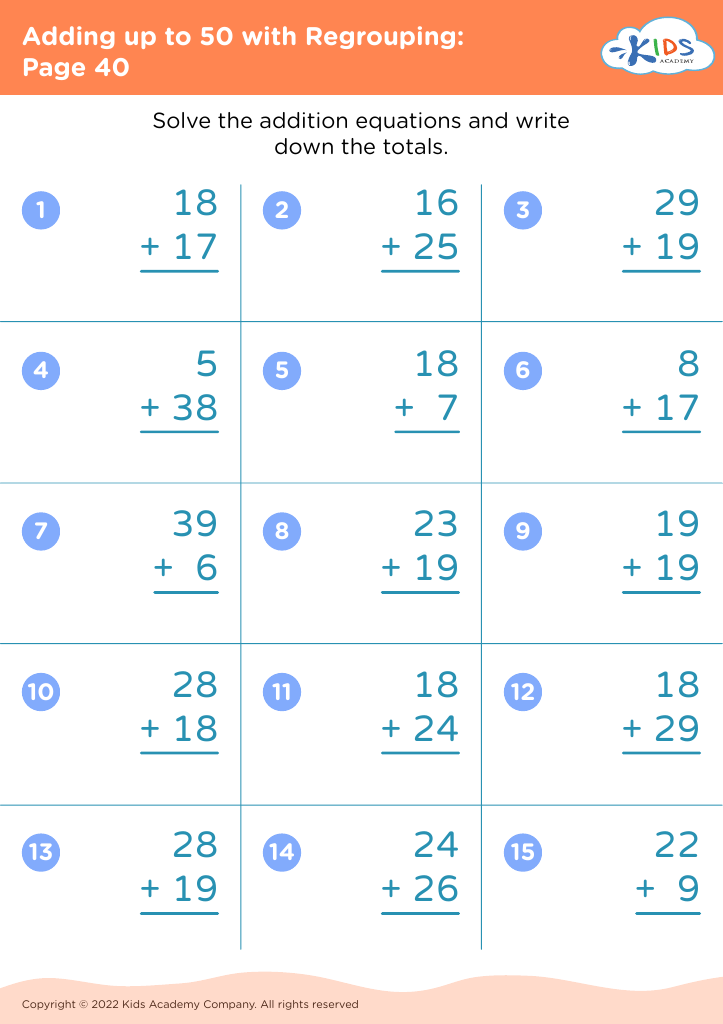
Adding up to 50 with Regrouping: Page 40
Worksheet
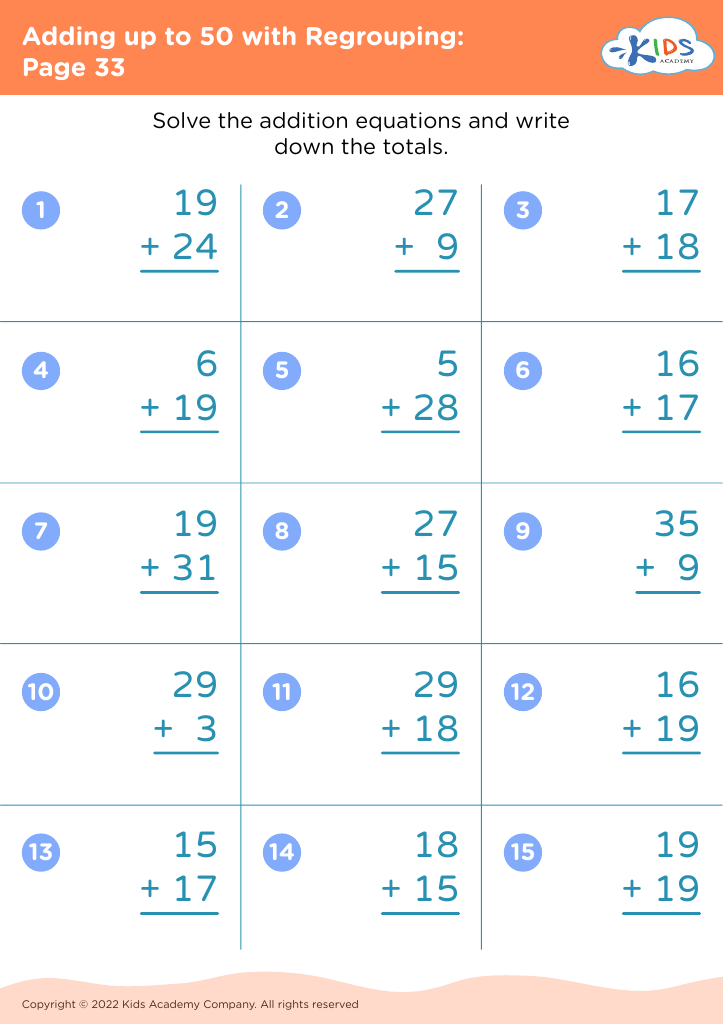
Adding up to 50 with Regrouping: Page 33
Worksheet
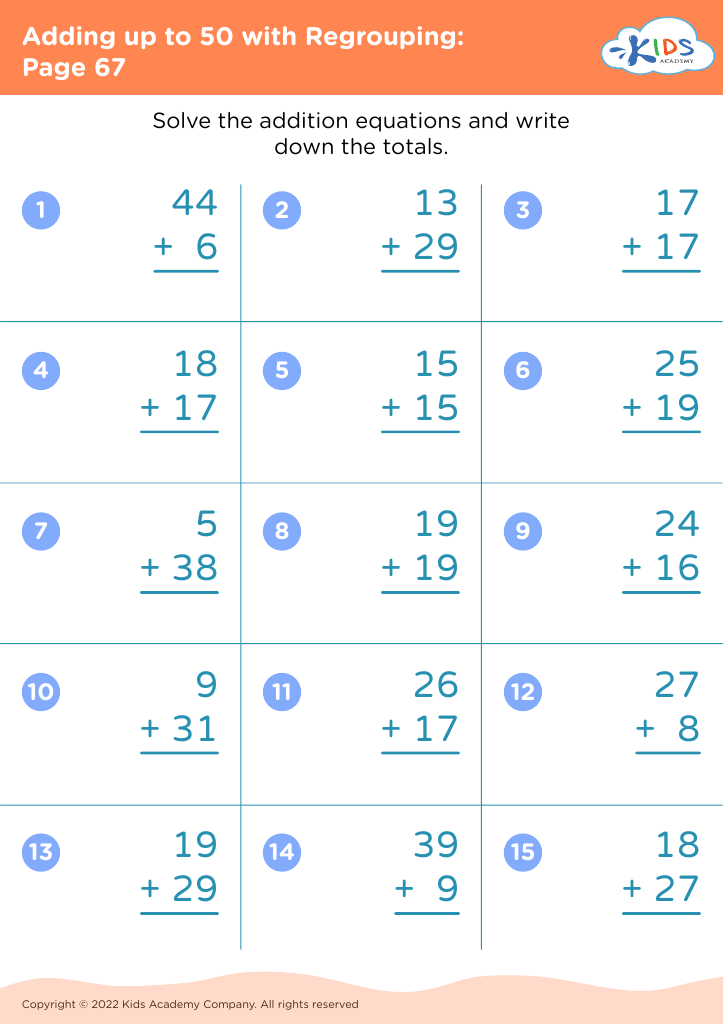
Adding up to 50 with Regrouping: Page 67
Worksheet
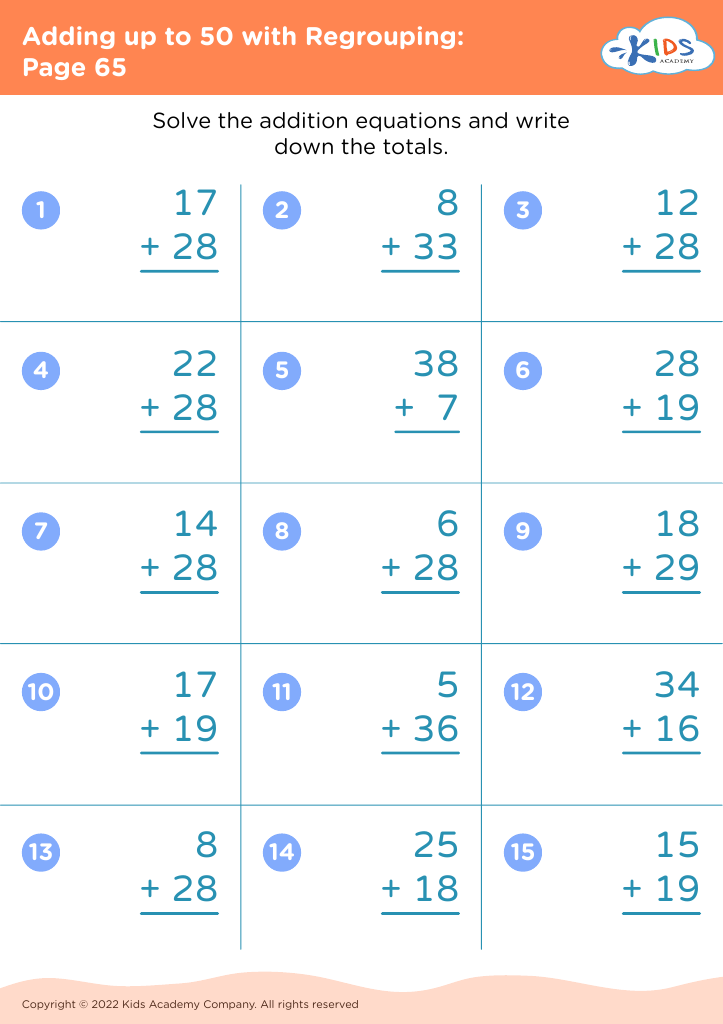
Adding up to 50 with Regrouping: Page 65
Worksheet
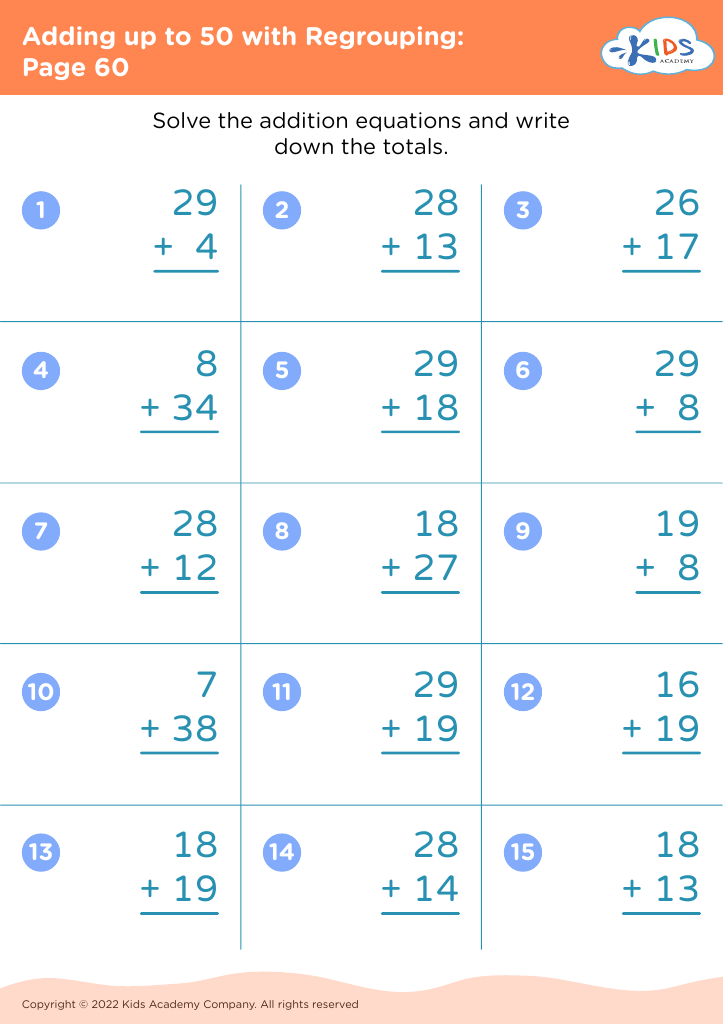
Adding up to 50 with Regrouping: Page 60
Worksheet
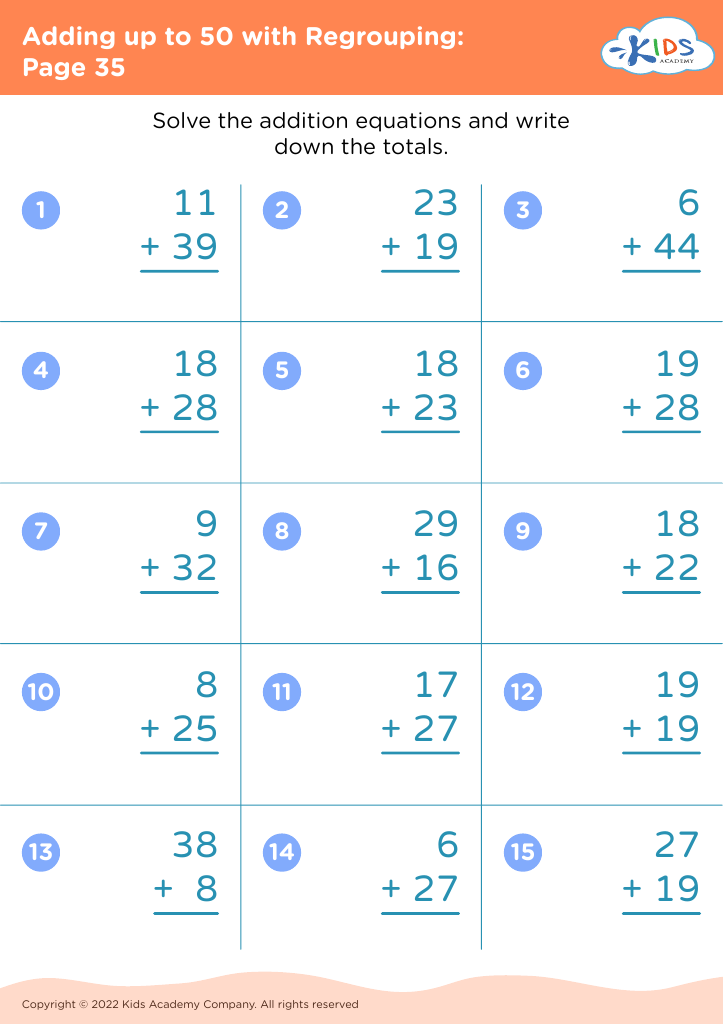
Adding up to 50 with Regrouping: Page 35
Worksheet
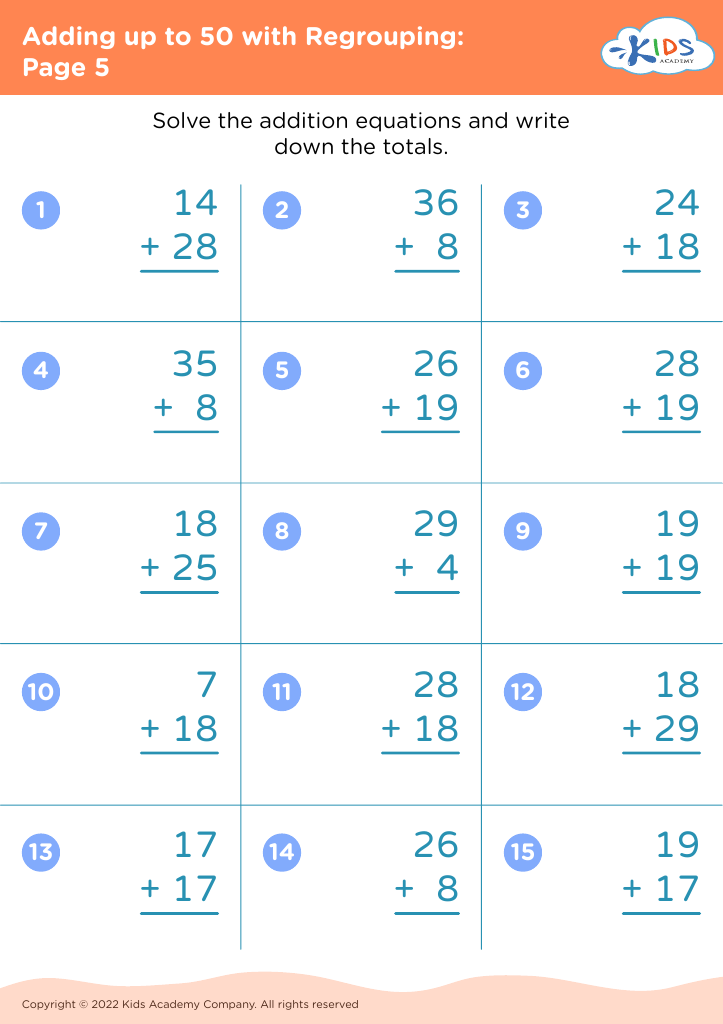
Adding up to 50 with Regrouping: Page 5
Worksheet
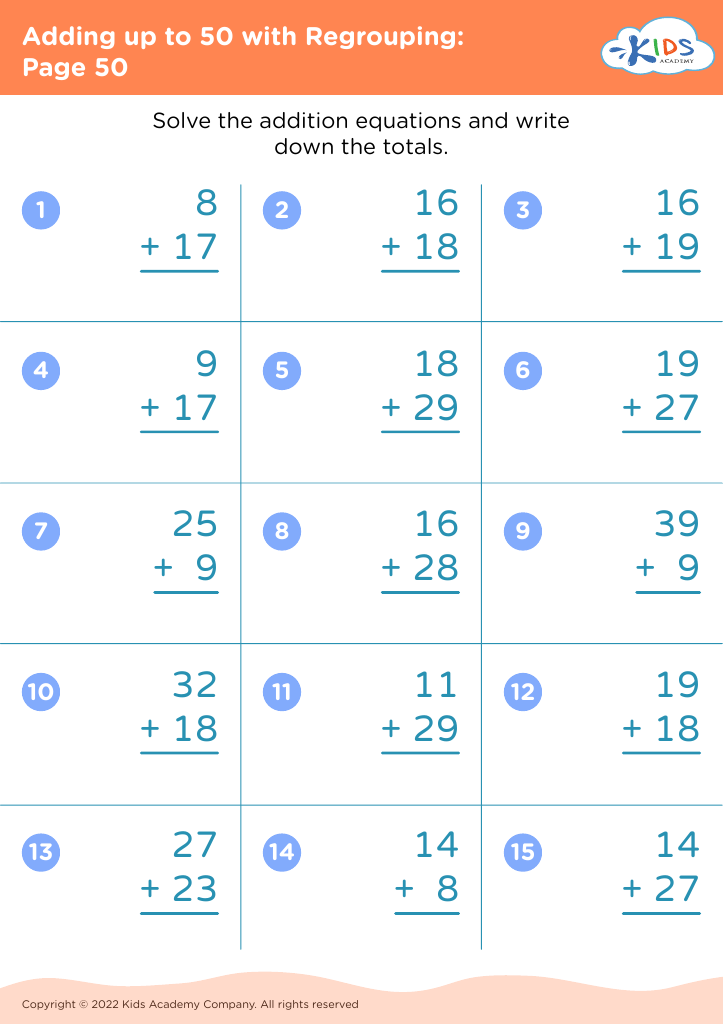
Adding up to 50 with Regrouping: Page 50
Worksheet
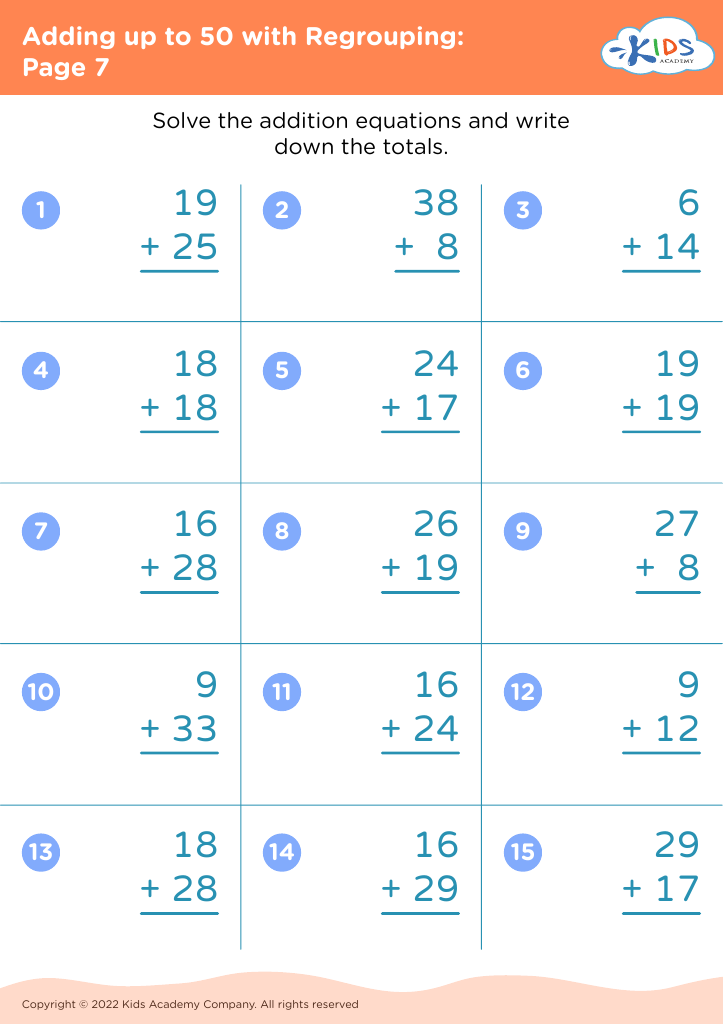
Adding up to 50 with Regrouping: Page 7
Worksheet
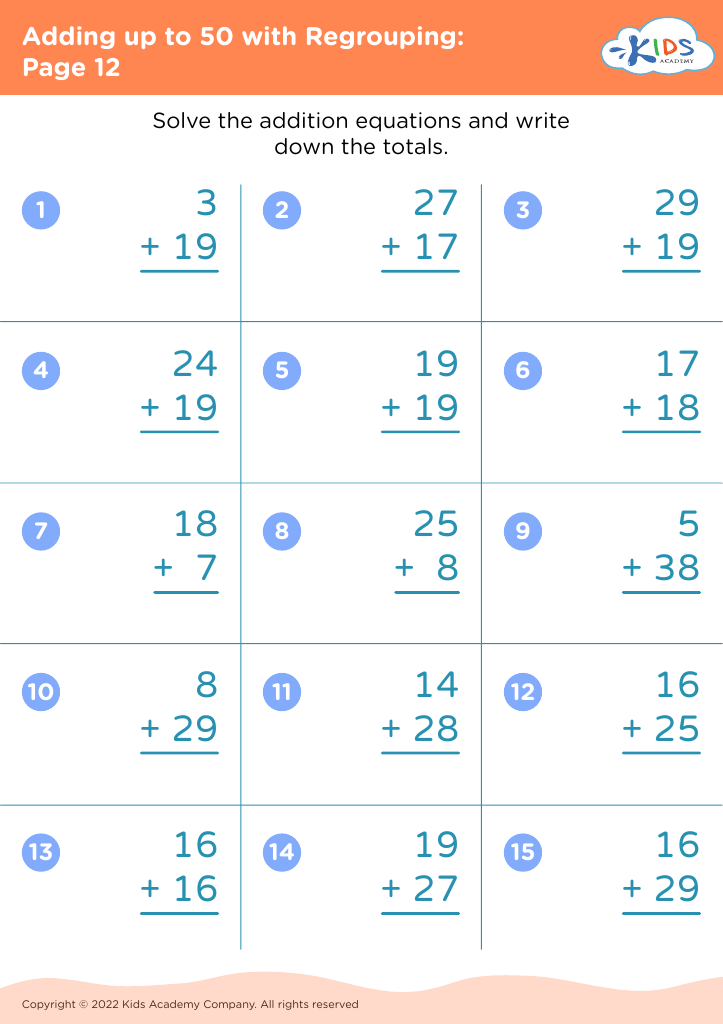
Adding up to 50 with Regrouping: Page 12
Worksheet
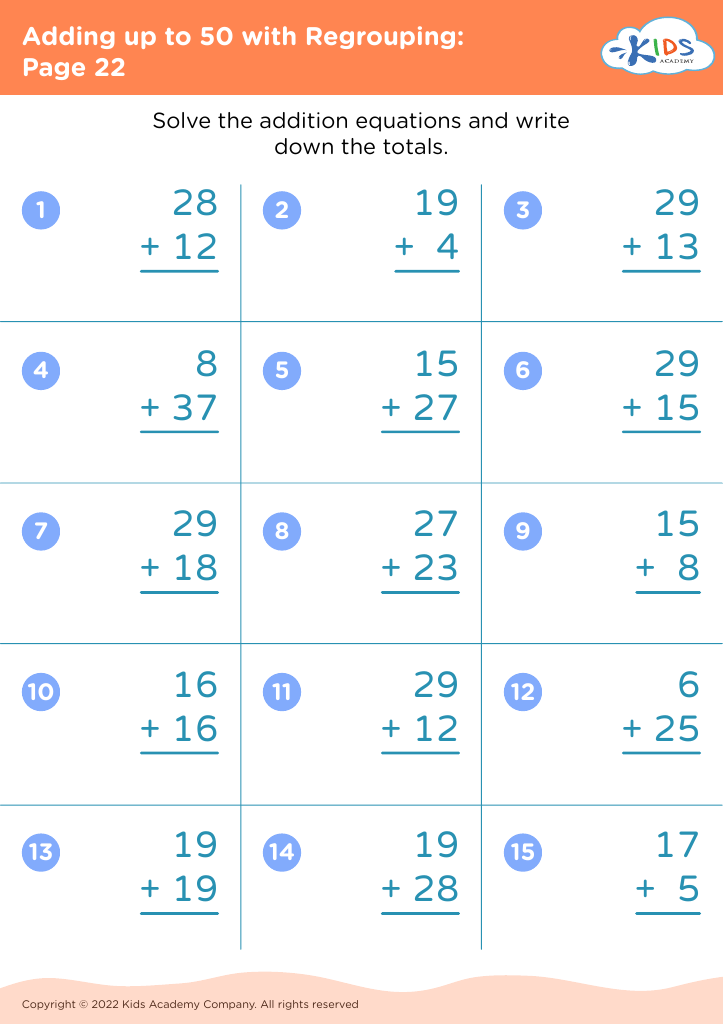
Adding up to 50 with Regrouping: Page 22
Worksheet
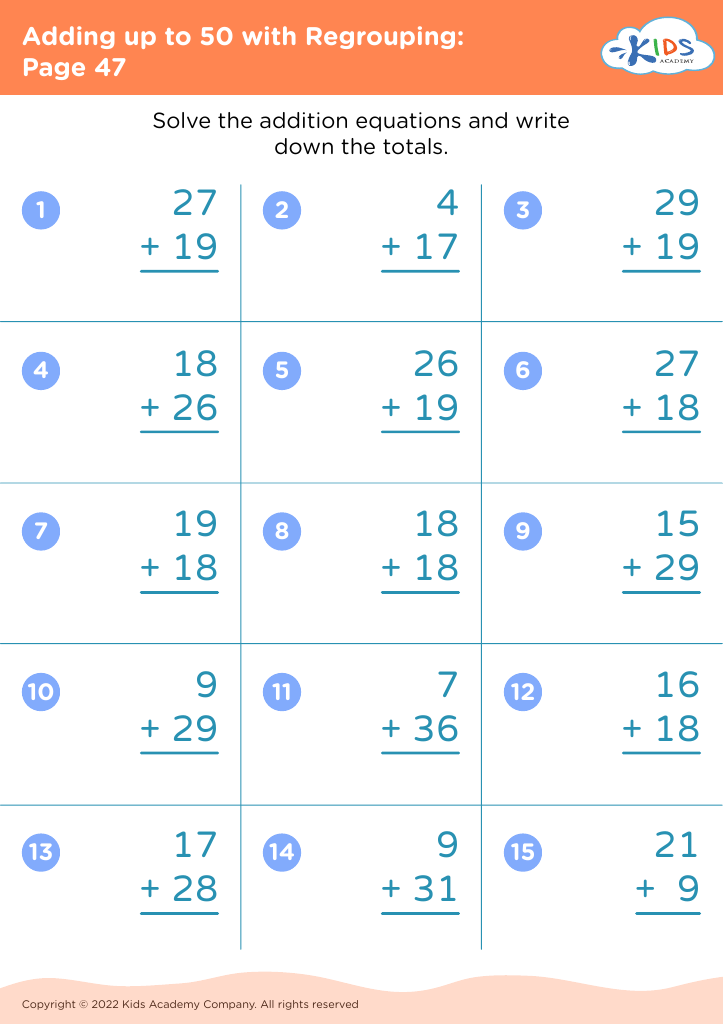
Adding up to 50 with Regrouping: Page 47
Worksheet
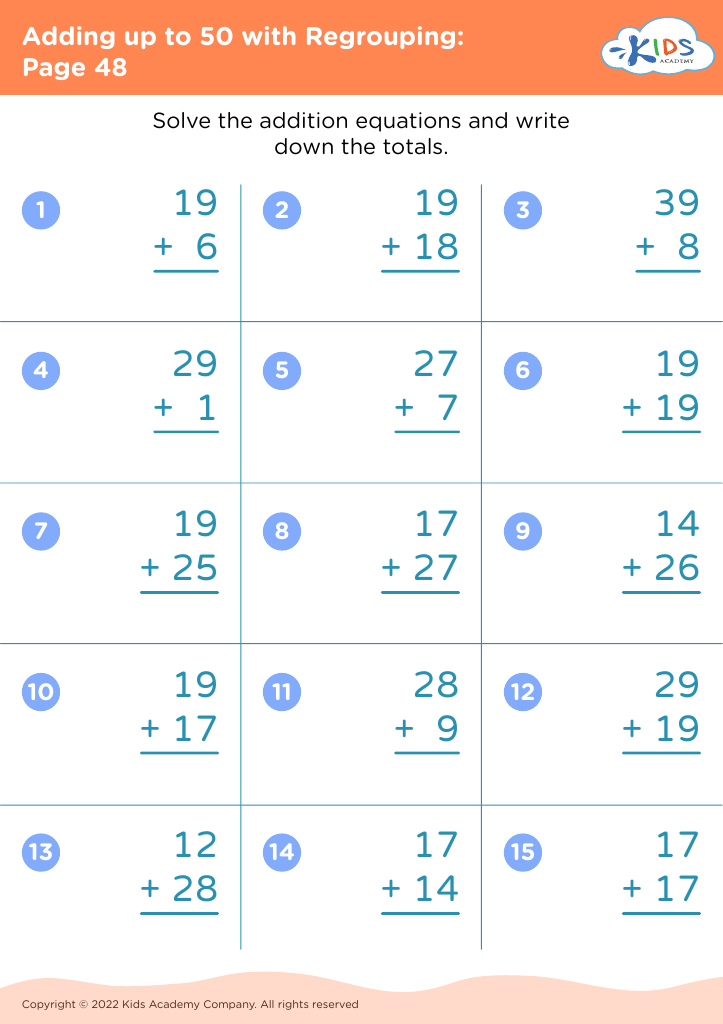
Adding up to 50 with Regrouping: Page 48
Worksheet
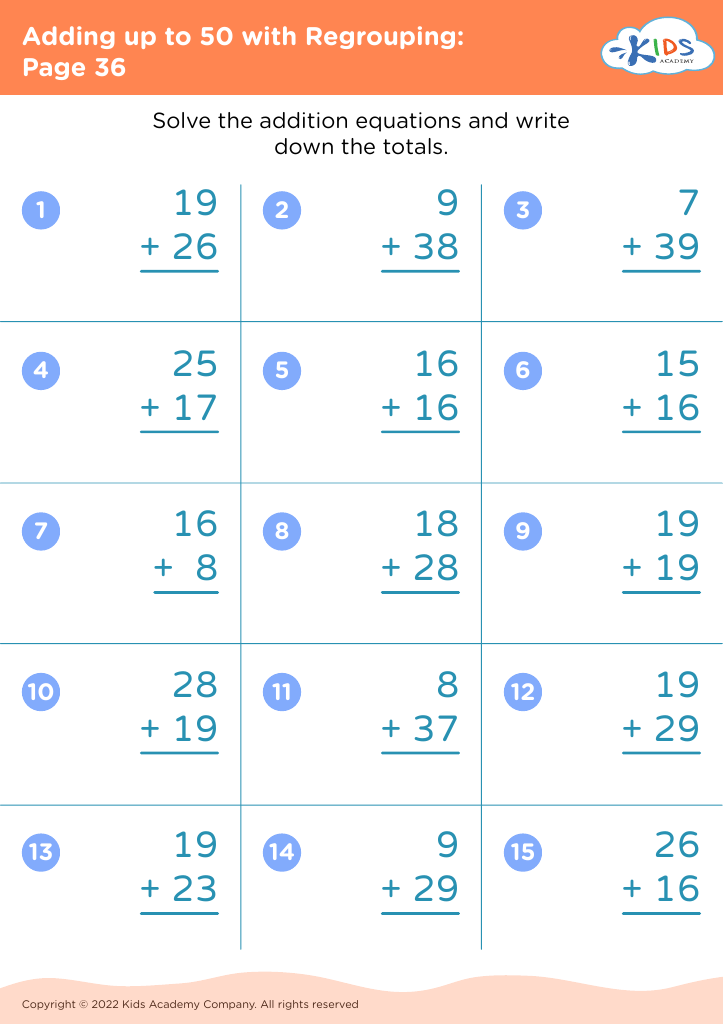
Adding up to 50 with Regrouping: Page 36
Worksheet
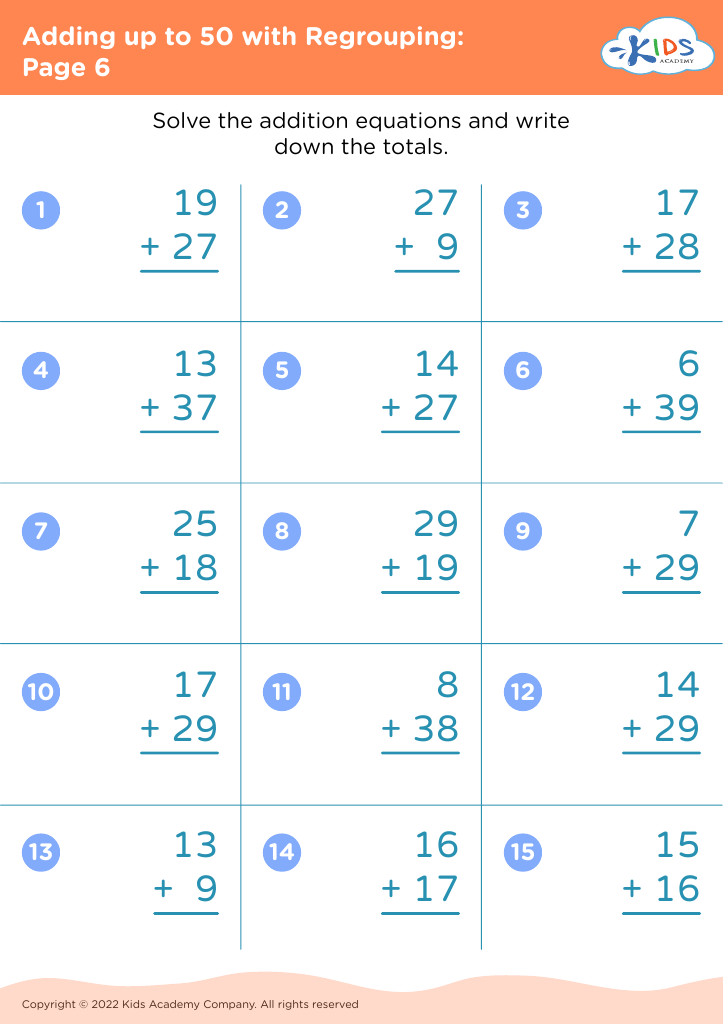
Adding up to 50 with Regrouping: Page 6
Worksheet
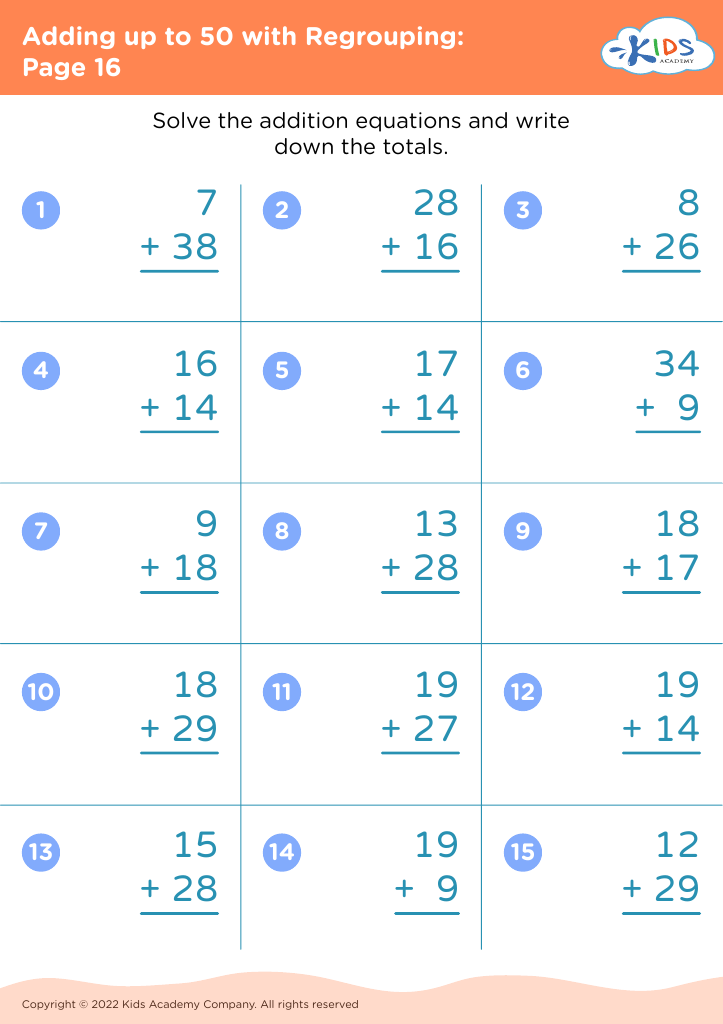
Adding up to 50 with Regrouping: Page 16
Worksheet
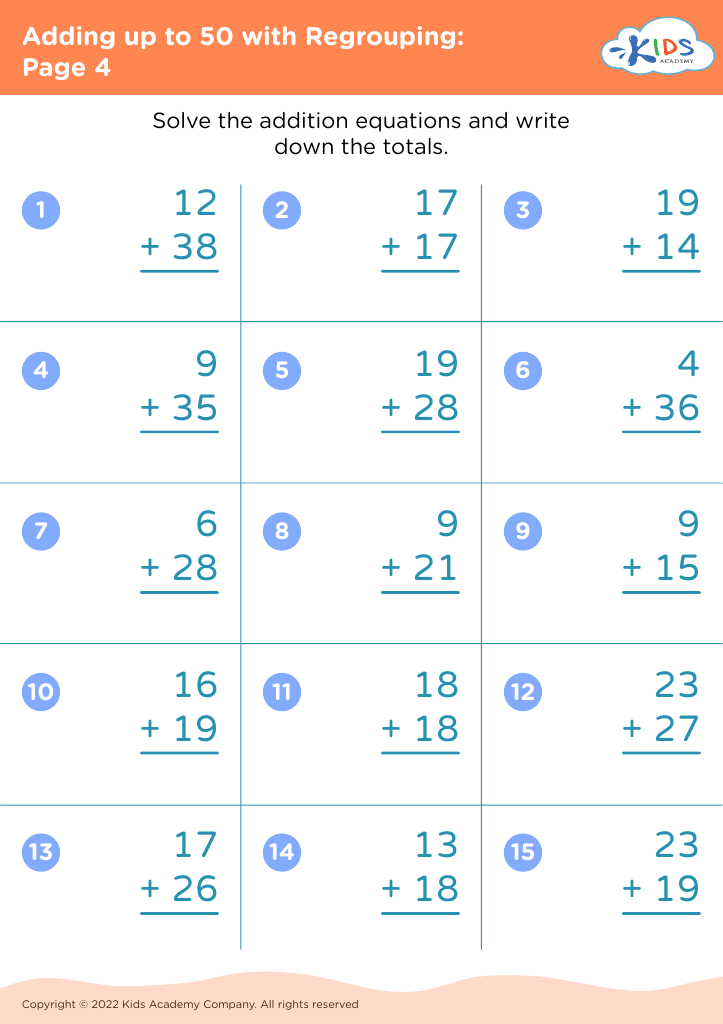
Adding up to 50 with Regrouping: Page 4
Worksheet


Understanding fractions and the concept of adding up to 50 with regrouping is essential for young learners, as it lays the foundation for their future mathematical skills. For children aged 5-7, the ability to manipulate and comprehend fractions fosters critical thinking and problem-solving abilities, which are crucial in everyday scenarios.

At this age, children learn the basics of sharing and dividing, which introduces them to fractional concepts, helping them understand parts of a whole. This conceptual grasp becomes more significant as they advance to more complex math topics.

Incorporating addition with regrouping reinforces their number sense. As students learn how to regroup numbers, they develop a stronger understanding of place value and the relationships between numbers, enabling them to solve larger problems confidently.

Parents and teachers play a vital role in supporting children’s mastery of these concepts. Engaging children in practical activities, such as cooking or measuring, can make learning interactive and enjoyable. Moreover, strong foundational skills in math at this early age can significantly influence their attitudes toward learning and confidence in tackling future mathematical challenges. Ultimately, investing time in understanding these concepts enhances children's overall academic success and promotes a lifelong love for math.