Counting practice Adding up to 50 Without Regrouping Worksheets for Ages 5-7
5 filtered results
-
From - To
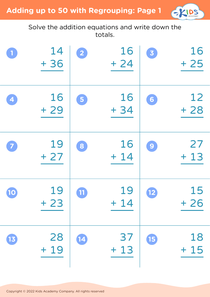
Introduce your young learners to the joy of addition with our "Counting Practice Adding Up to 50 Without Regrouping" worksheets, specially designed for ages 5-7. These engaging worksheets promote early math skills by helping children practice counting and addition through fun and colorful activities. With a focus on adding numbers up to 50 without regrouping, students will develop confidence and proficiency at their own pace. Perfect for preschool and early elementary settings, these printable worksheets make learning interactive and enjoyable. Enhance your child's mathematical foundation and encourage a love for math with these easy-to-understand counting practice exercises!
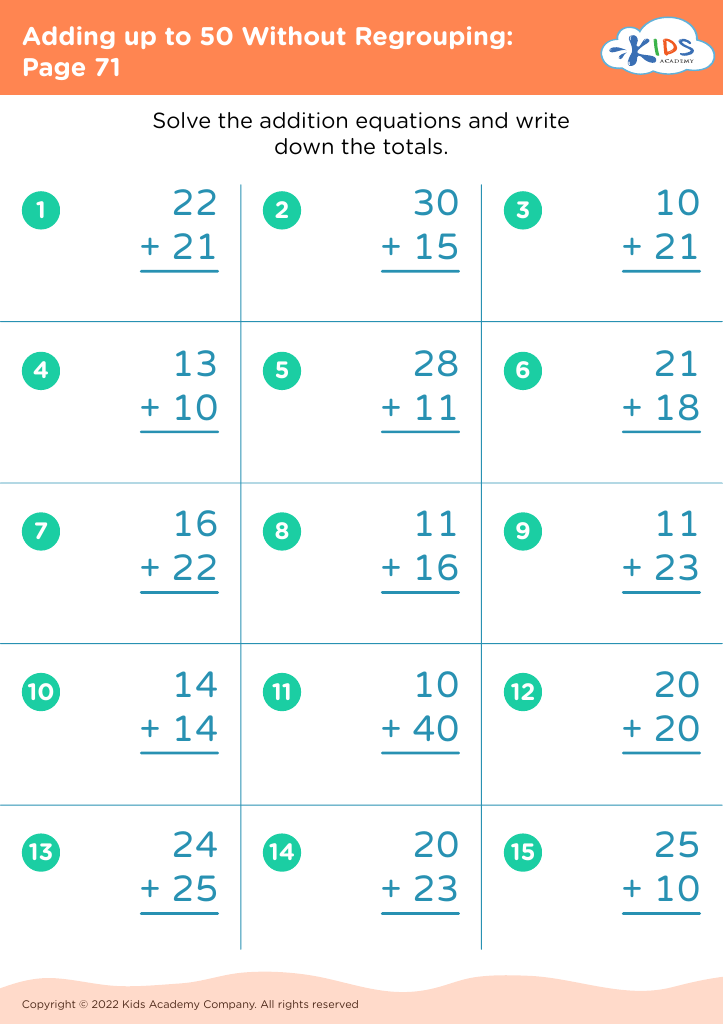
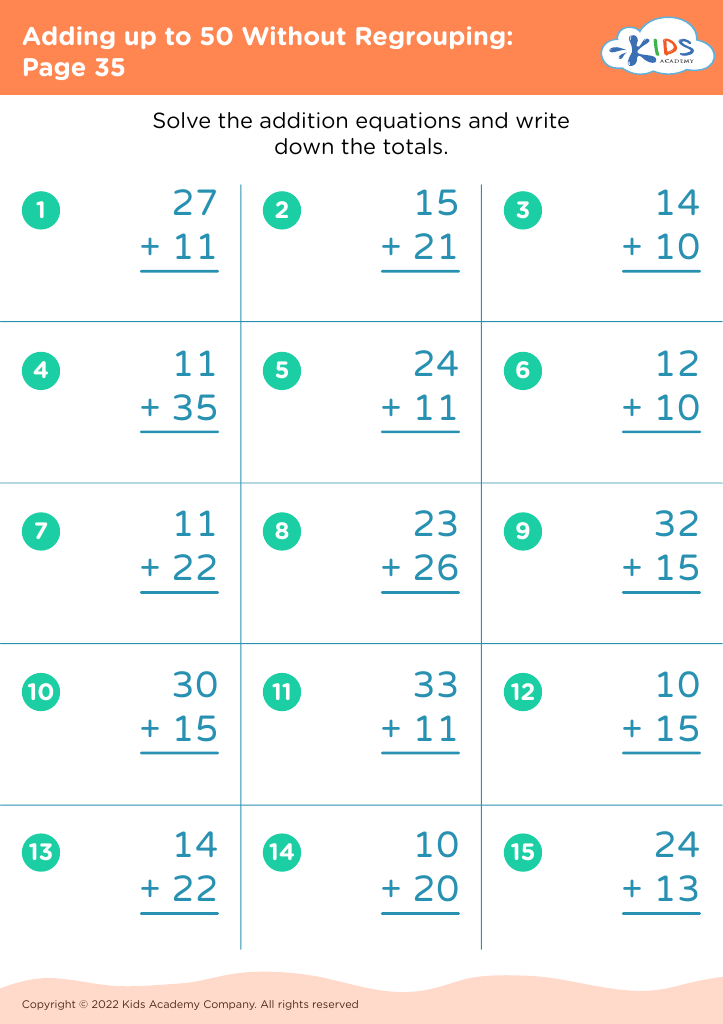
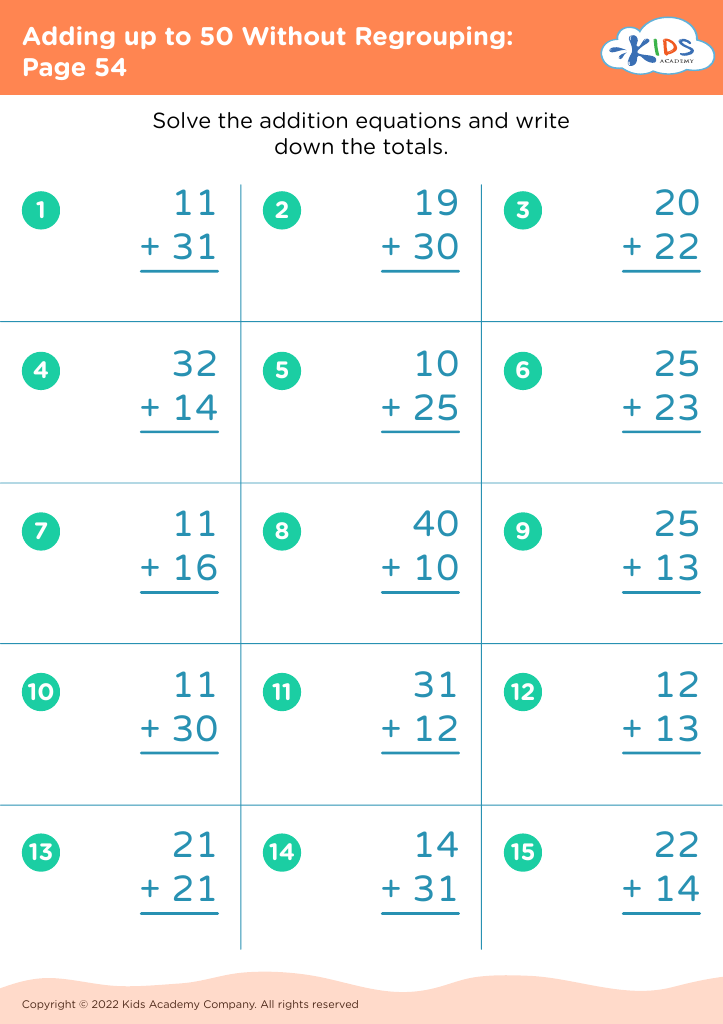
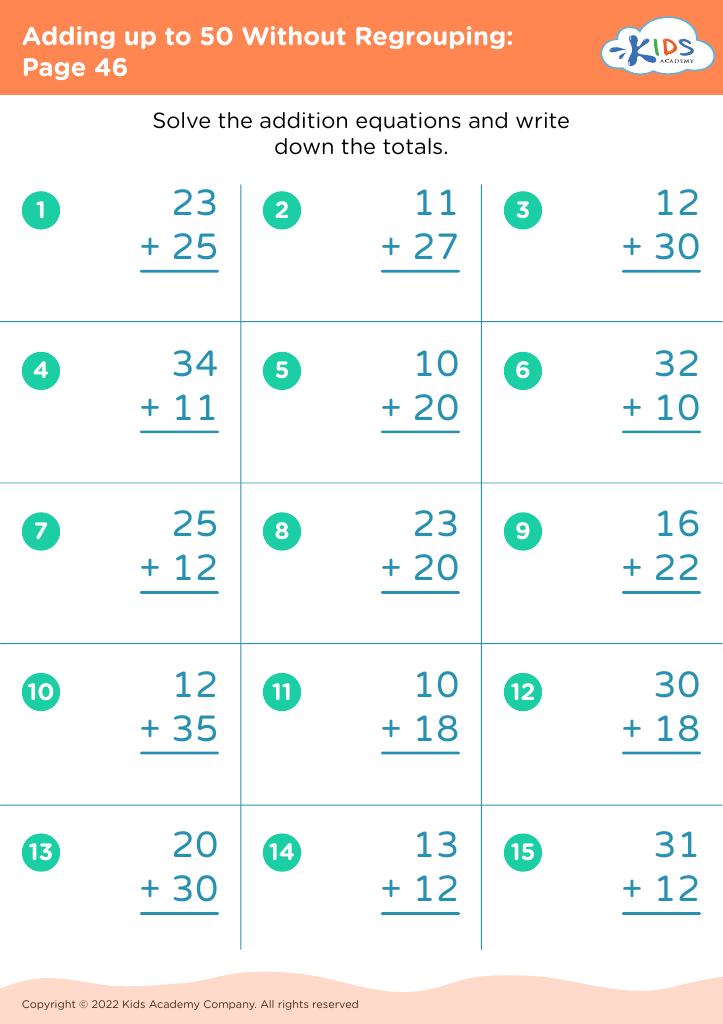
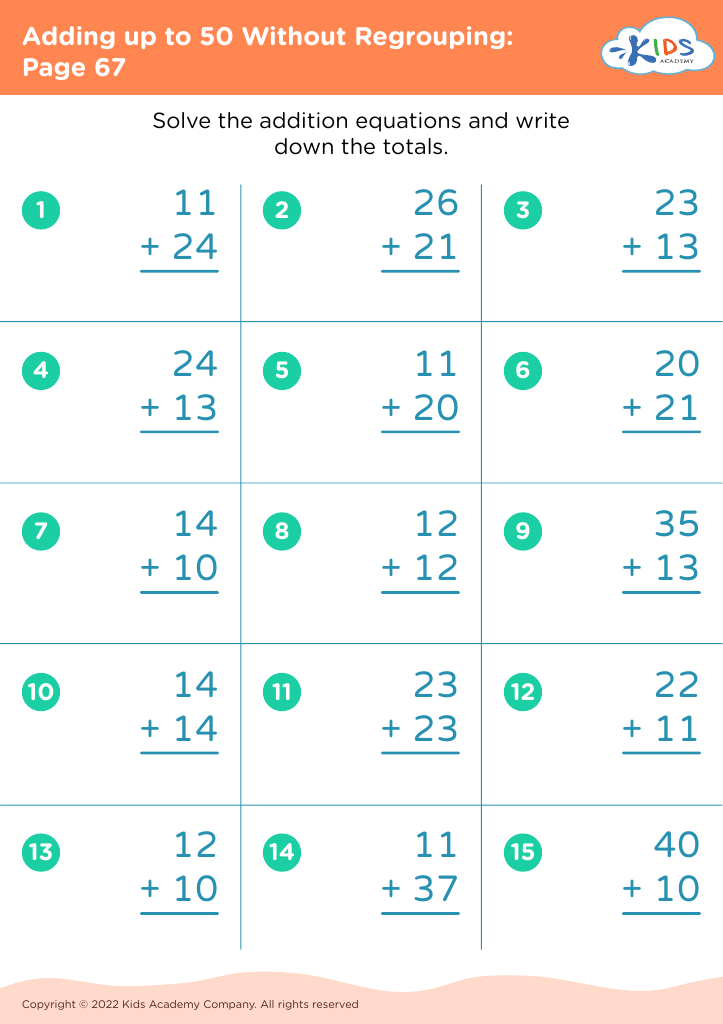


Counting practice, specifically adding up to 50 without regrouping, is vital for children aged 5-7. During these formative years, children develop foundational mathematical skills crucial for future learning. Understanding numbers up to 50 enhances a child's numeracy, providing them with strategies to grasp concepts such as addition, subtraction, and place value.
This practice extends beyond mere number manipulation; it fosters cognitive development. Counting helps improve concentration, memory, and problem-solving abilities. It equips children with the confidence to approach quantitative tasks, which are frequent in everyday life, from simple shopping scenarios to sharing toys.
Moreover, early math skills correlate strongly with academic success later in school. Parents and teachers who emphasize counting and addition without regrouping encourage a growth mindset, helping children embrace challenges rather than shy away from them.
Additionally, counting activities are often engaging and can be turned into fun games or collaborative exercises, strengthening social skills. By investing time in counting practice, parents and teachers not only help children develop mathematics skills but also inspire a love for learning, laying the groundwork for lifelong education. Therefore, supporting young learners in mastering these essential skills is crucial for their overall success.