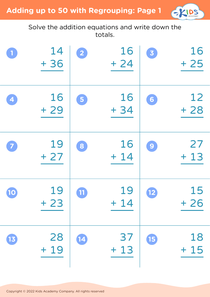
Fraction simplification Adding up to 50 Without Regrouping Worksheets for Ages 5-7
7 filtered results
-
From - To
Introduce young learners to the exciting world of fractions with our "Fraction Simplification Adding up to 50 Without Regrouping Worksheets for Ages 5-7." These worksheets are expertly designed to help children master the fundamentals of fraction simplification in a fun and engaging way. With colorful illustrations and simple exercises, kids develop essential math skills, build confidence, and make learning enjoyable. Our resources align with educational standards, ensuring your child’s learning is effective and age-appropriate. Perfect for classroom and at-home practice, these worksheets are a valuable tool for early math proficiency. Start exploring these free worksheets today!
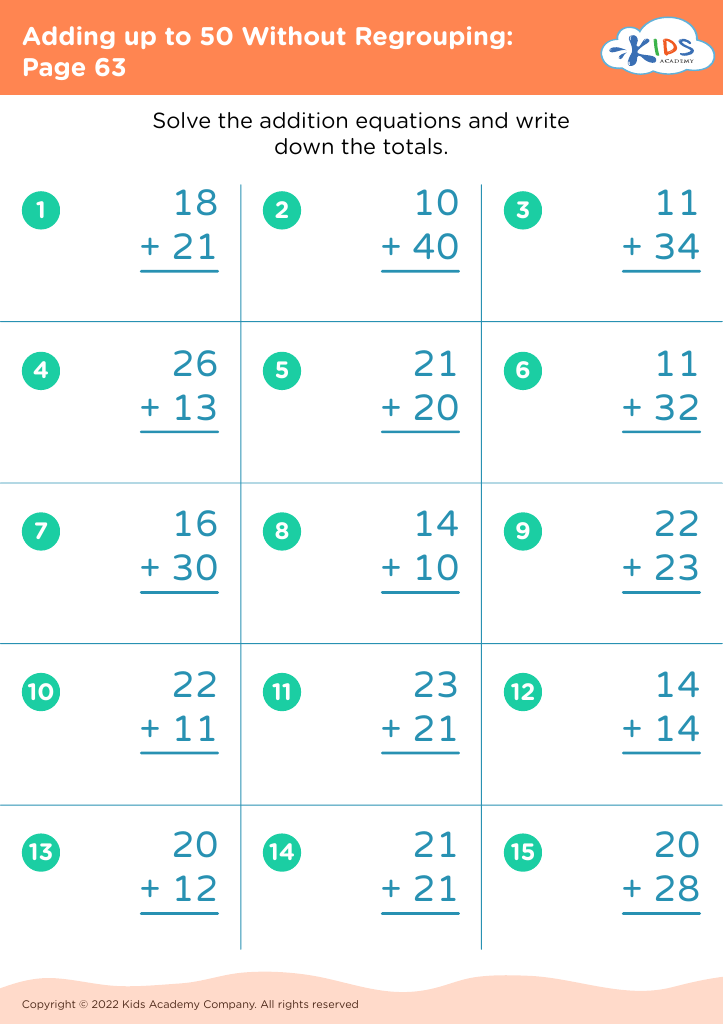
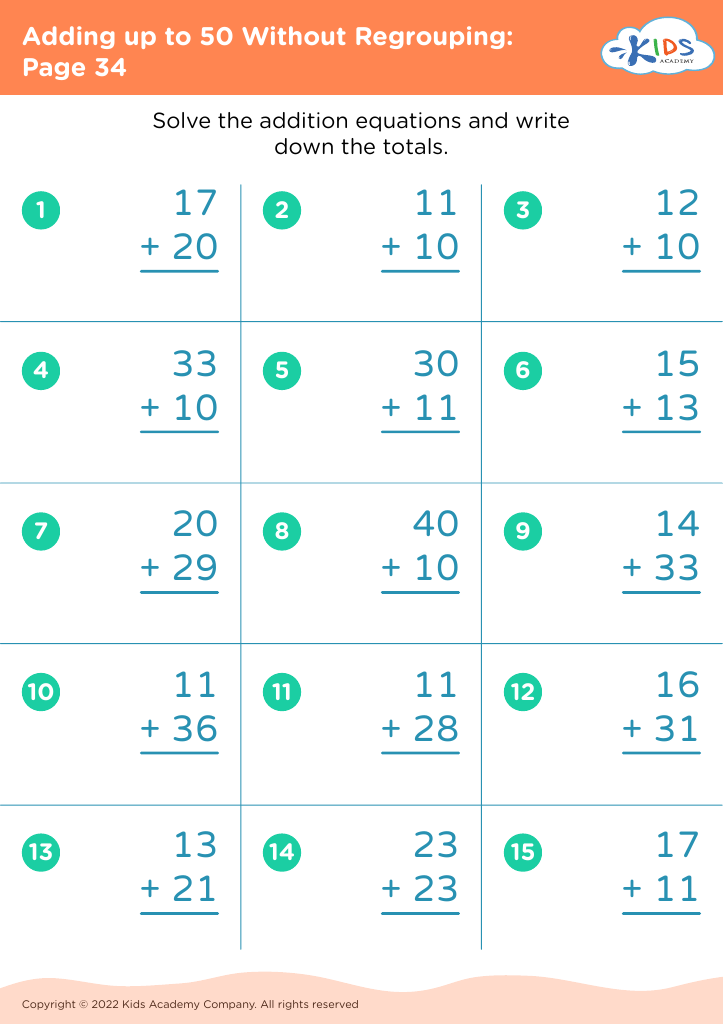
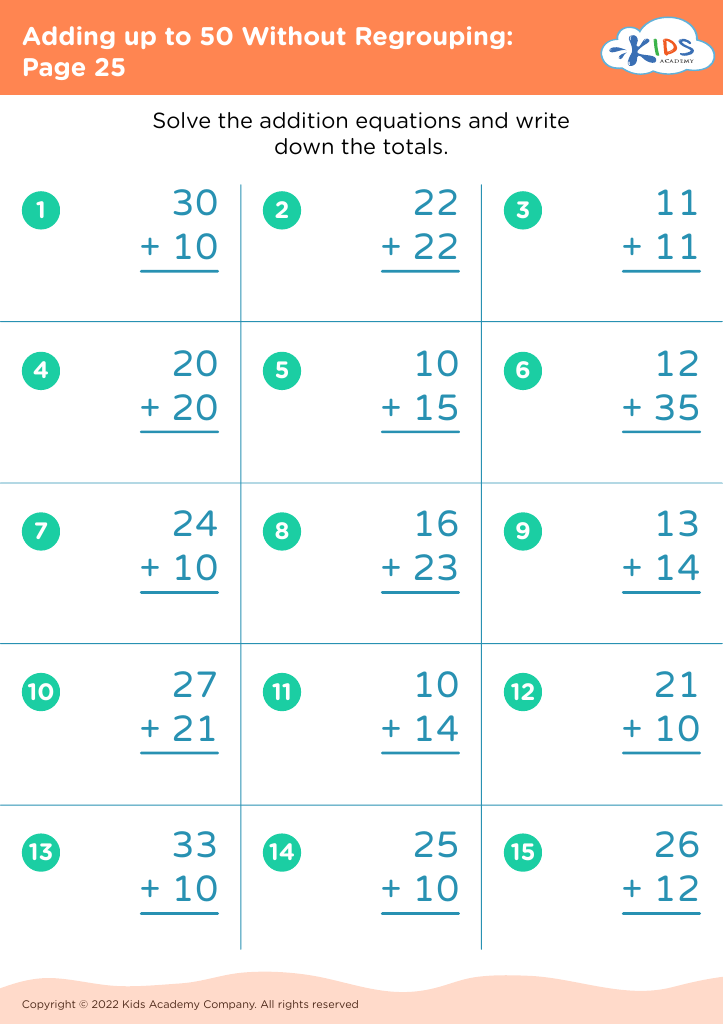
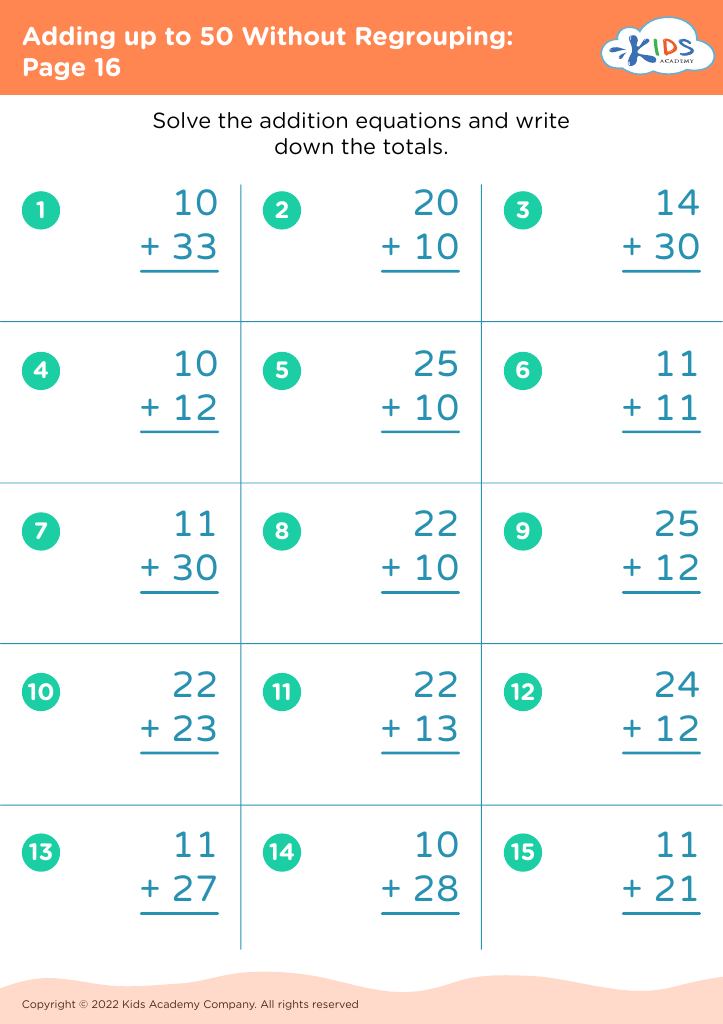
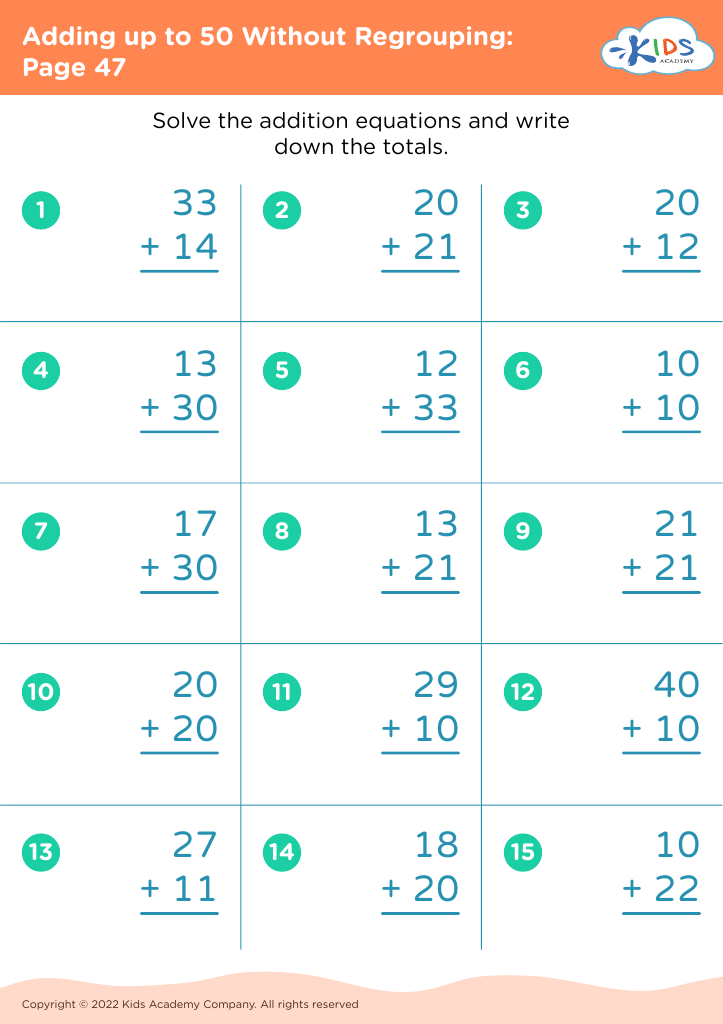
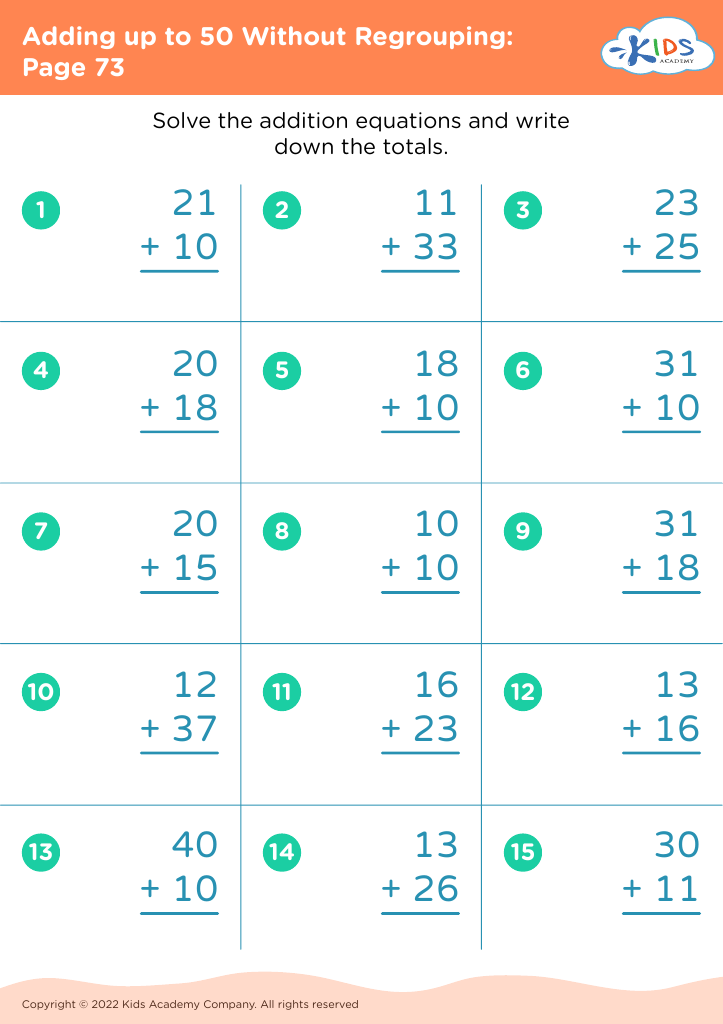
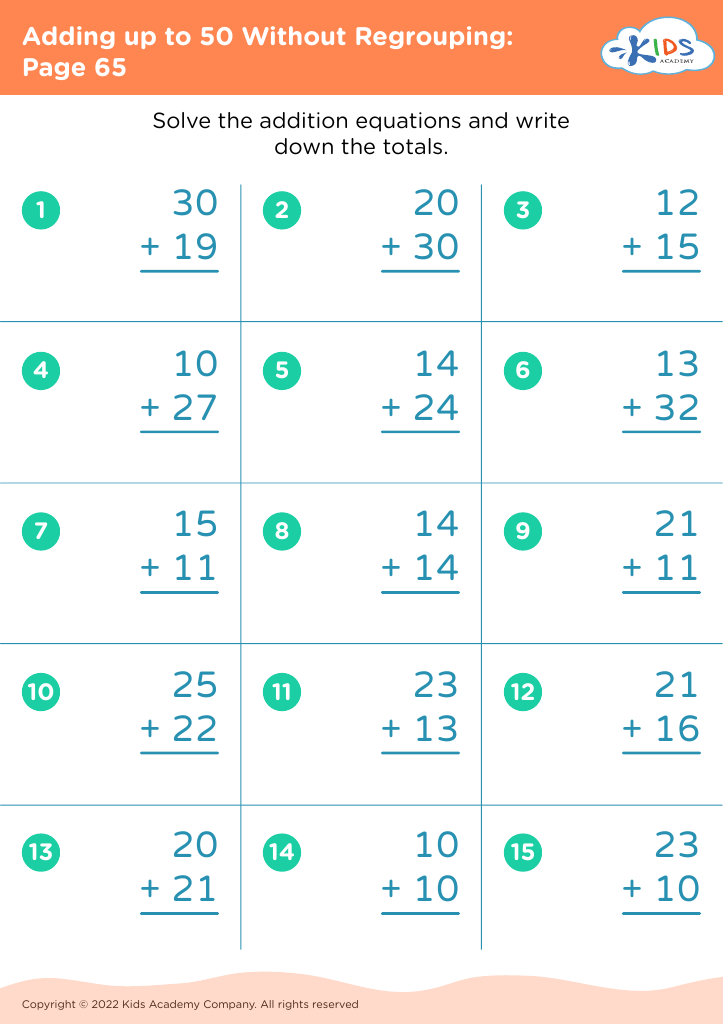


Parents and teachers should prioritize fraction simplification and addition up to 50 without regrouping for children aged 5-7 because it lays a strong mathematical foundation essential for future learning. At this crucial developmental stage, children are developing their numeracy skills and understanding basic mathematical concepts. Simplifying fractions helps them grasp the idea of equivalence and simplifies complex problems, making math less intimidating and more approachable.
Additionally, adding up to 50 without regrouping develops essential addition skills and strengthens their mental arithmetic. Mastery of these skills enables children to gain confidence and competence in their math abilities, which is vital for their academic success. Such foundational skills support problem-solving, logical thinking, and decision-making abilities, crucial across all subjects and daily life scenarios.
Focusing on these concepts also cultivates an early appreciation for mathematics, encourages persistence and attention to detail, and can spark a lifelong interest in the subject. For ages 5-7, a balance of fun, engaging learning activities can transform these basic concepts into achievable milestones, setting the groundwork for advanced mathematical learning. Ensuring these skills are well understood and practiced means children are more likely to excel in their studies and develop a positive, proactive attitude towards mathematics.