Reading comprehension Adding up to 50 Without Regrouping Worksheets for Ages 5-7
3 filtered results
-
From - To
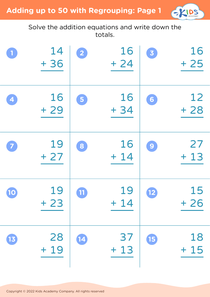
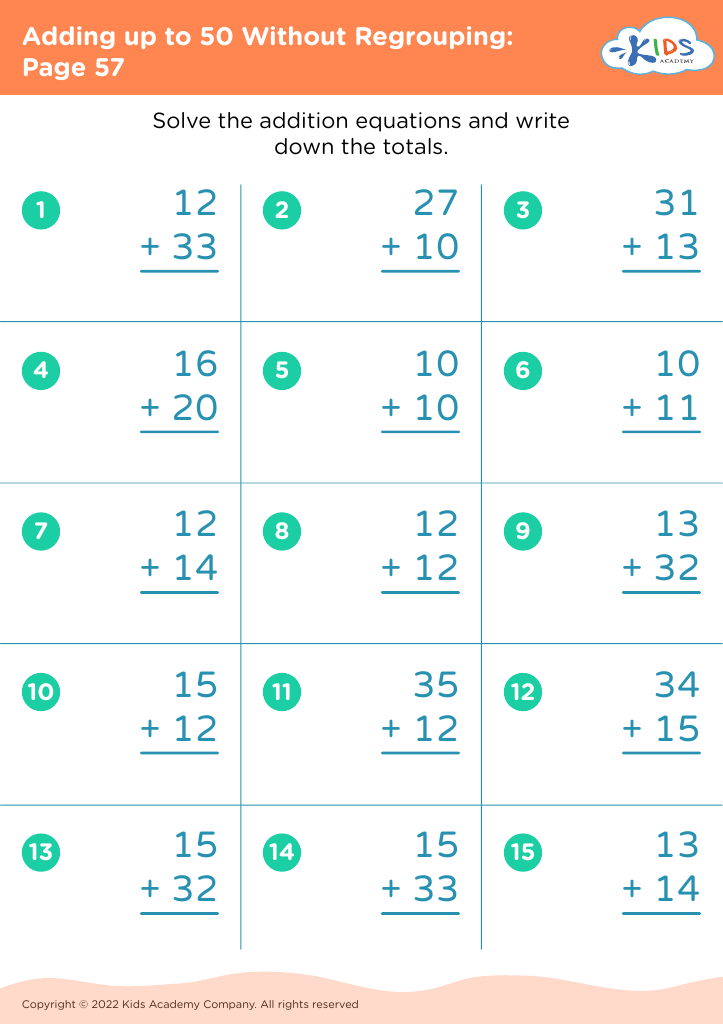
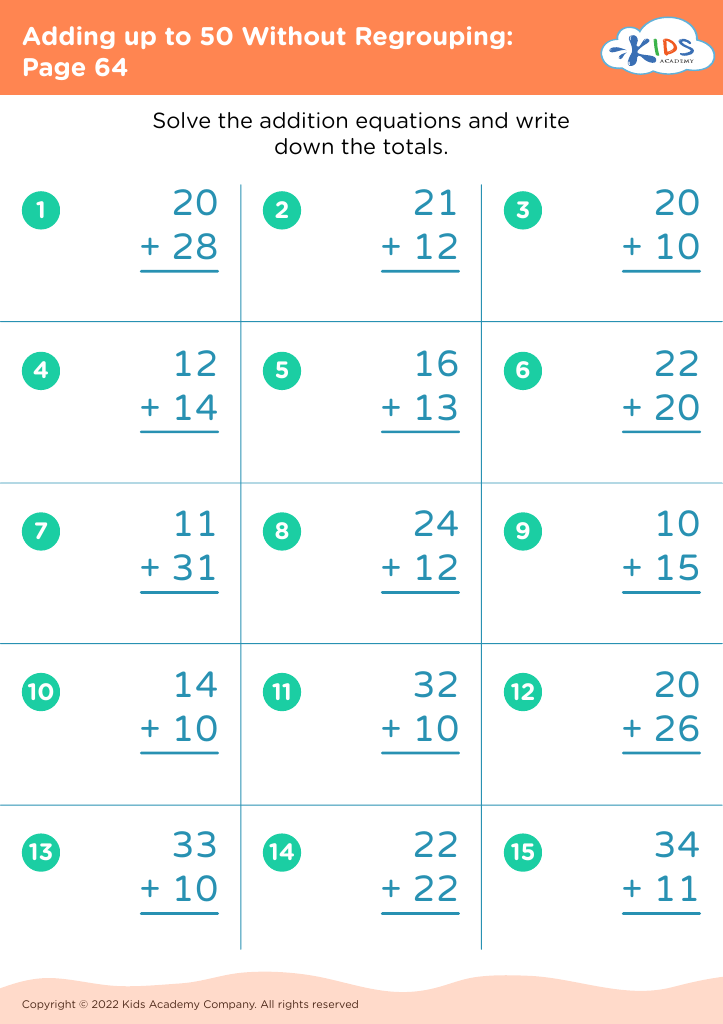
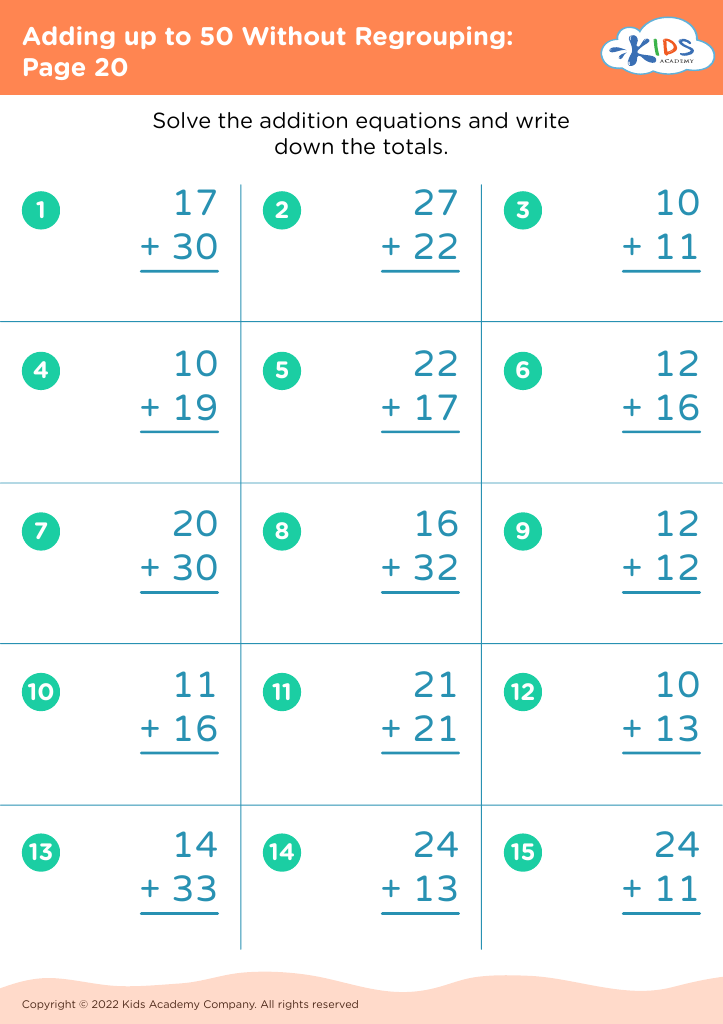
Enhance your child's reading comprehension skills with our "Adding Up to 50 Without Regrouping Worksheets" designed for ages 5-7. These engaging worksheets combine the fundamental concepts of math with reading exercises, ensuring kids not only learn to solve addition problems but also improve their understanding of instructions and contexts. Through these fun, interactive activities, young learners will read carefully to complete each problem, reinforcing their ability to decode questions and identify relevant information. Boost your child's confidence in both math and reading with our thoughtfully crafted worksheets, making learning a rewarding and enjoyable experience. Perfect for home or classroom use!


Parents and teachers should prioritize reading comprehension for children aged 5-7 because it lays the foundation for successful learning experiences across subjects. Proficient reading comprehension enables children to understand and absorb information more effectively, directly impacting their academic performance and confidence.
Similarly, the ability to add up to 50 without regrouping is essential for this age group. Early math skills reinforce logical thinking, problem-solving abilities, and number fluency, all of which contribute to a child’s overall cognitive development. When children grasp fundamental concepts of adding without regrouping, they build a solid foundational understanding of mathematics.
Combining strong reading comprehension with mathematical skills fosters a well-rounded education. For instance, when children read story problems, their ability to comprehend the text helps them solve math challenges, bridging language arts and math seamlessly.
Moreover, both skills promote critical thinking and engagement with learning materials, making it easier for students to participate in discussions and collaborative activities in the classroom. Encouraging proficiency in both reading and math not only prepares children for future academic challenges but also instills a lifelong love of learning, setting the stage for successful future endeavors. Thus, it is imperative for parents and teachers to emphasize the importance of these skills.