Filters

16 filtered results

Clear all filters
Favorites
With answer key
Interactive

16 filtered results

Difficulty Level

Grade


Enhance your child's mathematical foundation with our "Basic Math Skills: Adding Up to 50 Worksheets" designed for ages 5-7. These engaging, colorful worksheets introduce essential addition concepts, helping young learners boost their confidence and proficiency in math. Each worksheet features fun illustrations and varied exercises to keep students motivated as they practice adding numbers up to 50. Aligned with educational standards, our resources promote critical thinking and problem-solving skills in a playful environment. Perfect for at-home learning or classroom activities, these worksheets are an ideal tool for early math mastery. Start your child's math journey today with our interactive and enjoyable worksheets!
Check out this FREE Trial Lesson on Adding up to 50 for age 5-7!

L

Favorites
With answer key
Interactive
  • 5-7
  • Basic Math Skills
  • Adding up to 50
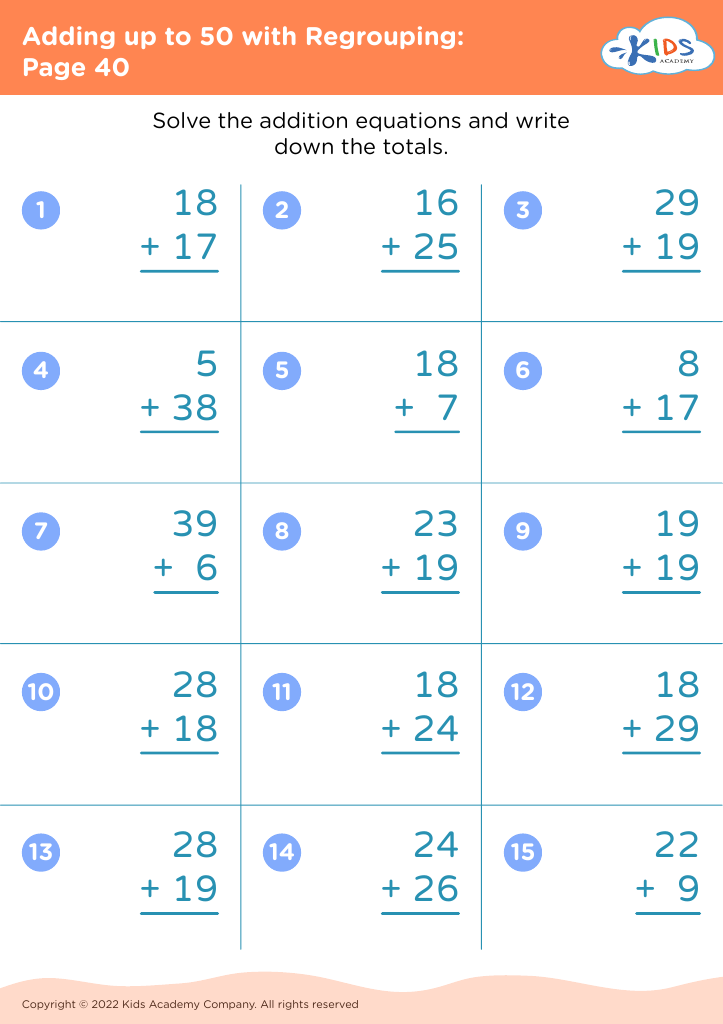
Adding up to 50 with Regrouping: Page 40
Worksheet
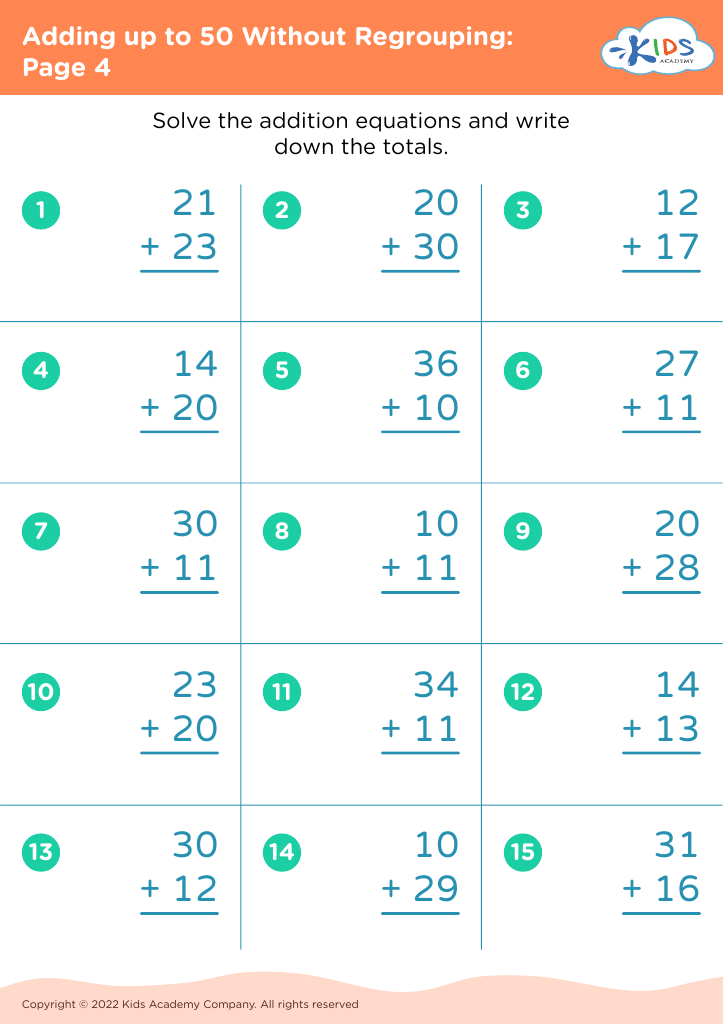
Adding up to 50 Without Regrouping: Page 4
Worksheet
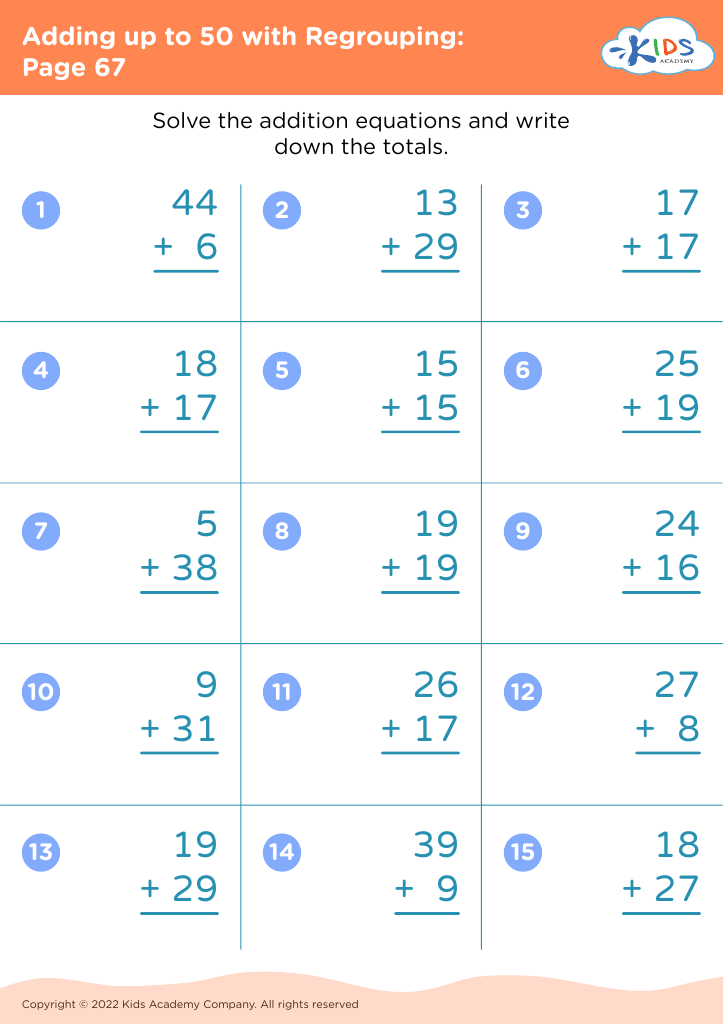
Adding up to 50 with Regrouping: Page 67
Worksheet
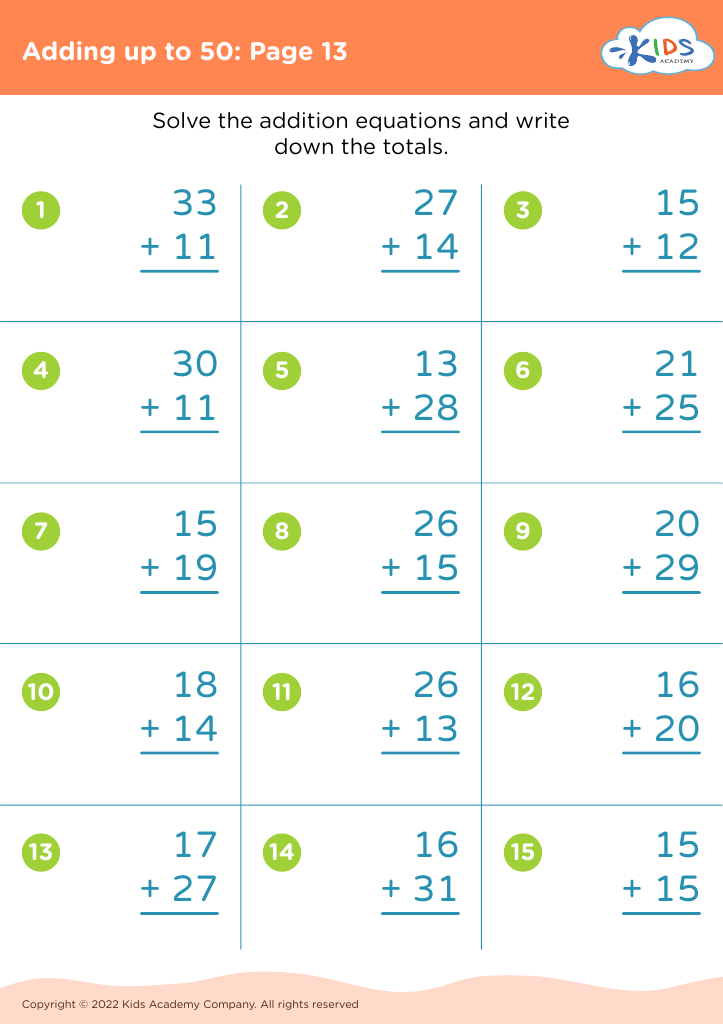
Adding up to 50: Page 13

Adding up to 50: Page 13

Adding up to 50: Page 13
Worksheet
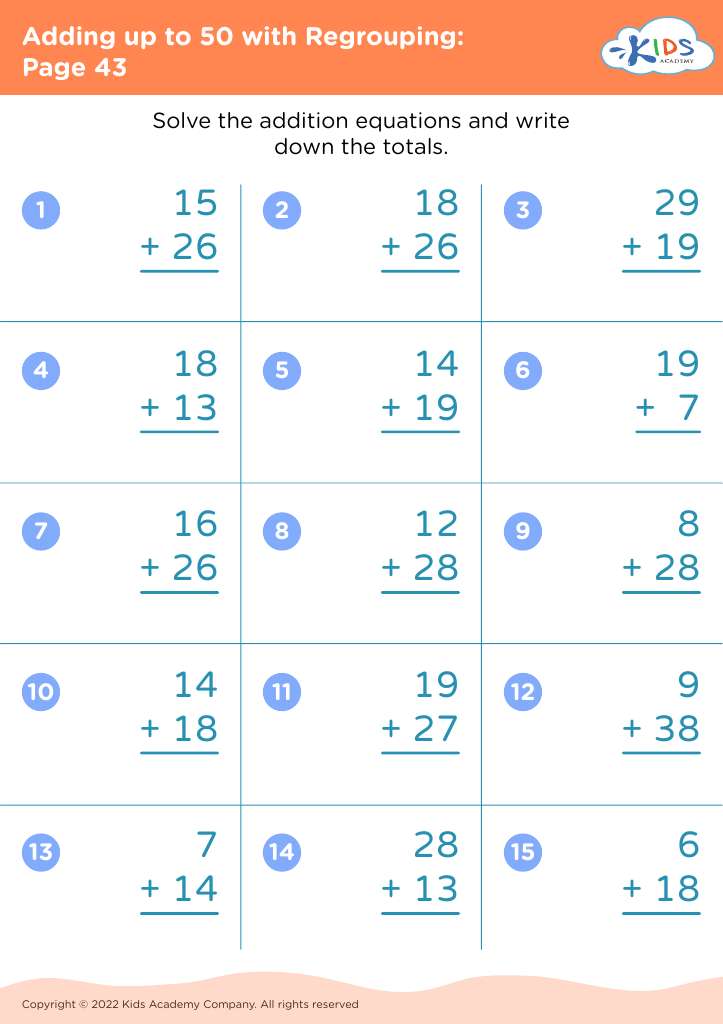
Adding up to 50 with Regrouping: Page 43
Worksheet
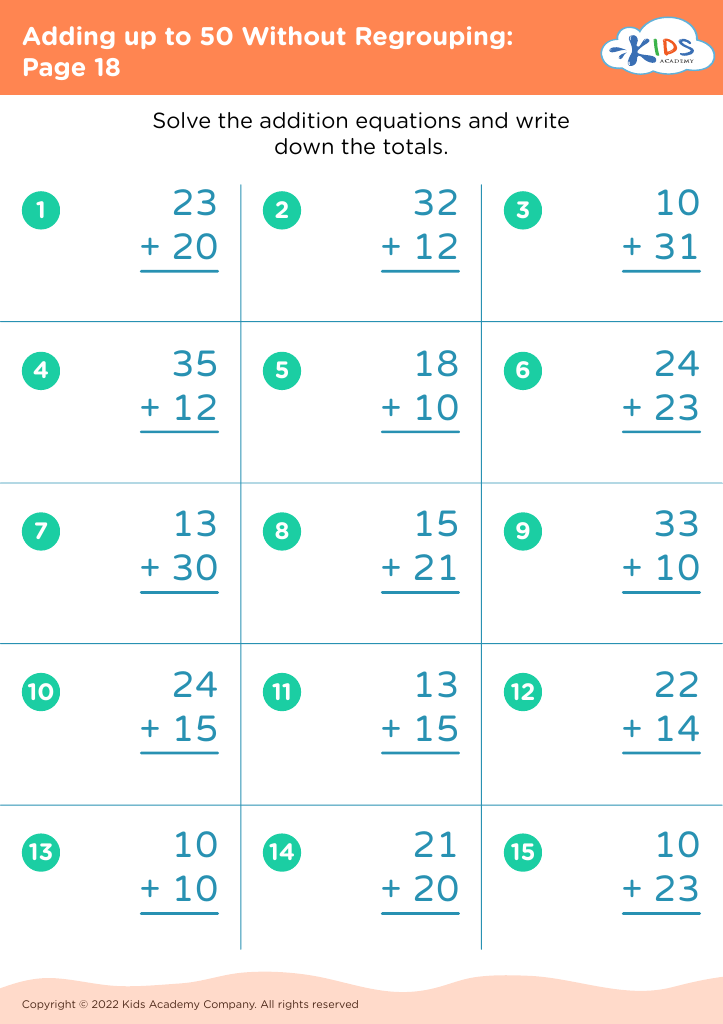
Adding up to 50 Without Regrouping: Page 18
Worksheet
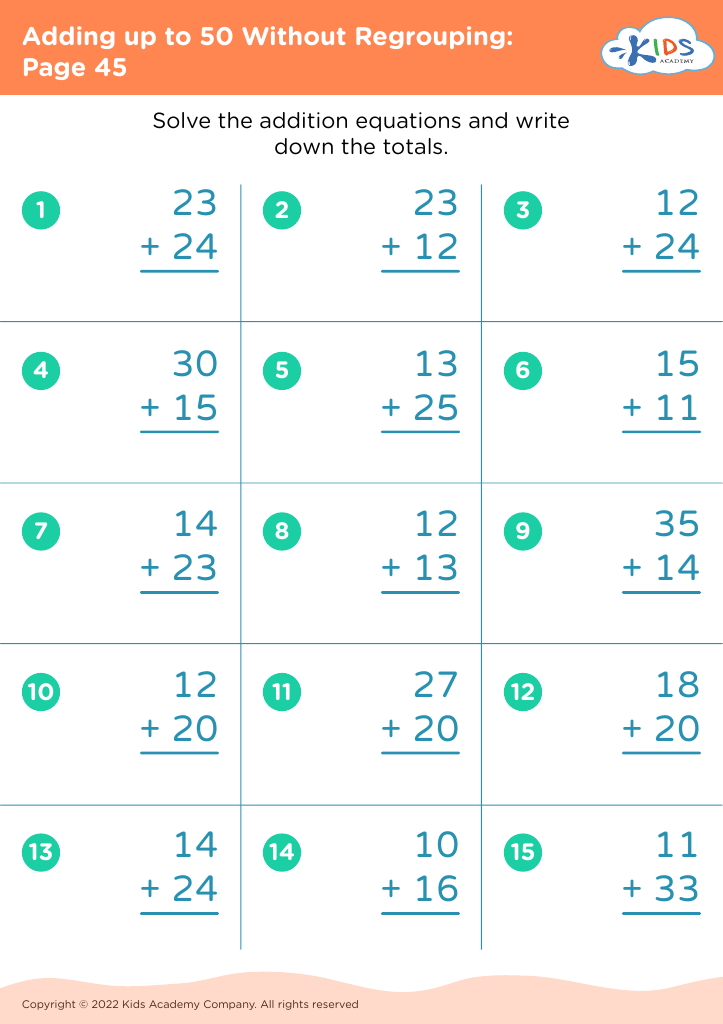
Adding up to 50 Without Regrouping: Page 45
Worksheet
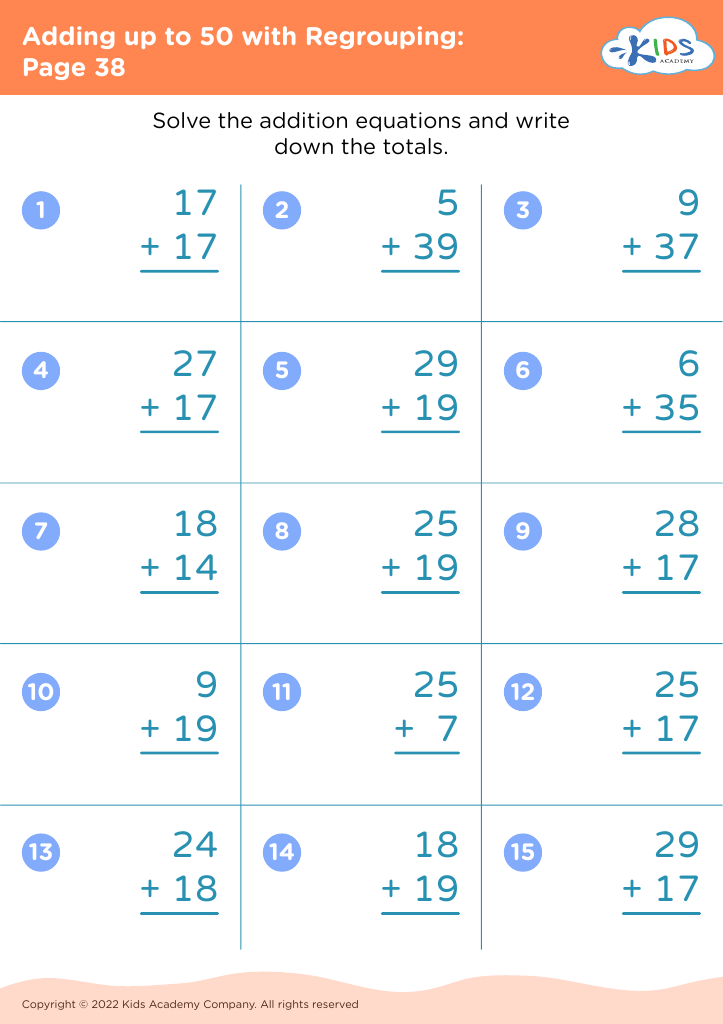
Adding up to 50 with Regrouping: Page 38
Worksheet
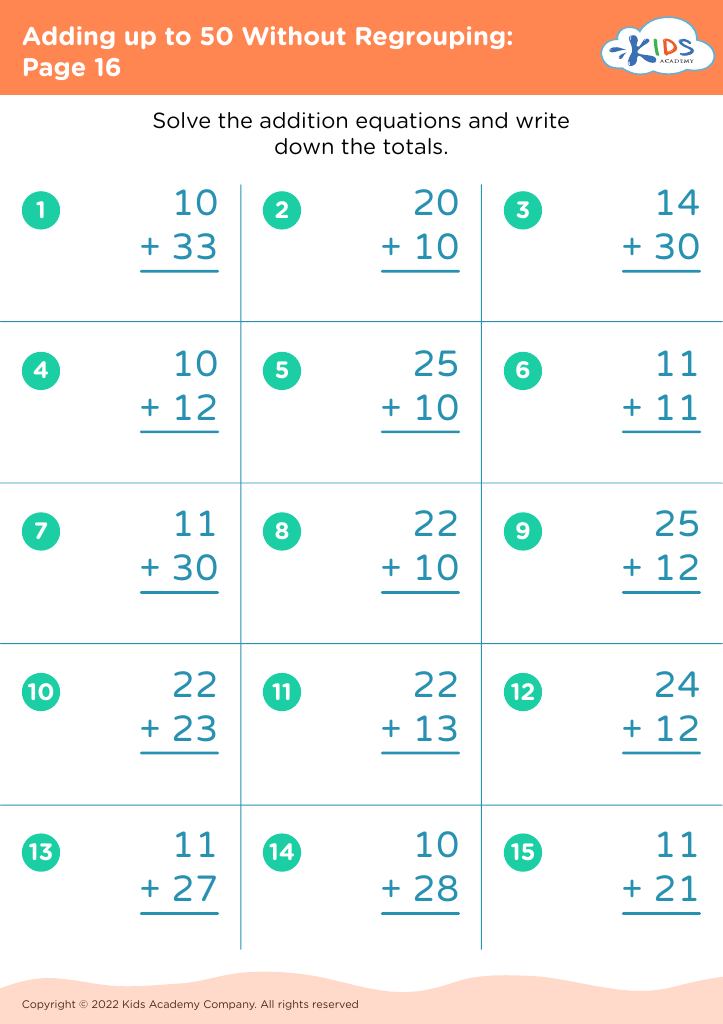
Adding up to 50 Without Regrouping: Page 16
Worksheet
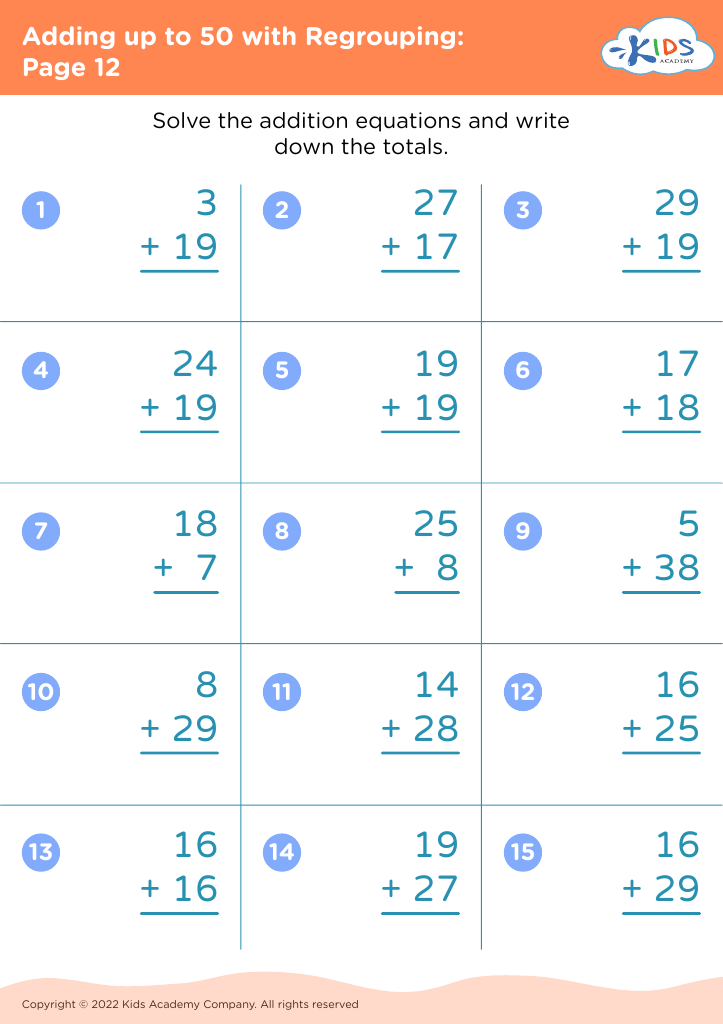
Adding up to 50 with Regrouping: Page 12
Worksheet
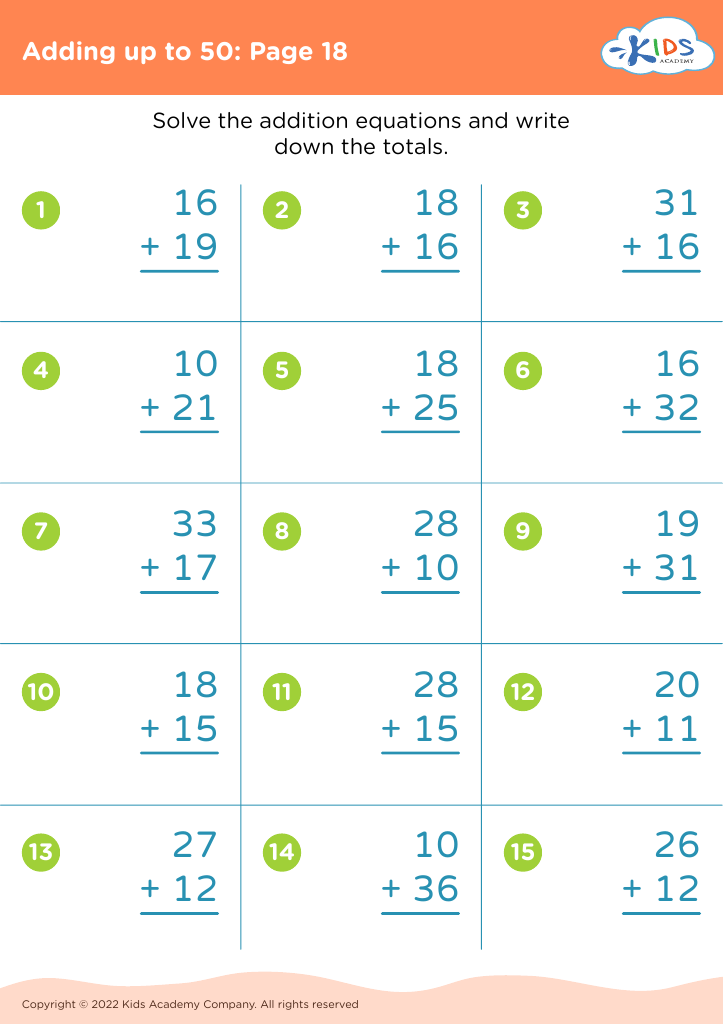
Adding up to 50: Page 18

Adding up to 50: Page 18

Adding up to 50: Page 18
Worksheet
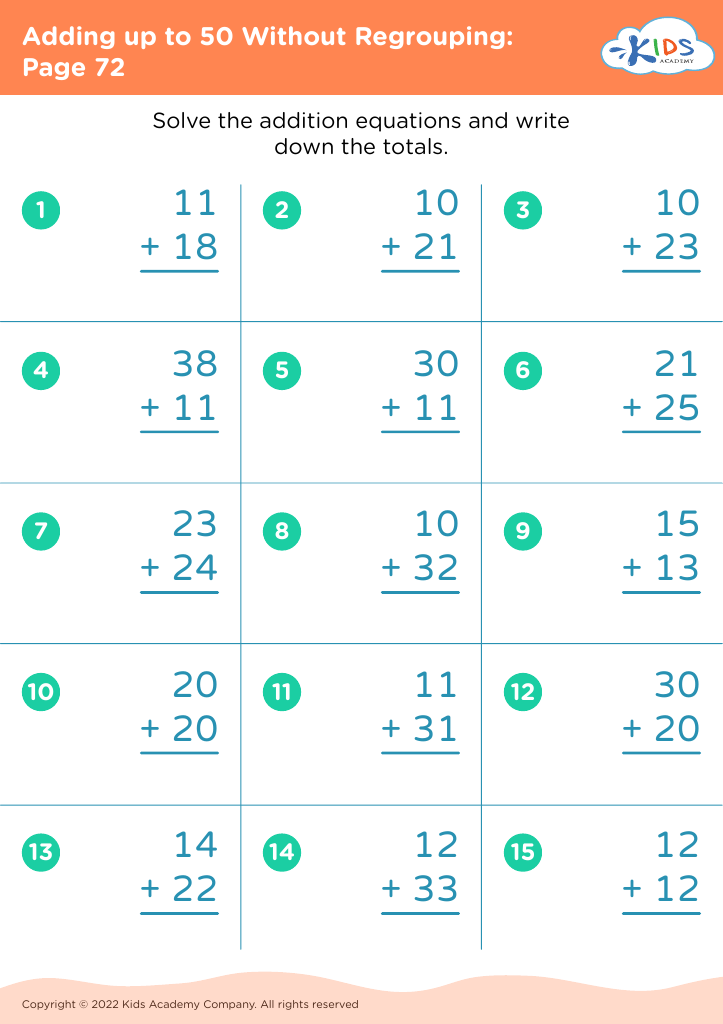
Adding up to 50 Without Regrouping: Page 72
Worksheet
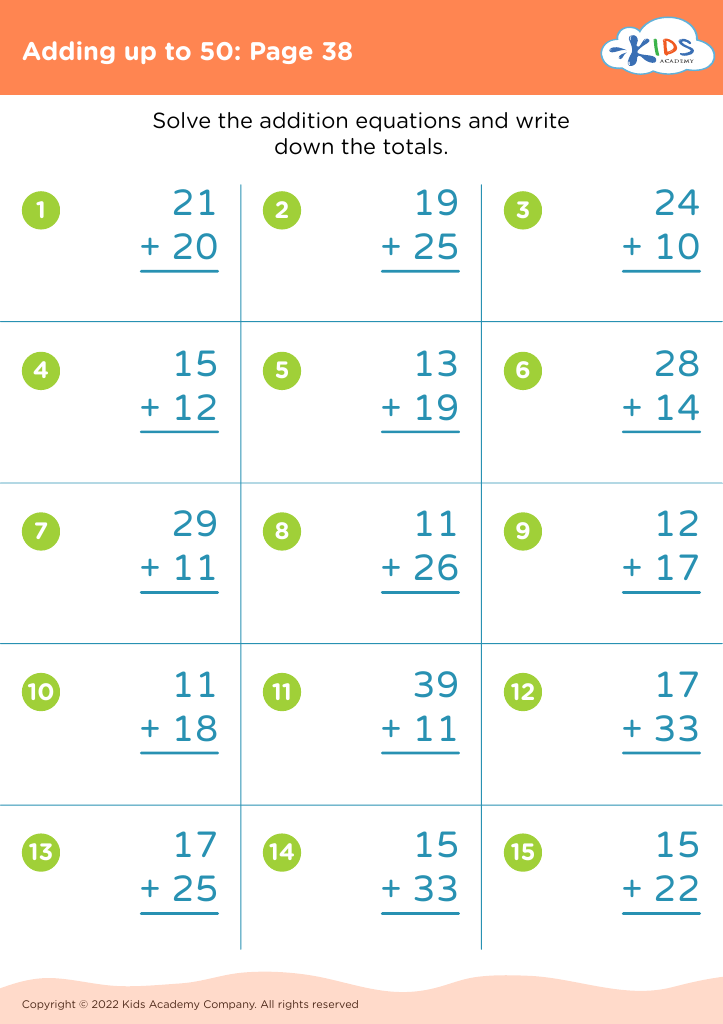
Adding up to 50: Page 38

Adding up to 50: Page 38

Adding up to 50: Page 38
Worksheet
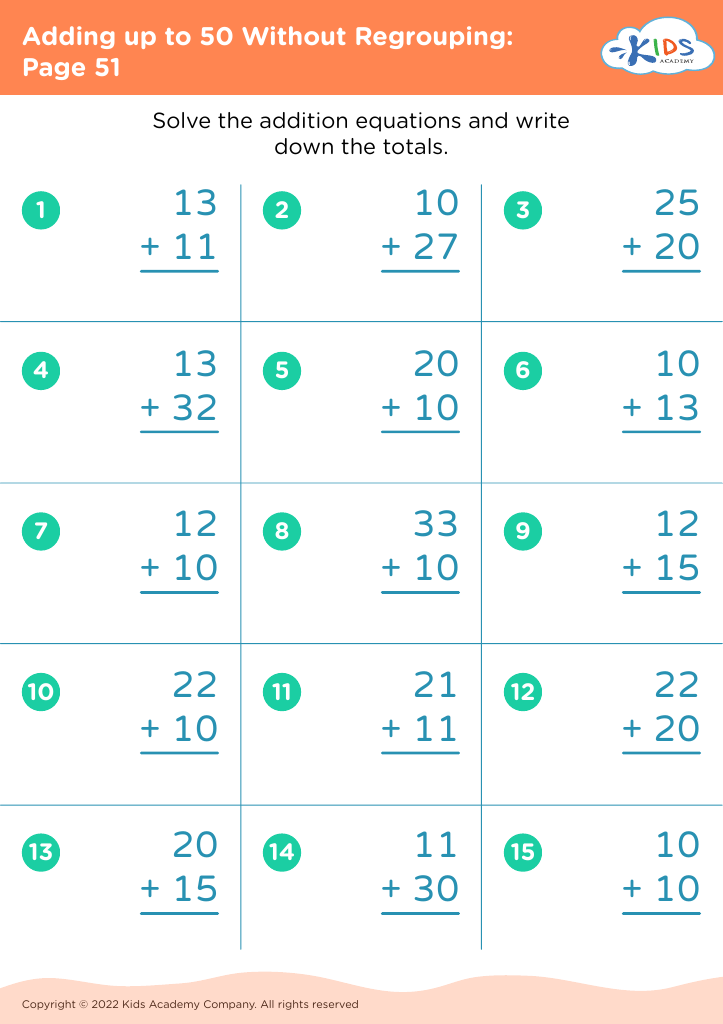
Adding up to 50 Without Regrouping: Page 51
Worksheet
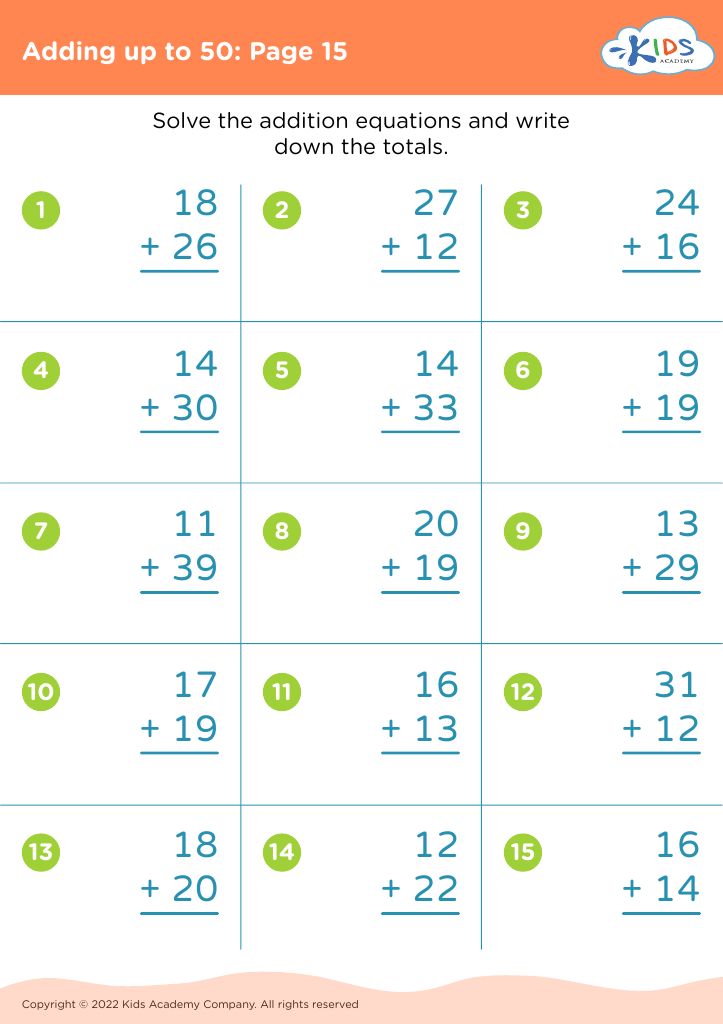
Adding up to 50: Page 15

Adding up to 50: Page 15

Adding up to 50: Page 15
Worksheet
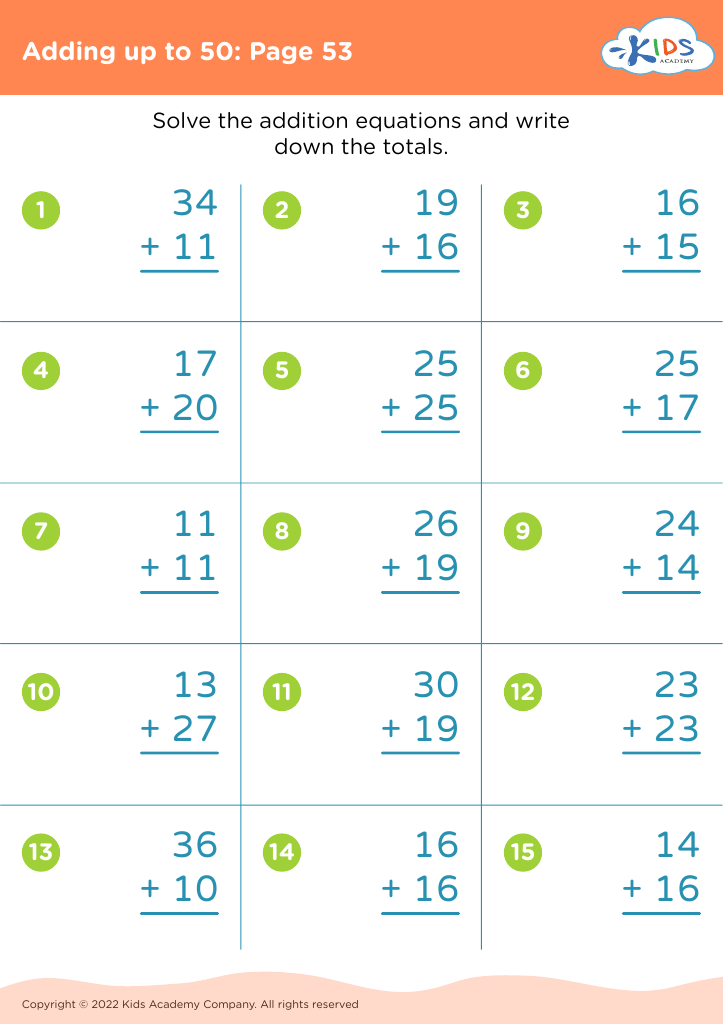
Adding up to 50: Page 53

Adding up to 50: Page 53

Adding up to 50: Page 53
Worksheet


Basic math skills, particularly the ability to add up to 50, are crucial for children aged 5-7 as they form the foundation for future learning. At this age, children are developing critical cognitive skills, and mastering basic addition helps enhance their problem-solving abilities and logical thinking. Early proficiency in addition contributes to confidence in handling numbers, encouraging a positive mindset towards math.

Understanding how to add up to 50 also supports children's everyday life skills. For example, recognizing and counting money, measuring ingredients for cooking, or calculating time—all these tasks involve basic addition. Engaging with these concepts early instills practical skills that are not only academic but also relevant in their daily activities.

Parents and teachers play a pivotal role in fostering these skills through interactive and playful learning experiences. By creating an environment where math is both fun and engaging, they can encourage curiosity and promote a lifelong love for learning. Additionally, having a strong grasp of basic math can alleviate future academic pressures, allowing children to approach more complex math concepts with ease and confidence. Investing time in developing these foundational skills is essential for any child's educational journey.