Color recognition Adding up to 50 Worksheets for Ages 5-7
3 filtered results
-
From - To
Enhance your child’s addition skills and color recognition with our engaging "Color Recognition Adding up to 50 Worksheets" designed for ages 5-7. These printable worksheets from Kids Academy merge math practice with fun color activities, making learning enjoyable and interactive. Children will add numbers up to 50 while identifying and filling objects with the correct colors. This dual approach not only solidifies foundational math skills but also improves attention to detail and color identification. Perfect for kindergarten and first-grade students, these worksheets foster a love for learning and promote cognitive development in a creative way. Download now to support your child’s educational journey!
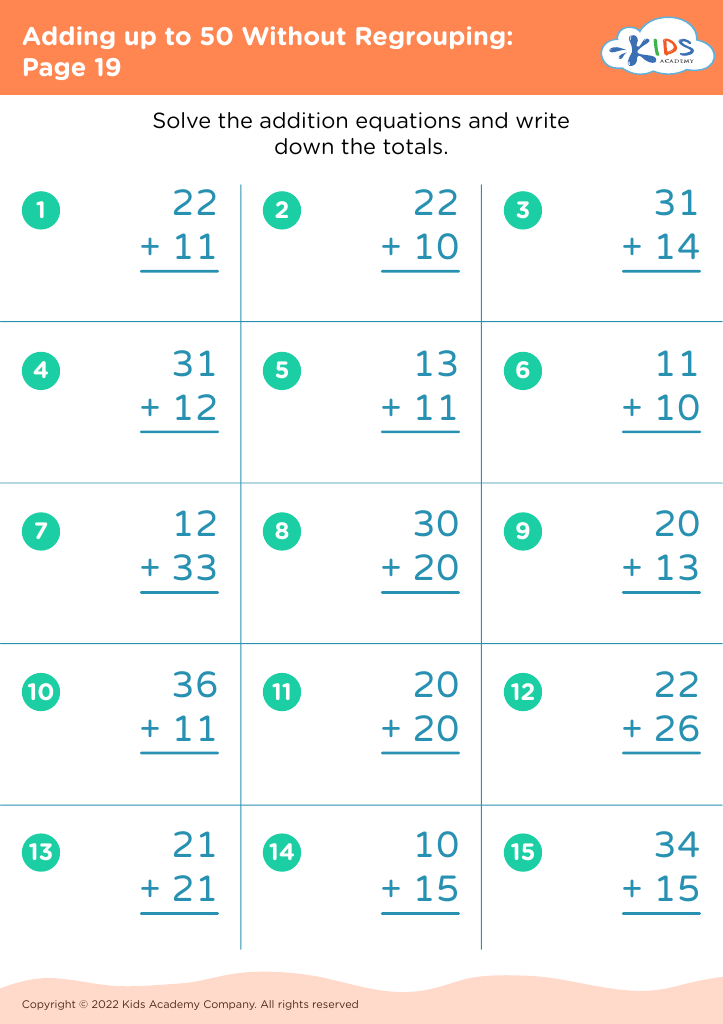
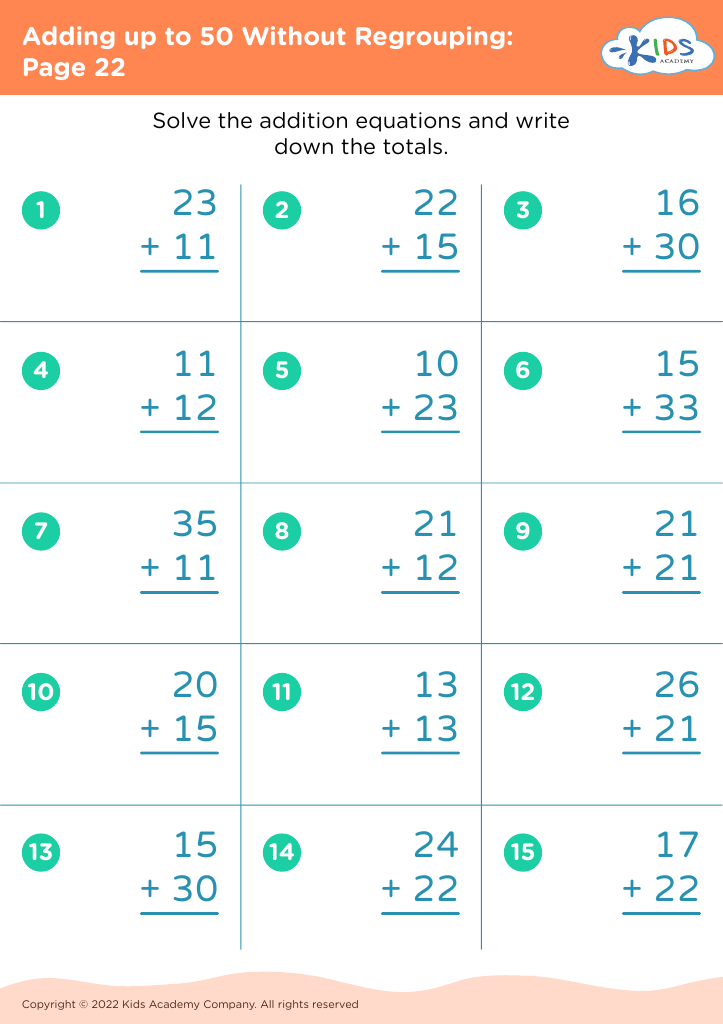
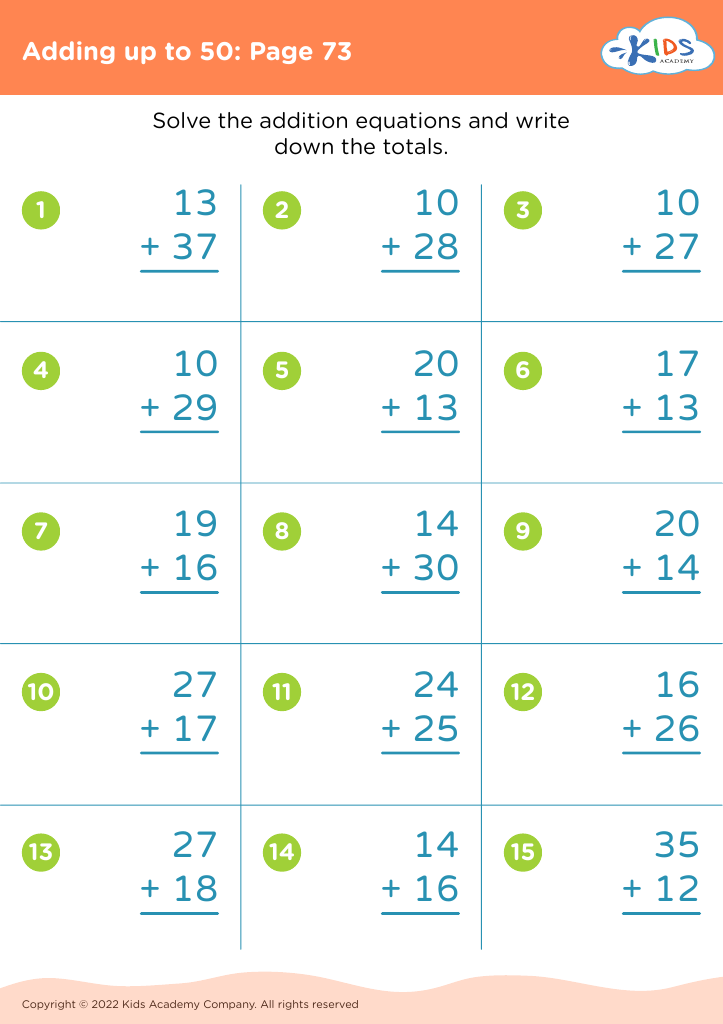




Color recognition and basic addition up to 50 are critical milestones in the cognitive and academic development of children ages 5-7. Understanding colors enhances a child's observation skills and helps them navigate their environment more effectively. Early color recognition is linked to improved memory and better communication, as children can more accurately describe the world around them. This foundational skill supports learning in areas such as reading and mathematics, where children often encounter color-coded information.
Mastering addition up to 50 lays the groundwork for numerical literacy. It nurtures essential skills like counting, understanding quantities, and recognizing patterns. Arithmetic fluency helps children build confidence in their mathematical abilities, crucial for tackling more complex concepts in the future. Early competence in math is associated with higher rates of academic success and problem-solving capabilities.
For parents and teachers, integrating color recognition and addition exercises into daily routines can make learning engaging and fun. Offering hands-on activities involving sorting colored objects, counting games, or using visual aids can spark curiosity and foster a lifelong love of learning. By supporting these skills early on, adults are setting children up for both educational success and a well-rounded cognitive development.








