Comparing Fractions Adding up to 50 Worksheets for Ages 5-7 - Page 2
30 filtered results
-
From - To
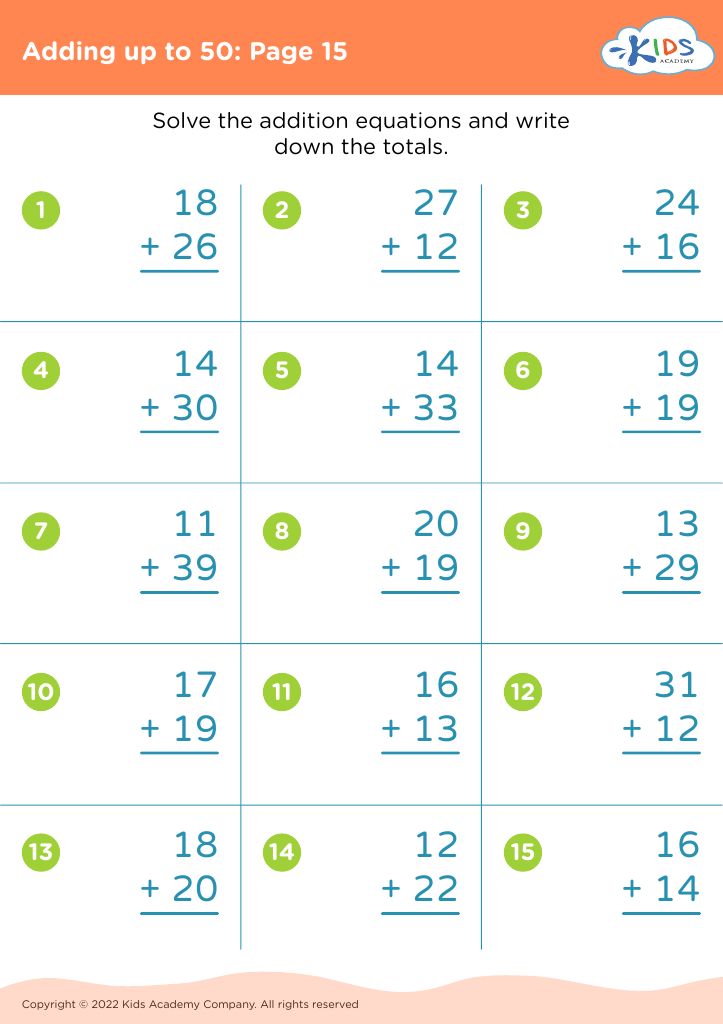
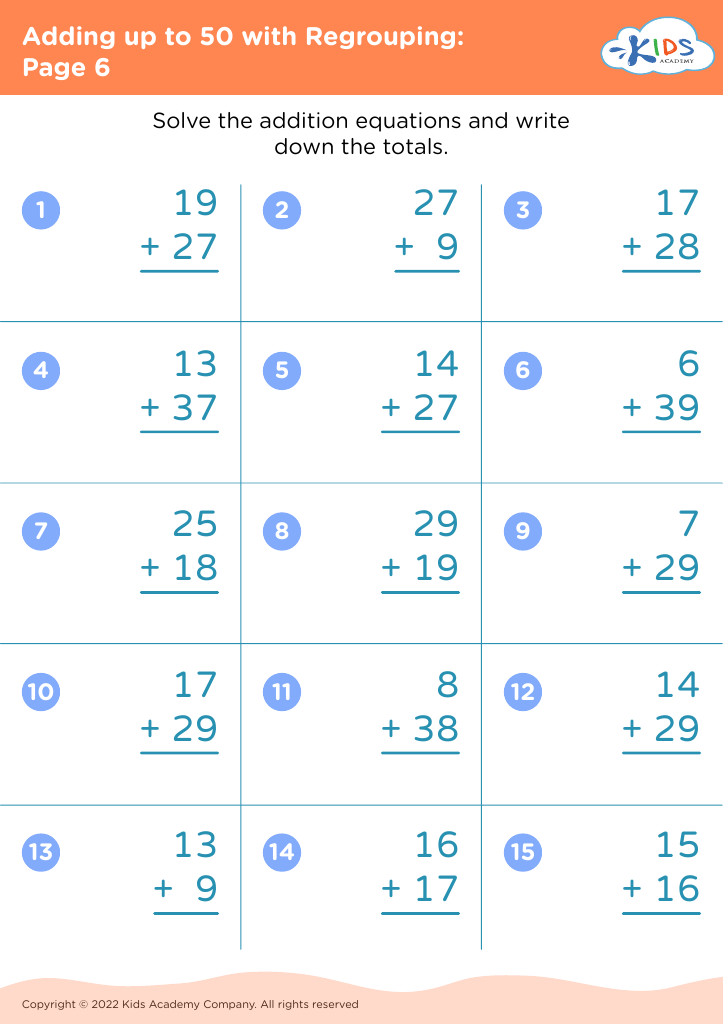
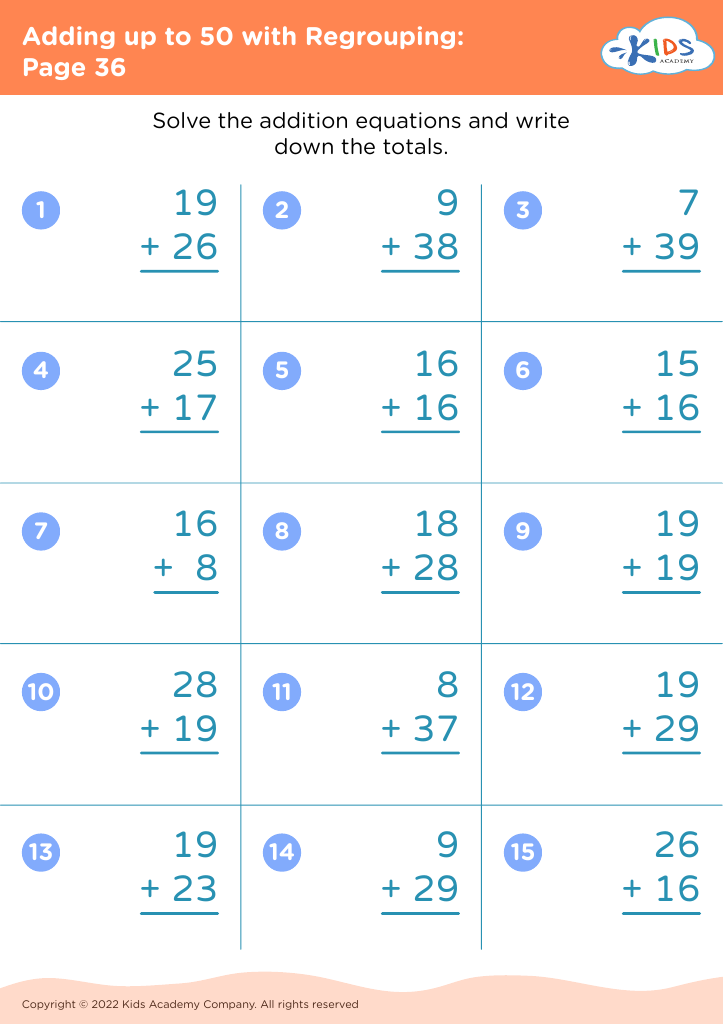
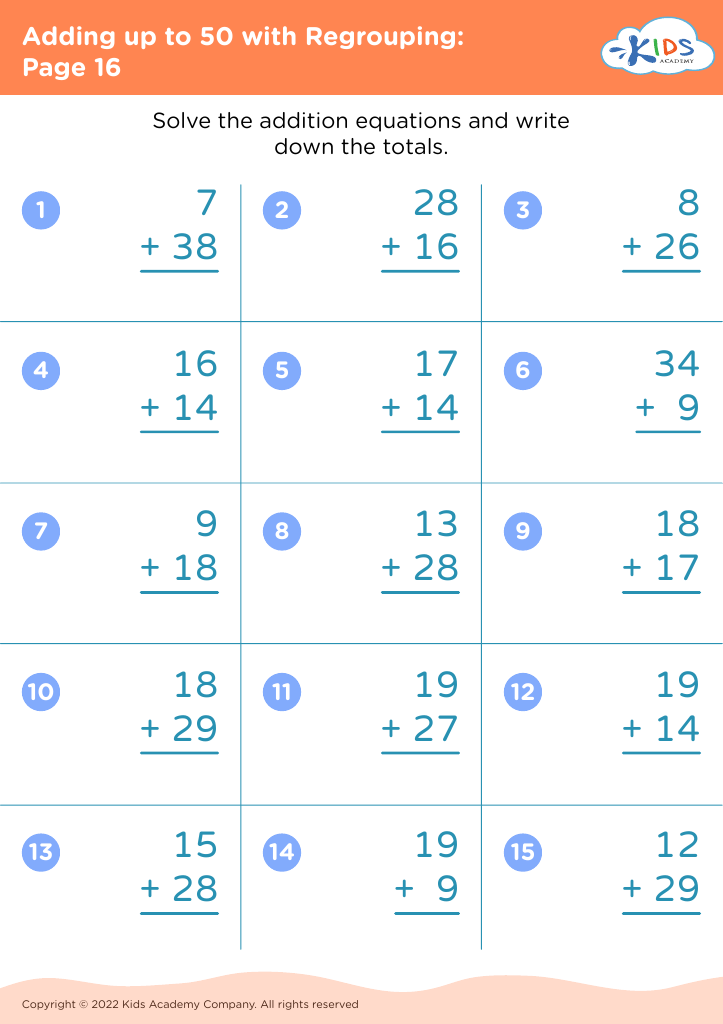
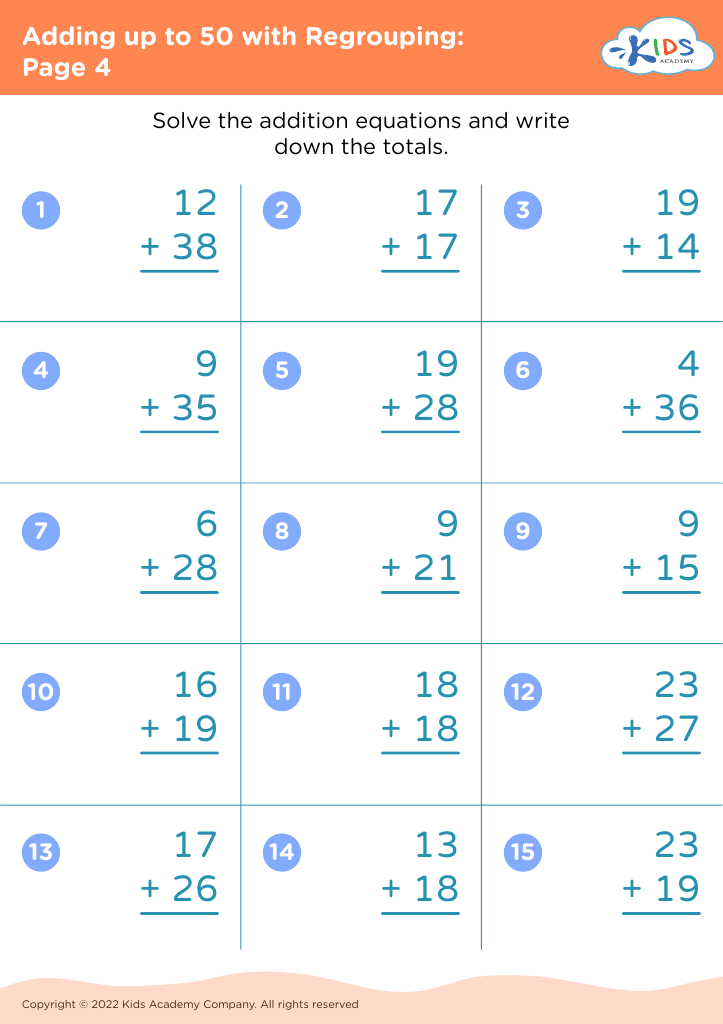
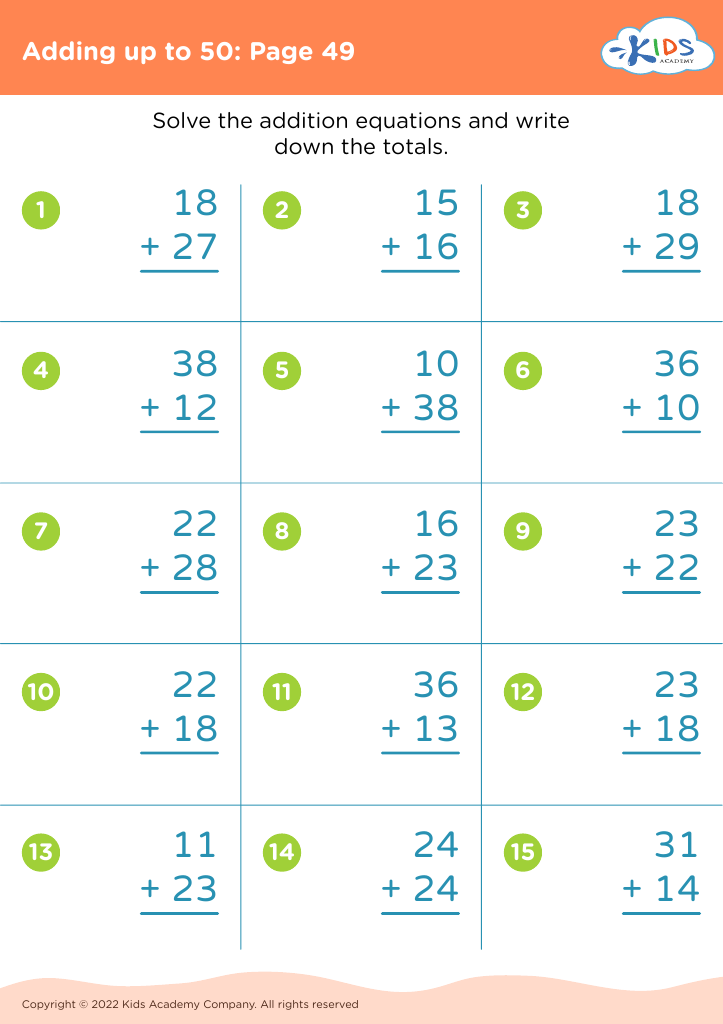




Understanding how to compare fractions is a fundamental math skill that lays the groundwork for future numerical reasoning. For children ages 5-7, exploring fractions that add up to 50 offers a playful and engaging way to grasp mathematical concepts. Parents and teachers should care about this topic because it helps young learners develop critical thinking and problem-solving skills.
When children compare fractions, they learn to recognize relationships between numbers, enhancing their ability to find equivalents and understand concepts like size and quantity. Using fractions that sum to 50 encourages them to visualize parts of a whole in a manageable context, promoting comprehension without overwhelming them with complexity.
Additionally, engaging with fractions prepares children for more advanced topics in math, such as addition, subtraction, and measurement. It fosters a sense of number sense, which is essential for later stages of academic success. Parents and teachers can further support learning by incorporating everyday examples and hands-on activities related to fractions, making lessons feel relevant and fun.
By focusing on comparing fractions, adults nurture essential math skills, build confidence, and instill a lifelong love for learning in young children. This foundational knowledge is invaluable throughout their educational journey.








