Comparing quantities Adding up to 50 Worksheets for Ages 5-7
3 filtered results
-
From - To
Welcome to our "Comparing Quantities Adding Up to 50" worksheets designed for children aged 5-7! These engaging and interactive resources help young learners develop essential math skills while exploring the concept of comparing quantities. Through fun exercises, your child will practice addition and subtraction, enhancing their ability to analyze numbers effectively. Our worksheets incorporate visual aids and colorful illustrations, making learning enjoyable and captivating. Perfect for classroom or home-use, these materials support early math competencies and foster critical thinking. Unlock your child’s potential in math with our thoughtfully designed worksheets that pave the way for a strong mathematical foundation!
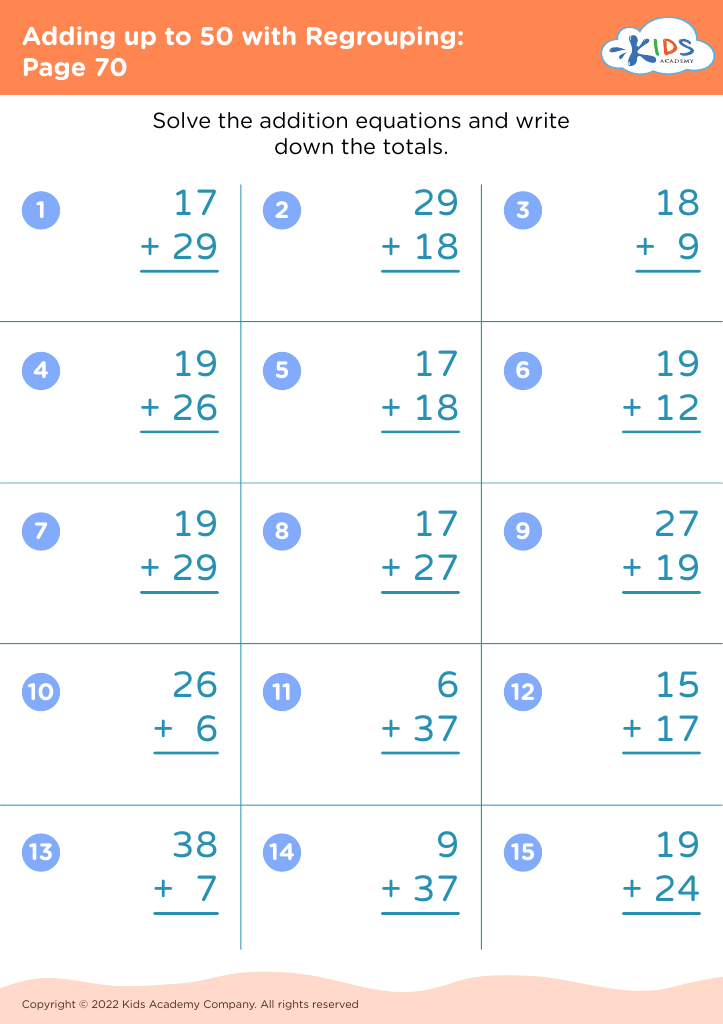
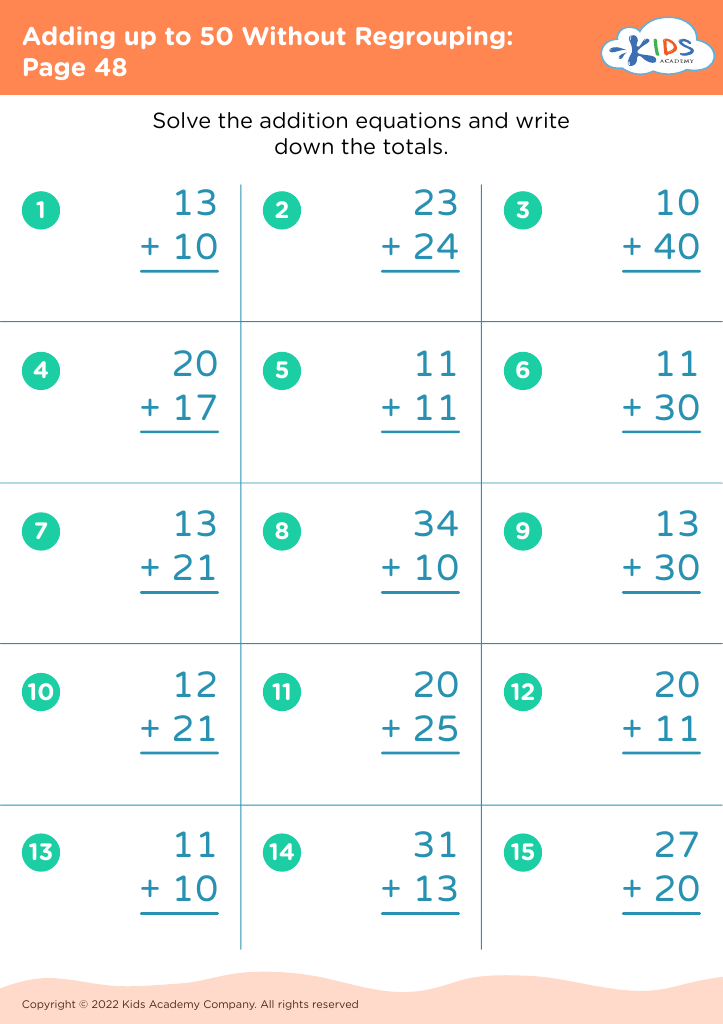
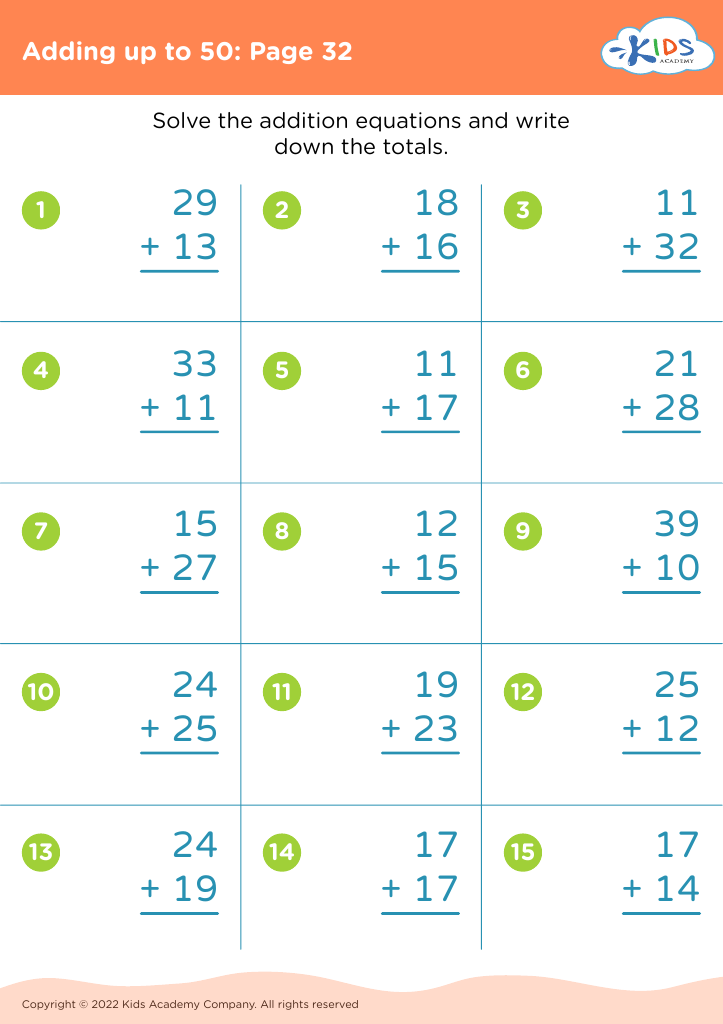




Comparing quantities and understanding addition up to 50 is crucial for children aged 5-7 as it lays the foundation for their mathematical literacy. At this developmental stage, children are naturally curious and eager to explore numbers, making it an ideal time to introduce concepts of comparison and addition. By mastering these skills, children learn to approach problems logically and develop critical thinking, which is essential throughout their education.
Engaging with activities related to comparing quantities helps children recognize patterns, discern differences, and make informed decisions based on numerical data. This skill is particularly important in real-life scenarios, such as understanding money, measuring ingredients in recipes, or analyzing data during science projects.
Furthermore, these foundational skills support the broader curriculum in mathematics, improving children's ability to tackle more complex concepts such as subtraction, multiplication, and division later on. By nurturing these skills through playful and educational activities, parents and teachers can foster a positive attitude toward math and build confidence in children's abilities. Ultimately, ensuring that young learners are proficient in comparing quantities and addition up to 50 sets them on a path to success in mathematics and prepares them for future academic challenges.








