Enhance number recognition Adding up to 50 Worksheets for Ages 5-7
5 filtered results
-
From - To
Boost your child's number recognition with our "Adding up to 50 Worksheets" designed for ages 5-7! These engaging and educational worksheets are crafted to make learning a breeze, helping young learners master addition while becoming familiar with numbers up to 50. Perfect for classroom use or at-home practice, each worksheet offers fun exercises that challenge and stimulate curious minds. As they solve problems, kids will build a strong math foundation, while enhancing their critical thinking and problem-solving skills. Give your child the tools they need for success in math with our expertly designed resources!
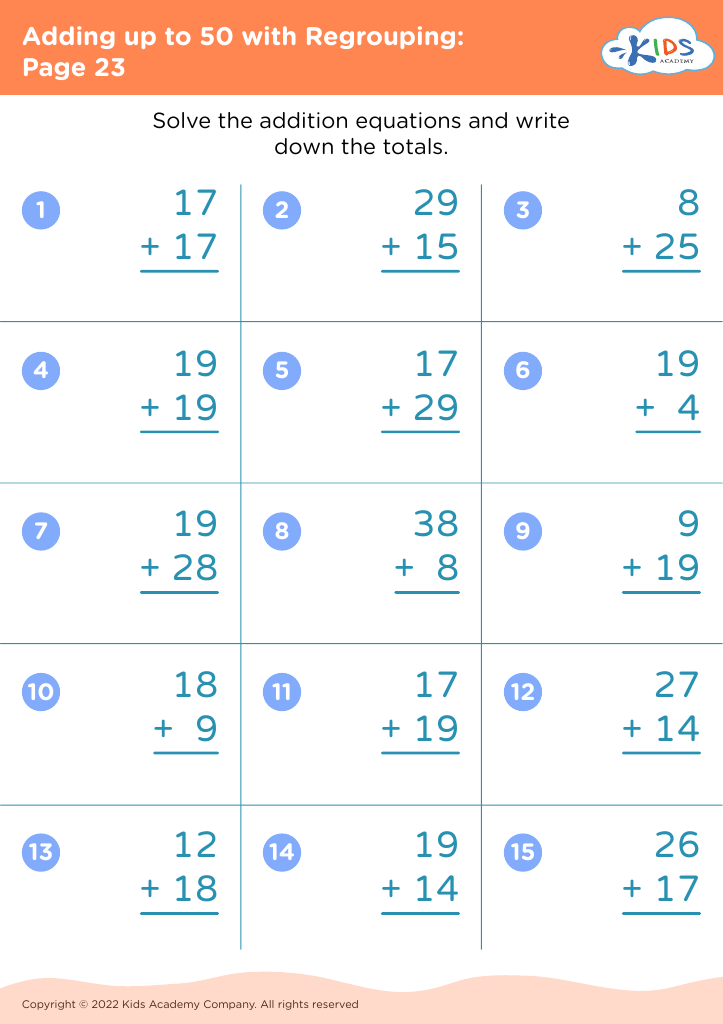
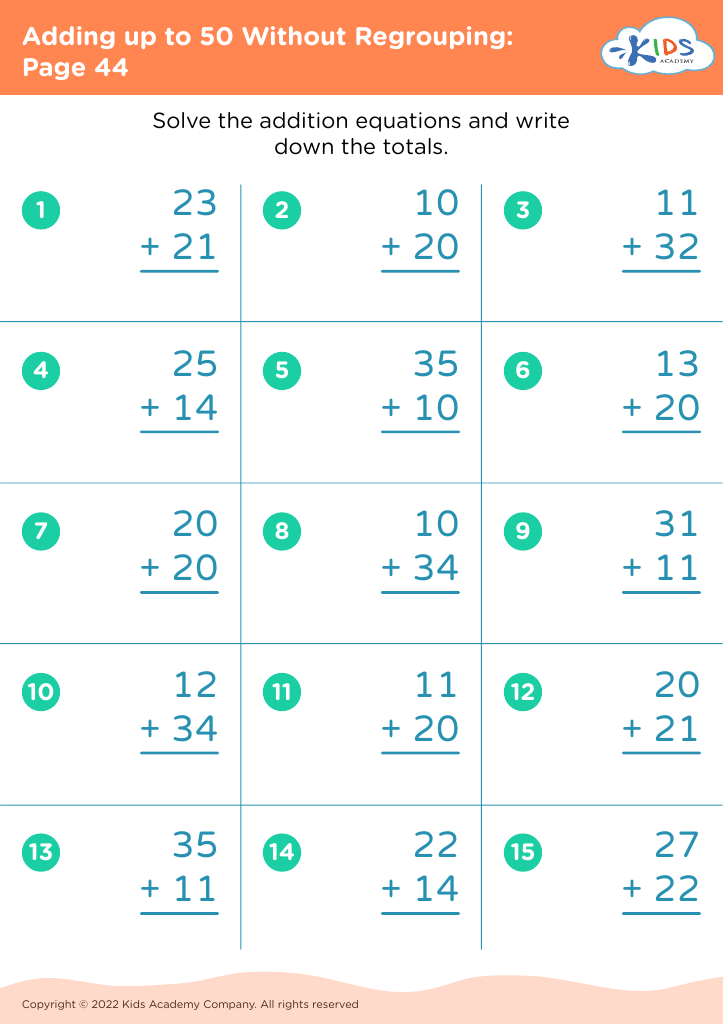
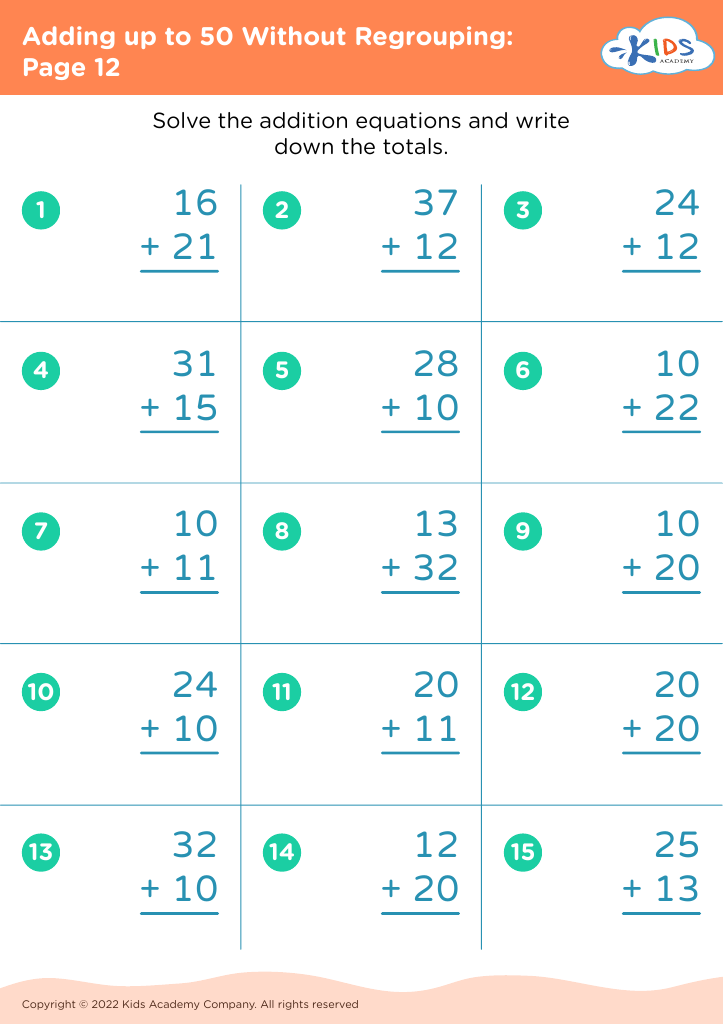
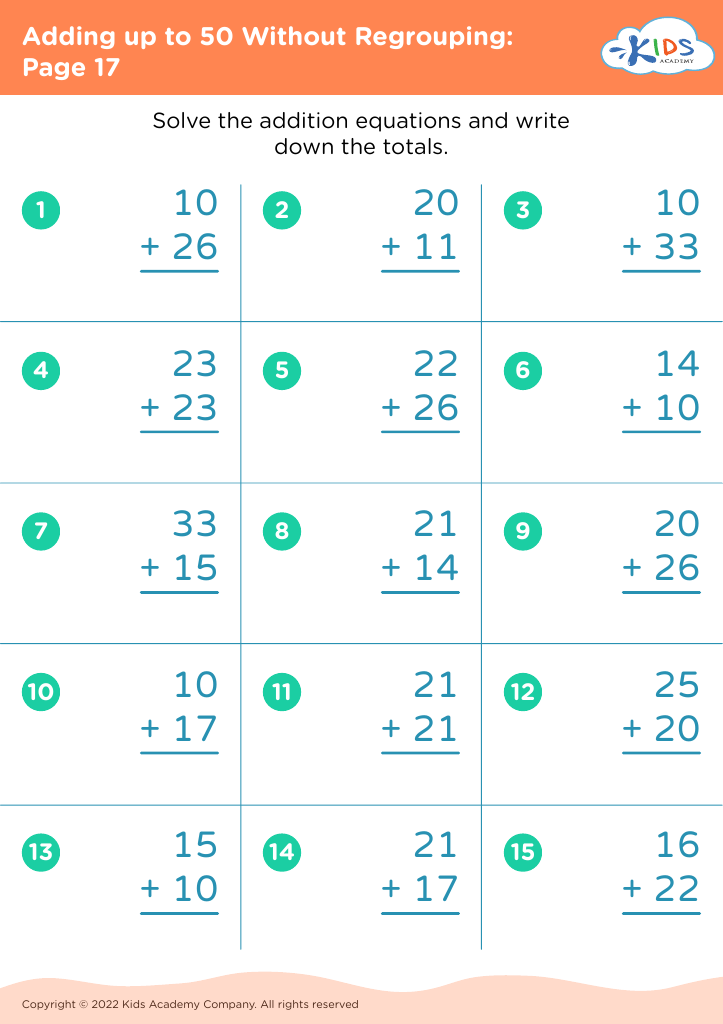
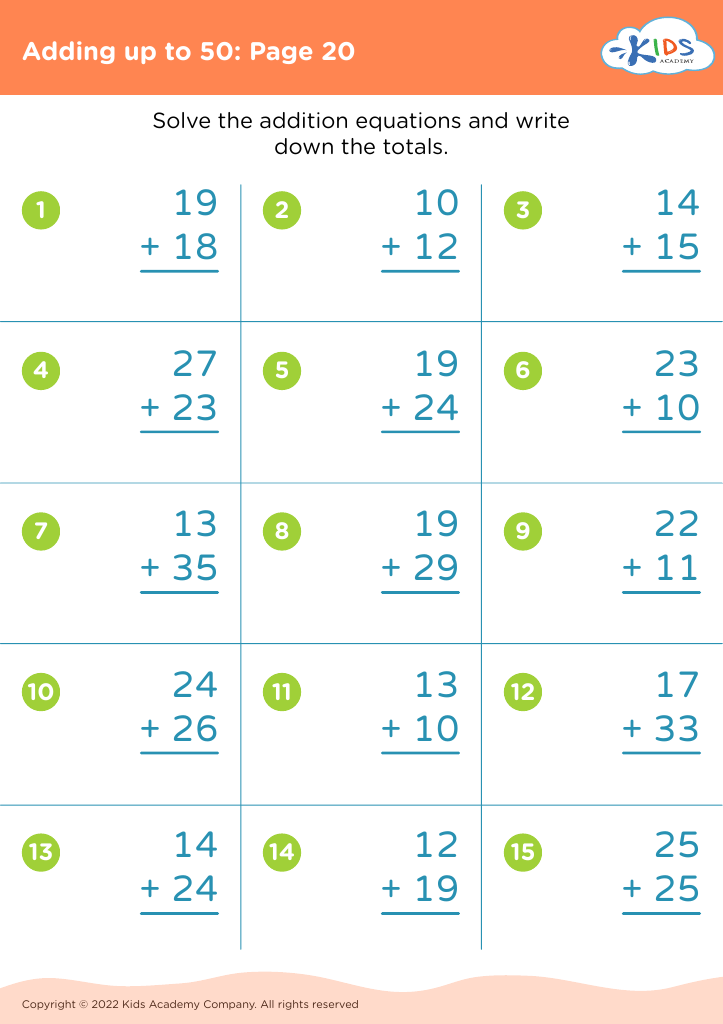




Enhancing number recognition and the ability to add numbers up to 50 for children ages 5-7 is essential for early mathematical development. At this formative age, a strong grasp of basic arithmetic sets the foundation for future learning across many subjects. Recognizing and adding numbers up to 50 helps children understand the concept of quantity, the significance of numbers, and the relationship between them. This fundamental skill not only prepares them for tackling more complex math problems in the future but also cultivates problem-solving and logical thinking abilities.
For parents and teachers, focusing on these skills supports the child's cognitive development and builds confidence. When children feel competent in their math abilities, they are more likely to approach learning with a positive attitude and curiosity. This formative experience can contribute to overall academic success, as many disciplines integrate mathematics.
Furthermore, early math skills are linked to future educational outcomes, including literacy and analytical abilities. By emphasizing number recognition and addition early on, parents and teachers give children a crucial advantage. Engaging activities, practical examples, and consistent practice make learning enjoyable and impactful, setting the stage for lifelong numeracy skills and a passion for learning.








