Fraction comparison Adding up to 50 Worksheets for Ages 5-7
7 filtered results
-
From - To
Discover our engaging "Fraction Comparison Adding up to 50 Worksheets" designed specifically for children ages 5-7! These worksheets provide a fun and interactive way for young learners to develop their understanding of fractions while practicing addition skills with numbers up to 50. Each worksheet includes colorful visuals and age-appropriate exercises that encourage critical thinking and enhance mathematical reasoning. Perfect for teachers and parents alike, these resources foster a love for math while promoting essential foundational skills. Set your child on the path to mathematical success with our carefully crafted worksheets that make learning fractions both easy and enjoyable!
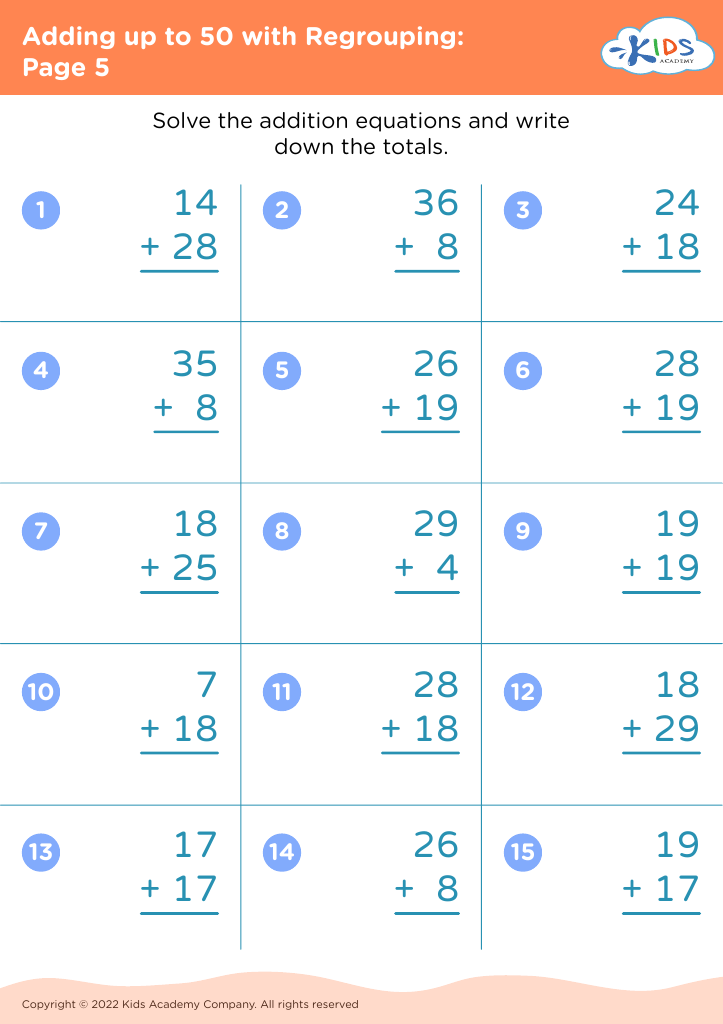
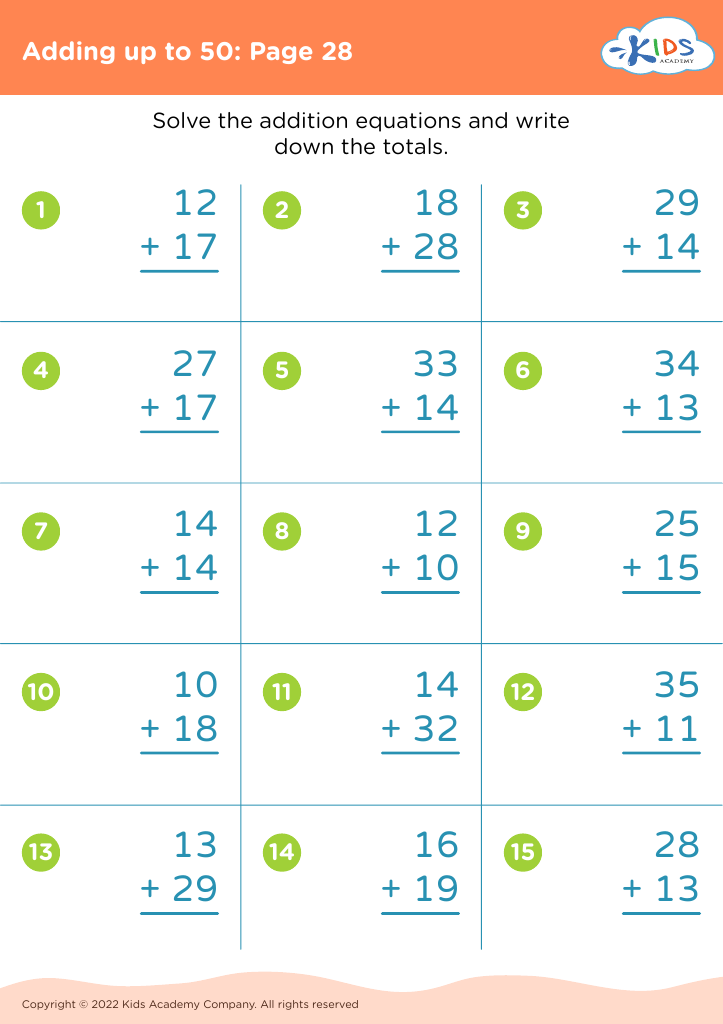
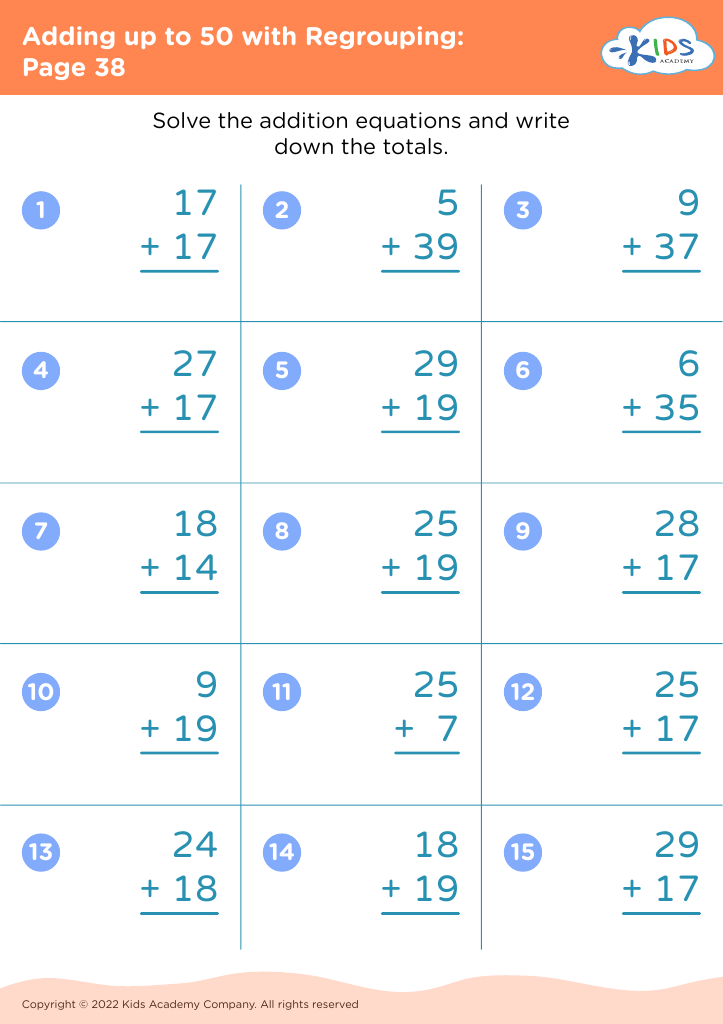
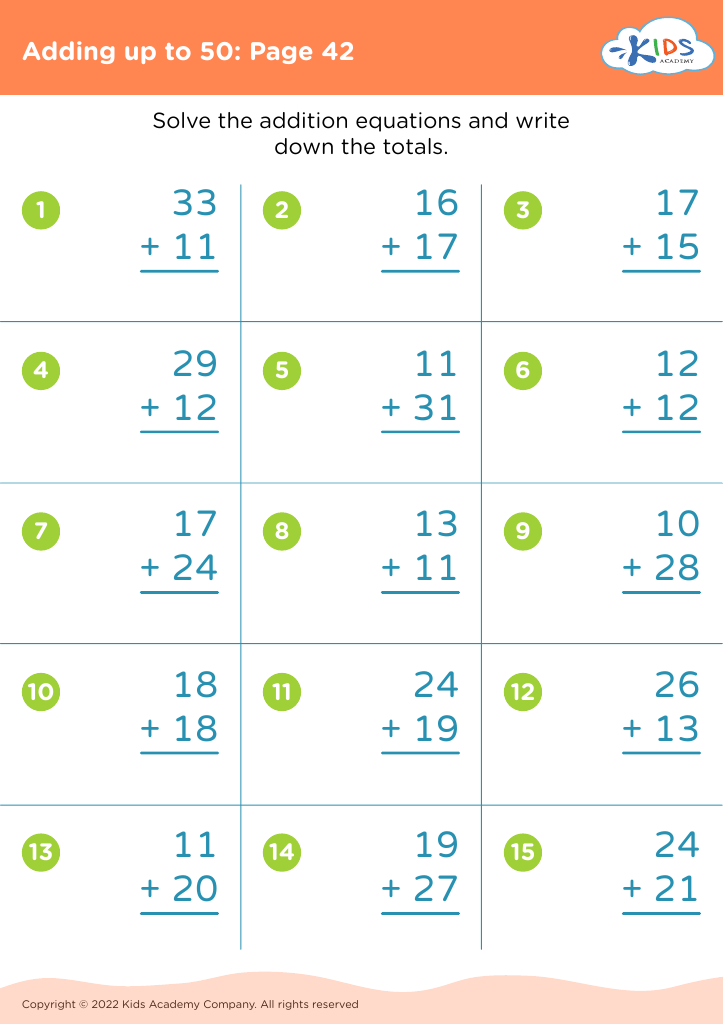
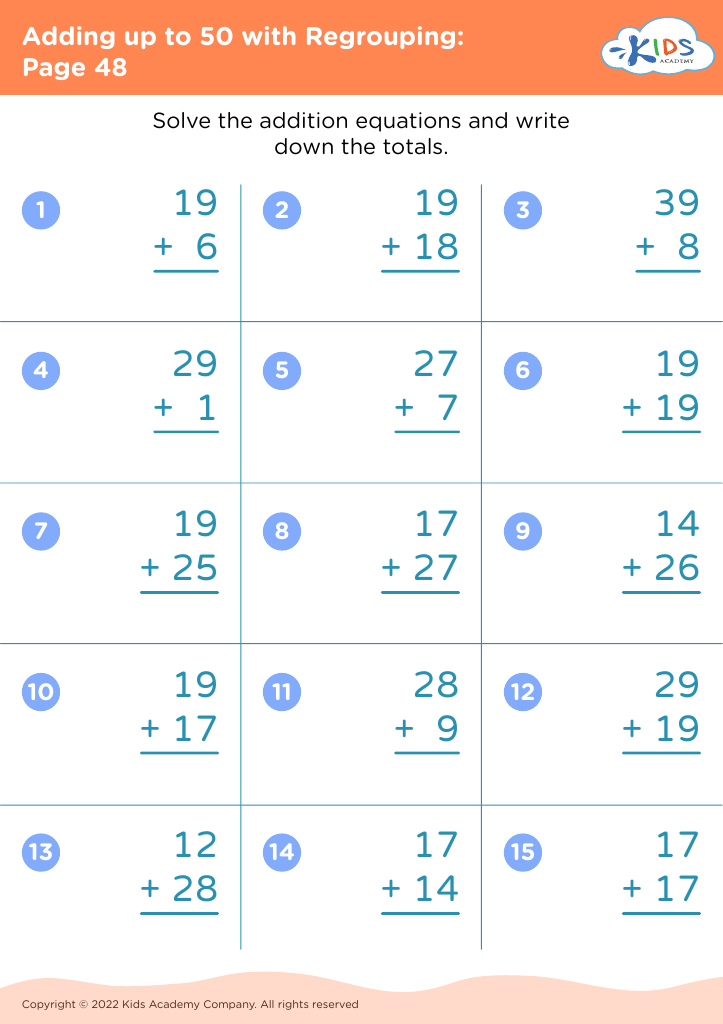
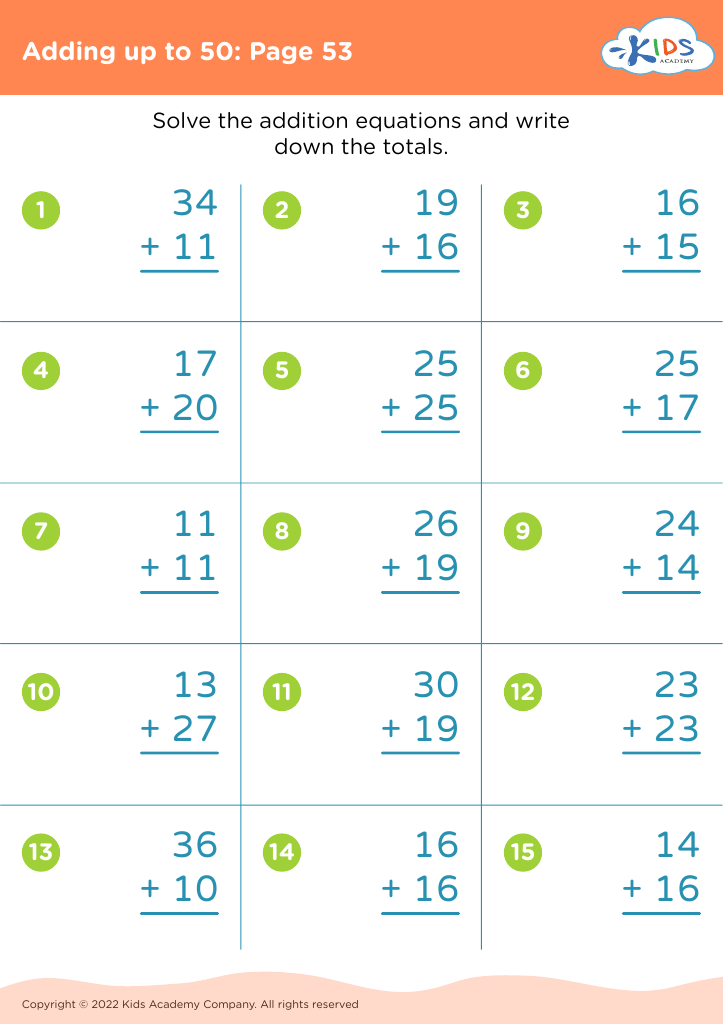
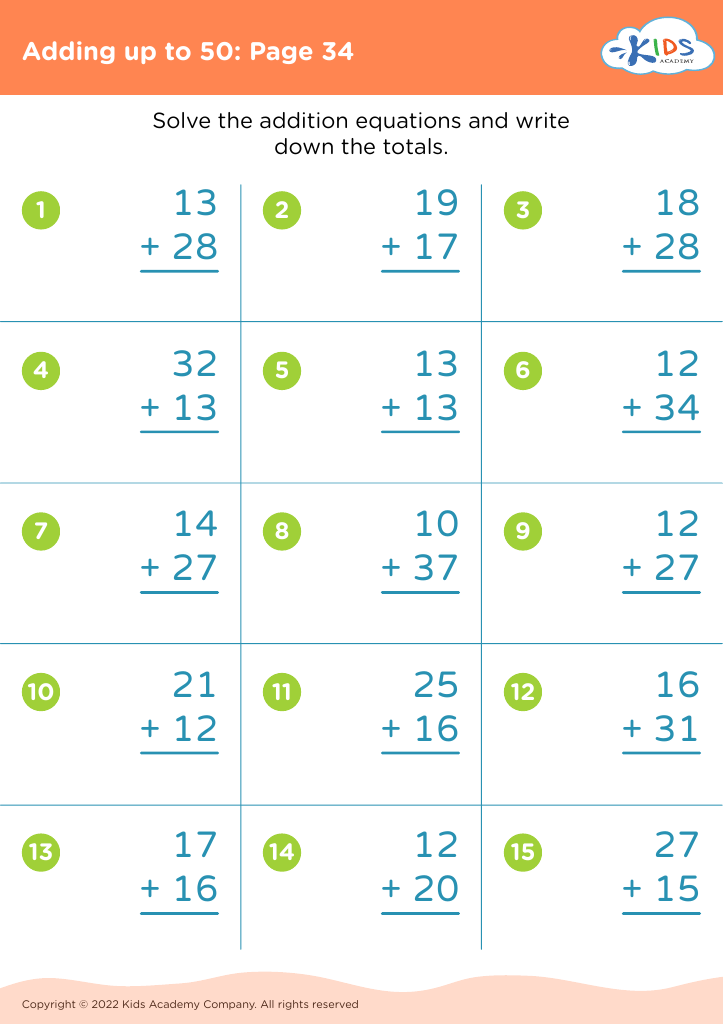




Parents and teachers should prioritize teaching kids about fraction comparison and addition to 50 because these foundational skills foster essential mathematical reasoning and problem-solving abilities. At ages 5-7, children are establishing critical cognitive pathways. Understanding fractions introduces them to the concept of parts of a whole, which is vital for their future learning in math. It cultivates their ability to discern proportions, fostering numeracy skills that are crucial as they progress in their education.
Adding fractions provides a practical application for mathematical principles, helping children understand how numbers interact and combine. By learning to compare fractions, kids develop analytical thinking, enabling them to evaluate quantities and make informed decisions based on their understanding of size and value.
Furthermore, engaging with these concepts early on builds confidence and reduces math anxiety later in life. It can also tie into everyday experiences—like sharing food or measuring ingredients—which makes learning real and relevant. By emphasizing the importance of fraction comparison and addition to 50, parents and teachers are laying a solid groundwork for mathematical proficiency, nurturing students who are eager to learn and well-prepared for more complex concepts as they advance in their education.








