Fraction identification Adding up to 50 Worksheets for Ages 5-7
3 filtered results
-
From - To
Discover our engaging "Fraction Identification Adding Up to 50 Worksheets" designed specifically for children aged 5-7. These worksheets provide an interactive way for young learners to explore and understand fractions while practicing their addition skills up to 50. Each activity is crafted to stimulate critical thinking, enhance mathematical understanding, and promote confidence in basic math concepts. With colorful illustrations and fun exercises, children will enjoy identifying fractions and learning to add them together effectively. Perfect for homeschooling, classroom use, or extra practice, these worksheets make learning math fun and enjoyable for your little ones! Start their fraction knowledge journey today!
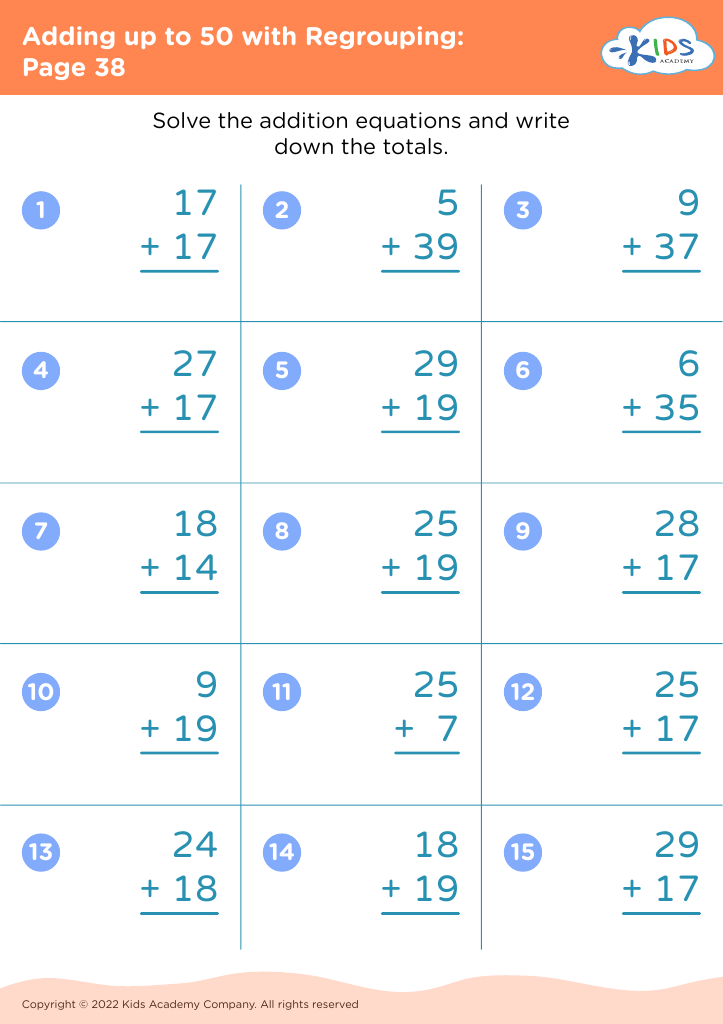
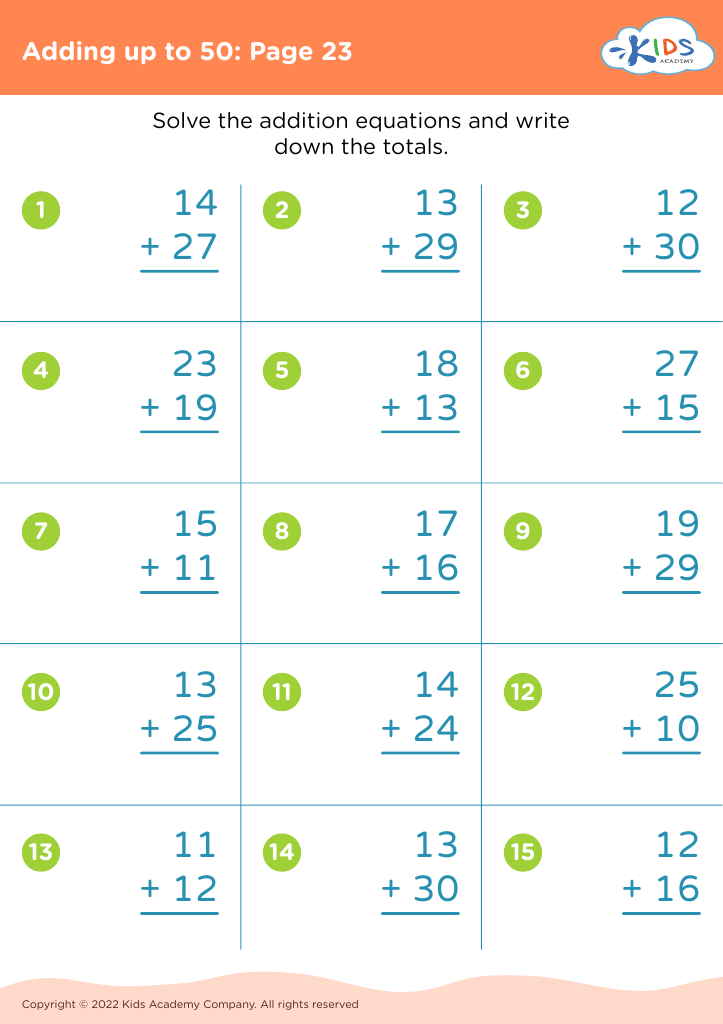
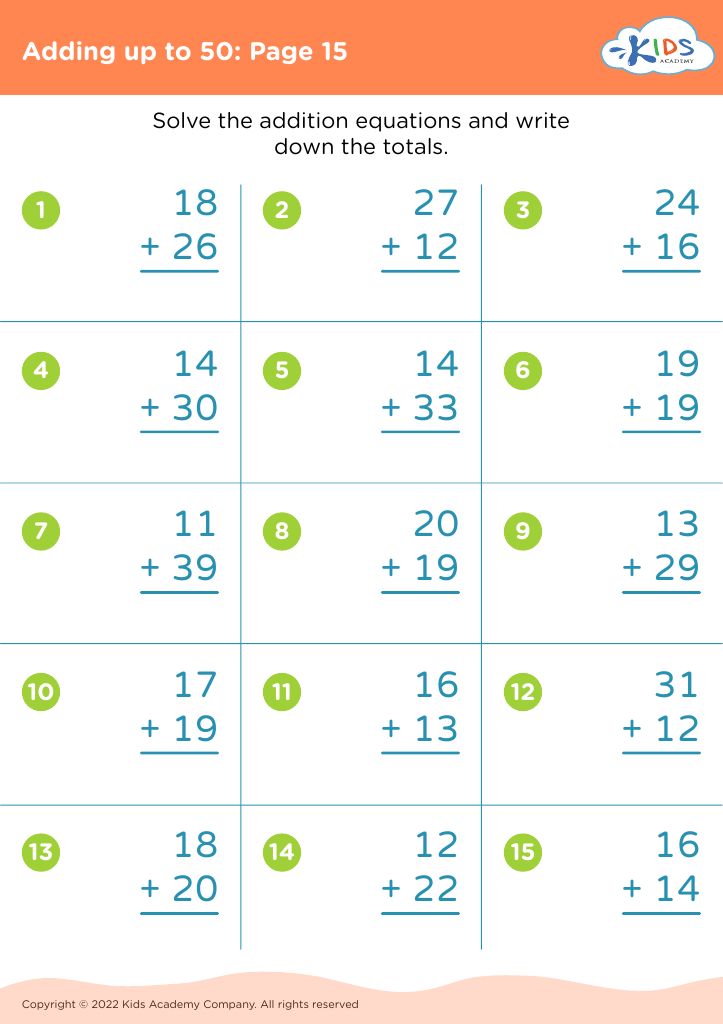




Understanding fraction identification and addition, particularly when it comes to numbers like 50, is crucial for children aged 5-7 as it lays the foundation for their mathematical development. At this age, children begin to grasp basic mathematical concepts and recognizing fractions helps them comprehend parts of a whole, which is essential for further learning in mathematics, including addition and subtraction.
Engaging with fractions enhances critical thinking and problem-solving skills. When children learn to identify and work with fractions, they learn to tackle more complex mathematical ideas and calculations as they progress. Additionally, being acquainted with representation, such as dividing objects into equal parts, helps developing spatial awareness and enhances logical reasoning.
Moreover, fraction identification pushes children to practice their addition skills by working toward specific sums, such as 50. It encourages them to think strategically about how different fractions can combine to form a larger whole, thus instilling confidence in their abilities. For parents and teachers, fostering these skills means preparing children not just for test performance but also for real-life scenarios, where understanding parts and wholes is a common occurrence. By prioritizing fraction learning, they contribute significantly to a child’s overall cognitive and mathematical growth.








