Problem Solving Adding up to 50 Worksheets for Ages 5-7
3 filtered results
-
From - To
Explore our engaging "Problem Solving Adding Up to 50 Worksheets" designed specifically for children aged 5 to 7. These worksheets offer a fun and effective way to build essential math skills while enhancing problem-solving abilities. Children will tackle a variety of addition challenges, working up to sums of 50 through playful exercises tailored to spark interest and boost confidence. With colorful illustrations and age-appropriate scenarios, these worksheets make learning math enjoyable. Ideal for use at home or in the classroom, our resources will help young learners develop critical thinking and numeric fluency in an enjoyable way. Start their math adventure today!
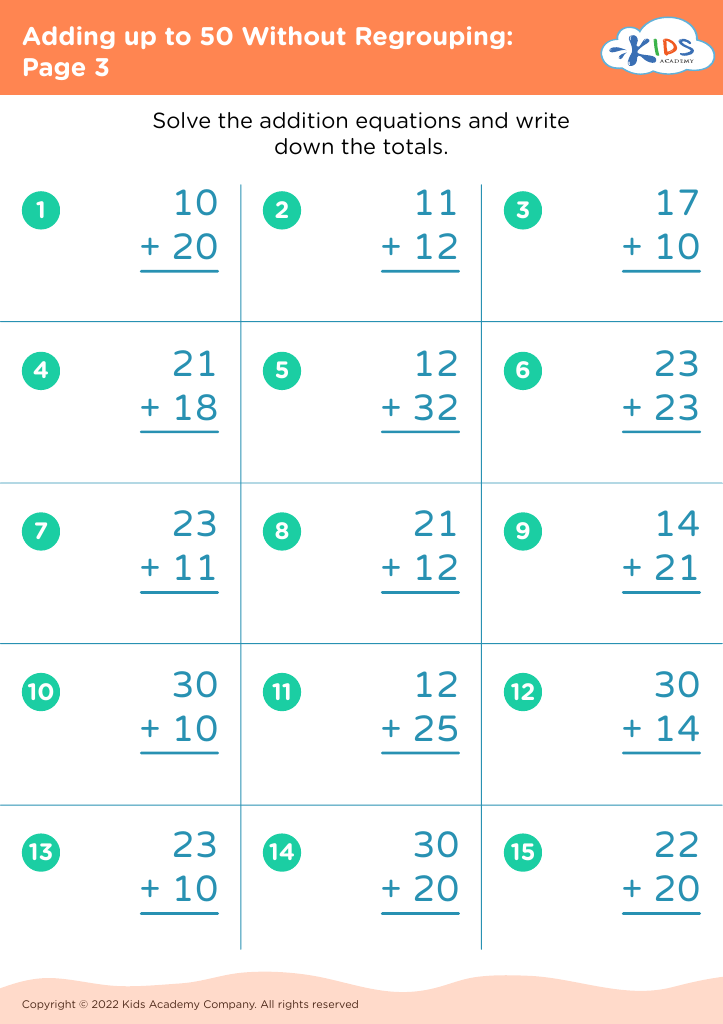
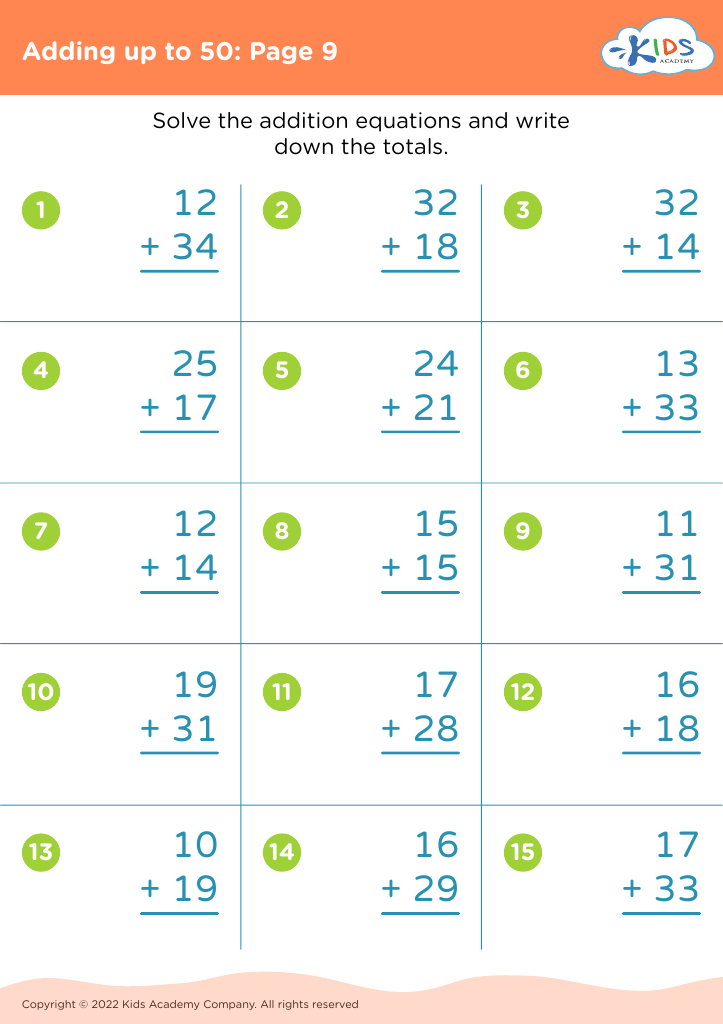
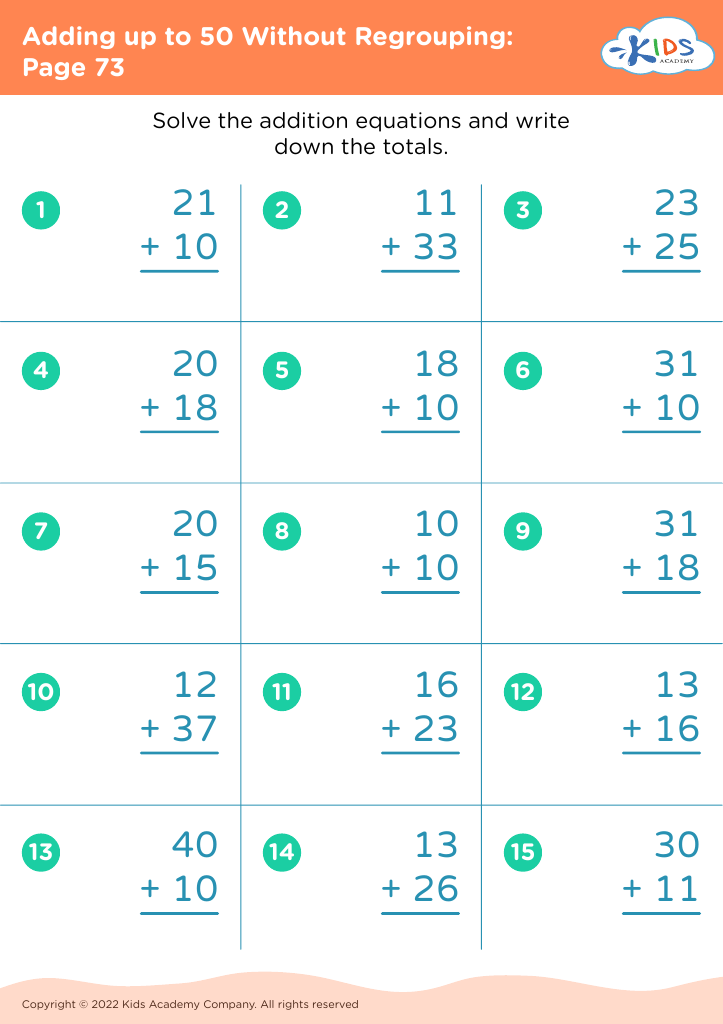




Parents and teachers play a crucial role in developing problem-solving skills in children aged 5-7, particularly with foundational math concepts like “Adding up to 50.” This early focus on addition isn’t just about numbers; it lays the groundwork for critical thinking, persistence, and the ability to work through challenges.
At this age, children are naturally curious and eager to learn. When they engage with problems that require them to add numbers to reach a total of 50, they practice essential cognitive skills such as estimation, pattern recognition, and strategic thinking. These skills not only foster mathematical understanding but also enhance their overall problem-solving abilities, translating to improved performance in various academic subjects.
Furthermore, tackling addition problems in a collaborative environment promotes communication and social skills. Parents and teachers can support this development by encouraging children to explain their thinking and reasoning. This builds confidence and reinforces a growth mindset—helping children learn that effort and persistence are keys to overcoming challenges.
Ultimately, nurturing problem-solving skills at this age empowers children to approach future academic tasks and real-life situations with confidence and creativity, encouraging a lifelong love for learning and resilience in facing difficulties.








