Problem-solving abilities Adding up to 50 Worksheets for Ages 5-7
4 filtered results
-
From - To
Enhance your child's problem-solving abilities with our "Adding Up to 50 Worksheets" designed specifically for ages 5-7. This collection of 100 engaging worksheets fosters critical thinking and mathematical skills while making learning fun! Each worksheet features a variety of problems that encourage children to explore addition strategies and improve their number sense. With colorful illustrations and interactive activities, kids will enjoy practicing their math skills and developing a strong foundation in early mathematics. Perfect for parents, teachers, or tutors, these worksheets are ideal for reinforcing classroom learning or enriching home study. Start your child's math journey today!
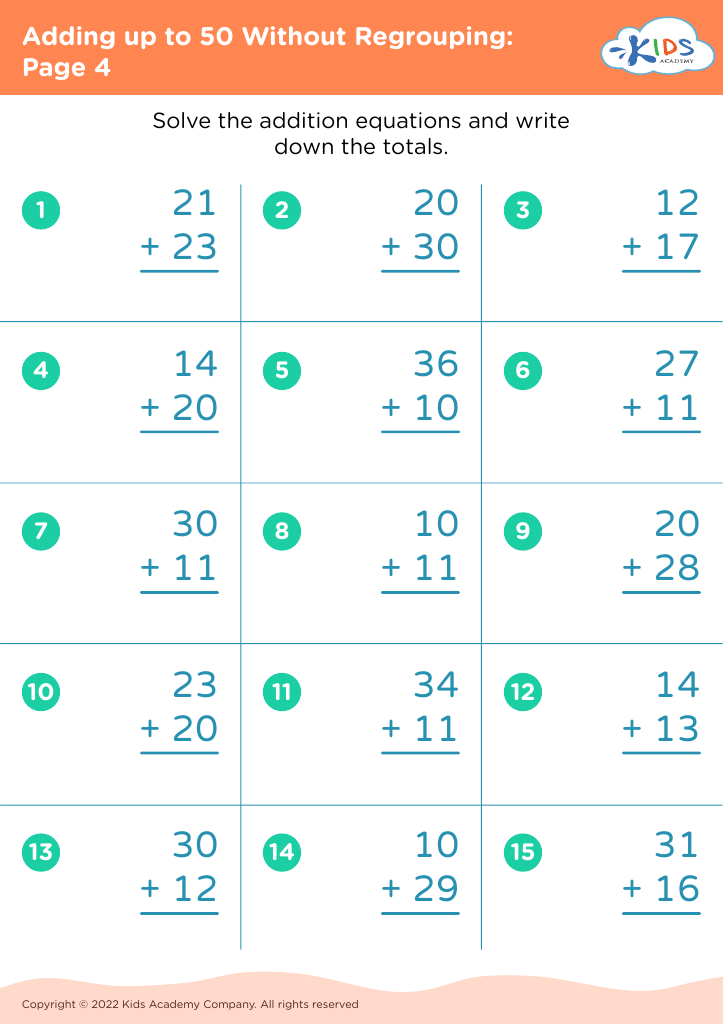
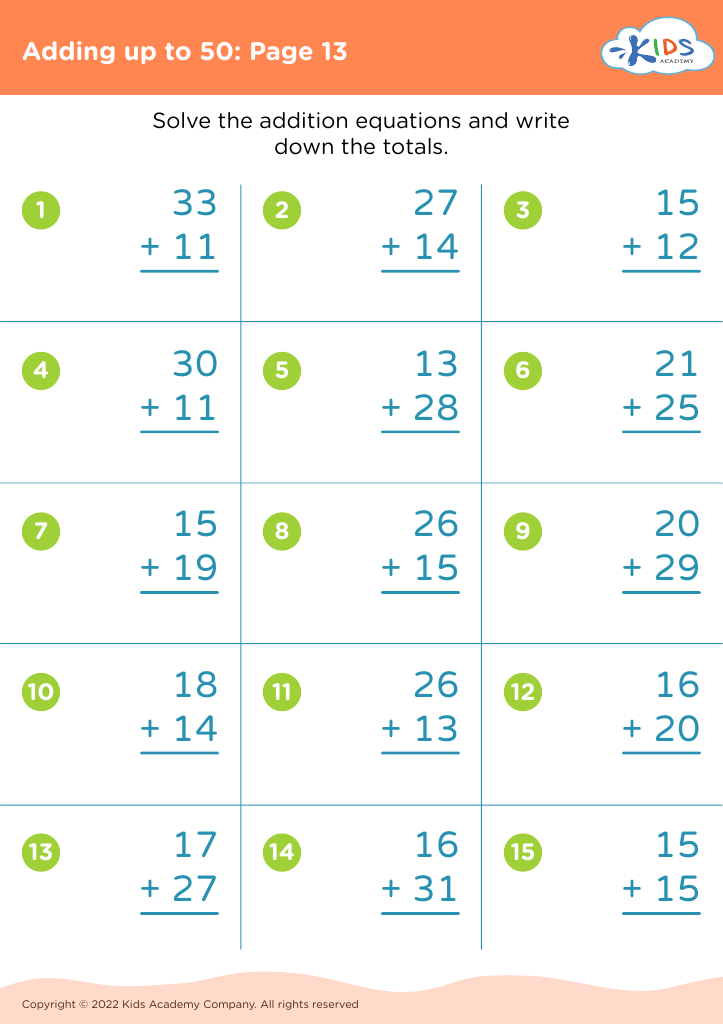
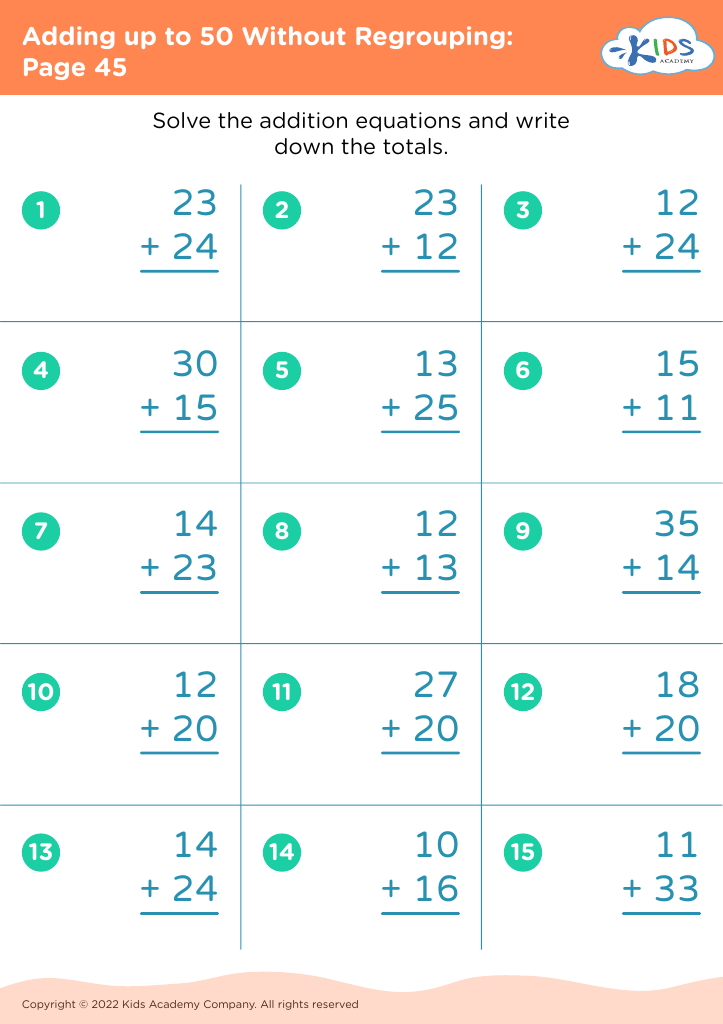
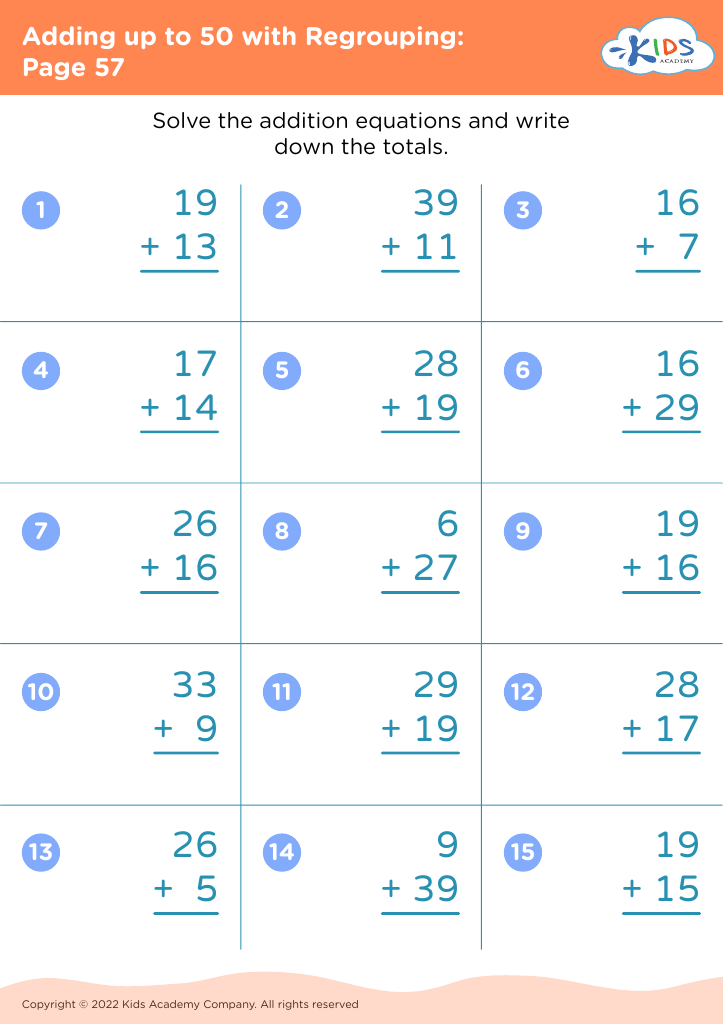




Problem-solving abilities, particularly in the context of adding up to 50, are crucial for children aged 5-7 as they lay the foundation for essential mathematical skills and cognitive development. At this early stage, children are naturally curious and eager to explore numbers, and teaching them how to solve problems involving addition not only enhances their arithmetic skills but also develops their critical thinking abilities.
Firstly, stronger problem-solving skills help children develop a positive attitude toward mathematics. When they learn to tackle addition with real-world applications—like combining toys or counting snacks—they begin to see math as relevant and exciting. This confidence gains momentum as they progress academically.
Additionally, these skills promote perseverance and resilience. Encountering and overcoming challenges fosters a growth mindset, encouraging youngsters to approach difficult tasks with determination rather than frustration.
Moreover, understanding how to add numbers effectively equips children with the skills they will need throughout their education and in everyday life. As they engage in group activities or projects, collaboration and communication during problem-solving exercises become valuable life skills.
In essence, fostering problem-solving abilities in early education empowers children both mathematically and personally, preparing them for a successful future.








