Shape identification Adding up to 50 Worksheets for Ages 5-7
3 filtered results
-
From - To
Enhance your child's learning experience with our Shape Identification Adding Up to 50 worksheets, specially designed for ages 5-7. These engaging worksheets combine essential math skills while helping young learners recognize and learn about different shapes. Your child will practice counting and addition through fun and interactive exercises that incorporate various shapes, reinforcing their understanding of geometry and number concepts. With a variety of activities, including drawing, coloring, and identifying shapes in math problems, children will develop confidence in their math abilities. Perfect for teachers and parents alike, these printable worksheets make learning both enjoyable and effective. Start your child's educational journey today!
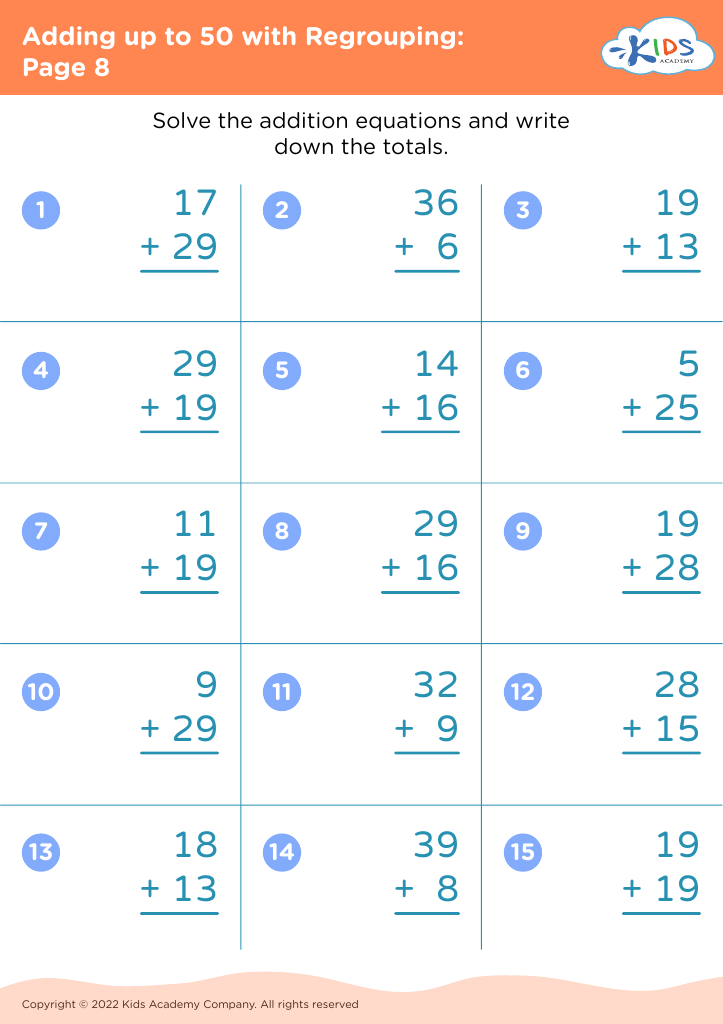
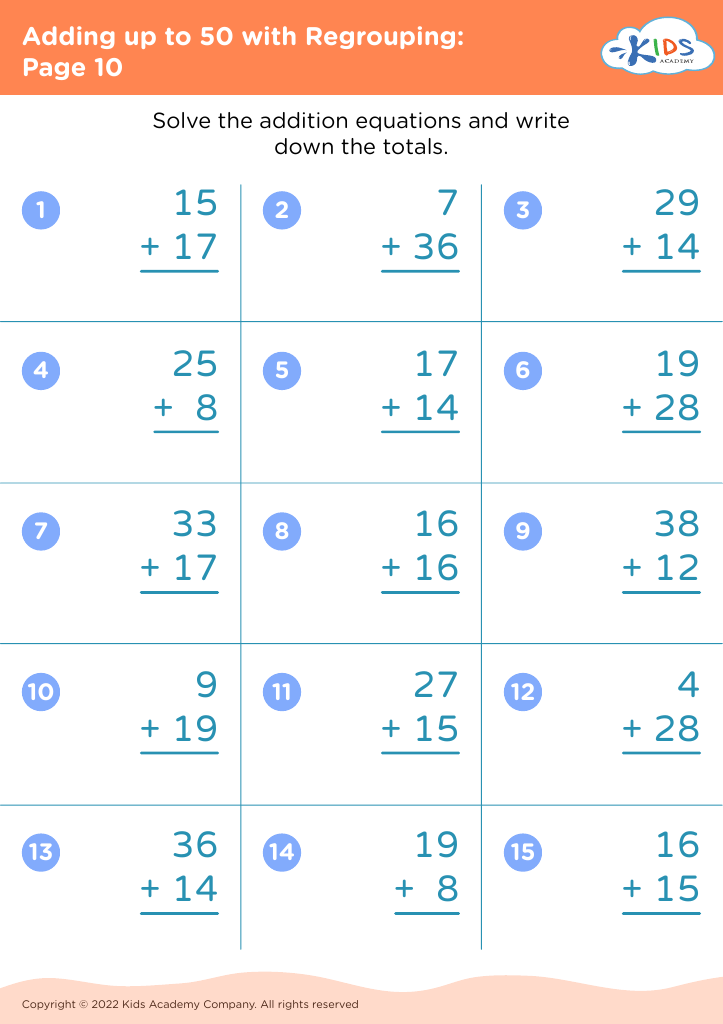
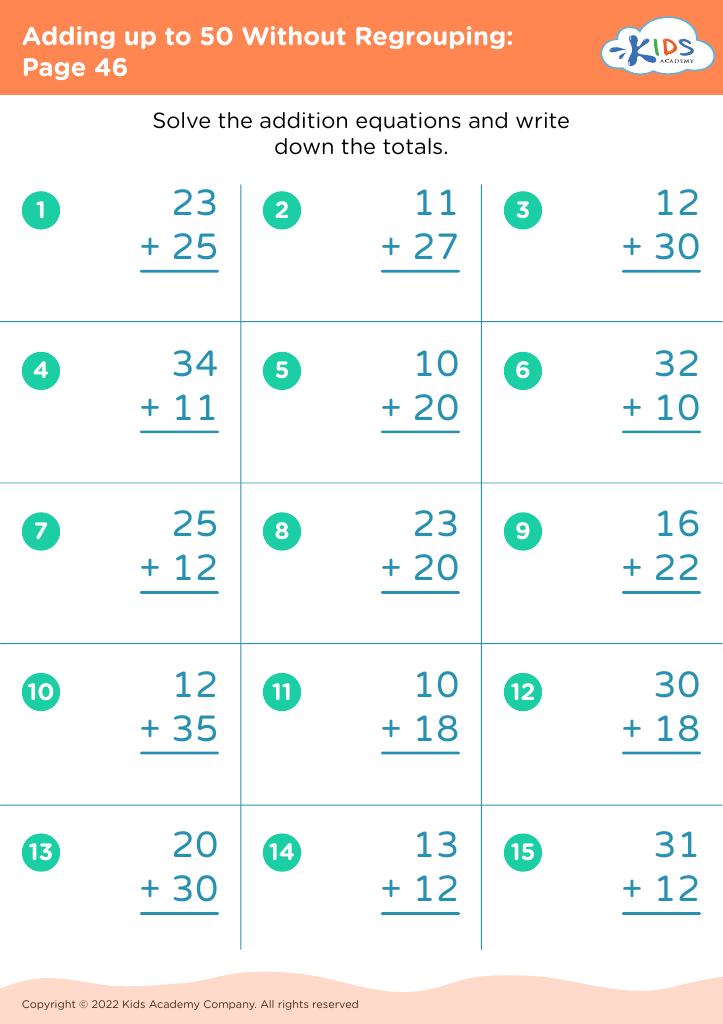




Shape identification and addition skills are fundamental building blocks in early childhood education, particularly for children ages 5-7. Understanding shapes helps children make sense of their world, as shapes are foundational in everyday objects and environments. This visual recognition fosters spatial awareness, enhances problem-solving skills, and stimulates critical thinking.
Moreover, combining shape identification with addition, especially adding numbers up to 50, allows children to connect mathematical concepts with tangible objects. When children can visualize and manipulate shapes, they develop a deeper grasp of numerical concepts and arithmetic operations. Engaging in activities that include counting shapes nurtures their ability to categorize and quantify, making math both meaningful and enjoyable.
Parents and teachers should also note that these skills align with cognitive development theories, which emphasize hands-on and interactive learning. By promoting shape identification and basic addition, educators and caregivers are cultivating patience, attention to detail, and analytical capabilities.
Furthermore, these activities can be tied to real-life contexts, such as organizing toys or baking, making learning relatable. Ultimately, a strong foundation in these skills prepares children for more complex math and science concepts in the future, leading to academic success and confidence in their abilities.








