Subtraction skills Adding up to 50 Worksheets for Ages 5-7
3 filtered results
-
From - To
Welcome to our engaging "Subtraction Skills Adding Up to 50 Worksheets" designed for children ages 5-7! These worksheets provide fun and interactive activities that help young learners build a solid foundation in subtraction. Through colorful illustrations and age-appropriate exercises, kids will practice subtracting numbers while developing critical math skills. Our carefully crafted resources encourage children's problem-solving abilities and boost their confidence in math. Perfect for classroom use or at-home learning, these worksheets support the Common Core Standards and make learning subtraction both enjoyable and effective. Download our subtraction worksheets today and watch your child's skills grow as they discover the exciting world of mathematics!
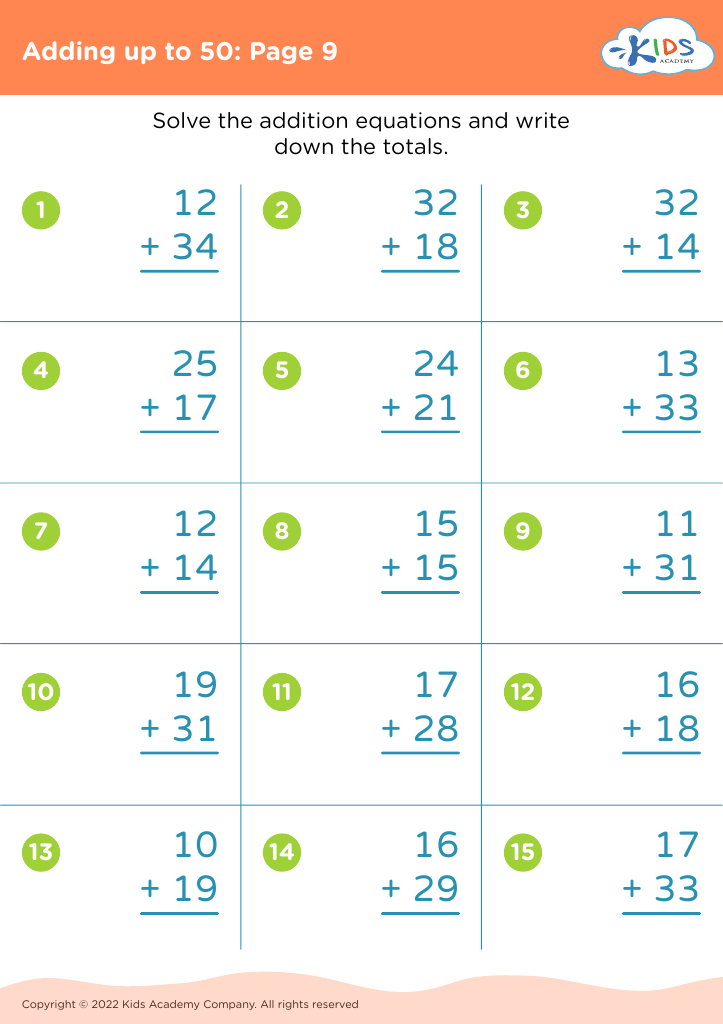
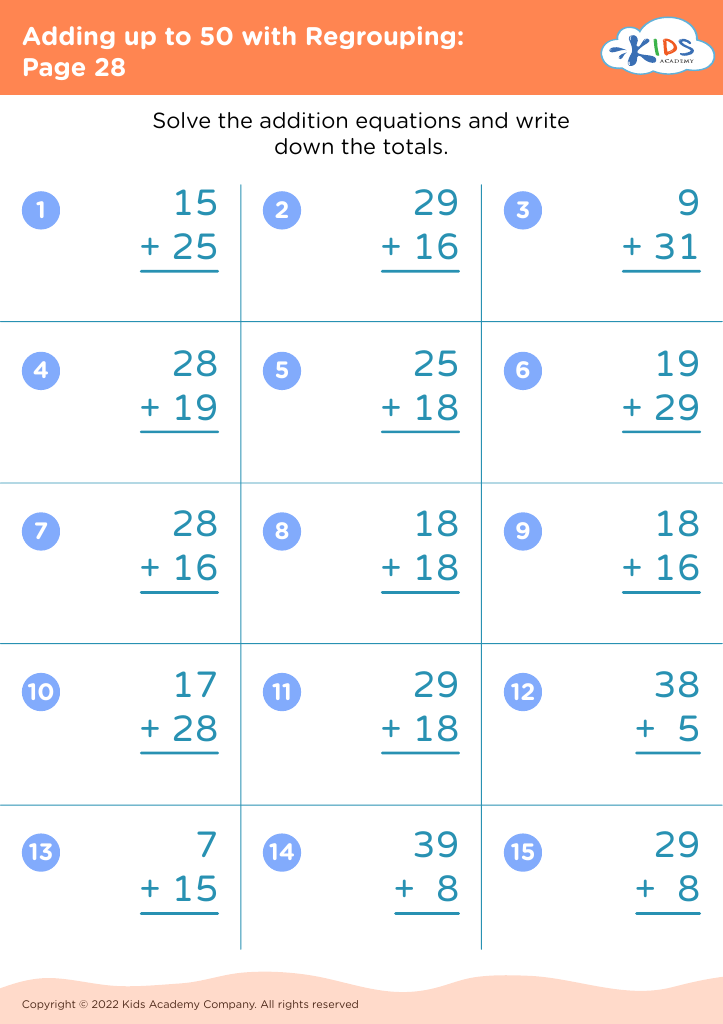
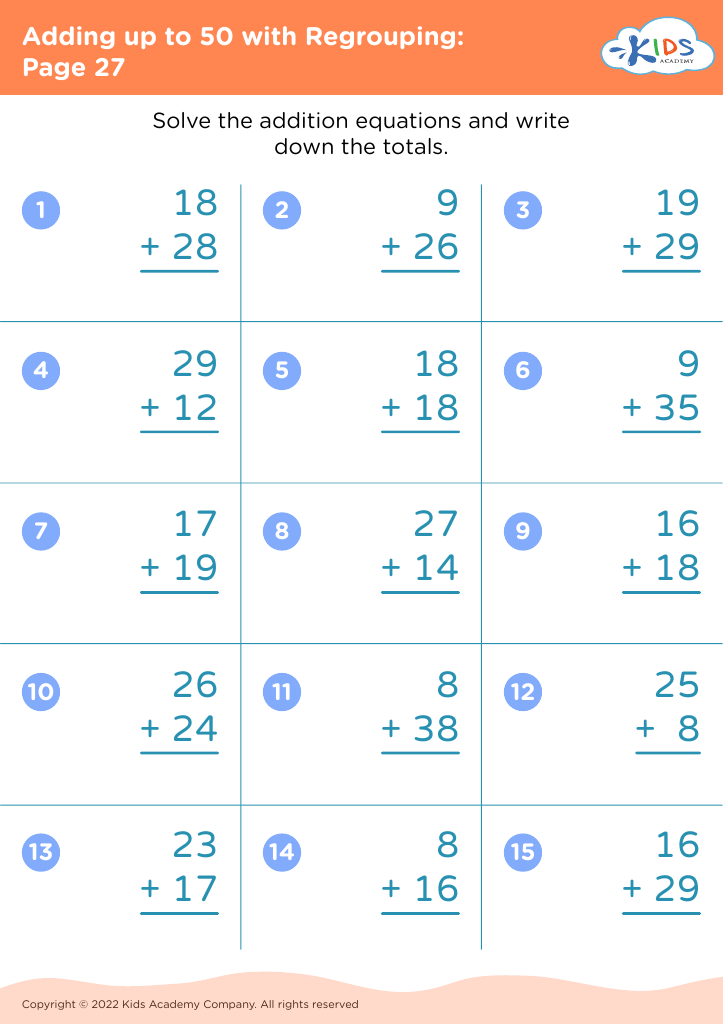




Subtraction skills up to 50 are essential for children aged 5-7, as they lay the foundation for more advanced mathematical concepts. At this age, students are transitioning from simple number recognition to understanding the relationship between numbers, and subtraction plays a crucial role in this development. Mastering subtraction within 50 helps children develop critical thinking and problem-solving skills, enabling them to approach challenges confidently.
Additionally, proficiency in subtraction fosters number sense, allowing children to analyze and compare quantities. These skills are not only vital for academic success but are also applicable in everyday situations, such as budgeting, shopping, and time management. As parents and teachers encourage these skills, they help cultivate a positive attitude towards mathematics, promoting lifelong learning.
Furthermore, early subtraction skills are linked to greater achievements in later grades. Research shows that children who grasp basic arithmetic tend to perform better in standardized testing and enjoy learning in mathematics. Hence, parents and teachers should prioritize these skills, integrating them within engaging activities and real-world applications. By investing in subtraction skills, they are equipping children with tools for critical thinking and paving the way for future success in both mathematics and other disciplines.








