
Understanding adjectives Adding up to 50 Worksheets for Ages 5-7
4 filtered results
Difficulty Level
Grade
Age
-
From - To
Subject
Activity
Standards
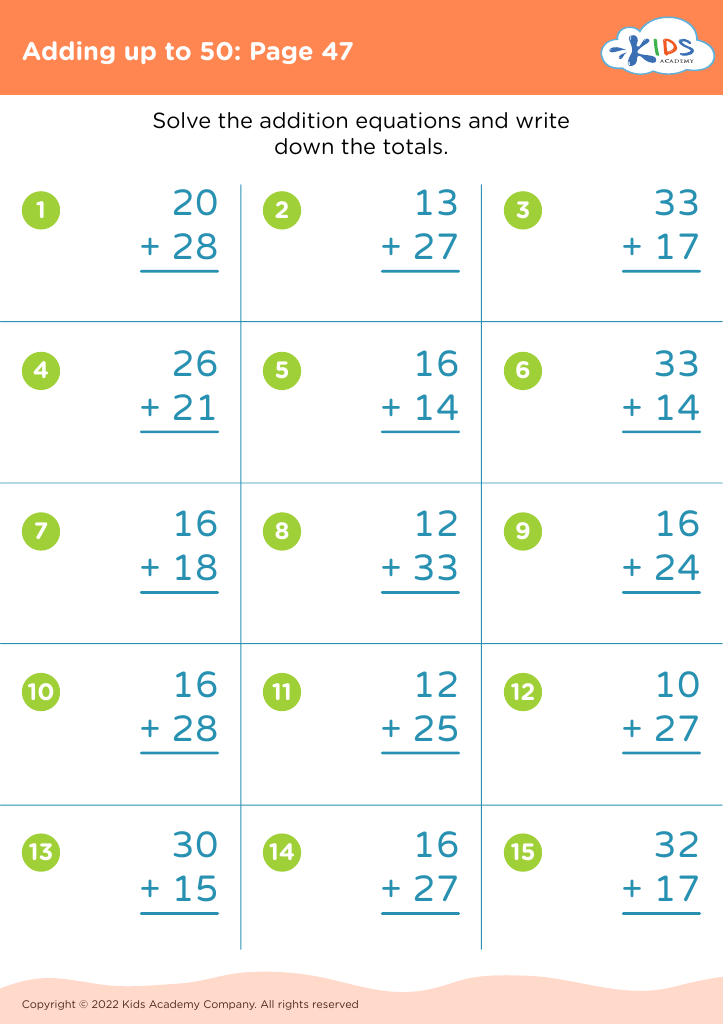
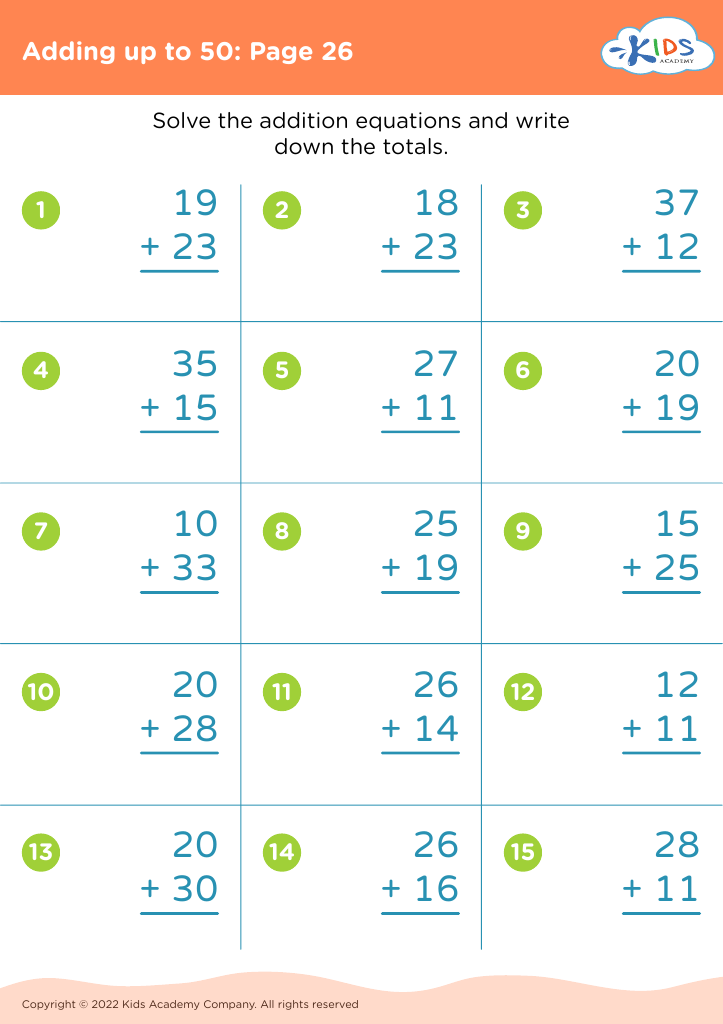
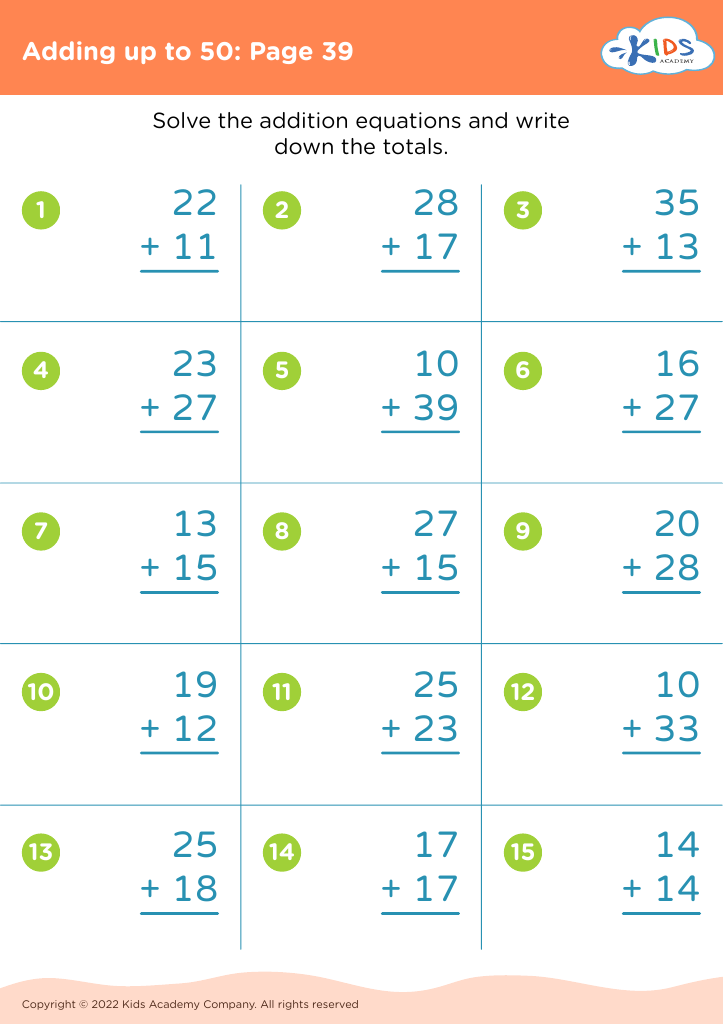
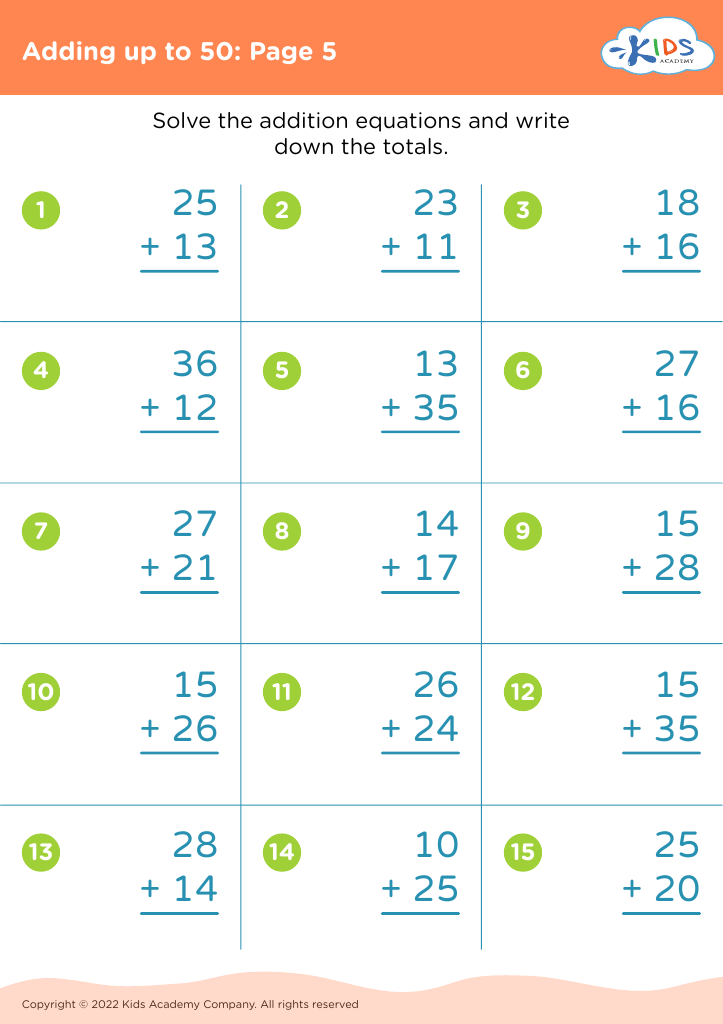
Enhance your child's learning experience with our "Understanding Adjectives Adding Up to 50 Worksheets," designed specifically for ages 5-7. These engaging worksheets combine essential math skills with fun language exercises, helping young learners master the concept of adjectives while practicing addition up to 50. Each worksheet encourages creativity and critical thinking, allowing children to describe objects, activities, and themes while completing math problems. Perfect for at-home learning or classroom activities, these resources keep students motivated and excited about learning. Boost your child's literacy and numeracy skills today with our comprehensive, age-appropriate worksheets that make education enjoyable and effective!
Favorites
With answer key
Interactive
Join Kids Academy for Free
Who is primarily going to use this learning content?




Understanding adjectives is crucial for young learners, aged 5-7, as they form the building blocks of language and expression. Adjectives enrich children’s vocabulary by helping them describe the world around them. When teachers and parents emphasize the importance of adjectives, they enable children to express their thoughts and feelings more vividly. For instance, instead of saying “the dog,” using adjectives allows children to specify which kind of dog they're referring to, such as “the fluffy brown dog.” This enhances comprehension as well as communication skills.
Moreover, learning to describe objects and experiences fosters creativity and critical thinking. Children can improve their storytelling abilities by incorporating descriptive language, making their narratives more engaging. Understanding adjectives also helps in developing reading skills, as children will encounter these descriptors in stories, improving their comprehension.
Furthermore, from a math perspective, integrating adjectives in learning exercises like “adding up to 50” can help teachers create relatable scenarios. For instance, having children classify groups of objects by size (big, small) while counting can reinforce their numerical understanding. Overall, supporting a child's mastery of adjectives lays the groundwork for effective communication, enriched creativity, and improved academic performance across subjects.








