Animal identification Addition & Subtraction Worksheets for Ages 5-7 - Page 2
28 filtered results
-
From - To
Animal Sanctuary Worksheet
 Assign to My Students







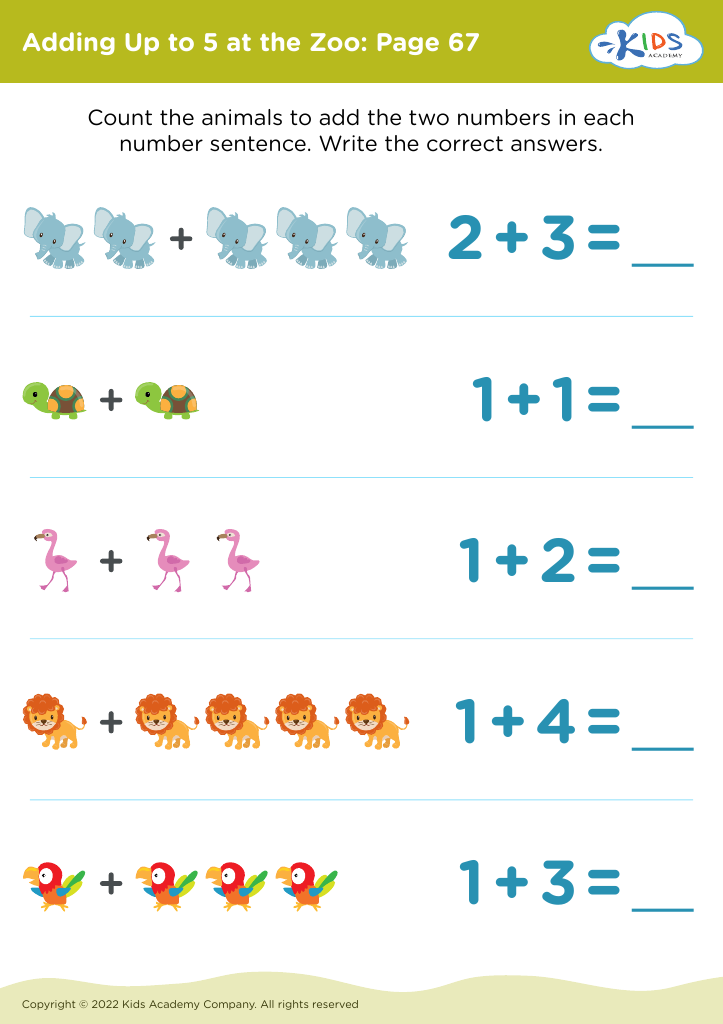
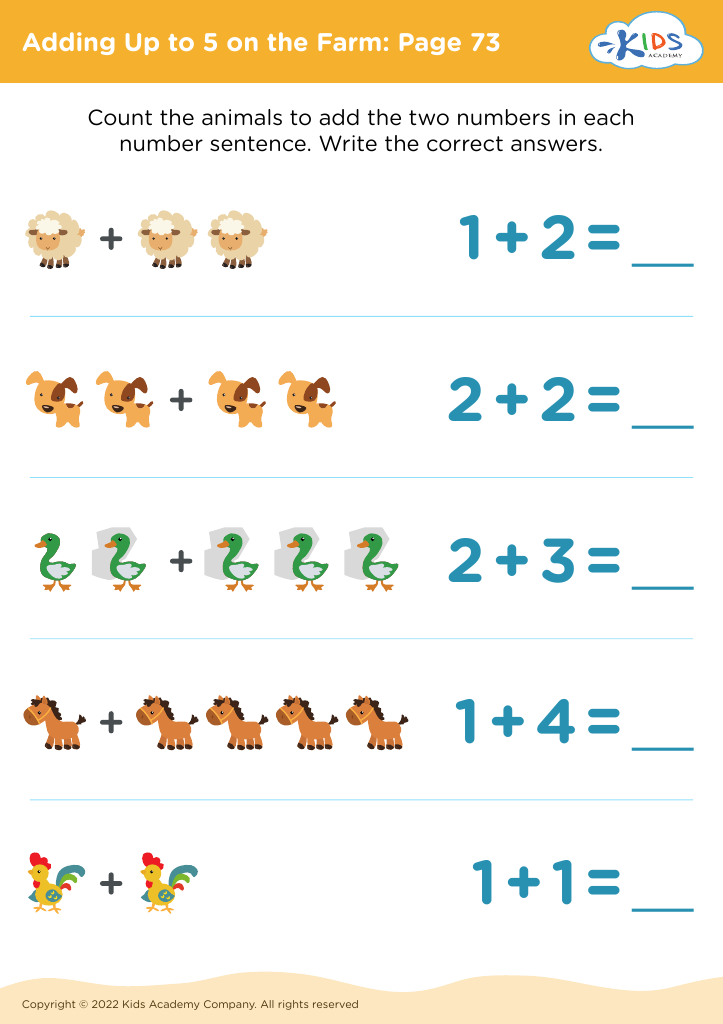
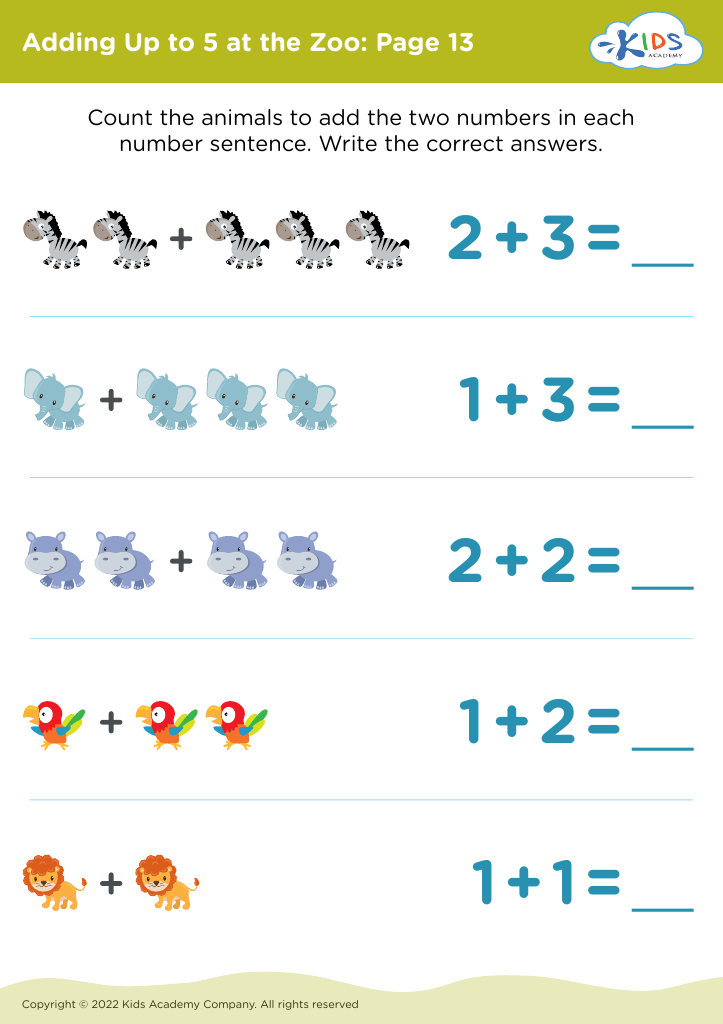
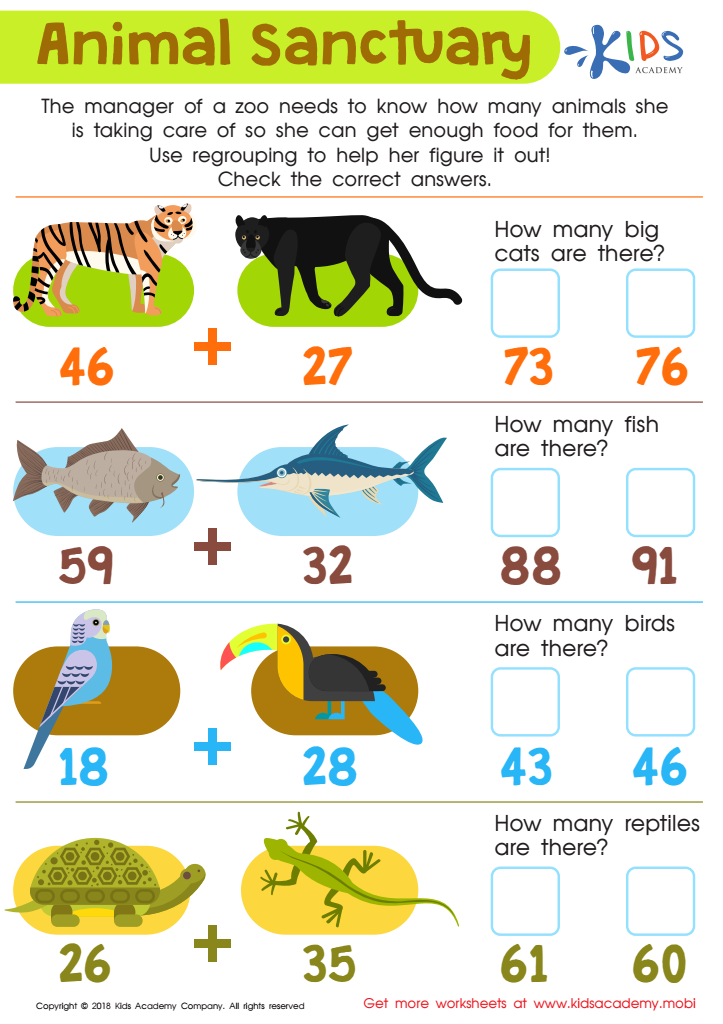
Parents and teachers should prioritize Animal Identification Addition and Subtraction for children aged 5-7 because it effectively combines foundational math skills with engaging content. At this developmental stage, children are naturally curious about the world around them, especially animals. By integrating animals into math lessons, educators can capture students' interest, making learning more enjoyable and memorable.
Furthermore, using animals as a context for addition and subtraction helps young learners grasp abstract mathematical concepts in a relatable way. For instance, problems involving counting animals or solving simple equations like "If you have three turtles and two more turtles come, how many do you have now?" provide concrete scenarios that facilitate comprehension.
Additionally, this approach fosters critical thinking and problem-solving skills, as children must visualize the circumstances to find solutions. It also promotes discussions about animal qualities, habitats, and diversity, enriching their knowledge base and encouraging curiosity about wildlife.
Moreover, incorporating Animal Identification into mathematics reinforces other educational aspects like literacy, as children learn to recognize the names and characteristics of various animals while solving math problems. Overall, this method enhances both cognitive development and a passion for learning, making it a valuable teaching strategy.








