
Boost critical thinking Addition & Subtraction Worksheets for Ages 5-7
3 filtered results
Difficulty Level
Grade
Age
-
From - To
Subject
Activity
Standards
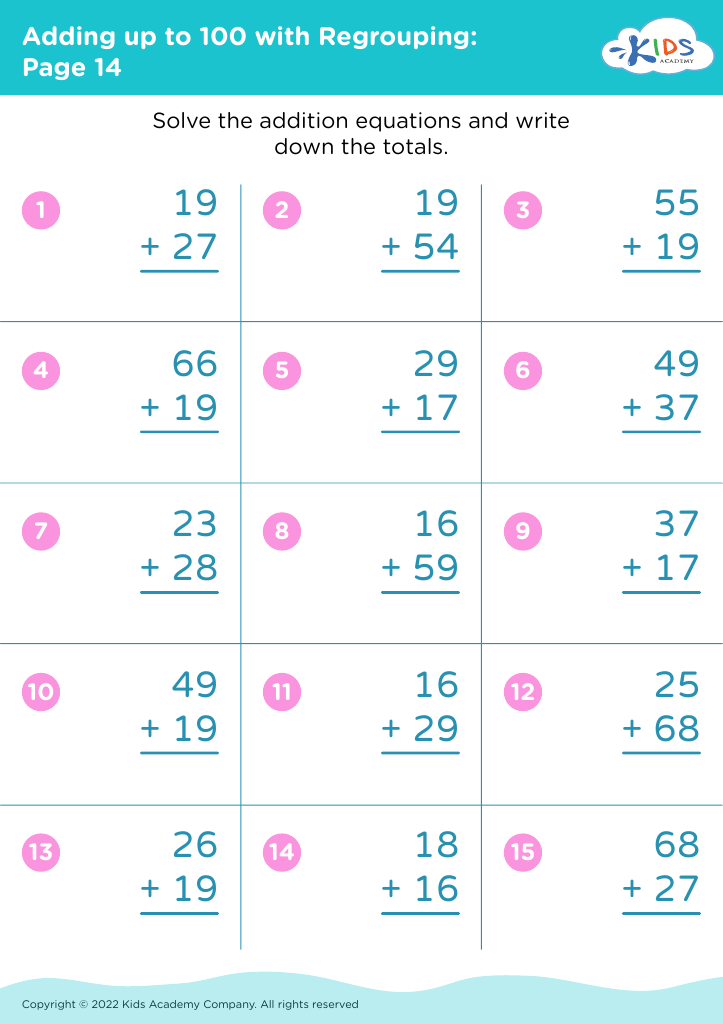
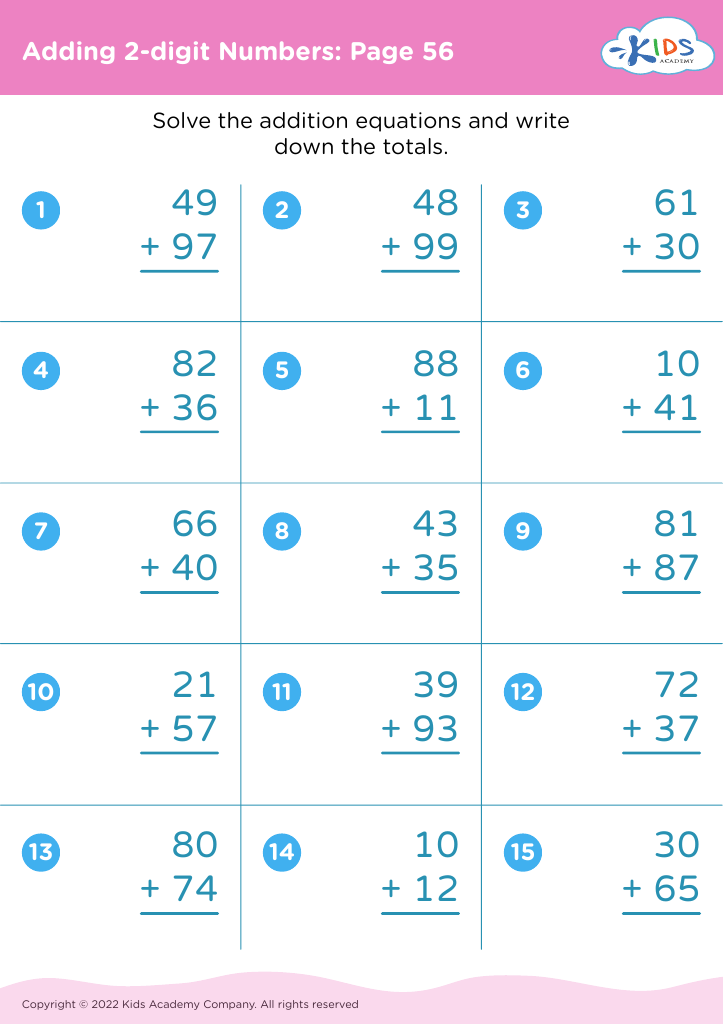
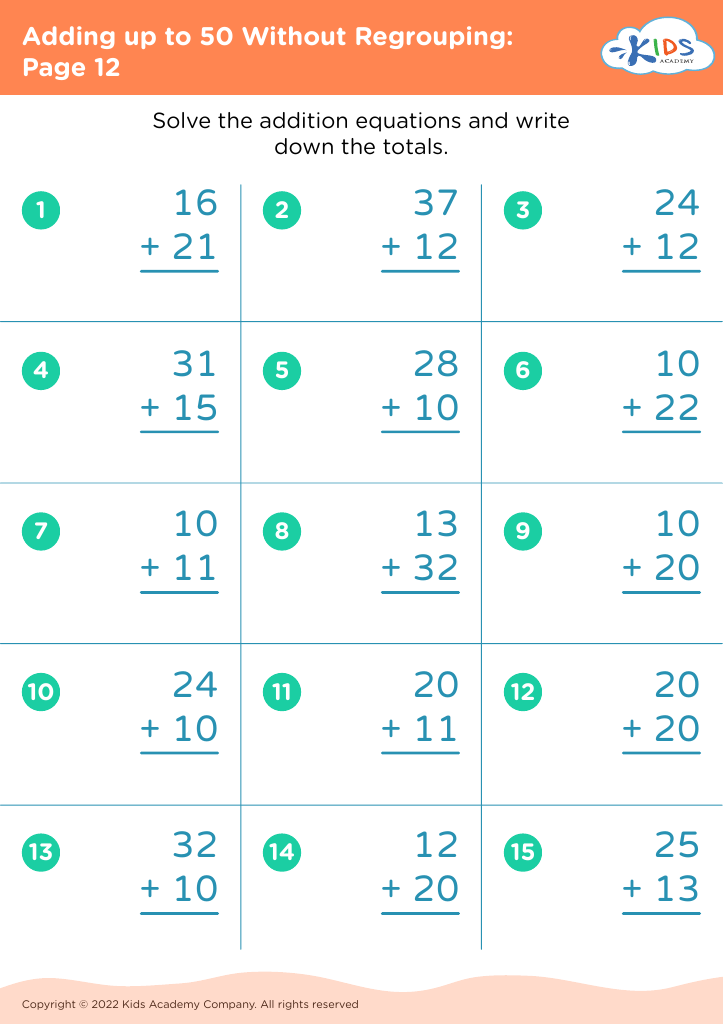
Enhance your child's critical thinking skills with our engaging Addition and Subtraction Worksheets designed for ages 5-7. These worksheets not only teach fundamental math concepts but also promote problem-solving and logical reasoning. Each activity is crafted to challenge young minds while making learning enjoyable. Children will explore various strategies to tackle addition and subtraction problems, encouraging them to think creatively and independently. Our thoughtfully designed worksheets cater to different learning styles, ensuring a comprehensive educational experience. Perfect for at-home practice or classroom use, these resources will build confidence in young learners as they develop essential math skills and critical thinking abilities.
Favorites
With answer key
Interactive
Join Kids Academy for Free
Who is primarily going to use this learning content?








Boosting critical thinking in addition and subtraction for children ages 5-7 is essential for several reasons. First and foremost, this stage is crucial for developing a strong foundation in mathematics. By fostering critical thinking skills, teachers and parents help children not only understand the mechanics of addition and subtraction but also develop problem-solving abilities that are applicable across subjects and real-life situations.
Encouraging children to think critically stimulates their cognitive development, enabling them to analyze problems, identify patterns, and draw logical conclusions. This lays the groundwork for more complex math concepts in the future. Engaging activities that promote critical thinking—like puzzles, games, or real-world math problems—make learning fun, boosting motivation and interest in subjects like math.
Moreover, these skills are transferable, benefiting children in reading comprehension, science projects, and everyday decision-making. As students cultivate critical thinking, they also enhance their ability to work collaboratively, communicate effectively, and approach challenges with a positive mindset. Thus, parents and teachers should prioritize critical thinking in addition and subtraction to equip children with essential skills for current and future academic success and for navigating life's everyday ‘math’ encounters.








