Critical thinking skills Addition & Subtraction Worksheets for Ages 5-7
8 filtered results
-
From - To
Enhance your child's mathematical abilities and critical thinking skills with our engaging Addition & Subtraction Worksheets for ages 5-7. Specifically designed for young learners, these worksheets combine foundational math operations with fun and challenging puzzles that stimulate problem-solving and analytical thinking. By incorporating a variety of tasks, from simple equations to word problems, Kids Academy ensures that your child builds solid arithmetic skills while also boosting their cognitive development. Ideal for classroom use or at-home practice, these educational resources make learning math enjoyable and effective. Unlock your child’s potential today!
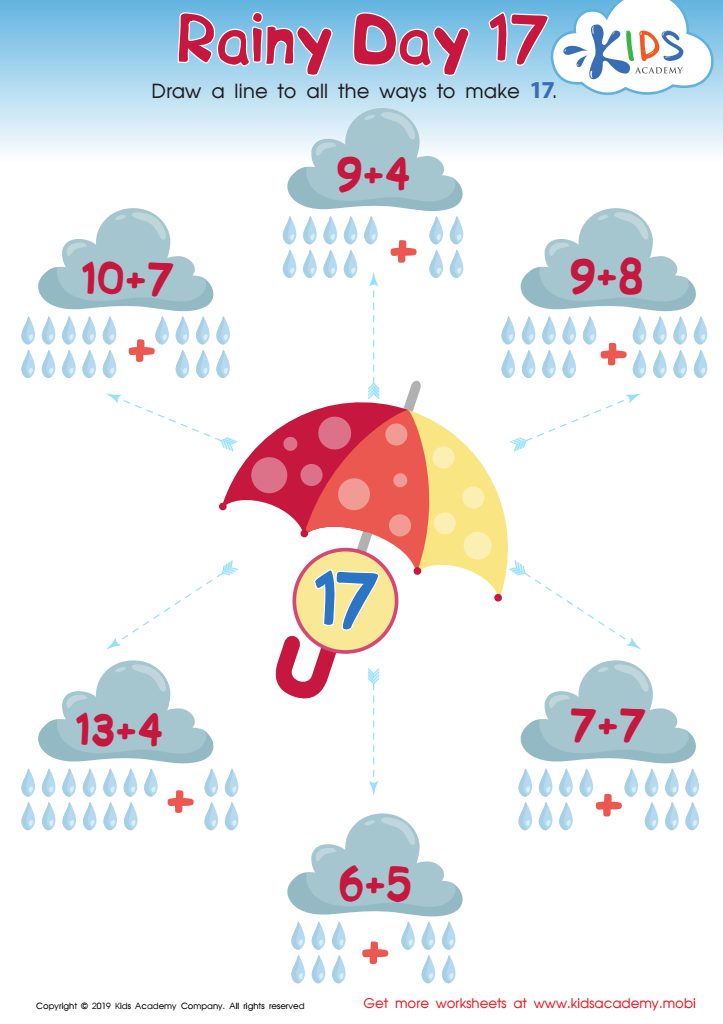
Rainy Day 17 Worksheet
 Assign to My Students
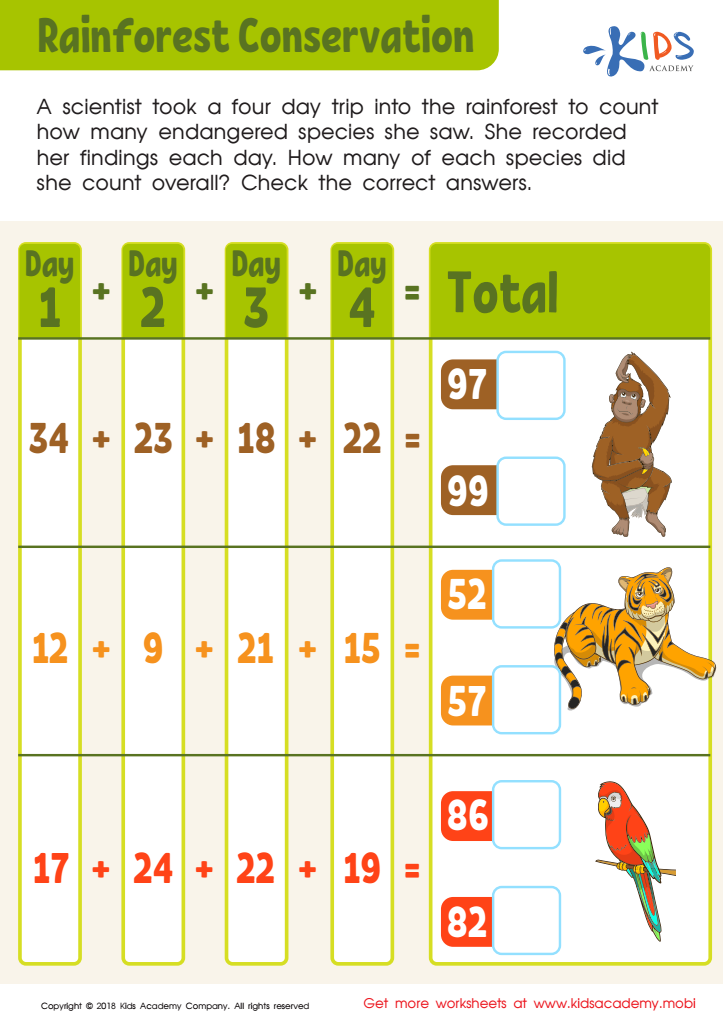
Rainforest Conservation Worksheet
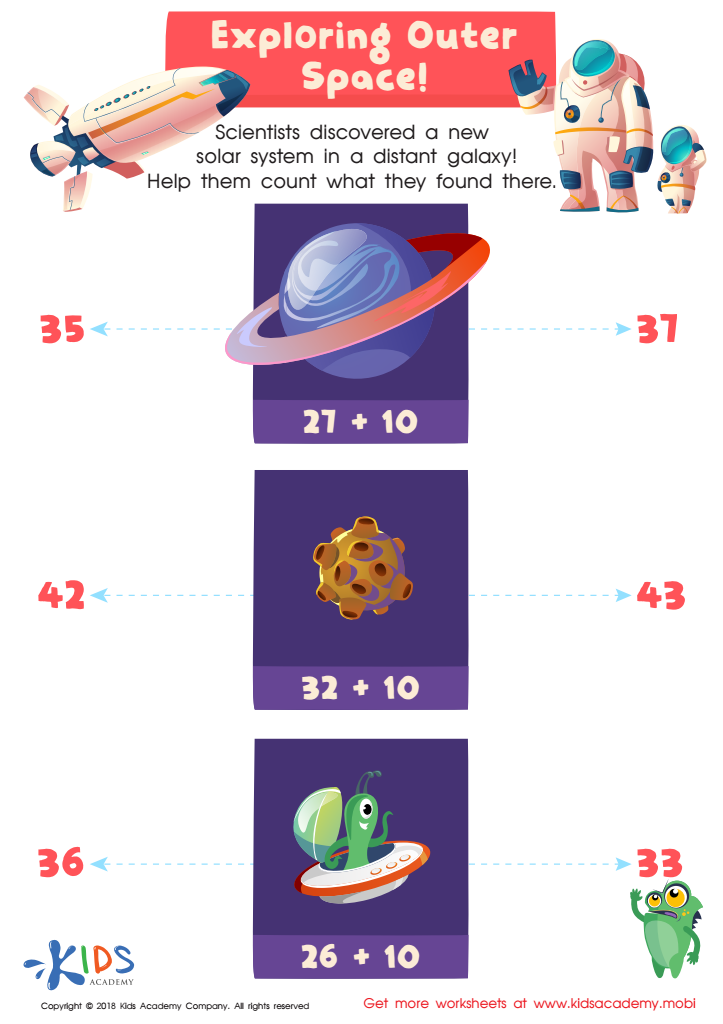
Exploring Outer Space Worksheet








Critical thinking skills in addition and subtraction for children aged 5-7 are foundational for both academic progress and everyday problem-solving. At this pivotal age, children are like cognitive sponges, rapidly absorbing new concepts. Parents and teachers should prioritize nurturing these skills for several compelling reasons.
Firstly, understanding addition and subtraction lays the groundwork for all future math learning. Mastery of these basic operations requires logical reasoning, the ability to recognize patterns, and the development of number sense—skills that are indispensable for tackling more complex mathematical concepts. Early proficiency in addition and subtraction significantly boosts a child's confidence, fostering a positive relationship with math.
Secondly, the development of critical thinking through math extends beyond numbers. When children solve addition and subtraction problems, they practice decision-making, enhance their spatial awareness, and refine their ability to process information logically. These cognitive skills are crucial for overall intellectual growth and affect other areas of learning such as literacy, science, and even social studies.
Furthermore, early exposure to critical thinking sets children on the path to becoming effective problem-solvers in real life. Whether making choices about counting money, distributing items fairly, or planning tasks, these skills cultivate a structured approach to everyday challenges.
Therefore, parents and teachers should not just view addition and subtraction as mere academic requirements, but as vital components in the holistic development of a child's cognitive abilities and life skills.








