
Develop counting skills Addition & Subtraction Worksheets for Ages 5-7
6 filtered results
Difficulty Level
Grade
Age
-
From - To
Subject
Activity
Standards
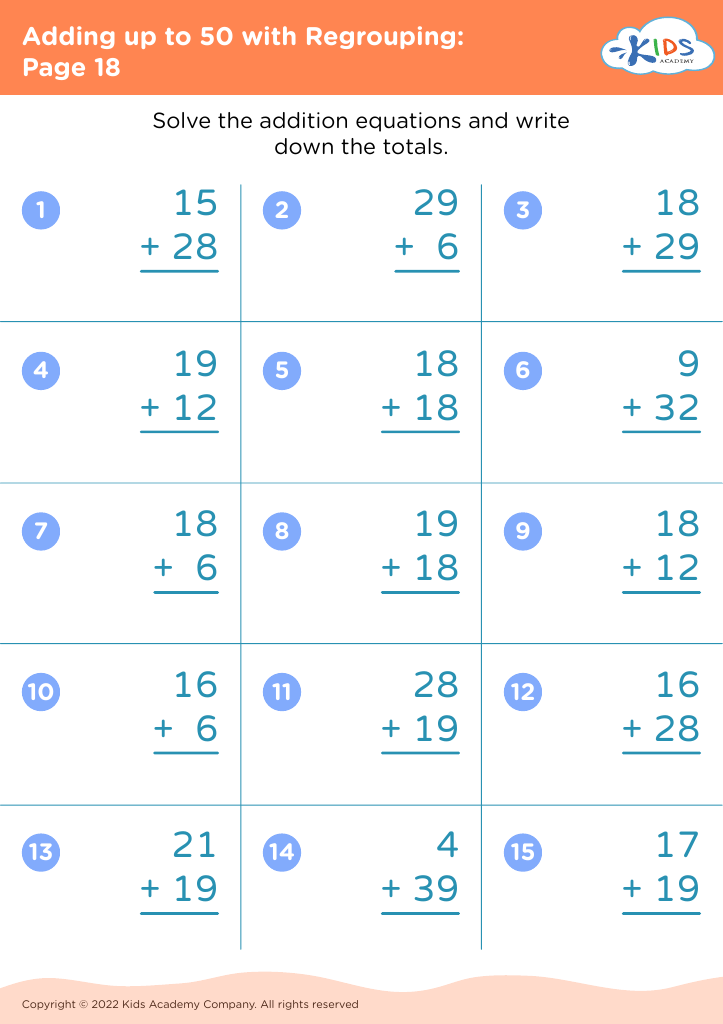
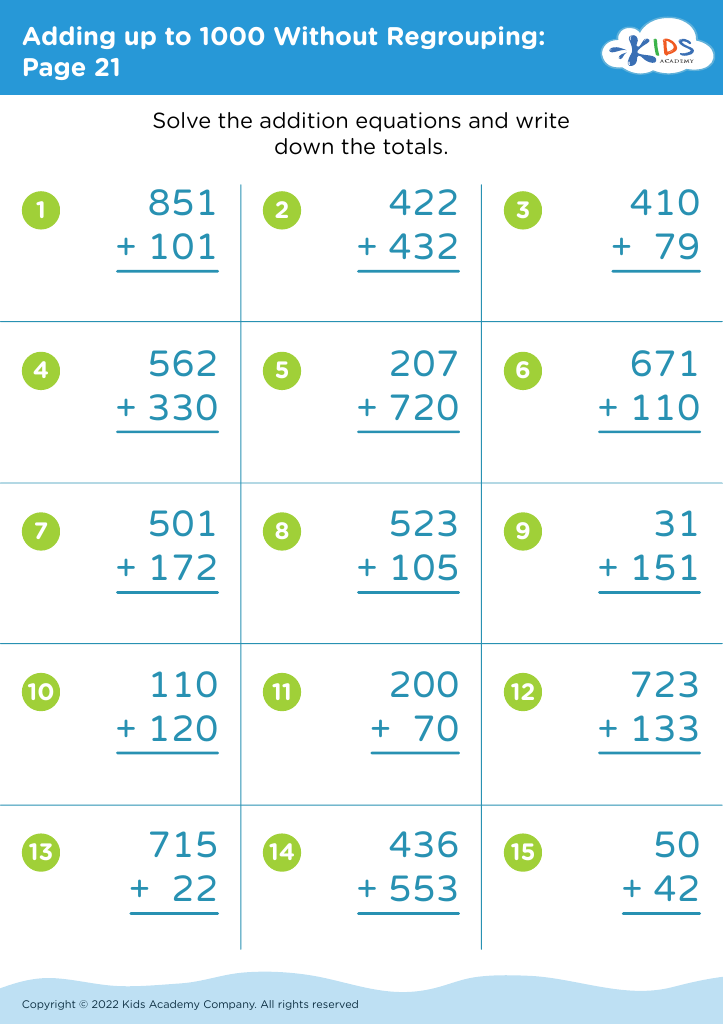
Our "Develop Counting Skills: Addition & Subtraction Worksheets for Ages 5-7" are specially designed to make learning fun and effective for young children. These worksheets focus on enhancing counting skills through engaging activities and colorful exercises. Perfect for kids in their early school years, they provide a solid foundation in basic math concepts. Each worksheet helps children practice addition and subtraction, fostering a love for numbers while building confidence. Parents and teachers will find these resources invaluable for reinforcing classroom learning and supporting kids' educational growth at home. Encourage your child to become a math whiz with our comprehensive worksheets!
Favorites
With answer key
Interactive
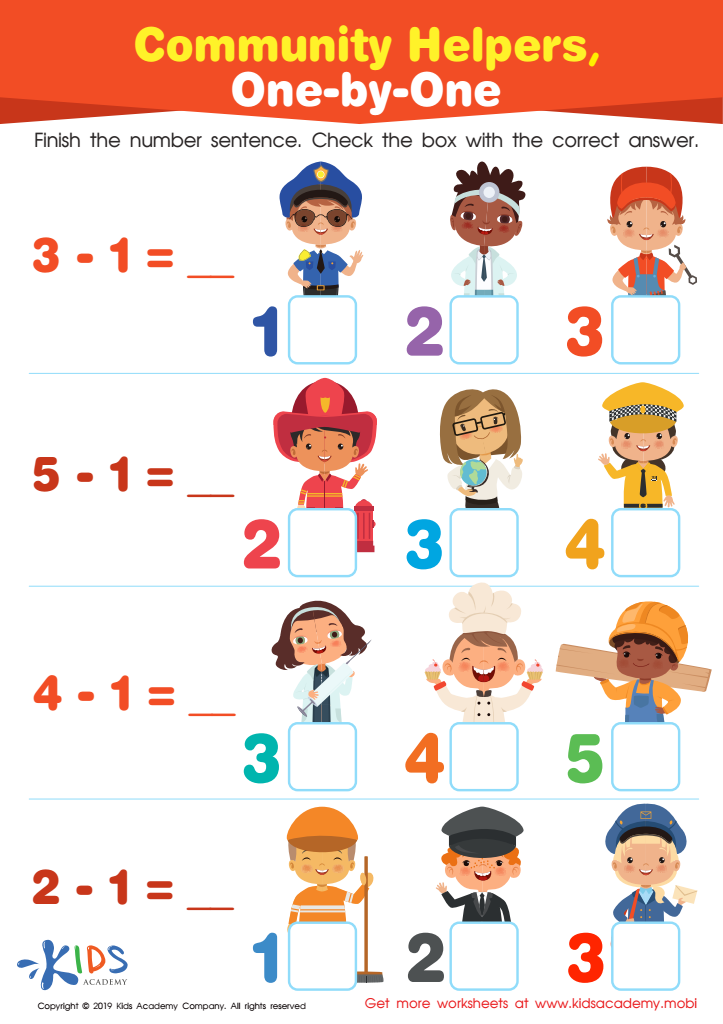
Community Helpers, One-by-One Worksheet
There are many people, buildings and places in our community, so it's important to have people who maintain order. It's important citizens do their part too! This worksheet will introduce kids to community helpers. Have them complete the number sentences by checking the correct box.
 Assign to My Students
Community Helpers, One-by-One Worksheet
Worksheet
Join Kids Academy for Free
Who is primarily going to use this learning content?








Parents and teachers should prioritize developing counting, addition, and subtraction skills for children aged 5-7 because these foundational concepts are crucial for later mathematical success and everyday problem-solving. At this formative age, children are particularly receptive to learning basic numerical concepts that underpin more complex arithmetic and mathematical reasoning. By mastering counting, children understand numerical order and quantity, which establishes the groundwork for addition and subtraction.
Addition and subtraction are not just about numbers; they develop critical thinking and problem-solving abilities. When children learn to add and subtract, they engage in mental exercises that enhance their cognitive skills, including memory, sequencing, and logical thinking. For instance, understanding that adding two groups of objects results in a larger group (addition) and that removing objects makes a group smaller (subtraction) reinforces their grasp of number properties and relationships.
These skills also have practical everyday applications. Young children who are confident in counting and basic arithmetic can, for instance, share treats fairly, follow simple instructions involving numbers, or manage time and tasks better. Encouraging early proficiency in these areas not only contributes to academic achievement but also builds confidence and a positive attitude towards learning, fostering ongoing educational engagement. Recognizing the importance of these skills can set the stage for lifelong numeracy and a keen ability to navigate the world effectively.








