
Enhancing creativity Addition & Subtraction Worksheets for Ages 5-7
4 filtered results
Difficulty Level
Grade
Age
-
From - To
Subject
Activity
Standards
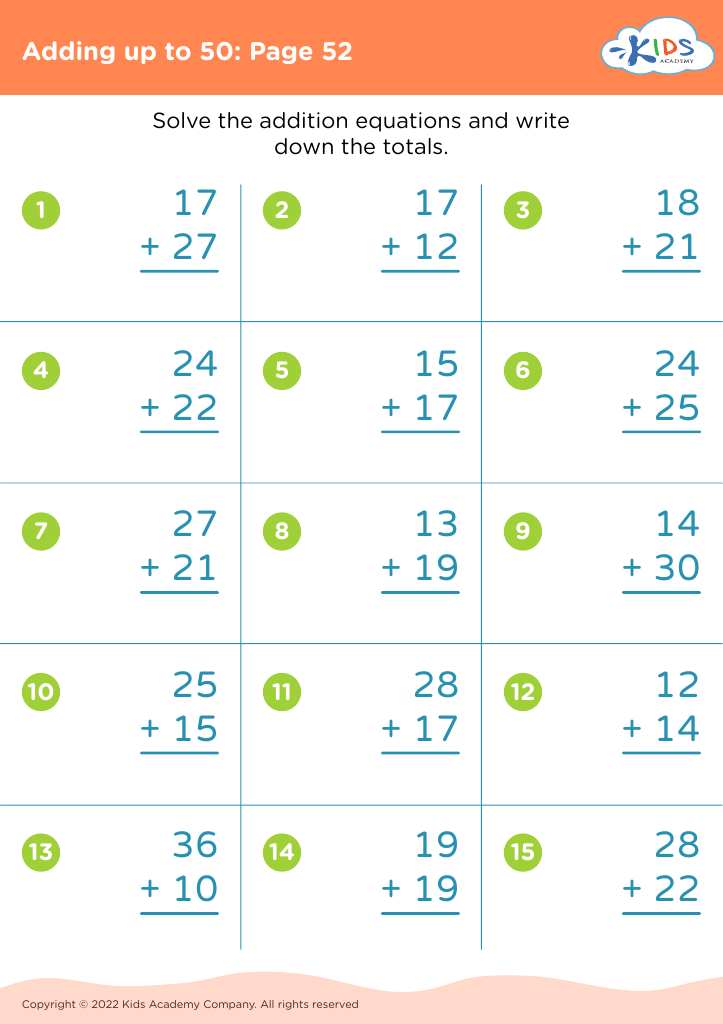
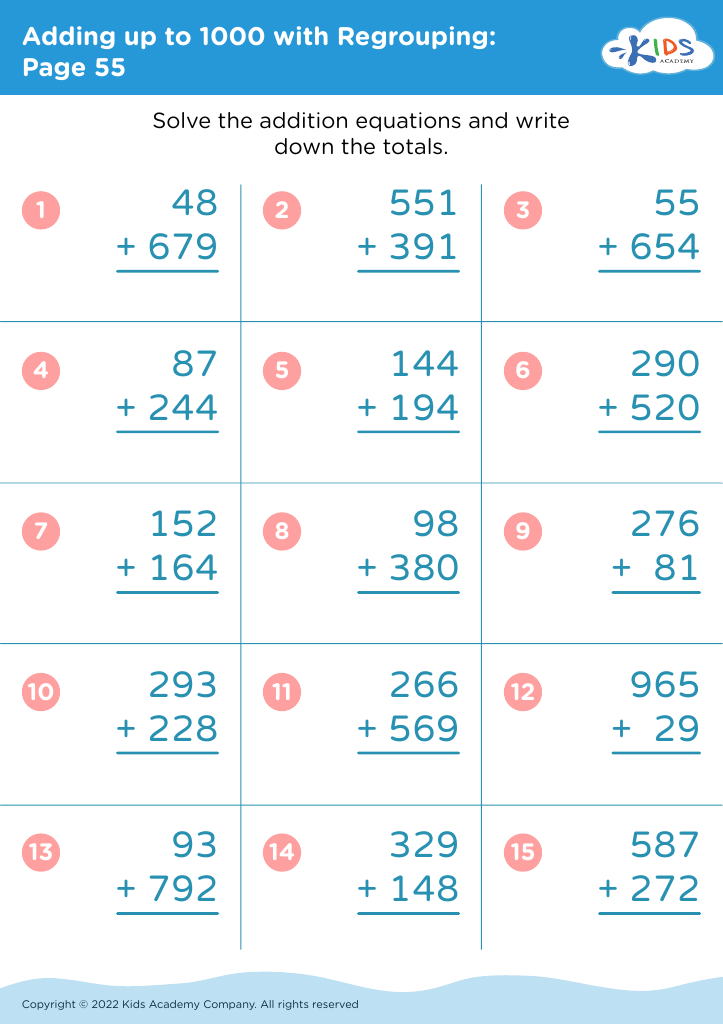
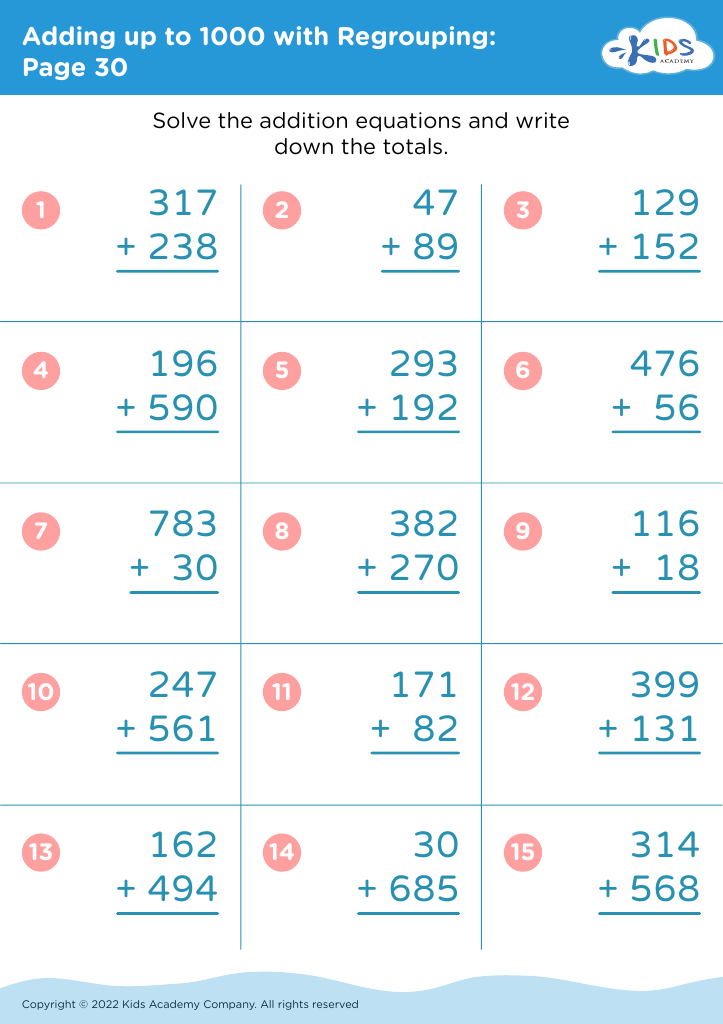
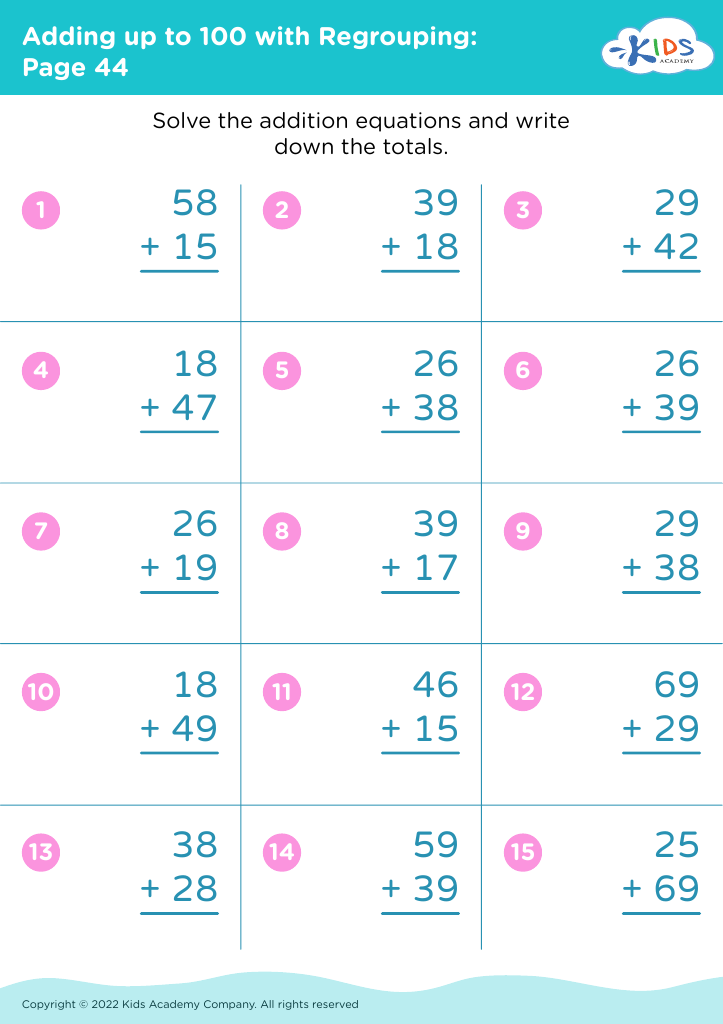
Discover our "Enhancing Creativity Addition & Subtraction Worksheets for Ages 5-7" designed to make learning math fun and engaging. These printable worksheets are thoughtfully crafted to combine essential arithmetic skills with creative activities, ensuring children develop a strong math foundation while stimulating their imaginations. Your child will enjoy solving color-by-number problems, completing imaginative stories based on math concepts, and engaging in interactive exercises that foster both logical thinking and creativity. Perfect for classroom use or at-home practice, our worksheets provide a comprehensive resource to support your child's math journey. Embrace a creative approach to education today!
Favorites
With answer key
Interactive
Join Kids Academy for Free
Who is primarily going to use this learning content?








Parents and teachers should prioritize enhancing creativity in addition and subtraction for children aged 5-7 because fostering a creative approach to math helps build a strong foundational understanding of these essential skills. At this developmental stage, children are like sponges, rapidly absorbing new information. Traditional methods of rote learning and memorization may not fully engage young minds or foster a deep understanding of mathematical concepts. By incorporating creative activities, such as storytelling with numbers, using physical objects for counting, and engaging in math-themed games and puzzles, children can develop a more intuitive grasp of addition and subtraction.
Creative teaching strategies make math fun and exciting, helping to alleviate any anxiety or fear associated with the subject. These engaging activities further stimulate a child's problem-solving abilities and critical thinking skills, driving curiosity and encouraging a love for learning. When children see math as an enjoyable and relevant part of their daily lives, their confidence in handling numbers grows. Additionally, pairing creativity with foundational math skills promotes flexibility in thinking, as children learn that there are multiple ways to approach problems. This flexible mindset is crucial not only for more complex math concepts they will encounter in the future but also for overall cognitive development and lifelong learning success.








