Learning addition Addition & Subtraction Worksheets for Ages 5-7
3 filtered results
-
From - To
Discover our engaging Addition & Subtraction worksheets designed for children aged 5-7! These interactive resources help young learners build a strong foundation in basic math skills. Each worksheet is crafted to make learning fun, featuring colorful illustrations and progressive challenges that capture kids' attention. Our carefully designed activities promote critical thinking and boost confidence in math. Whether used at home or in the classroom, these worksheets ensure a comprehensive understanding of addition concepts, preparing children for more advanced math levels. Explore our collection today and watch your little ones excel in their mathematical journey with ease and enjoyment!
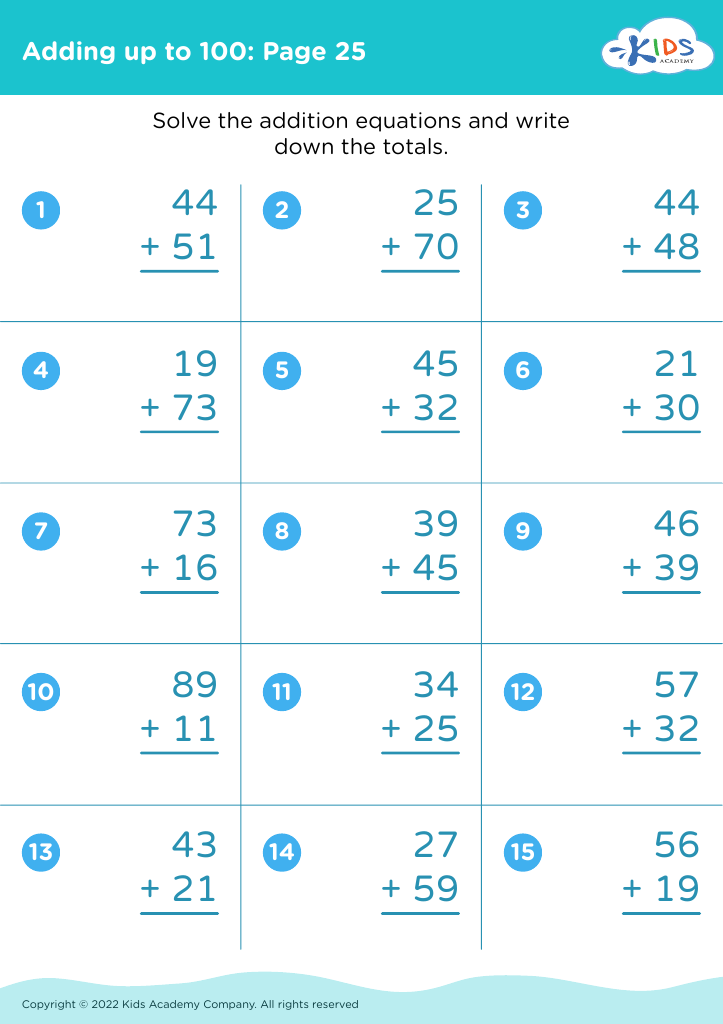
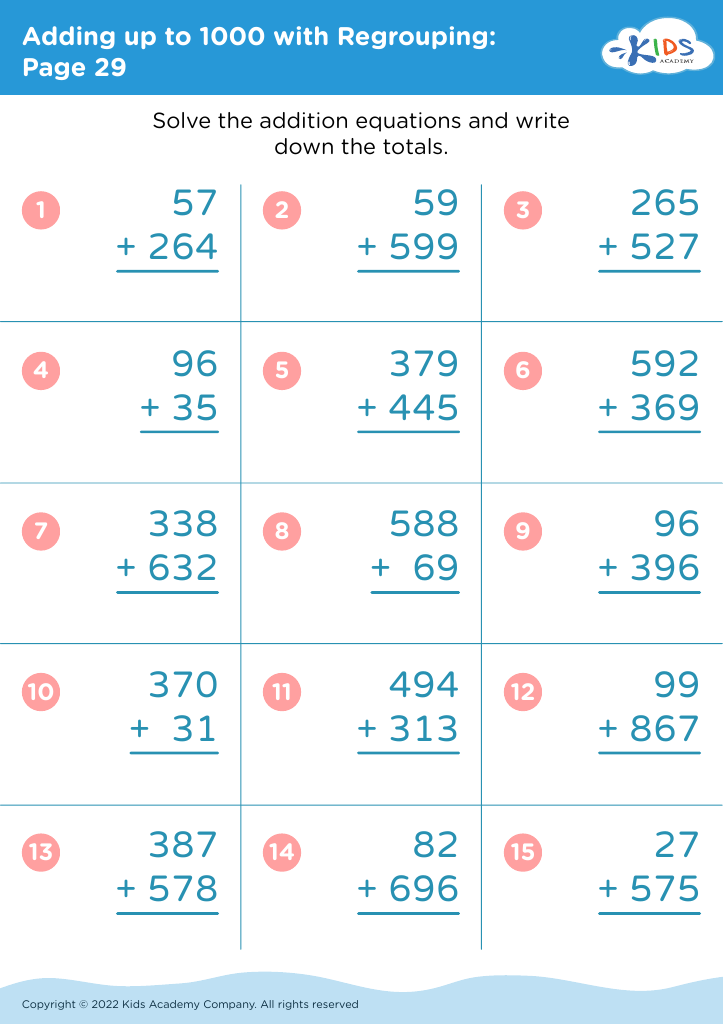
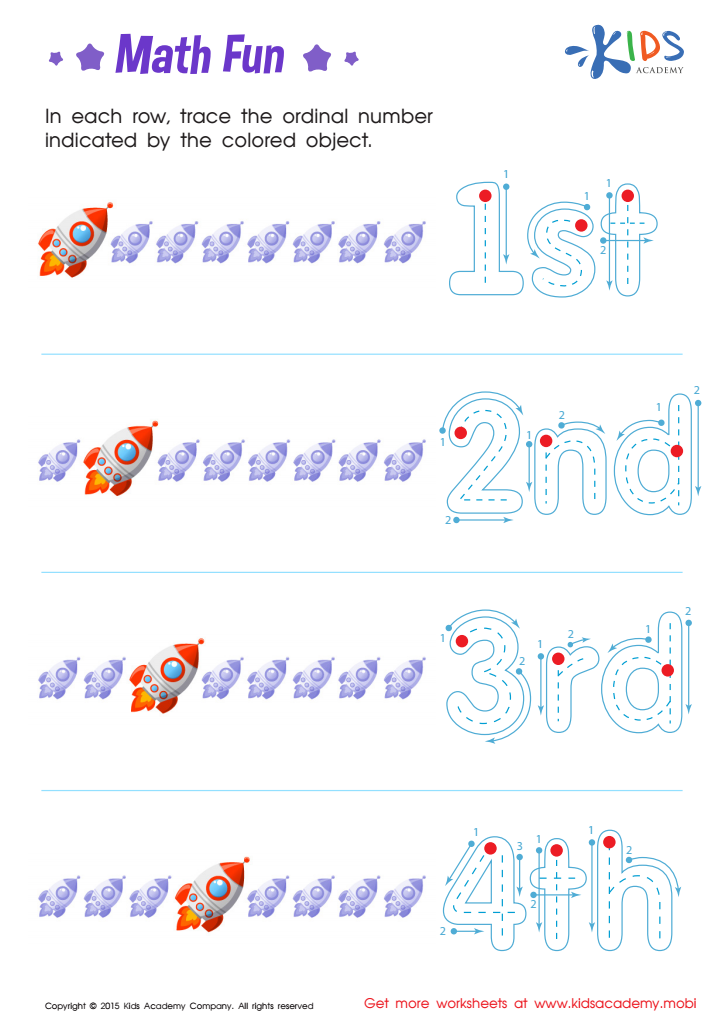
Ordinal Numbers: Math Fun Worksheet
 Assign to My Students








Parents and teachers should prioritize teaching addition and subtraction to children aged 5-7 because these foundational math skills are essential for academic success and everyday life. During this critical developmental phase, children are naturally curious and ready to learn about numbers and their relationships. Mastering addition and subtraction lays the groundwork for more complex mathematical concepts, such as multiplication and division, which they will encounter later in their education.
Furthermore, understanding basic arithmetic enhances a child’s problem-solving skills and critical thinking. Through engaging lessons and interactive activities, children can develop a confidence that encourages a positive attitude towards math, helping to reduce anxiety surrounding the subject as they grow older.
In addition to cognitive benefits, learning these skills fosters personal independence. Being able to perform simple calculations can help children in daily tasks, such as allowing them to count money, understand time, and make decisions based on numerical data.
Moreover, parental involvement reinforces learning, creating a supportive environment. When parents and teachers work together to promote these basic math skills, children are more likely to excel academically and nurturally, building a strong foundation for future learning and overall intellectual curiosity.








