Logic development Addition & Subtraction Worksheets for Ages 5-7
3 filtered results
-
From - To
Discover our engaging Logic Development Addition & Subtraction Worksheets designed for children ages 5 to 7! These worksheets not only reinforce essential math skills but also boost critical thinking and problem-solving abilities. Each activity incorporates fun, interactive elements that challenge young minds and makes learning enjoyable. With a variety of problems, our worksheets help students understand number relationships, develop their logical reasoning, and build a solid foundation in addition and subtraction. Perfect for home or classroom use, these resources support early learners in grasping key mathematical concepts while keeping them entertained and motivated. Start your child's math journey today!
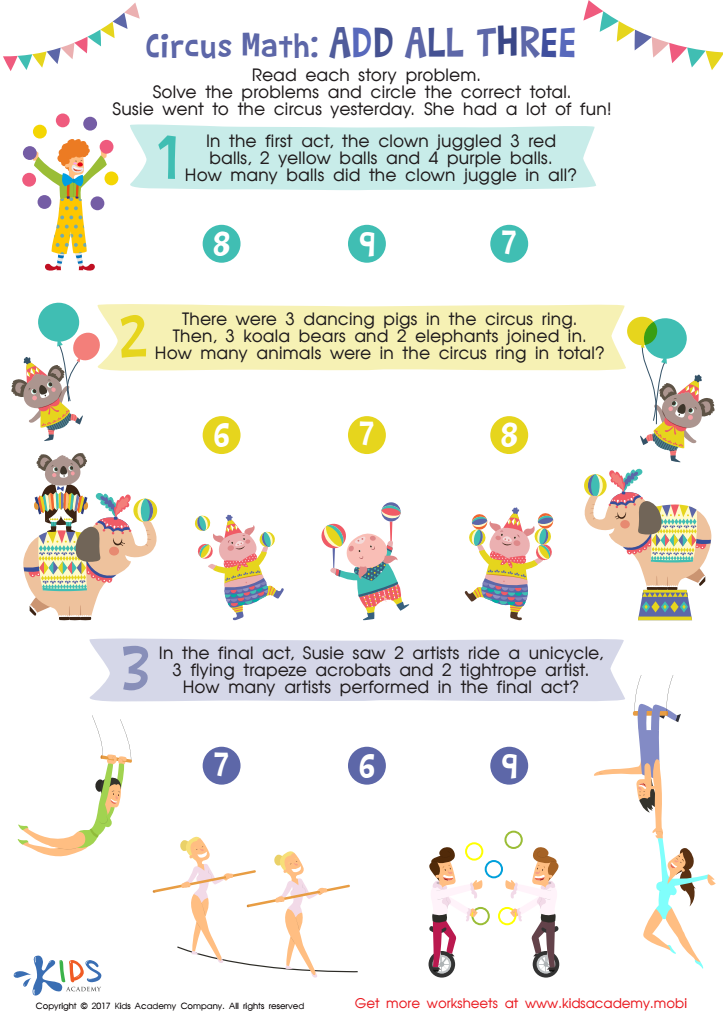
Circus Math Printable
 Assign to My Students
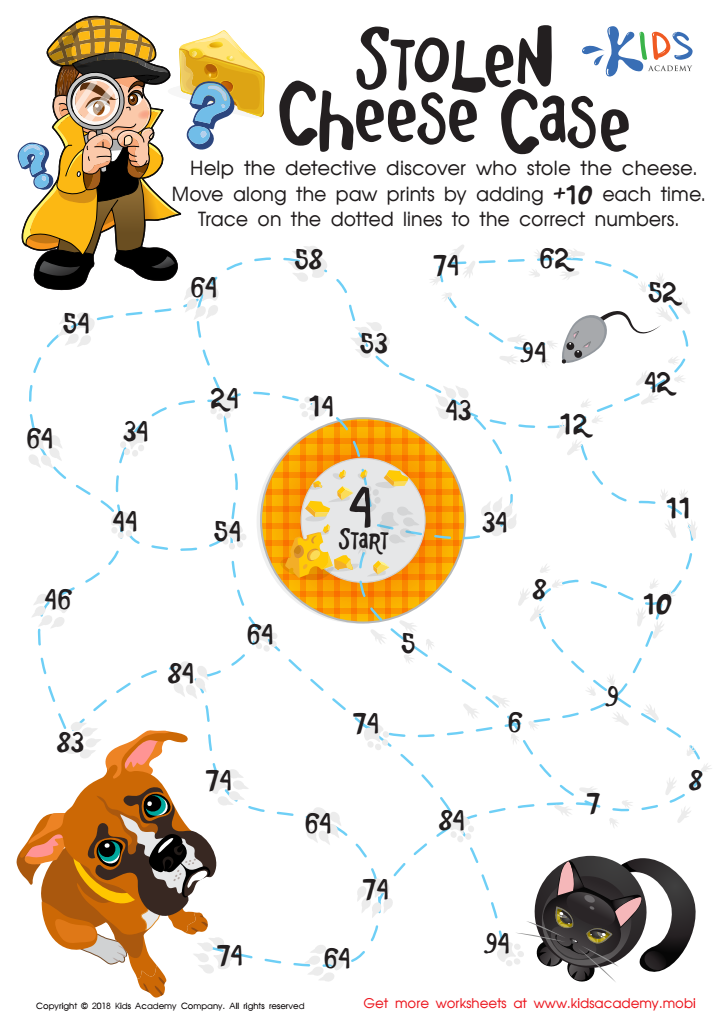
Stolen Cheese Case Maze Worksheet
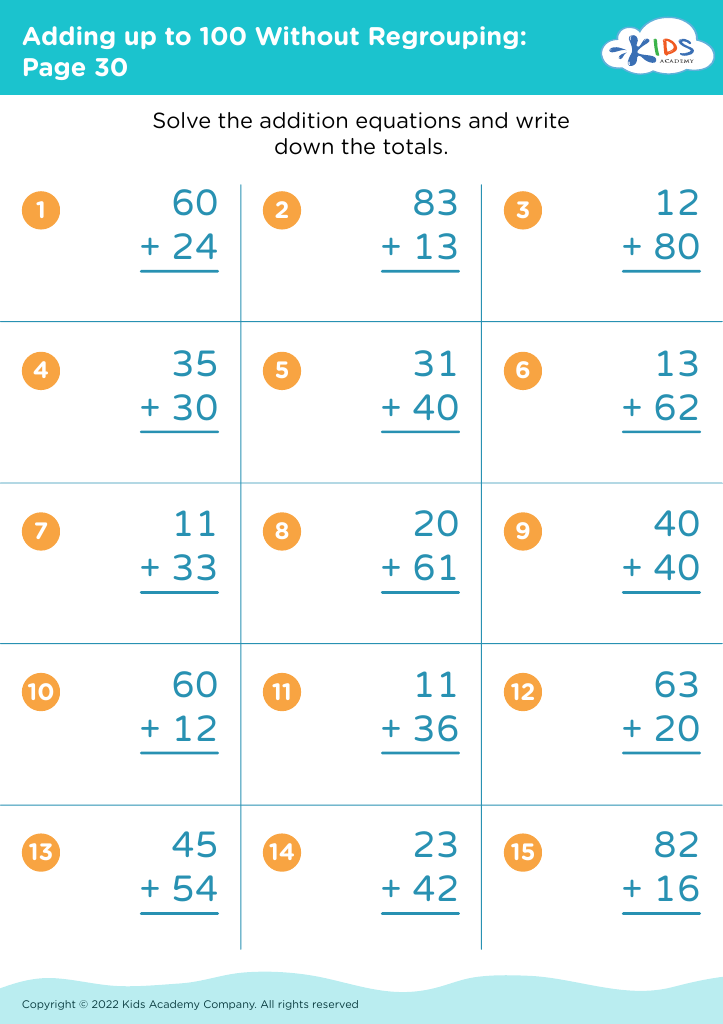








Logic development in addition and subtraction for children ages 5 to 7 is crucial for several reasons. First, foundational math skills are essential for children as they transition from early childhood education to more structured learning environments. Mastering these concepts not only helps in daily tasks—like sharing snacks or counting toys—but also fosters critical thinking and reasoning abilities.
At this age, children begin to process abstract concepts and understand relationships between numbers. Engaging with addition and subtraction enhances their problem-solving skills, helping them learn how to approach challenges methodically. Developments at this stage set the groundwork for more complex math operations and comprehension of mathematical principles in future academic pursuits.
Moreover, early mathematical proficiency is linked to future success in STEM fields. As parents and teachers, showing encouragement and reinforcing these skills through playful and engaging methods can spark a child’s interest in mathematics, making learning enjoyable.
Collaborative activities, games, and practical applications can develop a child’s logic and cognitive skills, setting them up for long-term academic achievement. Ignoring this critical developmental phase may lead to gaps in understanding, potentially affecting self-esteem and attitude towards math in the future. Fostering early logic skills is an investment in a child's educational journey.








