Logical thinking Addition & Subtraction Worksheets for Ages 5-7
9 filtered results
-
From - To
Boost your child's arithmetic prowess with our "Logical Thinking Addition & Subtraction Worksheets" designed for ages 5-7. These engaging activities combine essential math practice with fun logical challenges, ensuring young learners strengthen their addition and subtraction skills while enhancing critical thinking. Each worksheet is meticulously crafted to stimulate curiosity and foster problem-solving abilities, making math both enjoyable and educational. Perfect for classroom settings or additional home practice, our worksheets align with early learning standards, setting a strong foundation for future math success. Watch your child’s confidence and competence soar with these thoughtfully designed exercises!
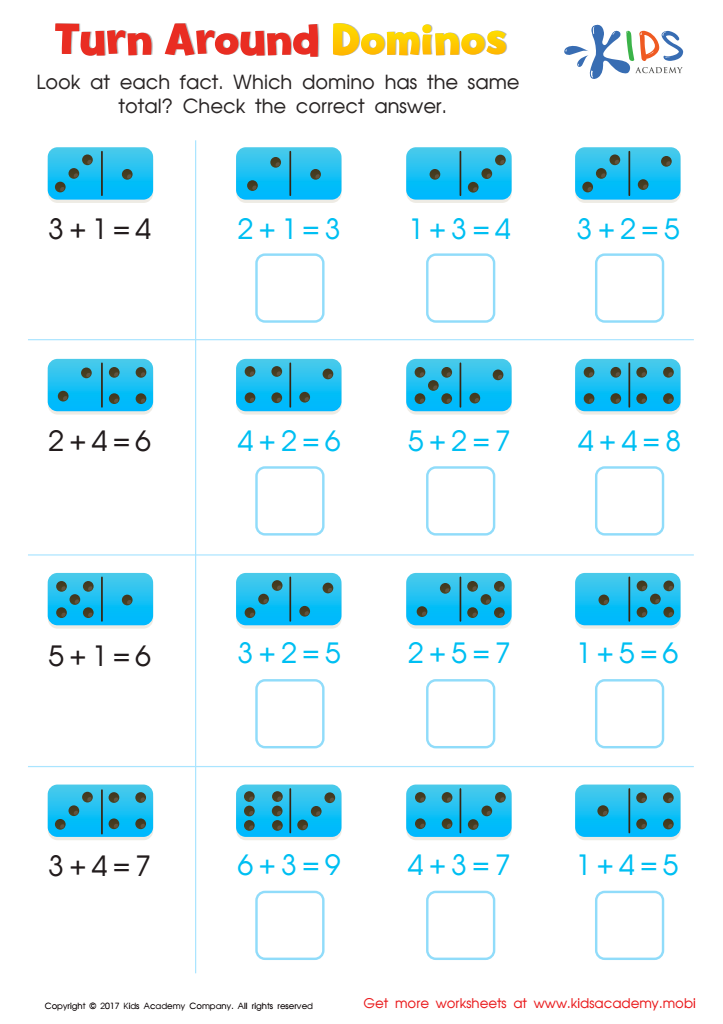
Turn Around Dominos Worksheet
 Assign to My Students
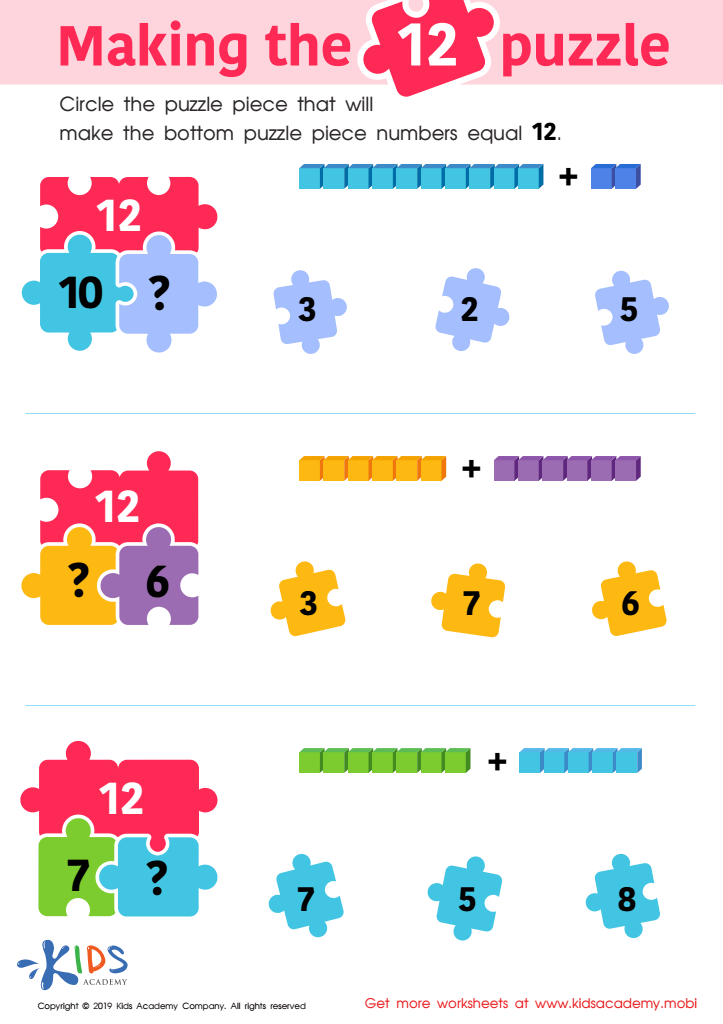
Making the 12 Puzzle Worksheet
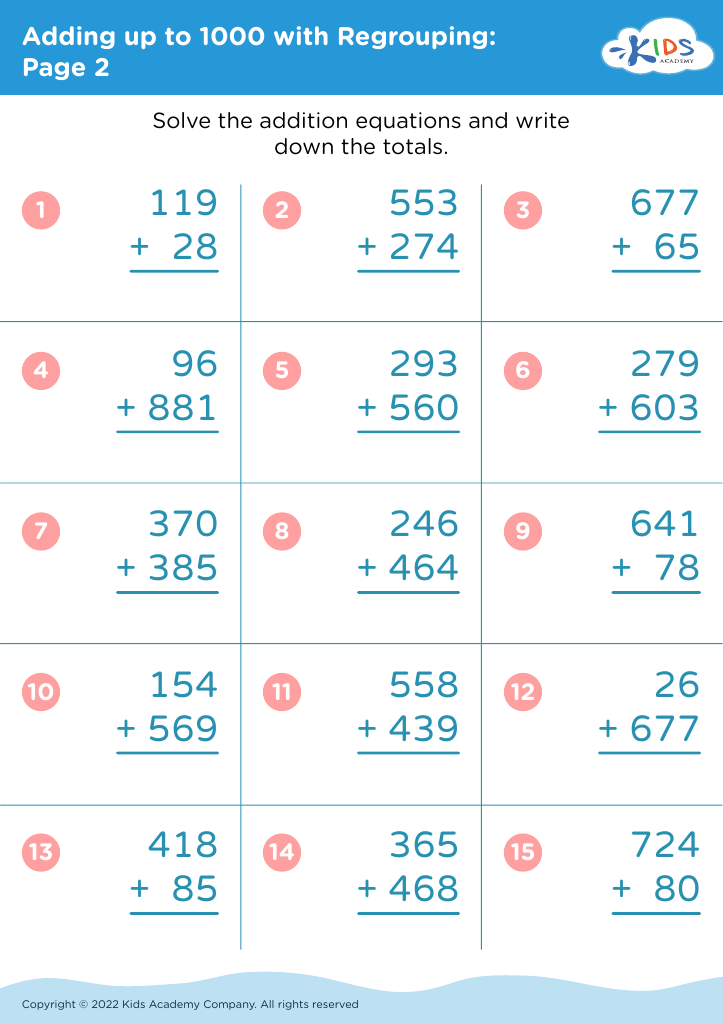








Teaching logical thinking and basic arithmetic skills, such as addition and subtraction, to children aged 5-7 is crucial for their cognitive development and future academic success. At this young age, children's brains are highly receptive and capable of forming neural connections that lay the foundational blocks for more advanced learning. Introducing logical thinking through these early math skills helps children develop problem-solving abilities, critical thinking, and the capacity to approach tasks methodically.
Addition and subtraction are fundamental concepts in mathematics. Mastery of these skills allows children to understand more complex math operations and concepts in later grades, such as multiplication, division, fractions, and algebra. Moreover, knowing how to add and subtract enhances their ability to manage daily life situations, like counting objects, understanding time, and even handling money.
For parents and teachers, fostering a child's logical thinking and early math skills is an investment in their future. It can increase a child's confidence, improve their academic performance, and instill a lifelong love of learning. Additionally, early proficiency in these areas is often linked to greater educational and professional opportunities down the line. Therefore, emphasizing logical thinking and basic arithmetic in children aged 5-7 creates a solid foundation for both academic and personal growth.








