
Matching skills Addition & Subtraction Worksheets for Ages 5-7
5 filtered results
Difficulty Level
Grade
Age
-
From - To
Subject
Activity
Standards
Enhance your child's math journey with our "Matching Skills Addition & Subtraction Worksheets" tailored for ages 5-7. Designed to develop key skills, these engaging worksheets incorporate fun matching activities that help young learners connect numbers with corresponding images. Perfect for reinforcing addition and subtraction concepts, each worksheet promotes critical thinking and boosts confidence in math basics. Students will love the vibrant designs and interactive matching exercises that make learning enjoyable. Ideal for homeschoolers, classroom teachers, or extra practice at home, our worksheets support early numeracy skills while encouraging a love for mathematics. Start matching and learning today!
Favorites
With answer key
Interactive
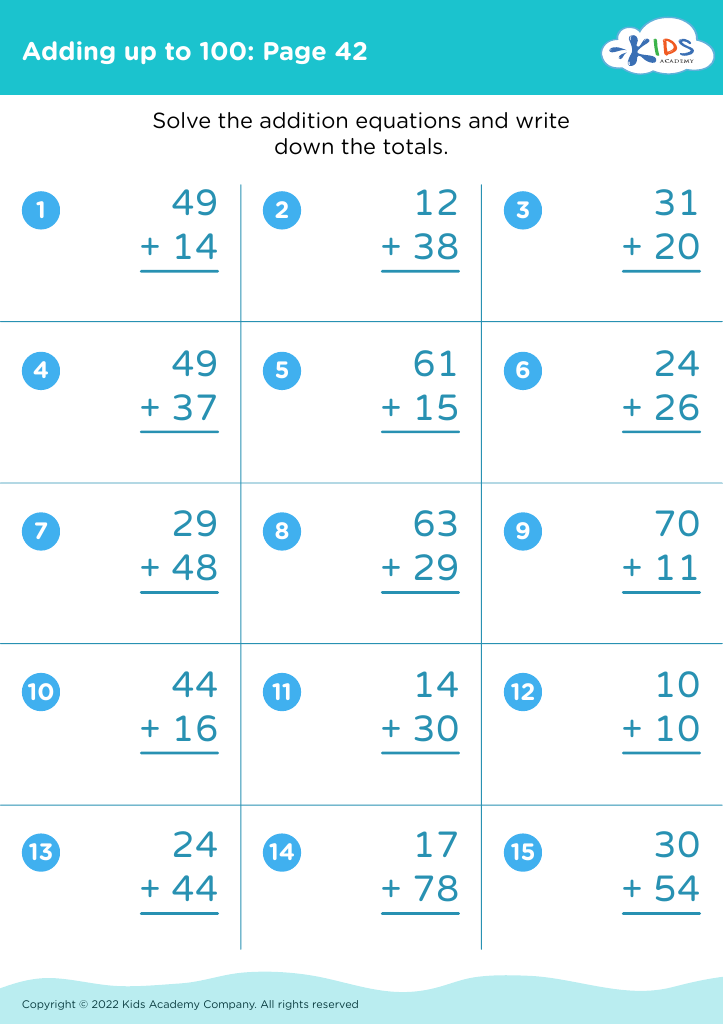
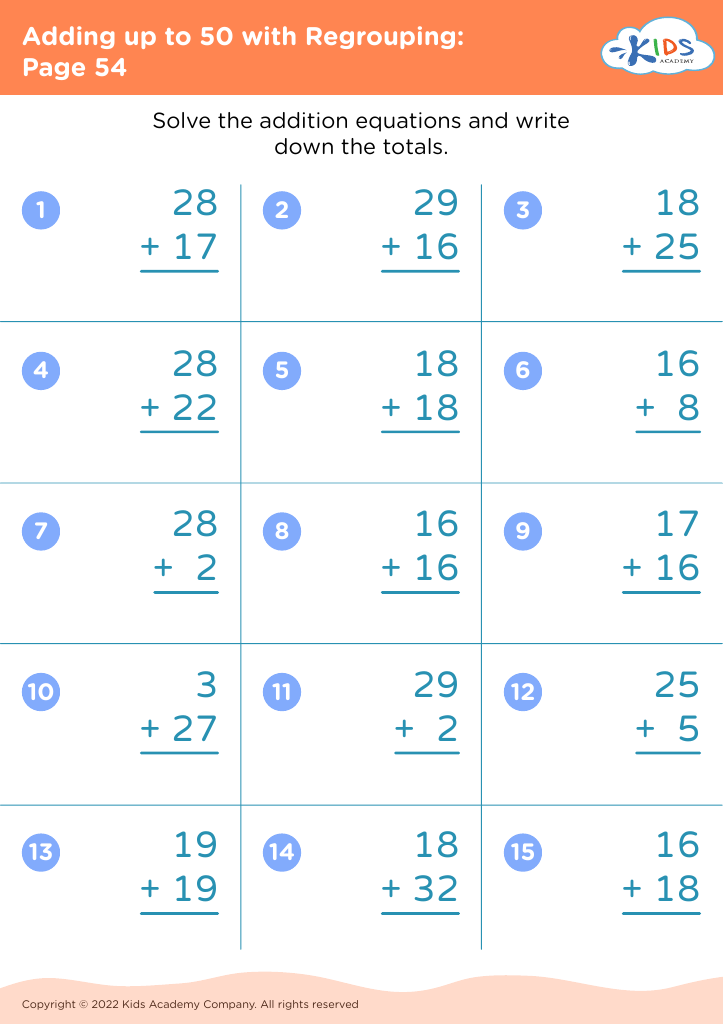
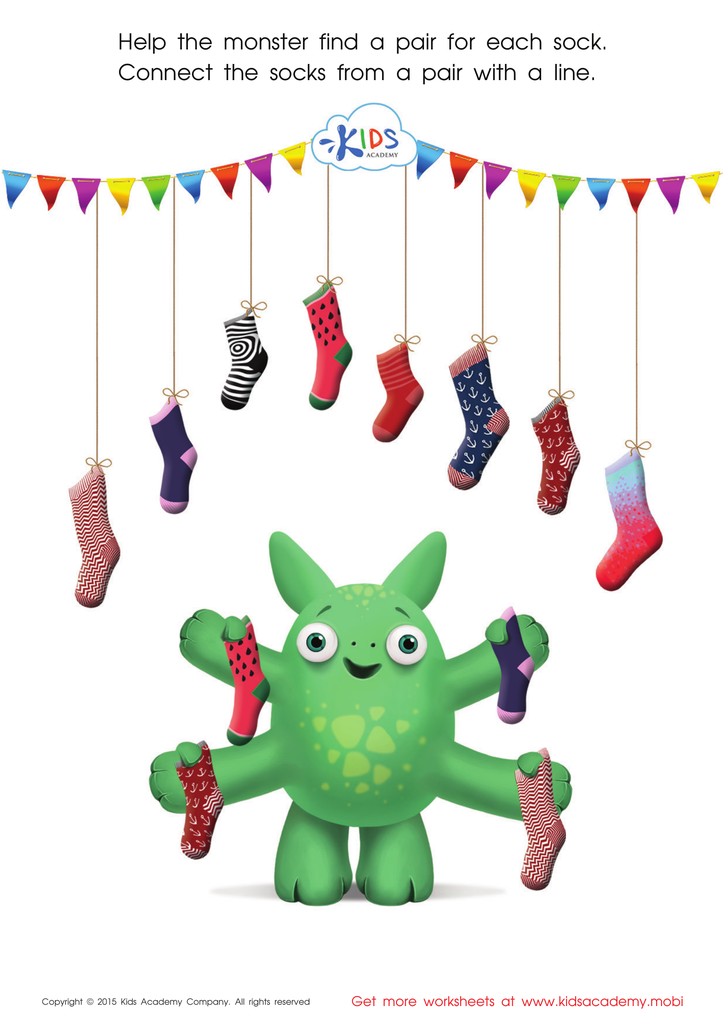
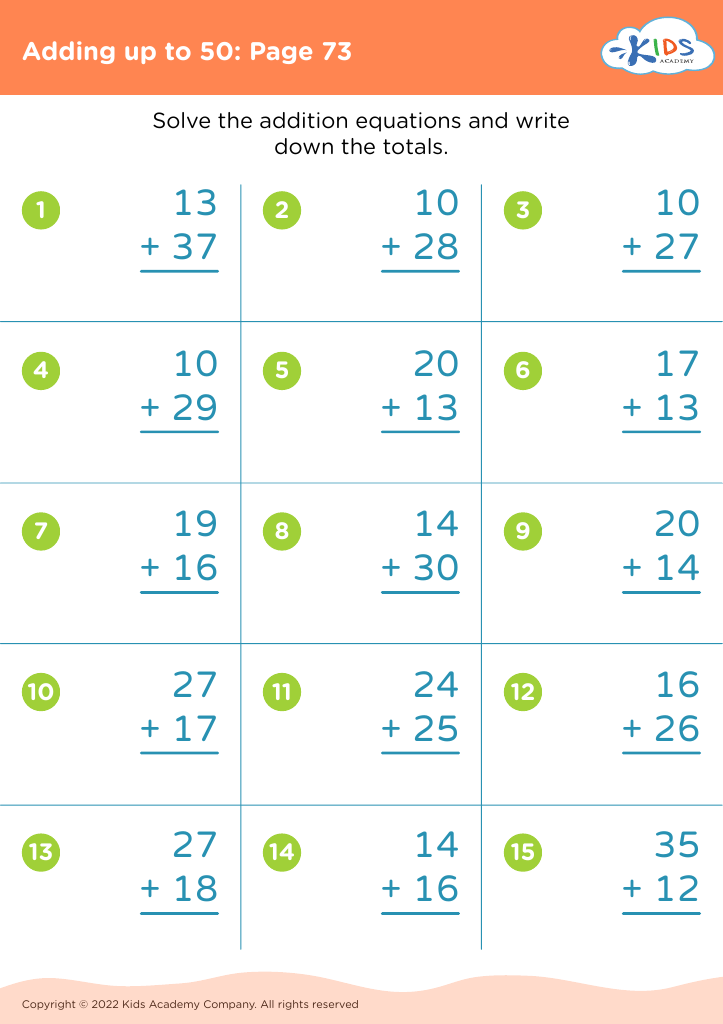
Math Matching Game: Monsterв's Socks Worksheet
Help the Monster put pairs of socks back together after a big storm! Kids draw lines to match the socks and develop cognitive and fine motor skills. Download and print the worksheet from Kids Academy. More preschool and kindergarten activities available.
Math Matching Game: Monsterв's Socks Worksheet
Worksheet
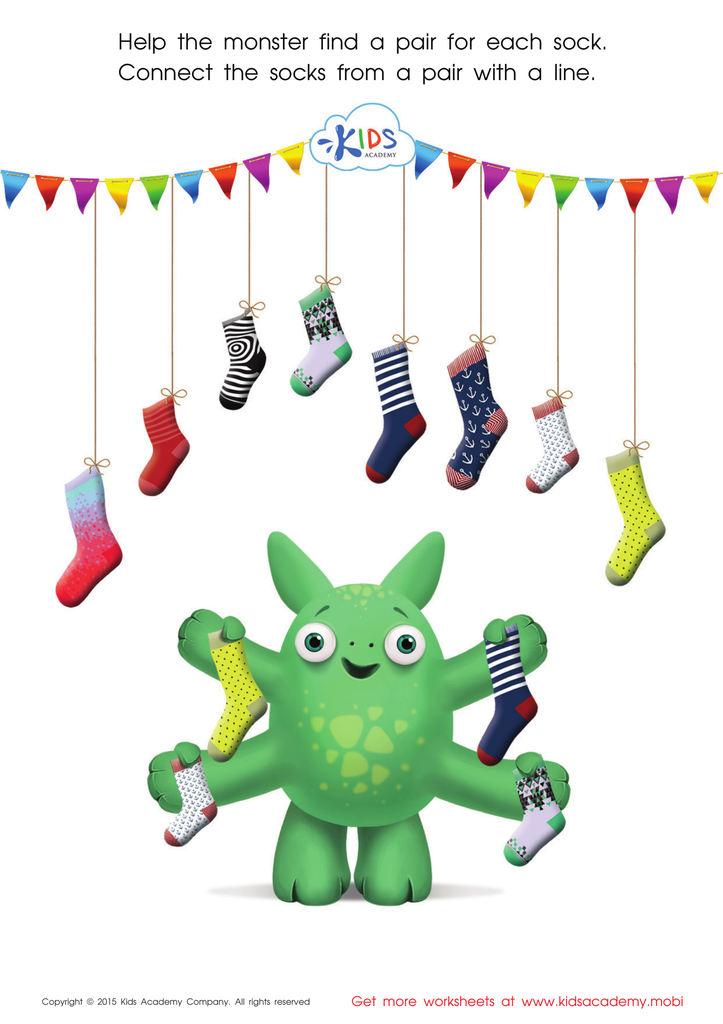
Math Matching Pairs Game: Monsterв's Socks Worksheet
Let your child learn, concentrate and practice sorting skills with this fun kindergarten worksheet. Matching polka dots, anchors, geo shapes and stripes on Monster's socks will help improve fine motor skills. Download and print this free worksheet and several others on different topics.
Math Matching Pairs Game: Monsterв's Socks Worksheet
Worksheet
Join Kids Academy for Free
Who is primarily going to use this learning content?








Matching skills in addition and subtraction is crucial for children aged 5-7, as it forms the foundation for their mathematical understanding. During this formative stage, children are introduced to the concepts of number relationships, which are vital for everyday problem-solving and future academic success. When parents and teachers emphasize matching skills, children learn how to recognize equivalents (e.g., knowing that 2 + 3 equals 5, and 5 - 3 equals 2), enabling them to develop mental math strategies that will serve them well in more advanced math.
Moreover, mastering these skills fosters confidence and independence in young learners. Children who are proficient in basic addition and subtraction can tackle more complex mathematical concepts down the road with ease. Engaging in matching exercises also improves critical thinking and promotes cognitive development, as children begin to see patterns and make connections.
Additionally, incorporating these skills into play and daily activities helps make learning enjoyable, encouraging a positive attitude toward math. When parents and teachers actively support matching games and exercises, they equip children with essential tools for academic success and life skills, ensuring they grow into confident learners prepared to take on more challenging mathematical concepts in the future.








