
Mathematics skills Addition & Subtraction Worksheets for Ages 5-7
3 filtered results
Difficulty Level
Grade
Age
-
From - To
Subject
Activity
Standards
Enhance your child's early math skills with our engaging Addition & Subtraction Worksheets designed for ages 5-7. Tailored to support young learners, these worksheets provide a variety of activities that make mastering basic arithmetic fun and interactive. Kids will develop critical thinking and problem-solving abilities while enjoying colorful illustrations and topics that capture their imagination. Our resources encourage practice at their own pace, ensuring a solid foundation in mathematics as they progress. Perfect for parents and educators alike, our worksheets create an enjoyable learning environment that promotes confidence in addition and subtraction skills. Discover the joy of math today!
Favorites
With answer key
Interactive
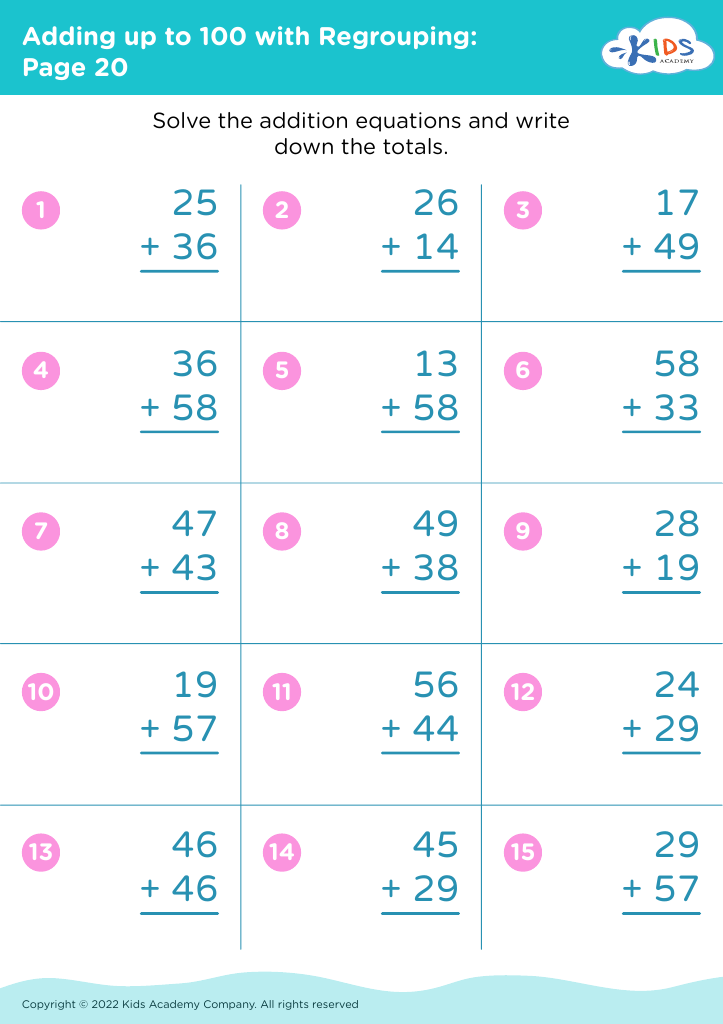
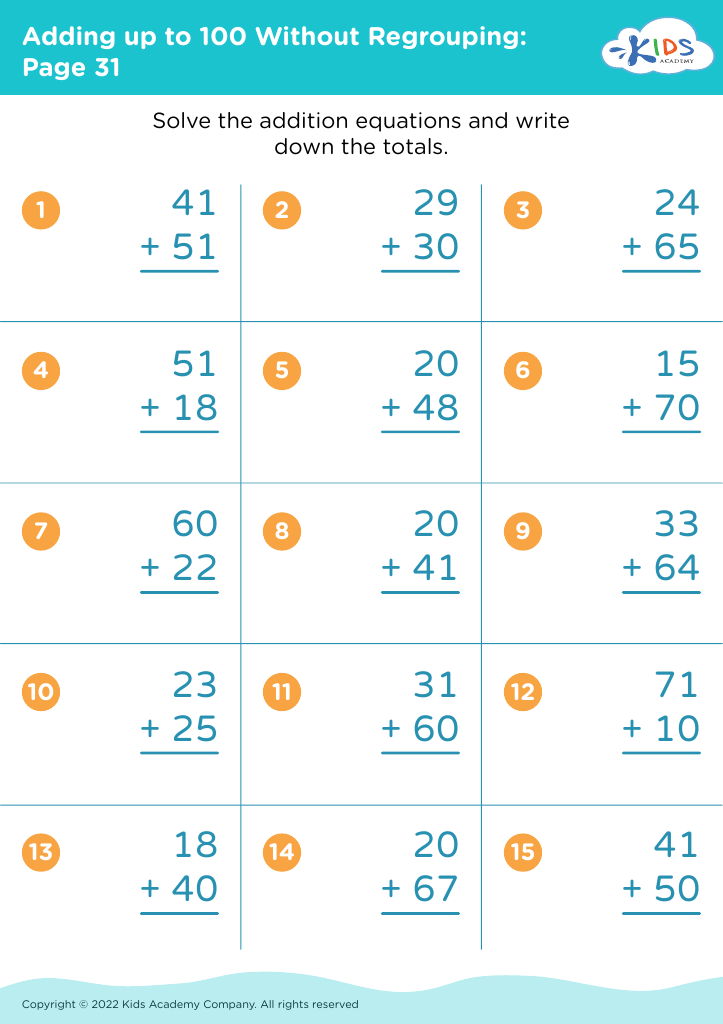
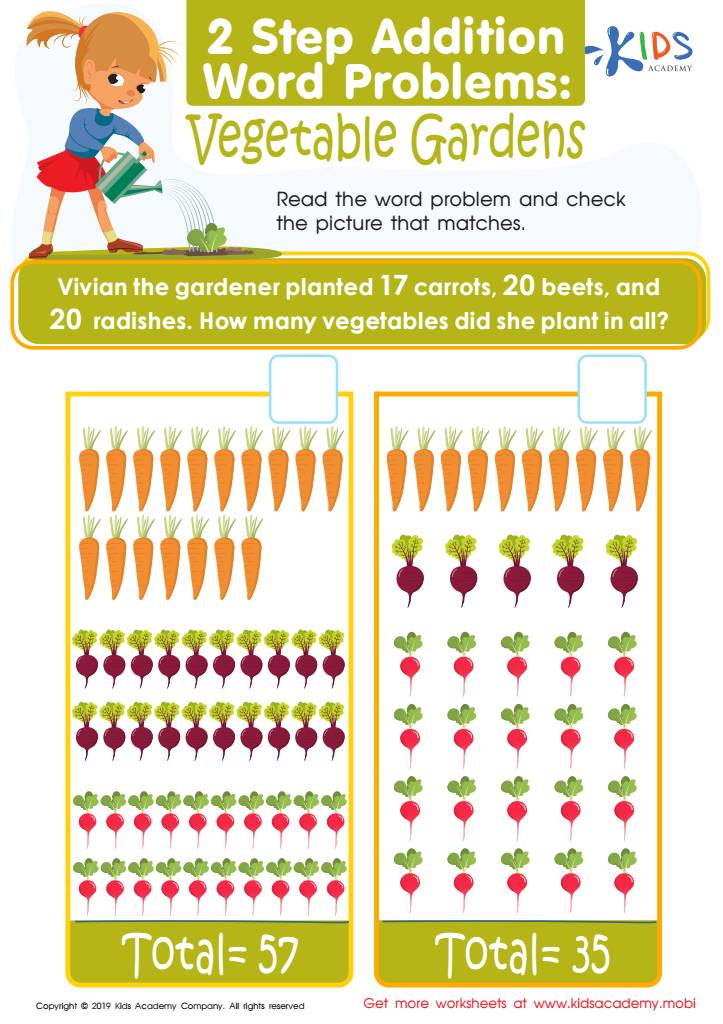
Vegetable Gardens Worksheet
Kids will have fun helping their buddy Vivian solve the addition word problems. Using one-to-one representation, they'll count the beets, carrots and radishes, then figure out the multi-step word problems. After, they'll check the picture that matches the answer, boosting their understanding of adding multiple numbers for one answer.
 Assign to My Students
Vegetable Gardens Worksheet
Worksheet
Join Kids Academy for Free
Who is primarily going to use this learning content?








Mathematics skills, particularly addition and subtraction, are foundational for children aged 5-7. During these early years, children develop essential cognitive skills that will support their future learning. Mastering basic addition and subtraction not only helps in mathematical understanding but also fosters critical thinking and problem-solving abilities.
Parents and teachers should care about these skills because they are pivotal in everyday life and learning. Proficiency in addition and subtraction enables children to handle information effectively, such as counting objects, understanding time, and managing money, which ultimately prepares them for real-world applications. Moreover, these skills serve as building blocks for more complex mathematical concepts in later grades.
Engaging in addition and subtraction activities can enhance a child's confidence in their mathematical abilities. Encouraging playful and interactive math games can promote an atmosphere of curiosity and enjoyment toward the subject. This positive attitude is instrumental in reducing math anxiety and fostering a lifelong love for learning.
In summary, investing time and resources into developing addition and subtraction skills in young children equips them with essential tools for academic success and lays a strong foundation for future educational endeavors.








