Practicing addition Addition & Subtraction Worksheets for Ages 5-7
4 filtered results
-
From - To
Enhance your child’s math skills with our engaging "Practicing Addition & Subtraction Worksheets" designed specifically for ages 5-7. These worksheets provide a fun and interactive way for young learners to grasp foundational math concepts. Each set includes vibrant illustrations and various problems that cater to different learning styles. Your child will develop essential skills in addition and subtraction while boosting their confidence in math. Surveys help track progress, and the worksheets are easily printable for at-home practice or classroom settings. Foster a love for learning and empower your child with essential arithmetic skills today!
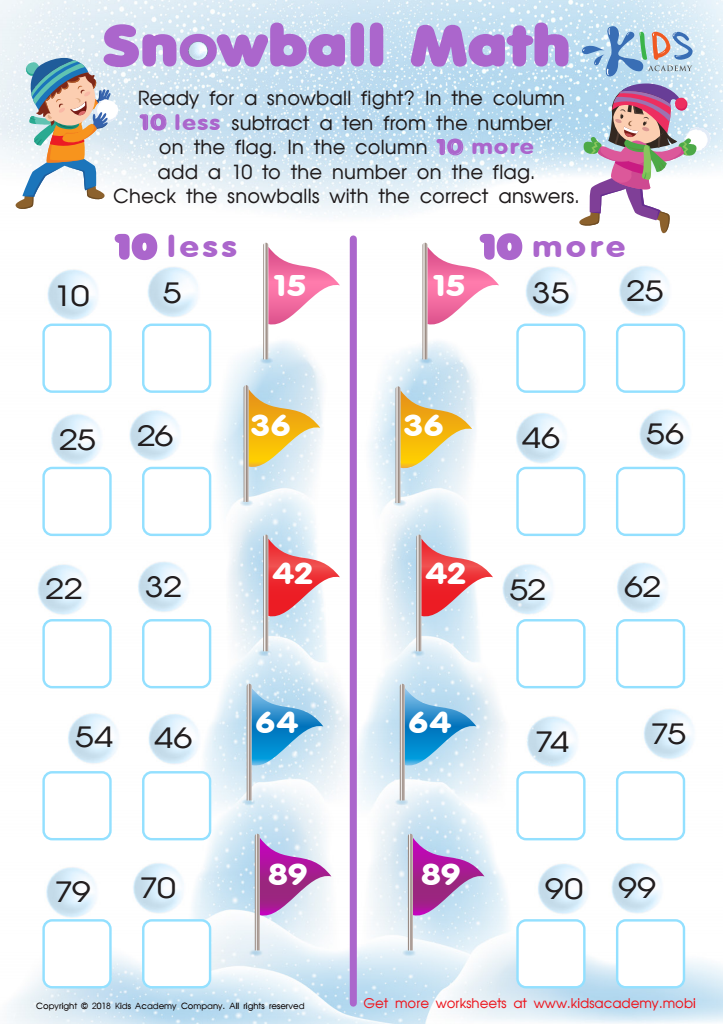
Snowball Math Worksheet
 Assign to My Students
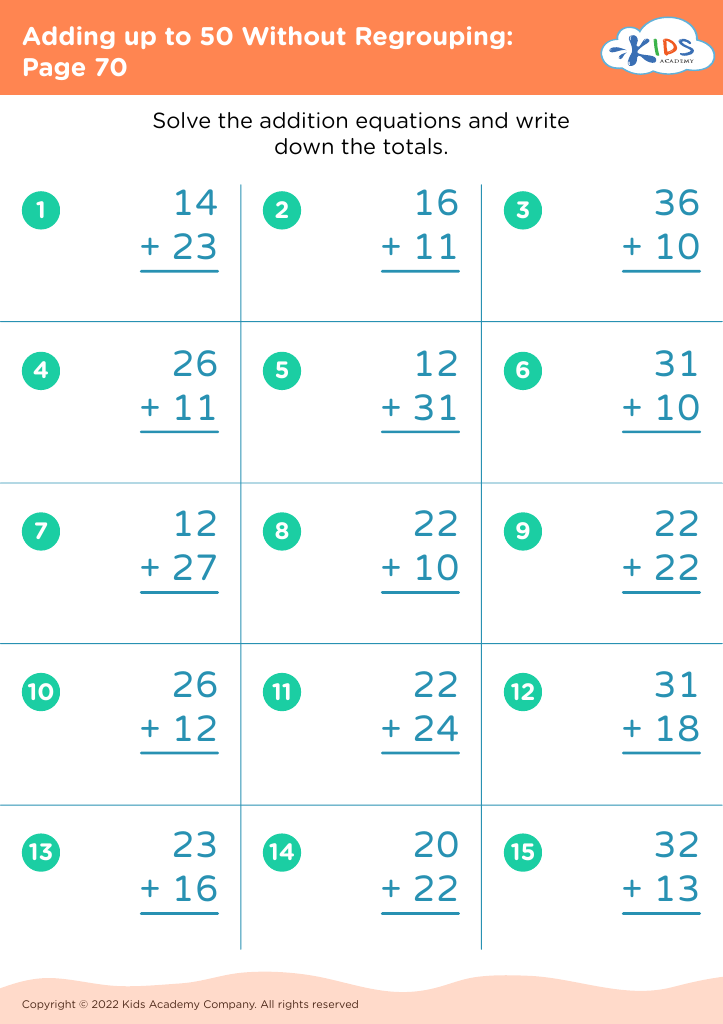
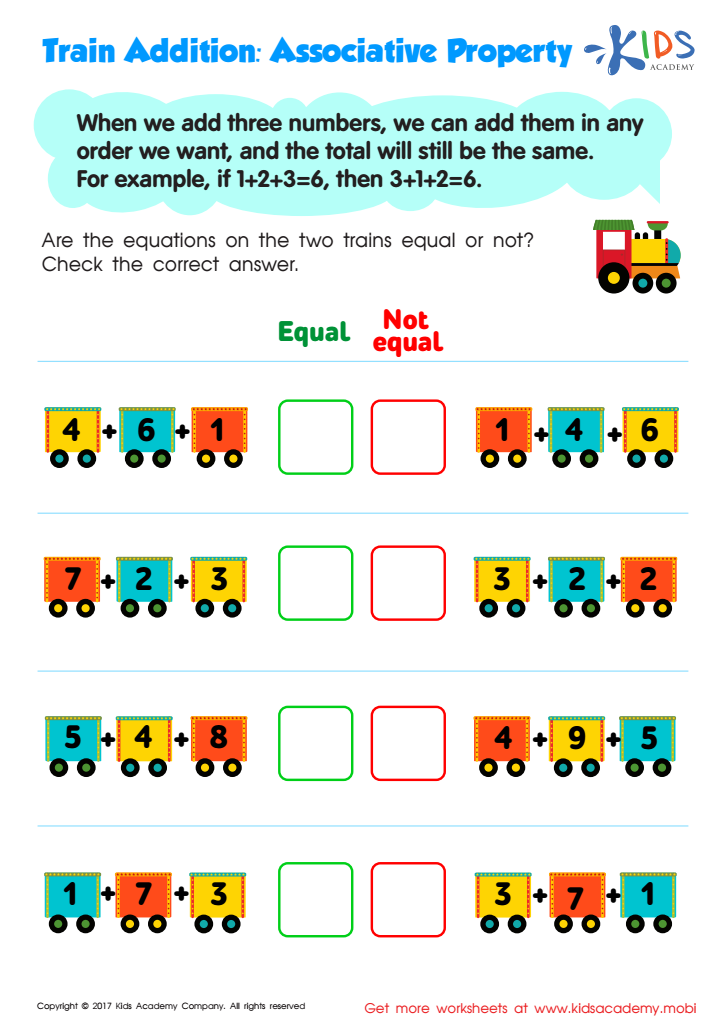
Train Addition: Associative Property Worksheet
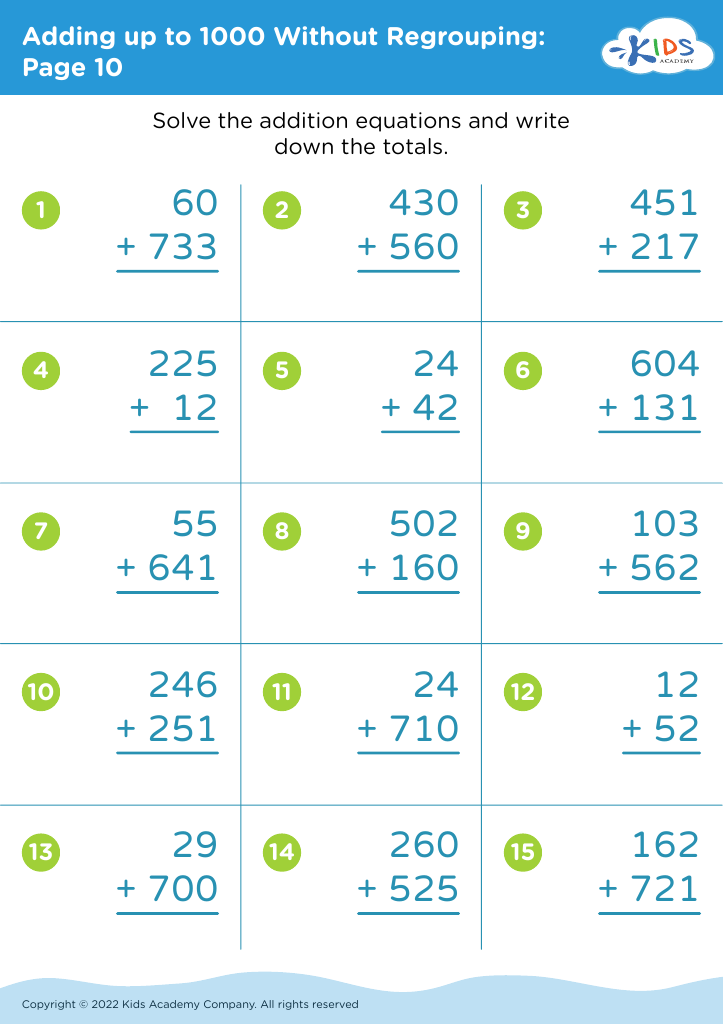








Practicing addition and subtraction for children aged 5-7 is crucial for several reasons. First, these skills form the foundation for mathematics, which is an essential life skill. Understanding basic arithmetic helps children make sense of everyday situations, such as managing money or measuring ingredients for cooking.
Moreover, engaging in consistent practice supports cognitive development. At this age, children's brains are highly adaptable, and repetitive activities strengthen neural connections. This lays the groundwork for more complex mathematical concepts in the future.
Additionally, practicing addition and subtraction boosts a child's confidence. Mastery of these fundamental skills empowers children, allowing them to participate actively in class and tackle more advanced problems. Games and fun activities involving numbers make learning enjoyable, which can instill a lifelong love for math.
Moreover, regular practice also encourages critical thinking and problem-solving abilities. Parents and teachers can facilitate learning by integrating math into daily routines, creating a rich learning environment that promotes analytical skills in a natural setting.
In summary, emphasizing addition and subtraction for young learners is vital for their academic success, cognitive growth, self-confidence, and future mathematical learning. Hence, parents and teachers should prioritize these essential skills.








