Sea creatures identification Addition & Subtraction Worksheets for Ages 5-7
3 filtered results
-
From - To
Discover our engaging Sea Creatures Identification Addition & Subtraction Worksheets, designed for children aged 5-7! These interactive worksheets combine the excitement of ocean exploration with essential math skills, making learning fun and effective. Kids will identify vibrant sea animals while solving addition and subtraction problems tailored to their developmental level. Each activity promotes critical thinking and reinforces math concepts in a playful, marine-themed environment. Perfect for at-home practice or classroom use, our worksheets will captivate young learners and spark their curiosity about the underwater world. Dive into math learning with these creative educational resources that promote both cognitive and scientific skills!
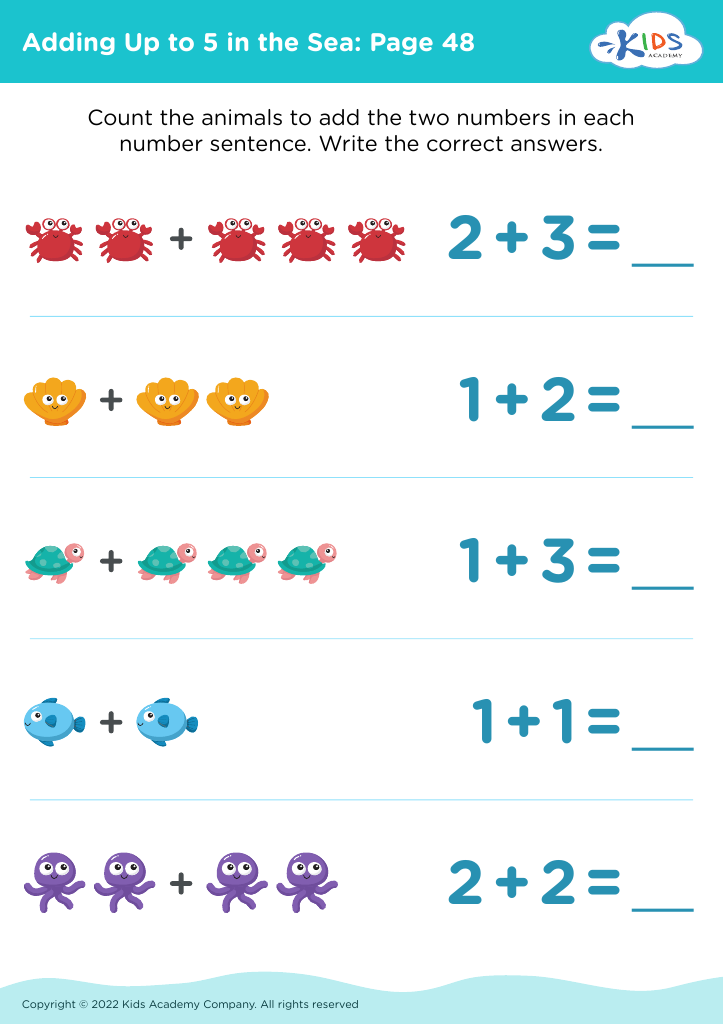
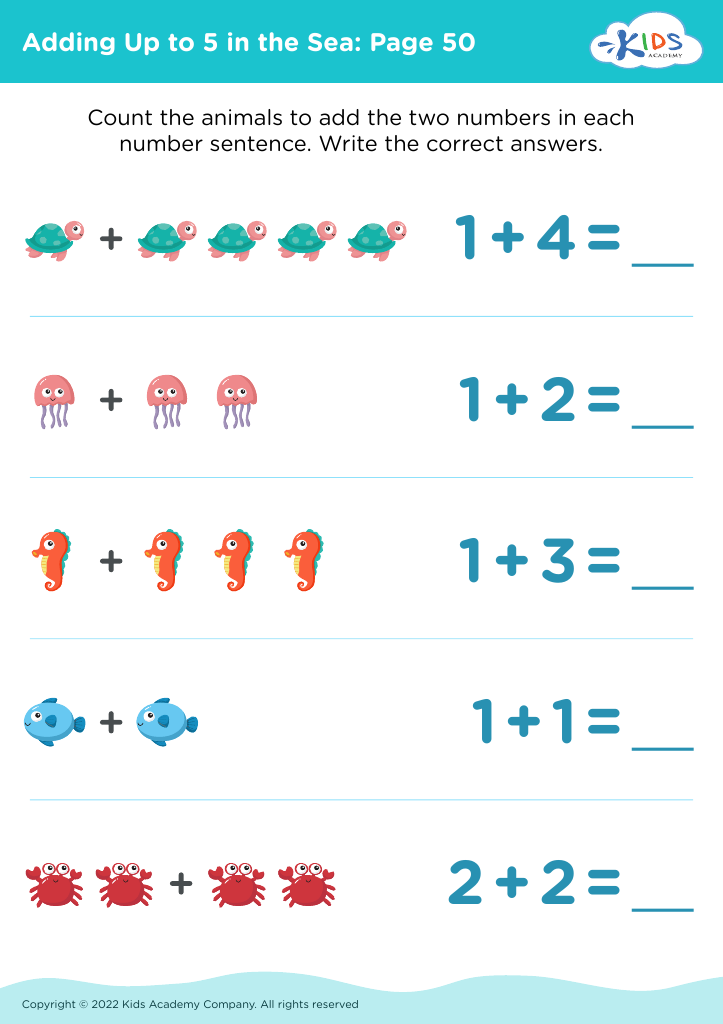
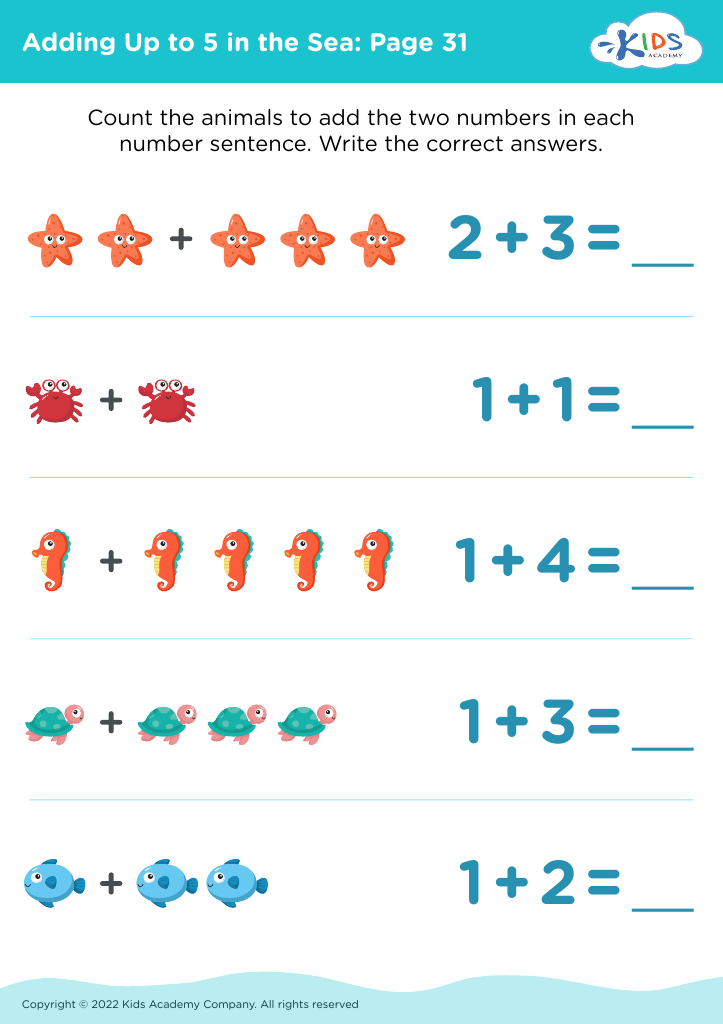








Understanding sea creature identification, alongside basic addition and subtraction, is crucial for parents and teachers working with children ages 5-7 for several reasons. First, integrating fun and engaging themes like sea creatures into math lessons can spark children's interest and motivation. This age group thrives on exploration and discovery, and combining subjects facilitates a holistic learning experience.
Moreover, identification of marine animals can promote curiosity about the natural world, fostering early scientific thinking. This connection between math concepts and real-life scenarios helps children see relevance in what they’re learning, promoting retention and application of skills.
Learning to recognize different sea creatures also serves as a vehicle for teaching critical thinking and problem-solving skills. For instance, using popular sea animals in math problems—like counting fish or adding octopuses—makes abstract concepts more tangible and relatable.
Lastly, in an era where environmental awareness is vital, teaching children about sea life can instill a sense of responsibility and care for the ocean ecosystems. Thus, combining identity of sea creatures with foundational math skills not only enhances cognitive development but also nurtures responsible, curious global citizens.








